Hernández-Salinas Romina, Decap Valerie, Leguina Alberto, Cáceres Patricio, Perez Druso, Urquiaga Ines, Iturriaga Rodrigo, Velarde Victoria
Departamento de Fisiología, Facultad de Ciencias Biológicas, Pontificia Universidad Católica de Chile, Santiago, Chile.
Center for Molecular Nutrition and Chronic Diseases, Pontificia Universidad Católica de Chile, Santiago, Chile.
Biol Res. 2015 Sep 30;48:53. doi: 10.1186/s40659-015-0045-4.
Metabolic syndrome is a growing worldwide health problem. We evaluated the effects of wine grape powder (WGP), rich in antioxidants and fiber, in a rat model of metabolic syndrome induced by a high fructose diet. We tested whether WGP supplementation may prevent glucose intolerance and decrease oxidative stress in rats fed with a high fructose diet.
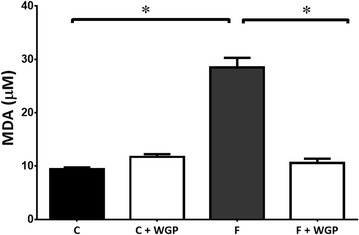
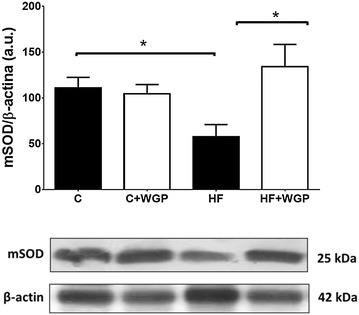
Male Sprague-Dawley rats weighing 180 g were divided into four groups according to their feeding protocols. Rats were fed with control diet (C), control plus 20 % WGP (C + WGP), 50 % high fructose (HF) or 50 % fructose plus 20 % WGP (HF + WGP) for 16 weeks. Blood glucose, insulin and triglycerides, weight, and arterial blood pressure were measured. Homeostasis model assessment (HOMA) index was calculated using insulin and glucose values. A glucose tolerance test was performed 2 days before the end of the experiment. As an index of oxidative stress, thiobarbituric acid reactive substances (TBARS) level was measured in plasma and kidney, and superoxide dismutase was measured in the kidney.
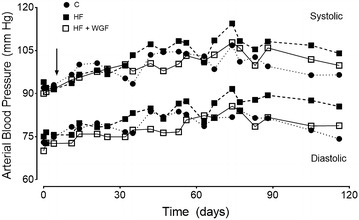
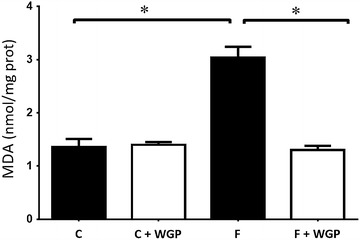
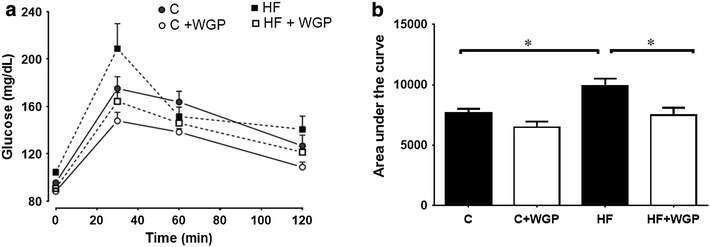
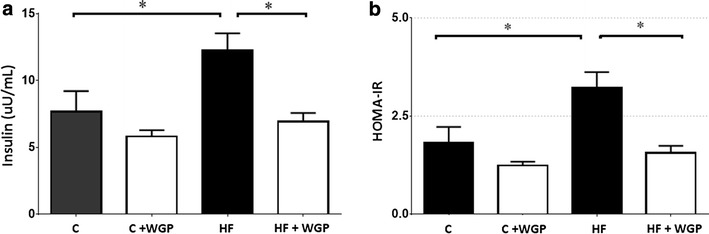
Thiobarbituric acid reactive substances in plasma and renal tissue were significantly higher when compared to the control group. In addition, the area under the curve of the glucose tolerance test was higher in HF fed animals. Furthermore, fasting blood glucose, plasma insulin levels, and the HOMA index, were also increased. WGP supplementation prevented these alterations in rats fed with the HF diet. We did not find any significant difference in body weight or systolic blood pressure in any of the groups.
Our results show that WGP supplementation prevented hyperglycemia, insulin resistance and reduced oxidative stress in rats fed with HF diet. We propose that WGP may be used as a supplement in human food as well.
代谢综合征是一个在全球范围内日益严重的健康问题。我们在高果糖饮食诱导的代谢综合征大鼠模型中评估了富含抗氧化剂和纤维的酿酒葡萄粉(WGP)的作用。我们测试了补充WGP是否可以预防高果糖饮食喂养的大鼠出现葡萄糖不耐受并降低氧化应激。
将体重180 g的雄性Sprague-Dawley大鼠根据喂养方案分为四组。大鼠分别喂食对照饮食(C)、对照加20% WGP(C + WGP)、50%高果糖(HF)或50%果糖加20% WGP(HF + WGP)16周。测量血糖、胰岛素、甘油三酯、体重和动脉血压。使用胰岛素和葡萄糖值计算稳态模型评估(HOMA)指数。在实验结束前2天进行葡萄糖耐量试验。作为氧化应激指标,测量血浆和肾脏中的硫代巴比妥酸反应物质(TBARS)水平,并在肾脏中测量超氧化物歧化酶。
与对照组相比,血浆和肾组织中的硫代巴比妥酸反应物质显著更高。此外,高果糖饮食喂养的动物葡萄糖耐量试验曲线下面积更高。此外,空腹血糖、血浆胰岛素水平和HOMA指数也升高。补充WGP可预防高果糖饮食喂养大鼠的这些改变。我们未发现任何一组的体重或收缩压有显著差异。
我们的结果表明,补充WGP可预防高果糖饮食喂养大鼠的高血糖、胰岛素抵抗并降低氧化应激。我们建议WGP也可用作人类食品中的补充剂。