Cavassin Emerson Danguy, de Figueiredo Luiz Francisco Poli, Otoch José Pinhata, Seckler Marcelo Martins, de Oliveira Roberto Angelo, Franco Fabiane Fantinelli, Marangoni Valeria Spolon, Zucolotto Valtencir, Levin Anna Sara Shafferman, Costa Silvia Figueiredo
Department of Infectious Diseases, University of São Paulo, São Paulo, Brazil.
Department of Surgery São Paulo, University of São Paulo, São Paulo, Brazil.
J Nanobiotechnology. 2015 Oct 5;13:64. doi: 10.1186/s12951-015-0120-6.
Multidrug resistant microorganisms are a growing challenge and new substances that can be useful to treat infections due to these microorganisms are needed. Silver nanoparticle may be a future option for treatment of these infections, however, the methods described in vitro to evaluate the inhibitory effect are controversial.
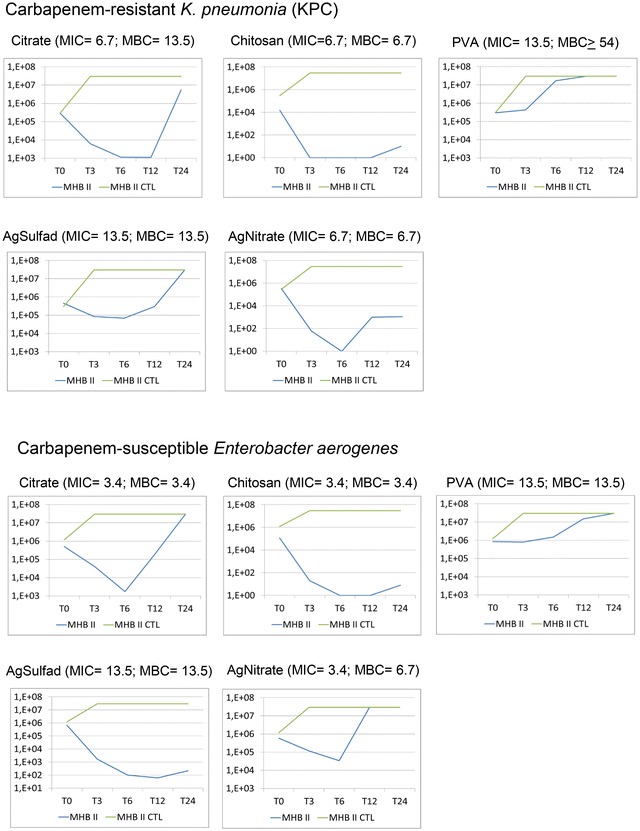
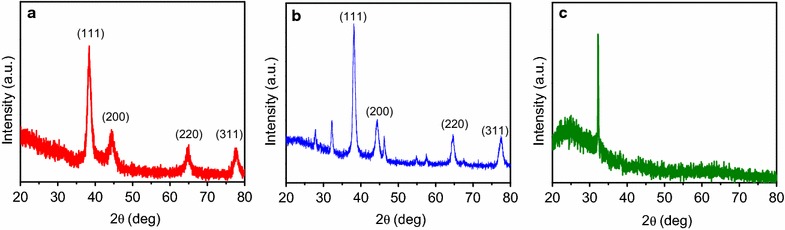
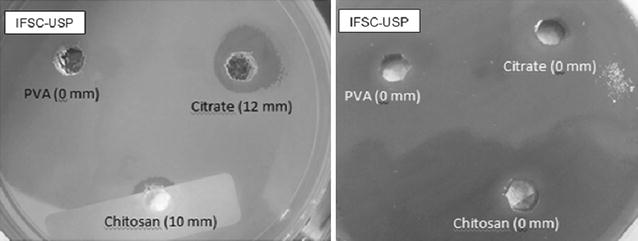
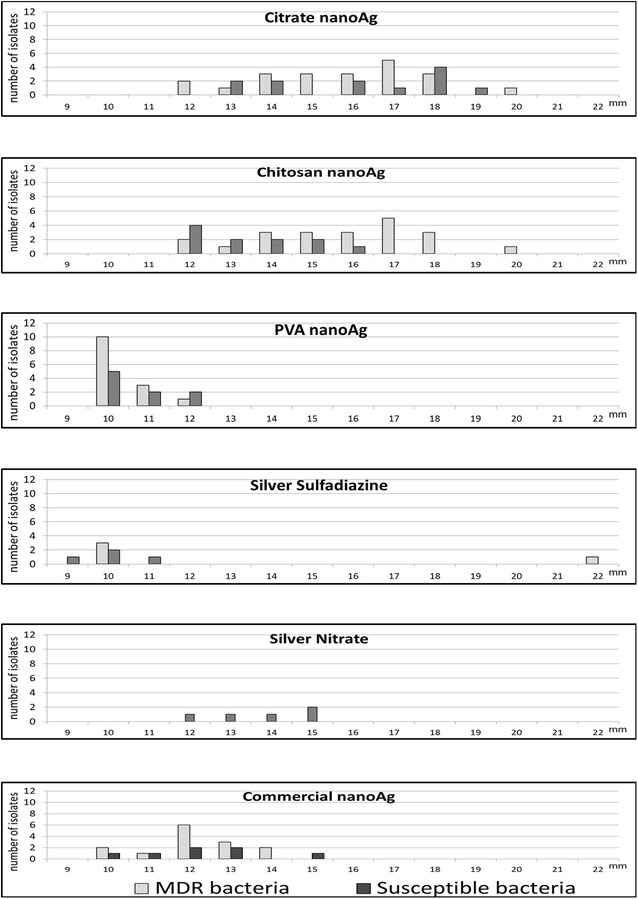
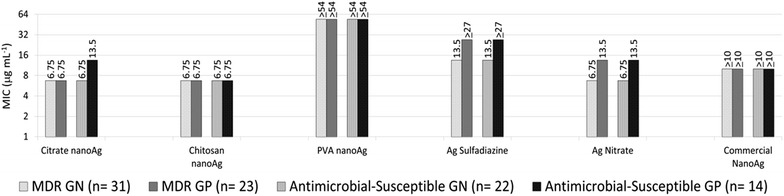
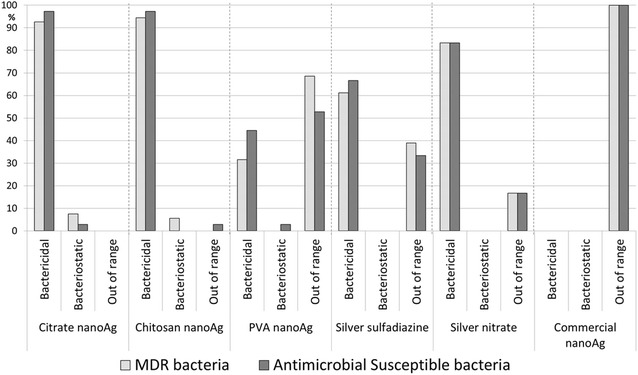
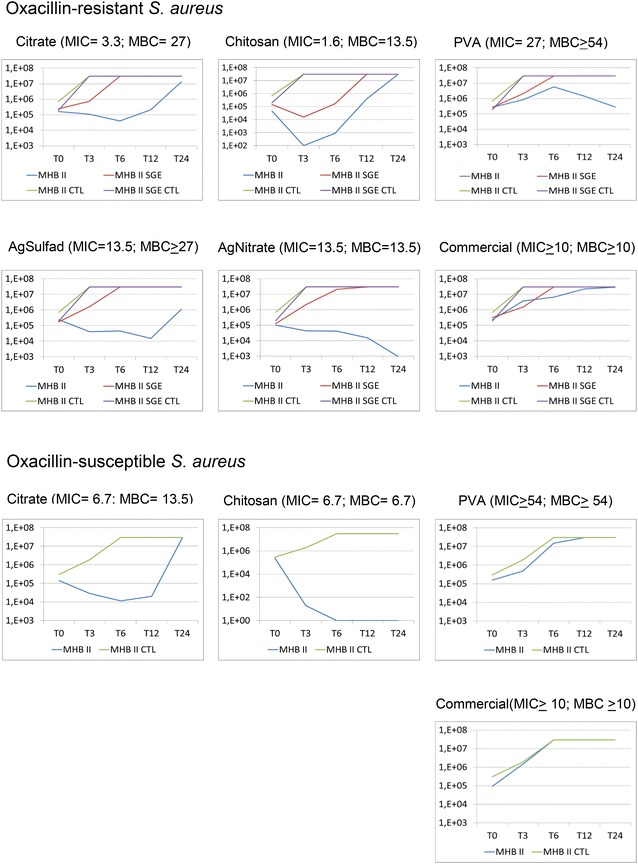
This study evaluated the in vitro activity of silver nanoparticles against 36 susceptible and 54 multidrug resistant Gram-positive and Gram-negative bacteria from clinical sources. The multidrug resistant bacteria were oxacilin-resistant Staphylococcus aureus, vancomycin-resistant Enterococcus spp., carbapenem- and polymyxin B-resistant A. baumannii, carbapenem-resistant P. aeruginosa and carbapenem-resistant Enterobacteriaceae. We analyzed silver nanoparticles stabilized with citrate, chitosan and polyvinyl alcohol and commercial silver nanoparticle. Silver sulfadiazine and silver nitrate were used as control. Different methods were used: agar diffusion, minimum inhibitory concentration, minimum bactericidal concentration and time-kill. The activity of AgNPs using diffusion in solid media and the MIC methods showed similar effect against MDR and antimicrobial-susceptible isolates, with a higher effect against Gram-negative isolates. The better results were achieved with citrate and chitosan silver nanoparticle, both with MIC90 of 6.75 μg mL(-1), which can be due the lower stability of these particles and, consequently, release of Ag(+) ions as revealed by X-ray diffraction (XRD). The bactericidal effect was higher against antimicrobial-susceptible bacteria.
It seems that agar diffusion method can be used as screening test, minimum inhibitory concentration/minimum bactericidal concentration and time kill showed to be useful methods. The activity of commercial silver nanoparticle and silver controls did not exceed the activity of the citrate and chitosan silver nanoparticles. The in vitro inhibitory effect was stronger against Gram-negative than Gram-positive, and similar against multidrug resistant and susceptible bacteria, with best result achieved using citrate and chitosan silver nanoparticles. The bactericidal effect of silver nanoparticle may, in the future, be translated into important therapeutic and clinical options, especially considering the shortage of new antimicrobials against the emerging antimicrobial resistant microorganisms, in particular against Gram-negative bacteria.
多重耐药微生物带来的挑战日益严峻,因此需要能有效治疗这些微生物所致感染的新物质。银纳米颗粒可能是治疗此类感染的一个未来选择,然而,体外评估其抑制作用的方法存在争议。
本研究评估了银纳米颗粒对36株敏感及54株来自临床的多重耐药革兰氏阳性和革兰氏阴性细菌的体外活性。多重耐药菌包括耐苯唑西林金黄色葡萄球菌、耐万古霉素肠球菌属、耐碳青霉烯类和多粘菌素B的鲍曼不动杆菌、耐碳青霉烯类铜绿假单胞菌以及耐碳青霉烯类肠杆菌科细菌。我们分析了用柠檬酸盐、壳聚糖和聚乙烯醇稳定的银纳米颗粒以及商用银纳米颗粒。磺胺嘧啶银和硝酸银用作对照。采用了不同方法:琼脂扩散法、最低抑菌浓度、最低杀菌浓度和时间杀菌法。使用固体培养基扩散法和最低抑菌浓度法时,银纳米颗粒对多重耐药菌和抗菌药物敏感菌株的活性相似,对革兰氏阴性菌株的作用更强。柠檬酸盐和壳聚糖银纳米颗粒取得了更好的结果,二者的最低抑菌浓度90均为6.75μg/mL,这可能是由于这些颗粒稳定性较低,因此如X射线衍射(XRD)所示会释放银离子。对抗菌药物敏感细菌的杀菌作用更强。
似乎琼脂扩散法可作为筛选试验,最低抑菌浓度/最低杀菌浓度和时间杀菌法显示是有用的方法。商用银纳米颗粒和银对照的活性未超过柠檬酸盐和壳聚糖银纳米颗粒的活性。体外抑制作用对革兰氏阴性菌比对革兰氏阳性菌更强,对多重耐药菌和敏感菌相似,使用柠檬酸盐和壳聚糖银纳米颗粒取得了最佳结果。银纳米颗粒的杀菌作用未来可能转化为重要的治疗和临床选择,尤其是考虑到针对新出现的抗菌药物耐药微生物,特别是革兰氏阴性菌的新型抗菌药物短缺的情况。