Feng Xin, Lai Zhongxiong, Lin Yuling, Lai Gongti, Lian Conglong
Institute of Horticultural Biotechnology, Fujian Agriculture and Forestry University, Fuzhou, Fujian, 350002, China.
BMC Genomics. 2015 Oct 20;16:823. doi: 10.1186/s12864-015-2046-7.
Superoxide dismutase (SOD) is an essential enzyme of the plant antioxidant system that responds to oxidative stresses caused by adverse conditions. Banana is an important staple and economic crop in tropical and subtropical regions. However, its growth and yield are constantly affected by various abiotic stresses. To analyze the roles of distinct SOD genes under various stresses, a detailed characterization and analysis of the SOD gene family in Cavendish banana is indispensable.
The presence and structure of the SOD family genes were experimentally verified using 5'/3' RACE-PCR, reverse transcription PCR and PCR. Then, their syntenic relationships, conserved motifs and phylogenetic relationships were analyzed using software. Cis-elements present in the promoters were predicted via PlantCARE. And the expression levels under abiotic and hormonal stresses were determined using real-time quantitative polymerase chain reaction.
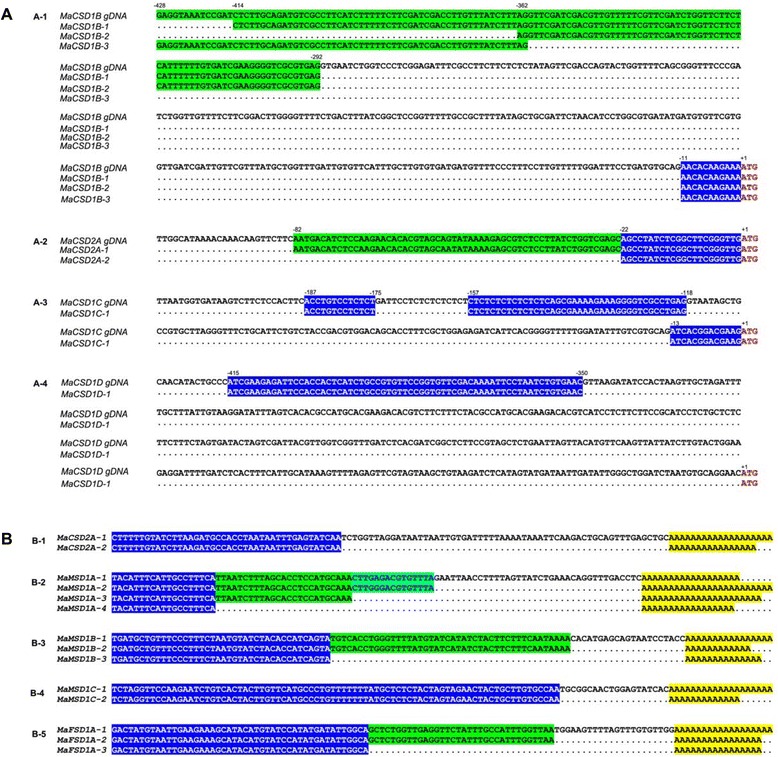
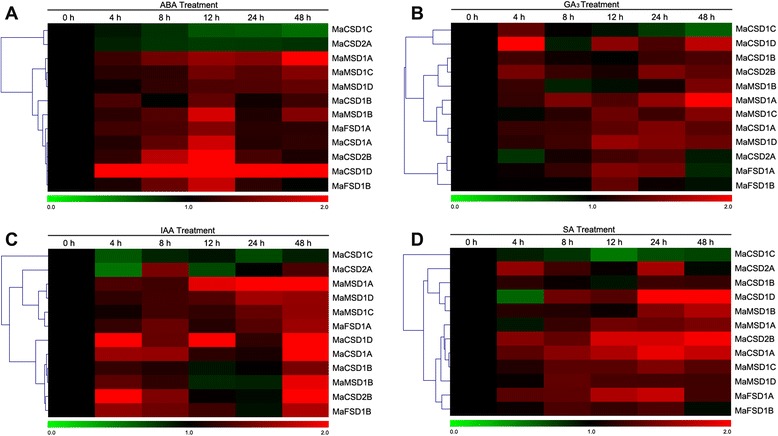
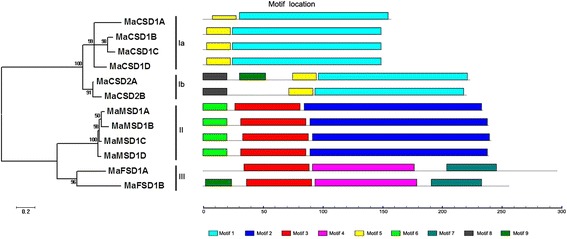
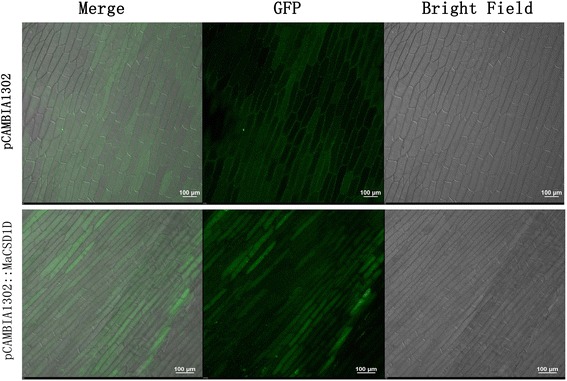
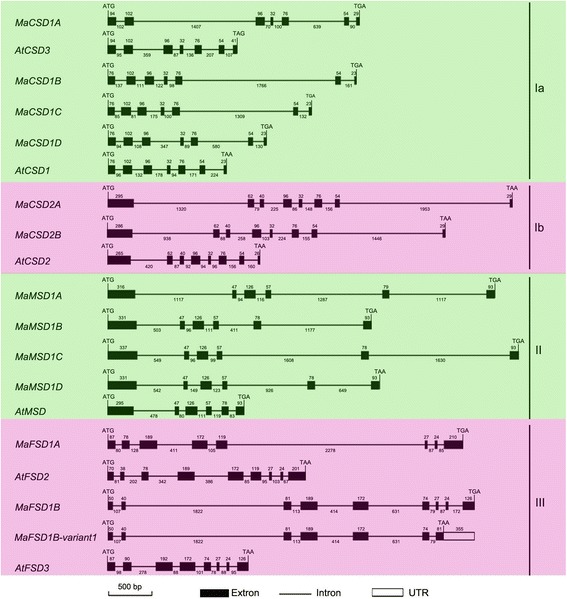
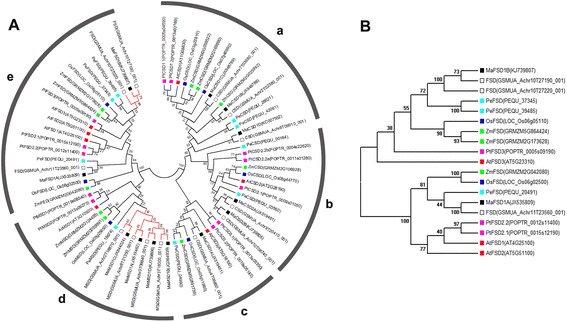
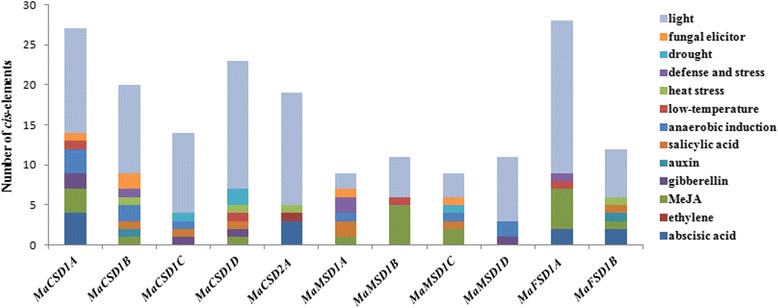
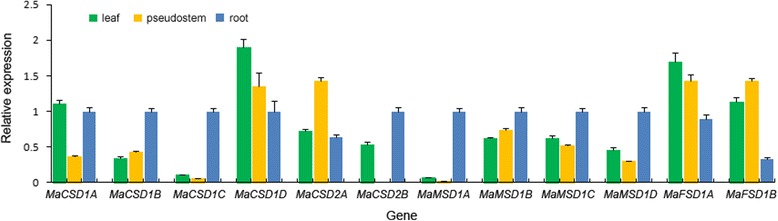
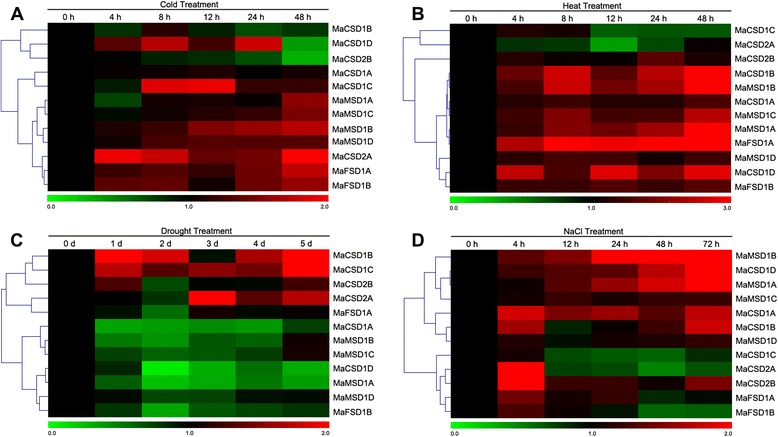
In total, 25 'Tianbaojiao' SOD cDNAs (MaSODs), which encoded six Cu/ZnSODs, four MnSODs and two FeSODs, were cloned. The 12 MaSOD genes were divided into four groups based on their conserved motifs, which corroborated their classifications based on gene-structure patterns and subcellular localizations. Eleven MaSOD promoters were isolated and found to contain many cis-acting elements involved in stress responses. Gene expression analysis showed that 11 out of the 12 MaSODs were expressed in all tested tissues (leaf, pseudostem and root), whereas MaCSD2B was expressed only in leaves and roots. Specific MaSOD members exhibited different expression patterns under abiotic and hormonal treatments. Among the 12 MaSOD genes, MaCSD1D was the only one that responded to all eight treatments, suggesting that this gene plays a predominant role in reactive oxygen species scavenging caused by various stresses in banana.
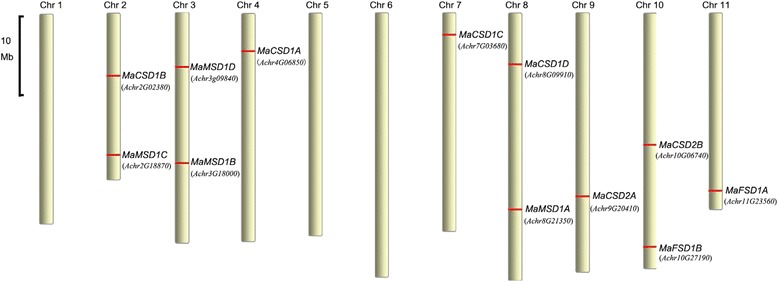
A genome-wide analysis showed that the 'Tianbaojiao' banana harbored an expanded SOD gene family. Whole genome duplication, segmental duplication and complex transcriptional regulation contributed to the gene expansion and mRNA diversity of the MaSODs. The expression patterns of distinct MaSOD genes showed that they are important responses to different abiotic and hormonal stresses in banana.
超氧化物歧化酶(SOD)是植物抗氧化系统中的一种关键酶,可应对不利条件引起的氧化应激。香蕉是热带和亚热带地区重要的主食和经济作物。然而,其生长和产量不断受到各种非生物胁迫的影响。为了分析不同SOD基因在各种胁迫下的作用,对香牙蕉中SOD基因家族进行详细的表征和分析是必不可少的。
利用5'/3' RACE-PCR、逆转录PCR和PCR对SOD家族基因的存在和结构进行实验验证。然后,使用软件分析它们的共线性关系、保守基序和系统发育关系。通过PlantCARE预测启动子中存在的顺式作用元件。并使用实时定量聚合酶链反应测定非生物和激素胁迫下的表达水平。
总共克隆了25个“天宝蕉”SOD cDNA(MaSODs),它们编码6个Cu/ZnSOD、4个MnSOD和2个FeSOD。12个MaSOD基因根据其保守基序分为四组,这证实了它们基于基因结构模式和亚细胞定位的分类。分离出11个MaSOD启动子,发现它们含有许多参与胁迫反应的顺式作用元件。基因表达分析表明,12个MaSOD中有11个在所有测试组织(叶、假茎和根)中表达,而MaCSD2B仅在叶和根中表达。特定的MaSOD成员在非生物和激素处理下表现出不同的表达模式。在12个MaSOD基因中,MaCSD1D是唯一对所有8种处理都有反应的基因,表明该基因在香蕉各种胁迫引起的活性氧清除中起主要作用。
全基因组分析表明,“天宝蕉”香蕉拥有一个扩展的SOD基因家族。全基因组复制、片段重复和复杂的转录调控导致了MaSODs的基因扩展和mRNA多样性。不同MaSOD基因的表达模式表明它们是香蕉对不同非生物和激素胁迫的重要反应。