Jung C, Allen P B, Ellington A D
Department of Chemistry and Biochemistry, Institute for Cellular and Molecular Biology, University of Texas at Austin, Austin, Texas 78712, USA.
Nat Nanotechnol. 2016 Feb;11(2):157-63. doi: 10.1038/nnano.2015.246. Epub 2015 Nov 2.
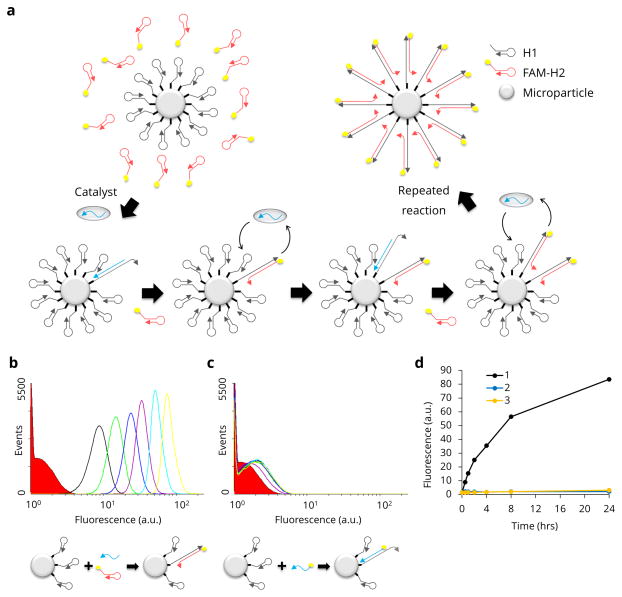
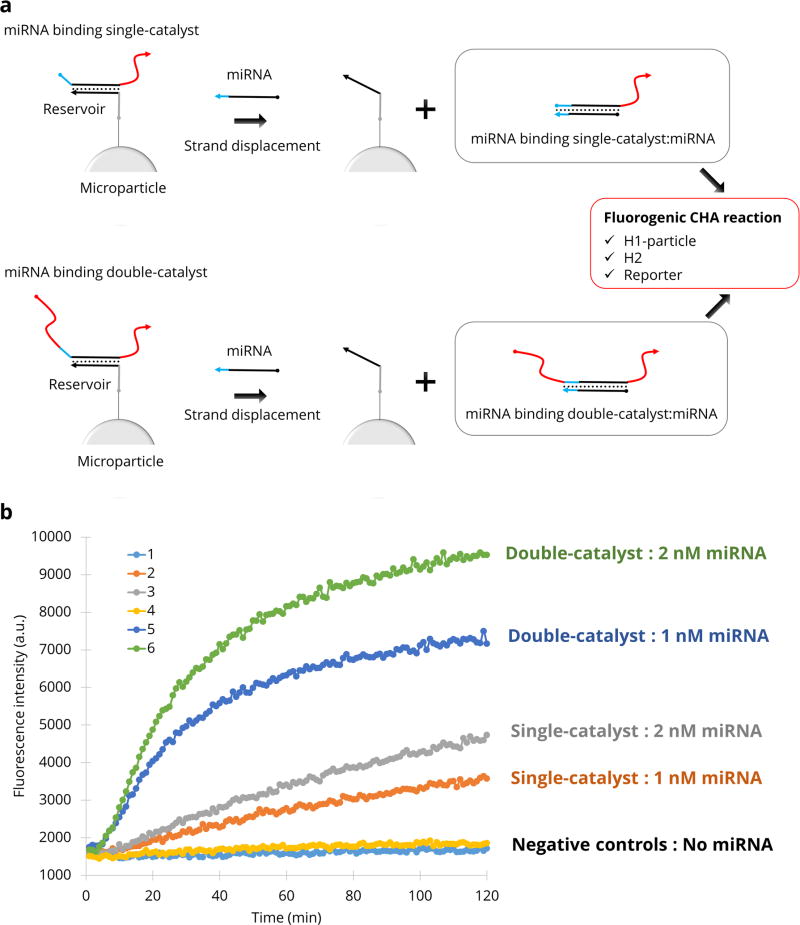
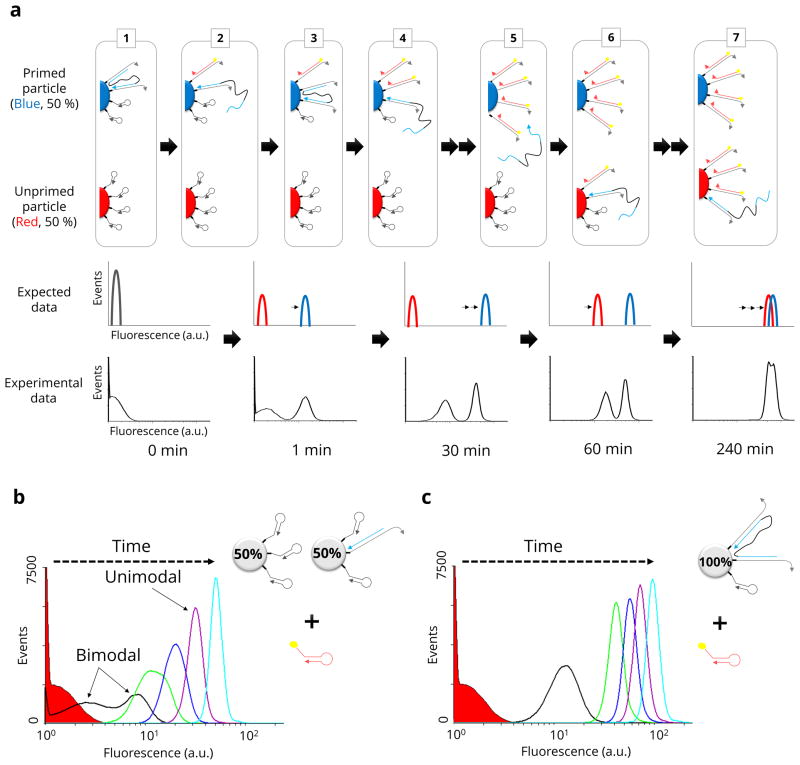
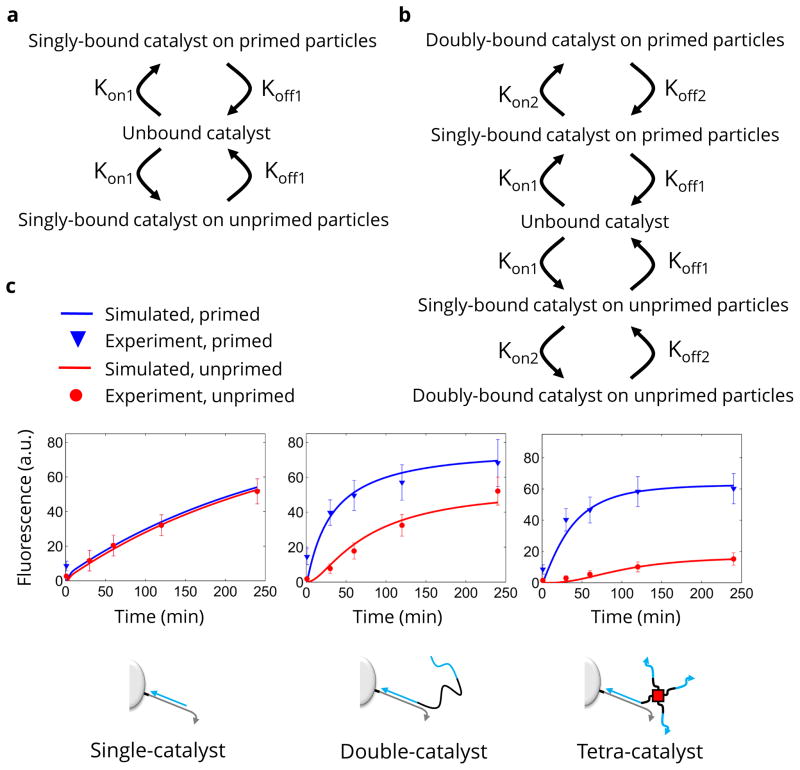
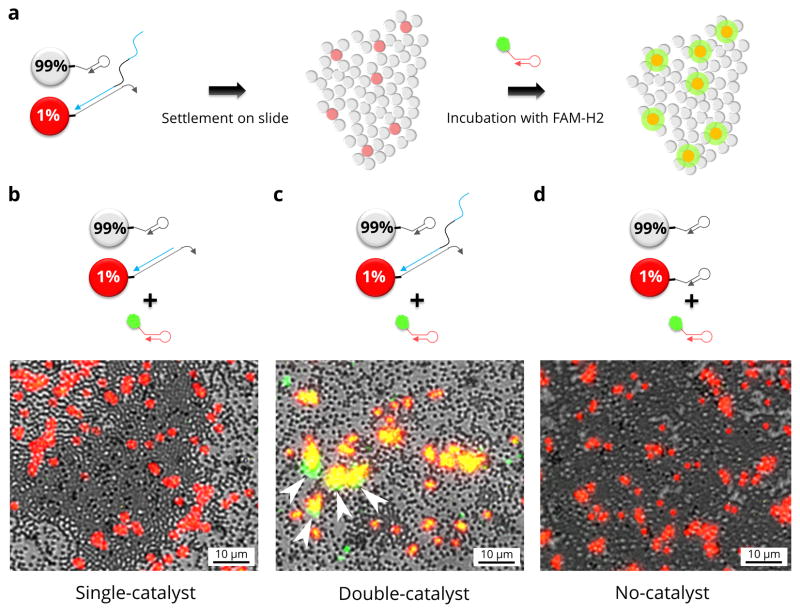
Molecular machines have previously been designed that are propelled by DNAzymes, protein enzymes and strand displacement. These engineered machines typically move along precisely defined one- and two-dimensional tracks. Here, we report a DNA walker that uses hybridization to drive walking on DNA-coated microparticle surfaces. Through purely DNA:DNA hybridization reactions, the nanoscale movements of the walker can lead to the generation of a single-stranded product and the subsequent immobilization of fluorescent labels on the microparticle surface. This suggests that the system could be of use in analytical and diagnostic applications, similar to how strand exchange reactions in solution have been used for transducing and quantifying signals from isothermal molecular amplification assays. The walking behaviour is robust and the walker can take more than 30 continuous steps. The traversal of an unprogrammed, inhomogeneous surface is also due entirely to autonomous decisions made by the walker, behaviour analogous to amorphous chemical reaction network computations, which have been shown to lead to pattern formation.
此前已设计出由脱氧核酶、蛋白质酶和链置换驱动的分子机器。这些工程化机器通常沿着精确限定的一维和二维轨道移动。在此,我们报告一种DNA步行器,它利用杂交作用在涂有DNA的微粒表面上驱动行走。通过纯粹的DNA:DNA杂交反应,步行器的纳米级移动可导致单链产物的产生以及随后荧光标记物在微粒表面的固定。这表明该系统可用于分析和诊断应用,类似于溶液中的链交换反应已被用于转导和量化等温分子扩增测定中的信号。步行行为稳健,步行器可以连续迈出30多步。穿越未编程的不均匀表面也完全归因于步行器自主做出的决策,这种行为类似于无定形化学反应网络计算,已证明其可导致图案形成。