• 文献检索
  • 文档翻译
  • 深度研究
  • 学术资讯
  • Suppr Zotero 插件Zotero 插件
  • 邀请有礼
  • 套餐&价格
  • 历史记录
应用&插件
Suppr Zotero 插件Zotero 插件浏览器插件Mac 客户端Windows 客户端微信小程序
定价
高级版会员购买积分包购买API积分包
服务
文献检索文档翻译深度研究API 文档MCP 服务
关于我们
关于 Suppr公司介绍联系我们用户协议隐私条款
关注我们

Suppr 超能文献

核心技术专利:CN118964589B侵权必究
粤ICP备2023148730 号-1Suppr @ 2026

文献检索

告别复杂PubMed语法,用中文像聊天一样搜索,搜遍4000万医学文献。AI智能推荐,让科研检索更轻松。

立即免费搜索

文件翻译

保留排版,准确专业,支持PDF/Word/PPT等文件格式,支持 12+语言互译。

免费翻译文档

深度研究

AI帮你快速写综述,25分钟生成高质量综述,智能提取关键信息,辅助科研写作。

立即免费体验

养殖水貂中的H9N2禽流感病毒感染

Avian influenza virus H9N2 infections in farmed minks.

作者信息

Zhang Chuanmei, Xuan Yang, Shan Hu, Yang Haiyan, Wang Jianlin, Wang Ke, Li Guimei, Qiao Jian

机构信息

Department of Pathophysiology, College of Veterinary Medicine, China Agricultural University, Beijing, 100094, China.

College of Animal Science and Veterinary Medicine, Qingdao Agricultural University, Qingdao, 266109, China.

出版信息

Virol J. 2015 Nov 2;12:180. doi: 10.1186/s12985-015-0411-4.

DOI:10.1186/s12985-015-0411-4
PMID:26527402
原文链接:https://pmc.ncbi.nlm.nih.gov/articles/PMC4630874/
Abstract

BACKGROUND

The prevalence of avian H9N2 viruses throughout Asia, along with their demonstrated ability to infect mammals, puts them high on the list of influenza viruses with pandemic potential for humans. In this study, we investigated whether H9N2 viruses could infect farmed minks.

METHODS

First, we conducted a serological survey for avian influenza virus antibodies on a random sample of the field-trial population of farmed minks. Then we inoculated farmed minks with A/Chicken/Hebei/4/2008 H9N2 viruses and observed the potential pathogenicity of H9N2 virus and virus shedding in infected minks.

RESULTS

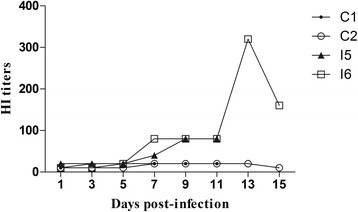
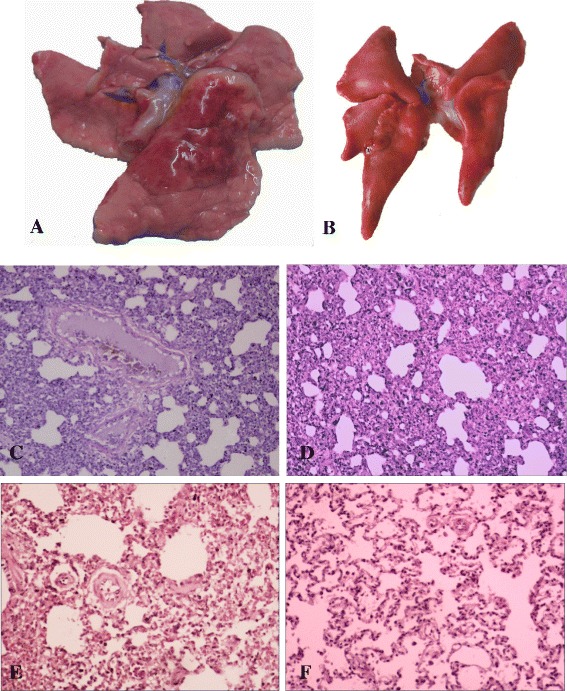
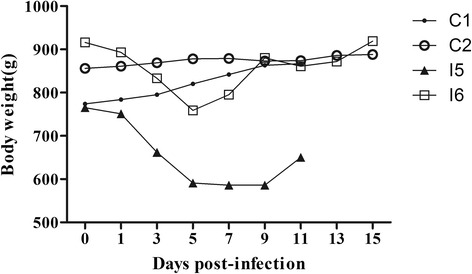
H9 influenza antibodies could be detected in most farmed minks with a higher seropositivity, which indicated that farmed minks had the high prevalence of exposure to H9 viruses. After infection, the minks displayed the slight clinical signs including lethargy and initial weight loss. The infected lungs showed the mild diffuse pneumonia with thickened alveolar walls and inflammatory cellular infiltration. Influenza virus detection showed that viruses were detected in the allantoic fluids inoculated supernatant of lung tissues at 3 and 7 days post-infection (dpi), and found in the nasal swabs of H9N2-infected minks at 3-11 dpi, suggesting that H9N2 viruses replicated in the respiratory organ, were then shed outwards. HI antibody test showed that antibody levels began to rise at 7 dpi.

CONCLUSIONS

Our data provided the serological and experimental evidences that strongly suggested farmed minks under the natural state were susceptible to H9N2 viral infection and might be the H9N2 virus carriers. It is imperative to strengthen the H9N2 viral monitoring in farmed minks and pay urgent attention to prevent and control new influenza viruses pandemic prevalence.

摘要

背景

H9N2禽流感病毒在亚洲广泛流行,且已证实其具有感染哺乳动物的能力,这使其成为具有人类大流行潜力的流感病毒中的重点关注对象。在本研究中,我们调查了H9N2病毒是否能感染养殖水貂。

方法

首先,我们对养殖水貂的田间试验群体进行随机抽样,开展禽流感病毒抗体的血清学调查。然后,我们用A/Chicken/Hebei/4/2008 H9N2病毒接种养殖水貂,观察H9N2病毒在感染水貂中的潜在致病性和病毒排泄情况。

结果

在大多数养殖水貂中可检测到H9流感抗体,血清阳性率较高,这表明养殖水貂接触H9病毒的患病率较高。感染后,水貂表现出轻微的临床症状,包括嗜睡和初期体重减轻。受感染的肺部显示出轻度弥漫性肺炎,肺泡壁增厚,有炎性细胞浸润。流感病毒检测显示,在感染后3天和7天(dpi),在接种肺组织上清液的尿囊液中检测到病毒,在感染H9N2的水貂的鼻拭子中在3 - 11 dpi时发现病毒,这表明H9N2病毒在呼吸器官中复制,然后向外排泄。血凝抑制(HI)抗体试验表明,抗体水平在7 dpi时开始上升。

结论

我们的数据提供了血清学和实验证据,有力地表明自然状态下的养殖水貂易受H9N2病毒感染,可能是H9N2病毒携带者。必须加强对养殖水貂的H9N2病毒监测,并紧急关注预防和控制新型流感病毒的大流行。
https://cdn.ncbi.nlm.nih.gov/pmc/blobs/41df/4630874/c7d417011fe2/12985_2015_411_Fig3_HTML.jpg
https://cdn.ncbi.nlm.nih.gov/pmc/blobs/41df/4630874/29efb36b1f13/12985_2015_411_Fig1_HTML.jpg
https://cdn.ncbi.nlm.nih.gov/pmc/blobs/41df/4630874/b9b88f405ddf/12985_2015_411_Fig2_HTML.jpg
https://cdn.ncbi.nlm.nih.gov/pmc/blobs/41df/4630874/c7d417011fe2/12985_2015_411_Fig3_HTML.jpg
https://cdn.ncbi.nlm.nih.gov/pmc/blobs/41df/4630874/29efb36b1f13/12985_2015_411_Fig1_HTML.jpg
https://cdn.ncbi.nlm.nih.gov/pmc/blobs/41df/4630874/b9b88f405ddf/12985_2015_411_Fig2_HTML.jpg
https://cdn.ncbi.nlm.nih.gov/pmc/blobs/41df/4630874/c7d417011fe2/12985_2015_411_Fig3_HTML.jpg

相似文献

1
Avian influenza virus H9N2 infections in farmed minks.养殖水貂中的H9N2禽流感病毒感染
Virol J. 2015 Nov 2;12:180. doi: 10.1186/s12985-015-0411-4.
2
Molecular characterization of H9N2 influenza virus isolated from mink and its pathogenesis in mink.从水貂分离的H9N2流感病毒的分子特征及其在水貂中的发病机制。
Vet Microbiol. 2015 Mar 23;176(1-2):88-96. doi: 10.1016/j.vetmic.2015.01.009. Epub 2015 Jan 15.
3
Two genetically similar H9N2 influenza viruses isolated from different species show similar virulence in minks but different virulence in mice.从不同物种分离出的两种基因相似的H9N2流感病毒在水貂中表现出相似的毒力,但在小鼠中表现出不同的毒力。
Acta Virol. 2020;64(1):67-77. doi: 10.4149/av_2020_109.
4
H9N2 influenza virus isolated from minks has enhanced virulence in mice.从水貂中分离出的 H9N2 流感病毒在小鼠中增强了毒力。
Transbound Emerg Dis. 2018 Jun;65(3):904-910. doi: 10.1111/tbed.12805. Epub 2018 Jan 14.
5
The comparison of pathology in ferrets infected by H9N2 avian influenza viruses with different genomic features.不同基因组特征的H9N2禽流感病毒感染雪貂的病理学比较。
Virology. 2016 Jan 15;488:149-55. doi: 10.1016/j.virol.2015.11.013. Epub 2015 Nov 28.
6
Lowly pathogenic avian influenza (H9N2) infection in Plateau pika (Ochotona curzoniae), Qinghai Lake, China.中国青海湖高原鼠兔(高原鼠兔)感染低致病性禽流感(H9N2)
Vet Microbiol. 2014 Sep 17;173(1-2):132-5. doi: 10.1016/j.vetmic.2014.07.002. Epub 2014 Jul 12.
7
Serological surveillance of H5 and H9 avian influenza A viral infections among pigs in Southern China.中国南方猪群中 H5 和 H9 禽流感病毒感染的血清学监测。
Microb Pathog. 2013 Nov;64:39-42. doi: 10.1016/j.micpath.2013.08.001. Epub 2013 Aug 22.
8
Experimental infection of non-human primates with avian influenza virus (H9N2).实验感染非人类灵长类动物禽流感病毒(H9N2)。
Arch Virol. 2013 Oct;158(10):2127-34. doi: 10.1007/s00705-013-1721-8. Epub 2013 May 12.
9
Infectivity and Transmissibility of Avian H9N2 Influenza Viruses in Pigs.猪源H9N2禽流感病毒的感染性与传播性
J Virol. 2016 Jan 13;90(7):3506-14. doi: 10.1128/JVI.02605-15.
10
Molecular characterization and pathogenicity of swine influenza H9N2 subtype virus A/swine/HeBei/012/2008/(H9N2).猪源H9N2亚型流感病毒A/swine/HeBei/012/2008/(H9N2)的分子特征与致病性
Acta Virol. 2011;55(3):219-26. doi: 10.4149/av_2011_03_219.

引用本文的文献

1
Epidemiology and evolutionary dynamics of H9N2 avian influenza virus in Bangladesh.孟加拉国H9N2禽流感病毒的流行病学与进化动态
Emerg Microbes Infect. 2025 Dec;14(1):2498574. doi: 10.1080/22221751.2025.2498574. Epub 2025 May 29.
2
Detection of a Reassortant Swine- and Human-Origin H3N2 Influenza A Virus in Farmed Mink in British Columbia, Canada.在加拿大不列颠哥伦比亚省养殖水貂中检测到一种猪源和人源重组H3N2甲型流感病毒。
Zoonoses Public Health. 2025 May;72(3):293-300. doi: 10.1111/zph.13205. Epub 2024 Dec 29.
3
Exploring Potential Intermediates in the Cross-Species Transmission of Influenza A Virus to Humans.

本文引用的文献

1
Molecular characterization of H9N2 influenza virus isolated from mink and its pathogenesis in mink.从水貂分离的H9N2流感病毒的分子特征及其在水貂中的发病机制。
Vet Microbiol. 2015 Mar 23;176(1-2):88-96. doi: 10.1016/j.vetmic.2015.01.009. Epub 2015 Jan 15.
2
Genetics, receptor binding property, and transmissibility in mammals of naturally isolated H9N2 Avian Influenza viruses.自然分离的H9N2禽流感病毒在哺乳动物中的遗传学、受体结合特性及传播性
PLoS Pathog. 2014 Nov 20;10(11):e1004508. doi: 10.1371/journal.ppat.1004508. eCollection 2014 Nov.
3
Evolution and ecology of influenza A viruses.
探索甲型流感病毒在跨物种传播至人类过程中的潜在中间体。
Viruses. 2024 Jul 14;16(7):1129. doi: 10.3390/v16071129.
4
Pandemic preparedness through vaccine development for avian influenza viruses.通过开发针对禽流感病毒的疫苗做好大流行的准备。
Hum Vaccin Immunother. 2024 Dec 31;20(1):2347019. doi: 10.1080/21645515.2024.2347019. Epub 2024 May 28.
5
Bat-borne H9N2 influenza virus evades MxA restriction and exhibits efficient replication and transmission in ferrets.蝙蝠携带的H9N2流感病毒逃避Mx蛋白限制,并在雪貂中表现出高效的复制和传播能力。
Nat Commun. 2024 Apr 25;15(1):3450. doi: 10.1038/s41467-024-47455-6.
6
The Chinese Hamster Ovary Cell-Based H9 HA Subunit Avian Influenza Vaccine Provides Complete Protection against the H9N2 Virus Challenge in Chickens.基于中国仓鼠卵巢细胞的H9亚型禽流感疫苗可使鸡只完全抵御H9N2病毒攻击。
Viruses. 2024 Jan 22;16(1):163. doi: 10.3390/v16010163.
7
Mink infection with influenza A viruses: an ignored intermediate host?水貂感染甲型流感病毒:一个被忽视的中间宿主?
One Health Adv. 2023;1(1):5. doi: 10.1186/s44280-023-00004-0. Epub 2023 Mar 30.
8
Zoonotic Animal Influenza Virus and Potential Mixing Vessel Hosts.人畜共患流感病毒与潜在混合宿主
Viruses. 2023 Apr 16;15(4):980. doi: 10.3390/v15040980.
9
Detection and Characterization of an H9N2 Influenza A Virus in the Egyptian Rousette Bat in Limpopo, South Africa.南非林波波省埃及果蝠中 H9N2 流感 A 病毒的检测与特征分析。
Viruses. 2023 Feb 10;15(2):498. doi: 10.3390/v15020498.
10
All-trans retinoic acid increases the pathogenicity of the H9N2 influenza virus in mice.全反式视黄酸增加了 H9N2 流感病毒在小鼠中的致病性。
Virol J. 2022 Jun 28;19(1):113. doi: 10.1186/s12985-022-01809-y.
甲型流感病毒的进化与生态学
Curr Top Microbiol Immunol. 2014;385:359-75. doi: 10.1007/82_2014_396.
4
Human infection with a novel avian-origin influenza A (H7N9) virus.人感染新型甲型 H7N9 流感病毒。
N Engl J Med. 2013 May 16;368(20):1888-97. doi: 10.1056/NEJMoa1304459. Epub 2013 Apr 11.
5
Pneumonia caused by influenza A H1N1 2009 virus in farmed American mink (Neovison vison).2009年甲型H1N1流感病毒引起的养殖美国水貂(Neovison vison)肺炎。
Vet Rec. 2012 Apr 7;170(14):362. doi: 10.1136/vr.100512. Epub 2012 Mar 23.
6
Naturally occurring Influenza A virus subtype H1N2 infection in a Midwest United States mink (Mustela vison) ranch.
J Vet Diagn Invest. 2012 Mar;24(2):388-91. doi: 10.1177/1040638711428349. Epub 2011 Dec 8.
7
Emergence of a new swine H3N2 and pandemic (H1N1) 2009 influenza A virus reassortant in two Canadian animal populations, mink and swine.在加拿大的两个动物种群(水貂和猪)中出现了一种新的猪 H3N2 和大流行(H1N1)2009 流感 A 病毒重组体。
J Clin Microbiol. 2011 Dec;49(12):4386-90. doi: 10.1128/JCM.05676-11. Epub 2011 Oct 19.
8
The ferret as a model organism to study influenza A virus infection.雪貂作为一种研究流感 A 病毒感染的模式生物。
Dis Model Mech. 2011 Sep;4(5):575-9. doi: 10.1242/dmm.007823. Epub 2011 Aug 2.
9
Acute respiratory distress syndrome induced by H9N2 virus in mice.H9N2 病毒诱导的小鼠急性呼吸窘迫综合征。
Arch Virol. 2010 Feb;155(2):187-95. doi: 10.1007/s00705-009-0560-0. Epub 2009 Nov 28.
10
Characterization of a Canadian mink H3N2 influenza A virus isolate genetically related to triple reassortant swine influenza virus.一株与三重重配猪流感病毒存在基因关联的加拿大水貂H3N2甲型流感病毒分离株的特性分析
J Clin Microbiol. 2009 Mar;47(3):796-9. doi: 10.1128/JCM.01228-08. Epub 2008 Dec 30.