Komoto Satoshi, Tacharoenmuang Ratana, Guntapong Ratigorn, Ide Tomihiko, Haga Kei, Katayama Kazuhiko, Kato Takema, Ouchi Yuya, Kurahashi Hiroki, Tsuji Takao, Sangkitporn Somchai, Taniguchi Koki
Department of Virology and Parasitology, Fujita Health University School of Medicine, Toyoake, Aichi, Japan.
Department of Medical Sciences, National Institute of Health, Nonthaburi, Thailand.
PLoS One. 2015 Nov 5;10(11):e0141739. doi: 10.1371/journal.pone.0141739. eCollection 2015.
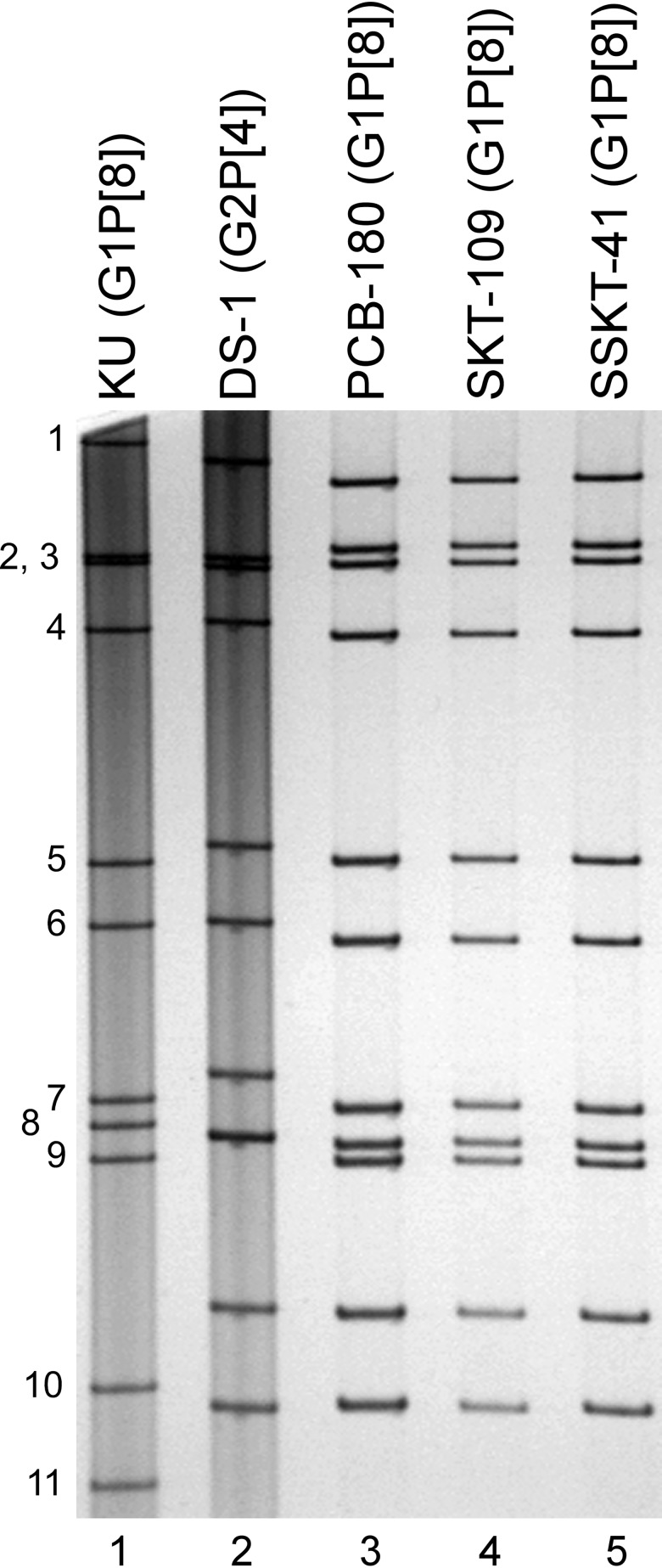
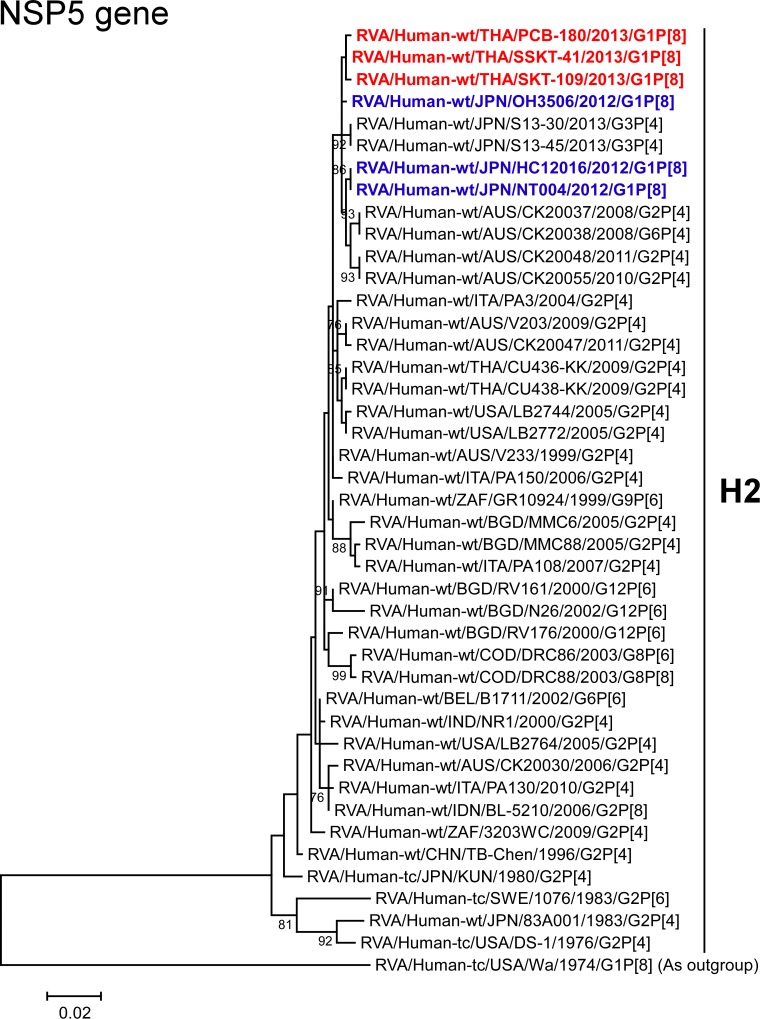
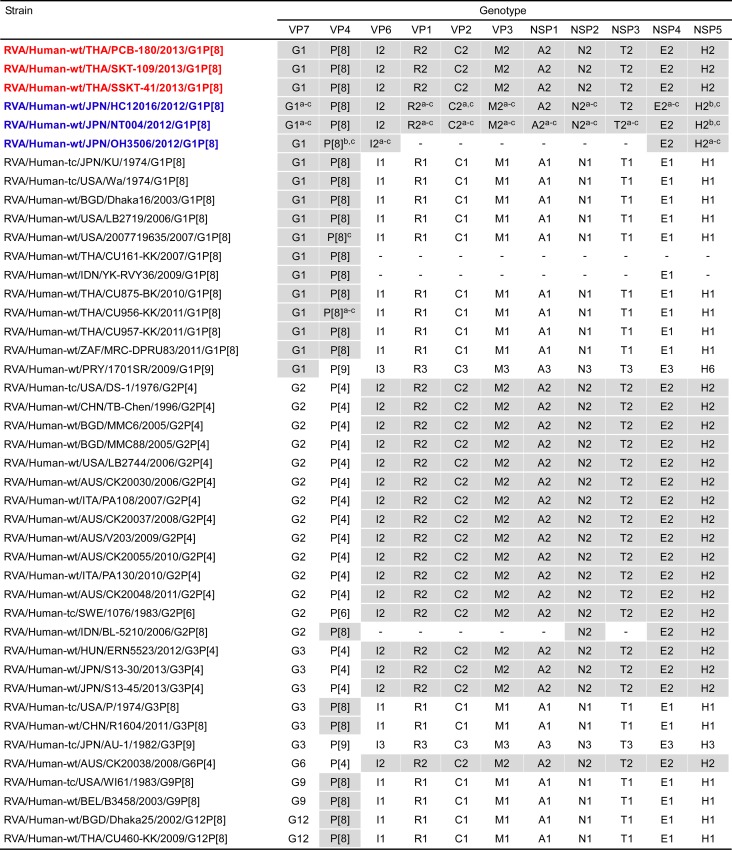
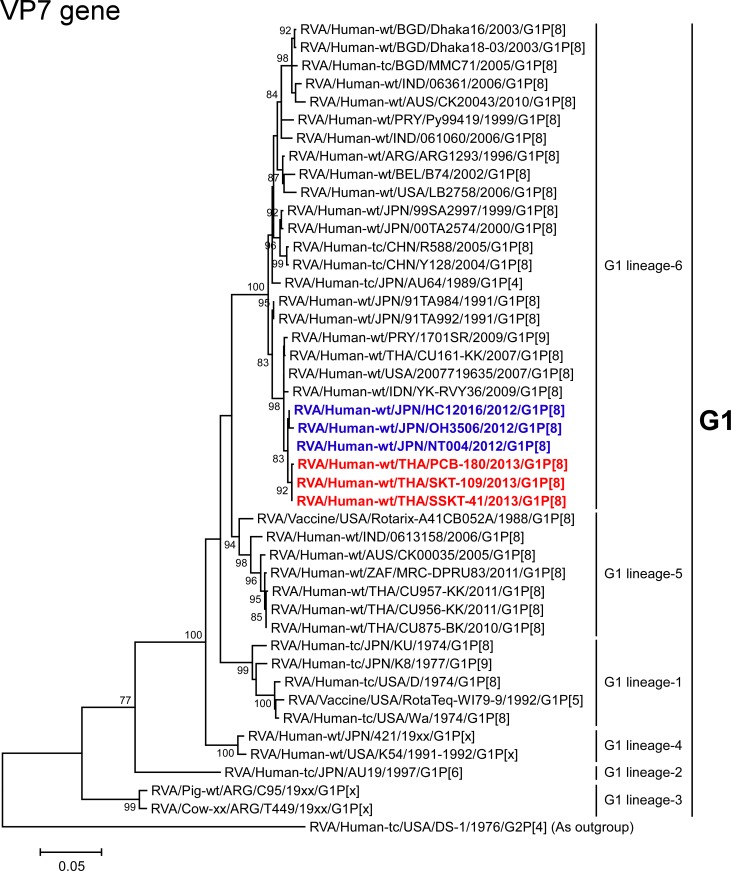
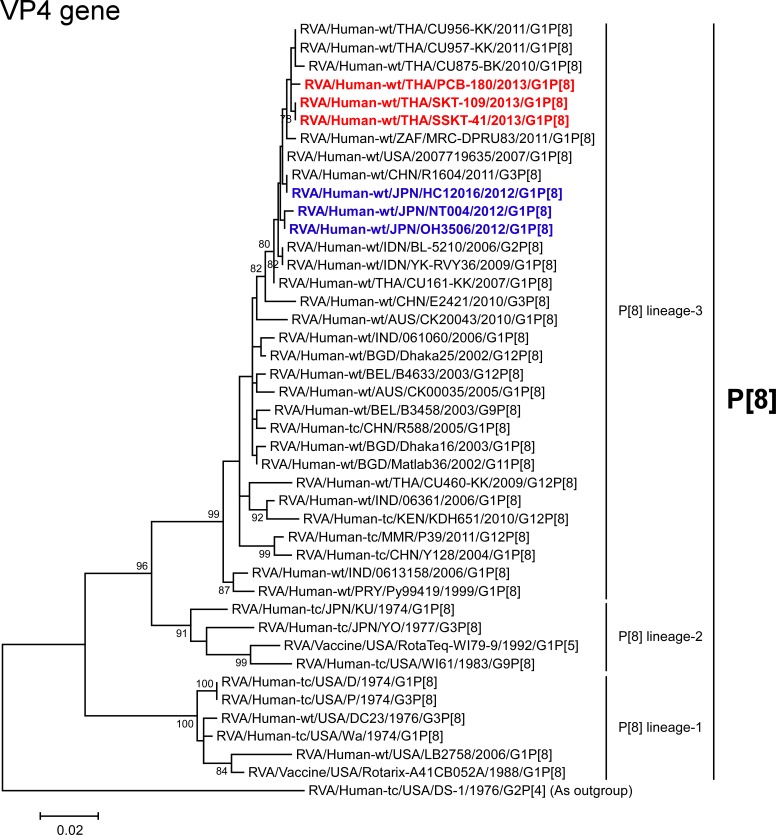
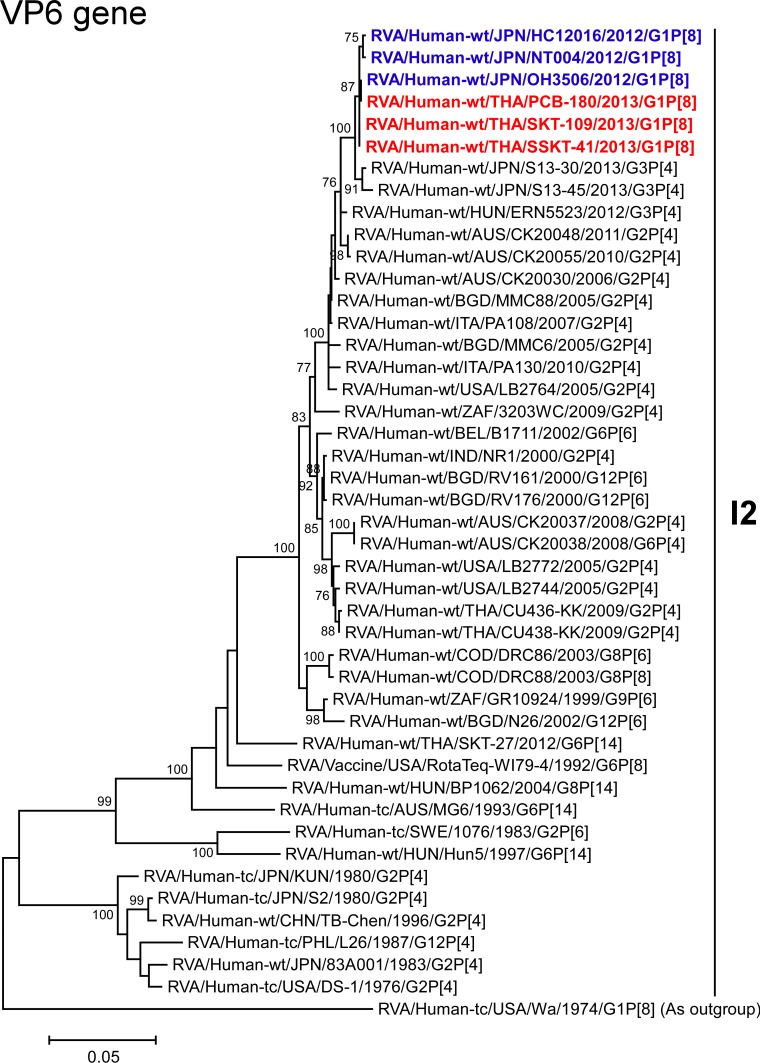
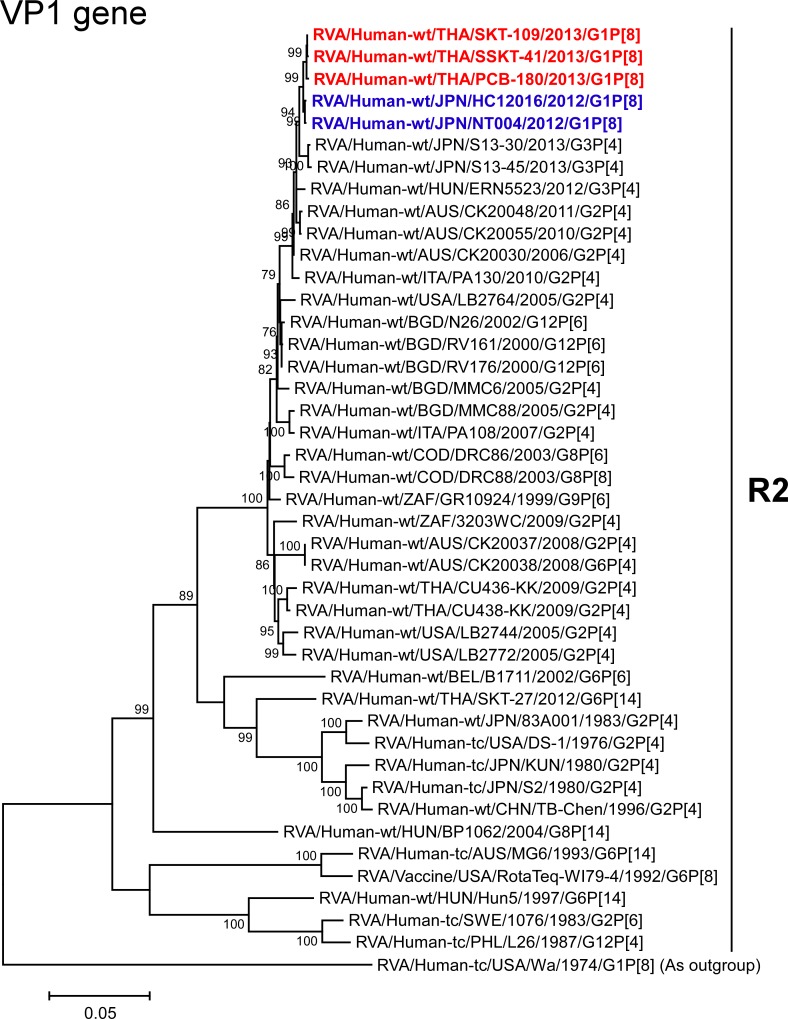
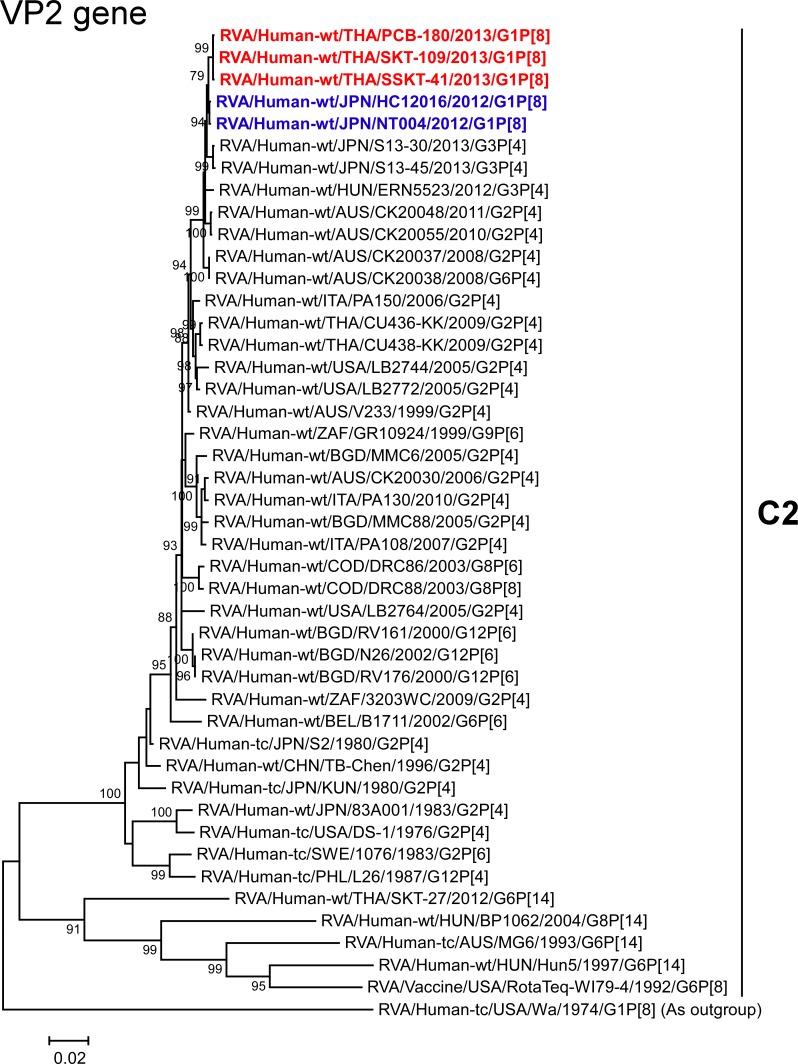
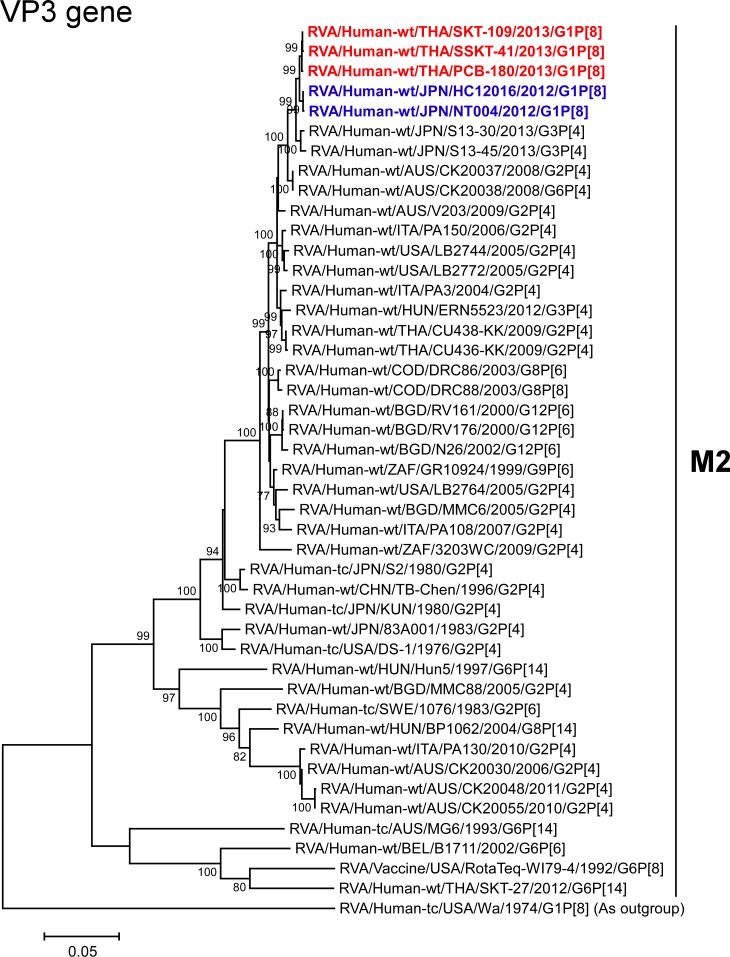
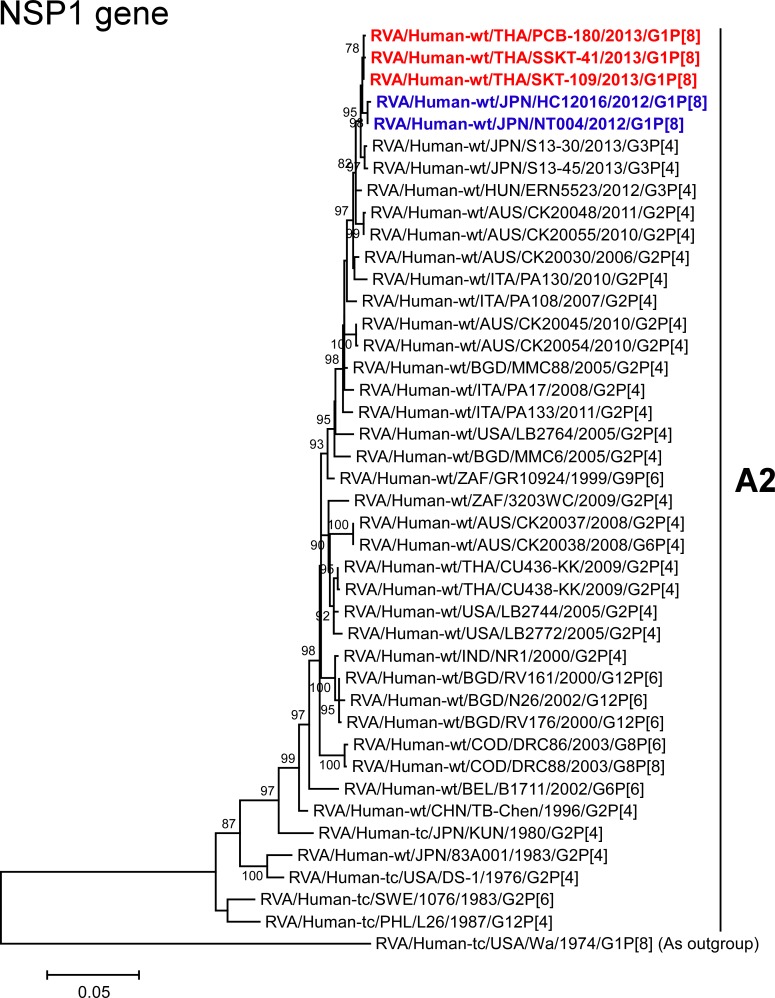
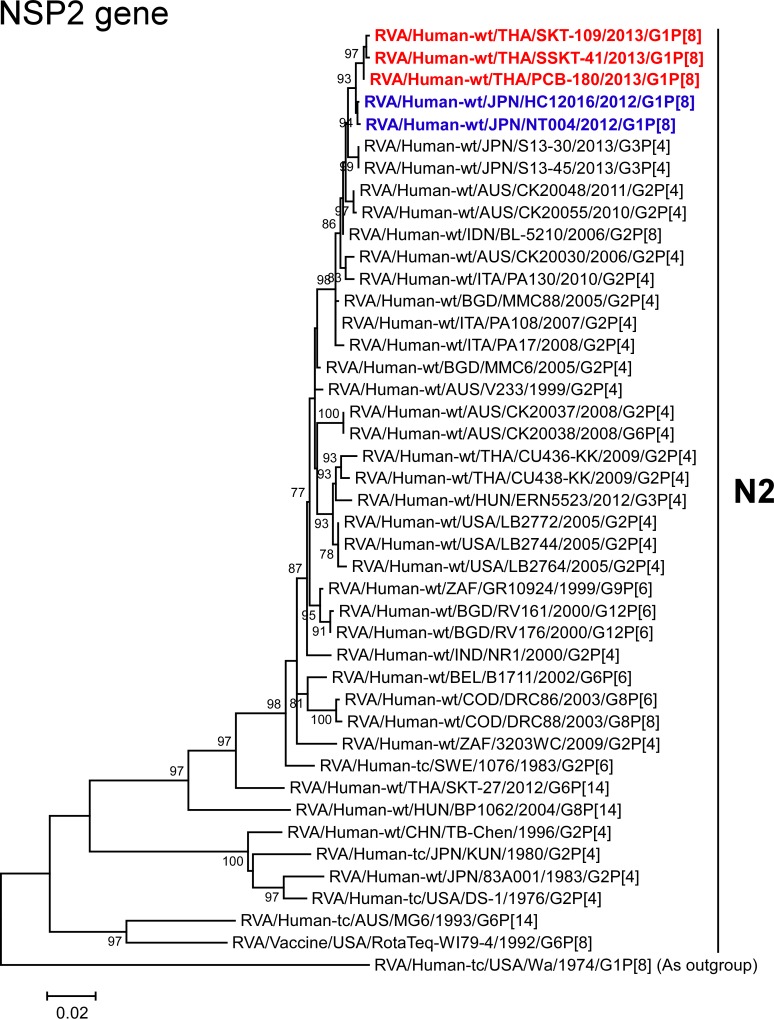
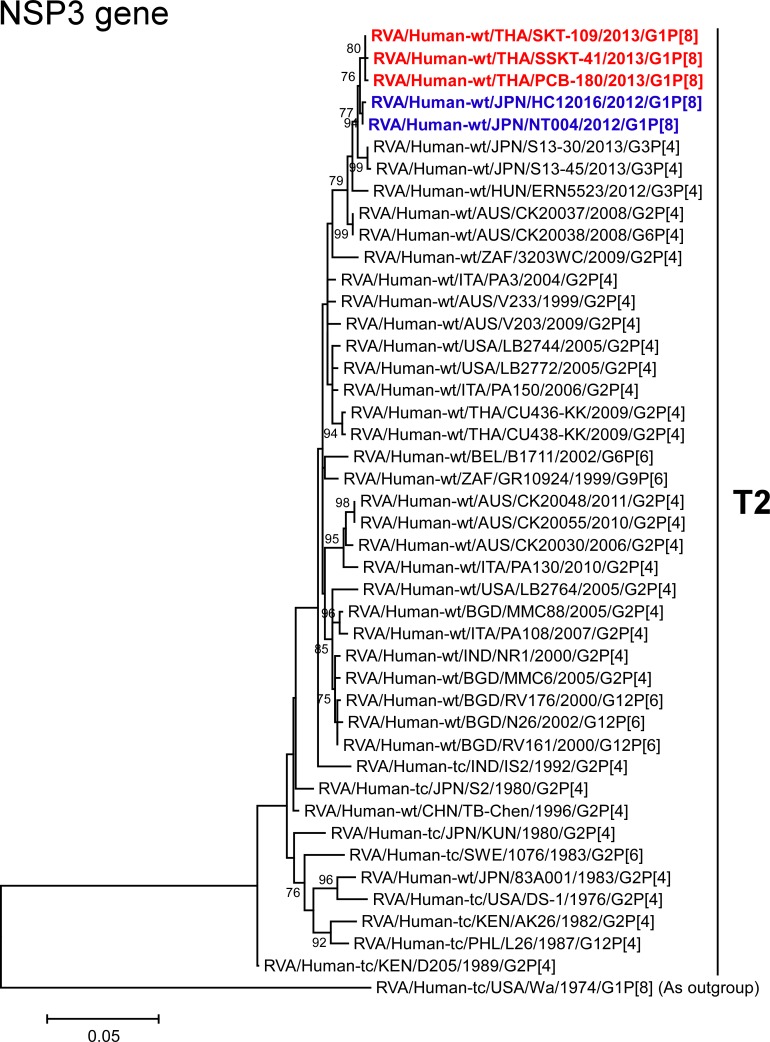
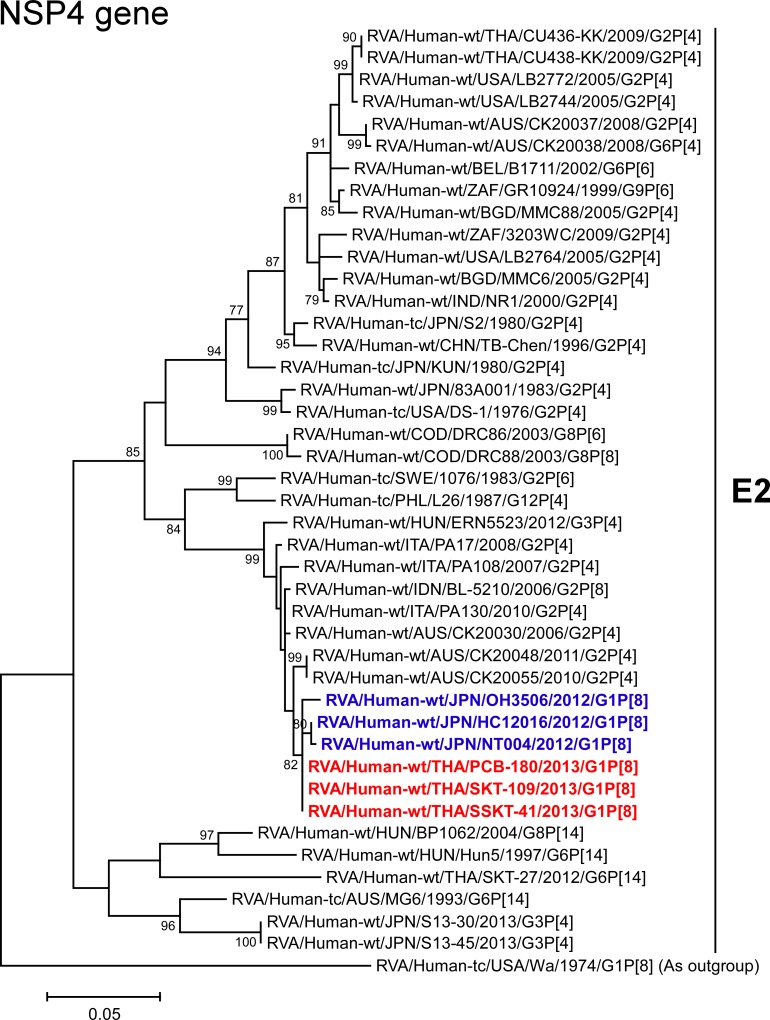
The emergence and rapid spread of unusual DS-1-like G1P[8] rotaviruses in Japan have been recently reported. During rotavirus surveillance in Thailand, three DS-1-like G1P[8] strains (RVA/Human-wt/THA/PCB-180/2013/G1P[8], RVA/Human-wt/THA/SKT-109/2013/G1P[8], and RVA/Human-wt/THA/SSKT-41/2013/G1P[8]) were identified in stool specimens from hospitalized children with severe diarrhea. In this study, we sequenced and characterized the complete genomes of strains PCB-180, SKT-109, and SSKT-41. On whole genomic analysis, all three strains exhibited a unique genotype constellation including both genogroup 1 and 2 genes: G1-P[8]-I2-R2-C2-M2-A2-N2-T2-E2-H2. This novel genotype constellation is shared with Japanese DS-1-like G1P[8] strains. Phylogenetic analysis revealed that the G/P genes of strains PCB-180, SKT-109, and SSKT-41 appeared to have originated from human Wa-like G1P[8] strains. On the other hand, the non-G/P genes of the three strains were assumed to have originated from human DS-1-like strains. Thus, strains PCB-180, SKT-109, and SSKT-41 appeared to be derived through reassortment event(s) between Wa-like G1P[8] and DS-1-like human rotaviruses. Furthermore, strains PCB-180, SKT-109, and SSKT-41 were found to have the 11-segment genome almost indistinguishable from one another in their nucleotide sequences and phylogenetic lineages, indicating the derivation of the three strains from a common origin. Moreover, all the 11 genes of the three strains were closely related to those of Japanese DS-1-like G1P[8] strains. Therefore, DS-1-like G1P[8] strains that have emerged in Thailand and Japan were assumed to have originated from a recent common ancestor. To our knowledge, this is the first report on whole genome-based characterization of DS-1-like G1P[8] strains that have emerged in an area other than Japan. Our observations will provide important insights into the evolutionary dynamics of emerging DS-1-like G1P[8] rotaviruses.
最近有报道称,异常的DS - 1样G1P[8]轮状病毒在日本出现并迅速传播。在泰国进行轮状病毒监测期间,从患有严重腹泻的住院儿童粪便标本中鉴定出三株DS - 1样G1P[8]毒株(RVA/Human - wt/THA/PCB - 180/2013/G1P[8]、RVA/Human - wt/THA/SKT - 109/2013/G1P[8]和RVA/Human - wt/THA/SSKT - 41/2013/G1P[8])。在本研究中,我们对PCB - 180、SKT - 109和SSKT - 41毒株的全基因组进行了测序和特征分析。通过全基因组分析,所有三株毒株均呈现出独特的基因型组合,包括基因组1和2的基因:G1 - P[8] - I2 - R2 - C2 - M2 - A2 - N2 - T2 - E2 - H2。这种新型基因型组合与日本的DS - 1样G1P[8]毒株相同。系统发育分析表明,PCB - 180、SKT - 109和SSKT - 41毒株的G/P基因似乎起源于人类Wa样G1P[8]毒株。另一方面,这三株毒株的非G/P基因被认为起源于人类DS - 1样毒株。因此,PCB - 180、SKT - 109和SSKT - 41毒株似乎是通过Wa样G1P[8]和DS - 1样人类轮状病毒之间的重配事件产生的。此外,发现PCB - 180、SKT - 109和SSKT - 41毒株的11片段基因组在核苷酸序列和系统发育谱系上几乎无法区分,表明这三株毒株起源于共同的祖先。此外,这三株毒株的所有11个基因都与日本DS - 1样G1P[8]毒株的基因密切相关。因此,在泰国和日本出现的DS - 1样G1P[8]毒株被认为起源于最近的共同祖先。据我们所知,这是关于在日本以外地区出现的DS - 1样G1P[8]毒株基于全基因组特征分析的首次报告。我们的观察结果将为新兴的DS - 1样G1P[8]轮状病毒的进化动态提供重要见解。