Kumar M Senthil, Plotkin Joshua B, Hannenhalli Sridhar
Graduate Program in Bioinformatics, University of Maryland, College Park, Maryland, United States of America.
Center for Bioinformatics and Computational Biology, University of Maryland, College Park, Maryland, United States of America.
PLoS Comput Biol. 2015 Nov 6;11(11):e1004603. doi: 10.1371/journal.pcbi.1004603. eCollection 2015 Nov.
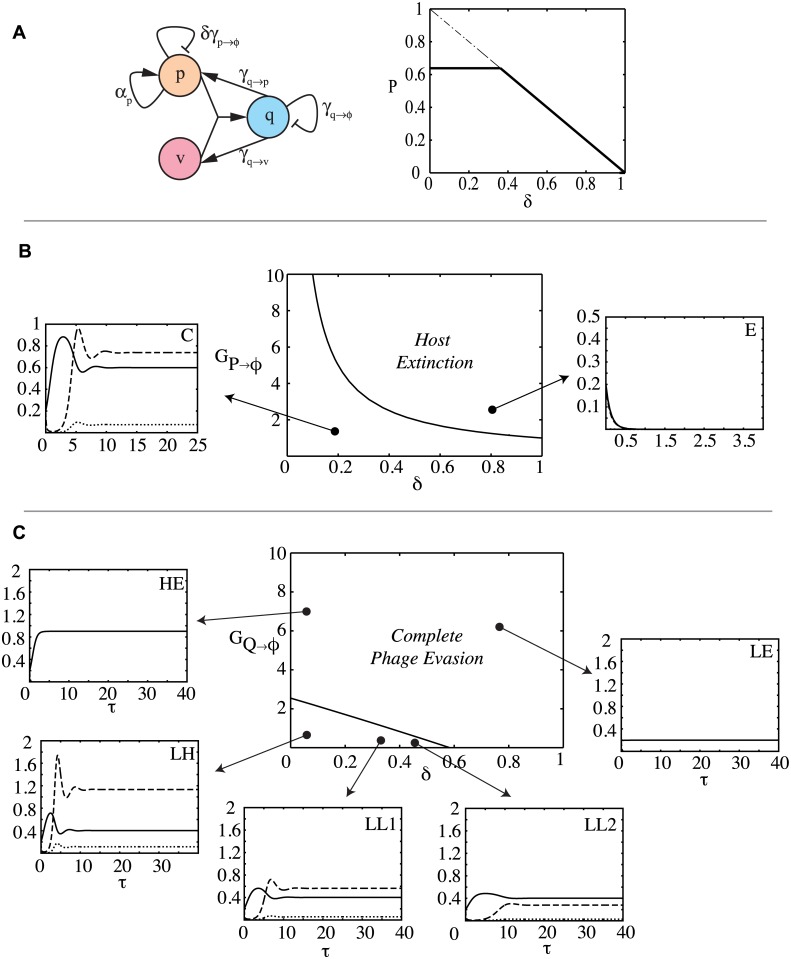
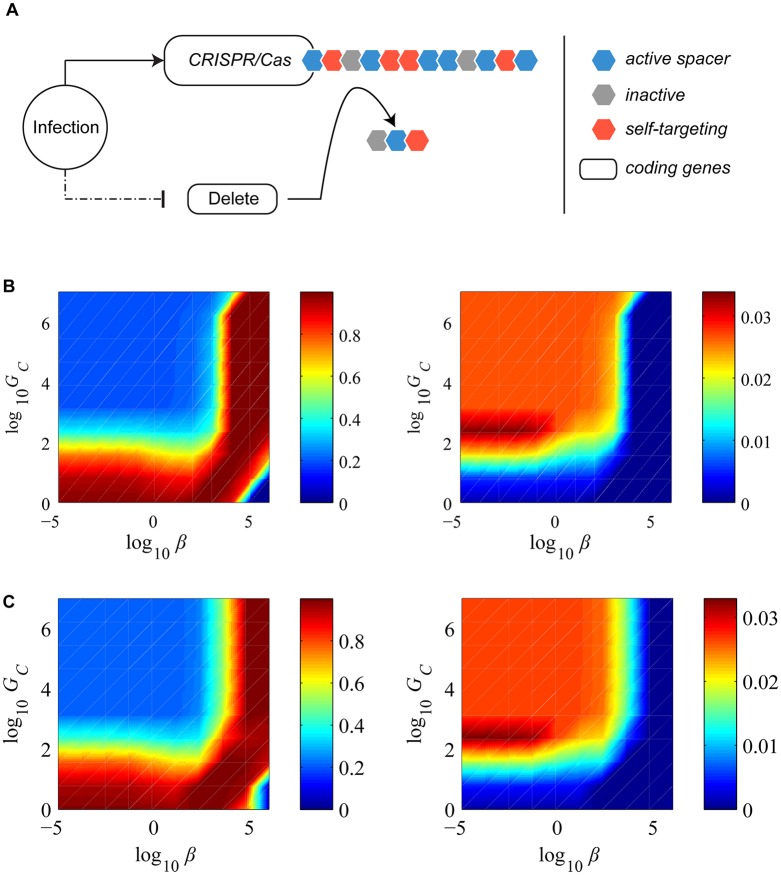
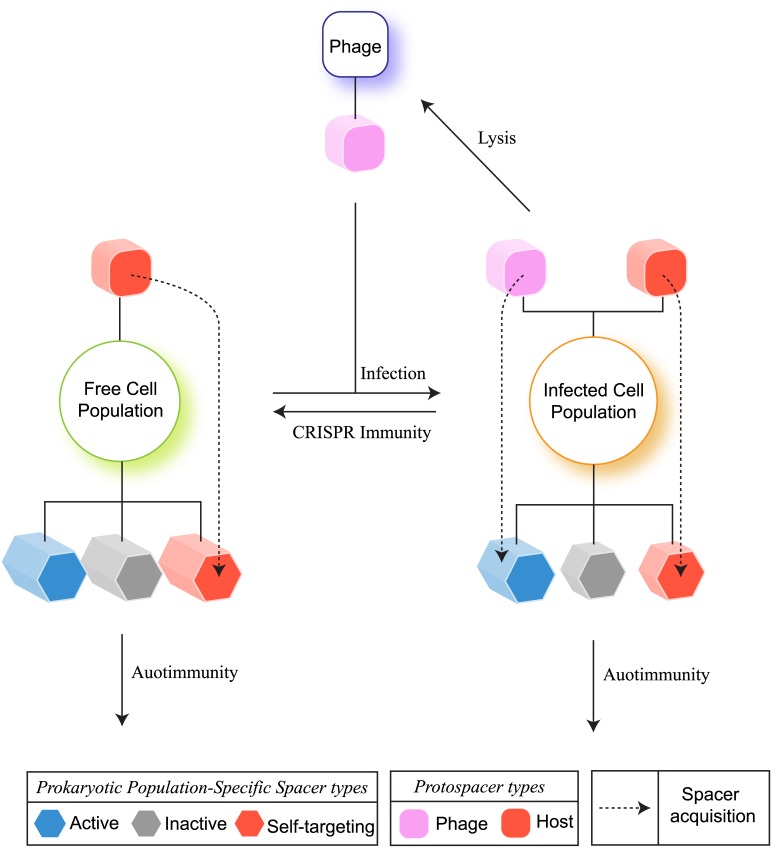
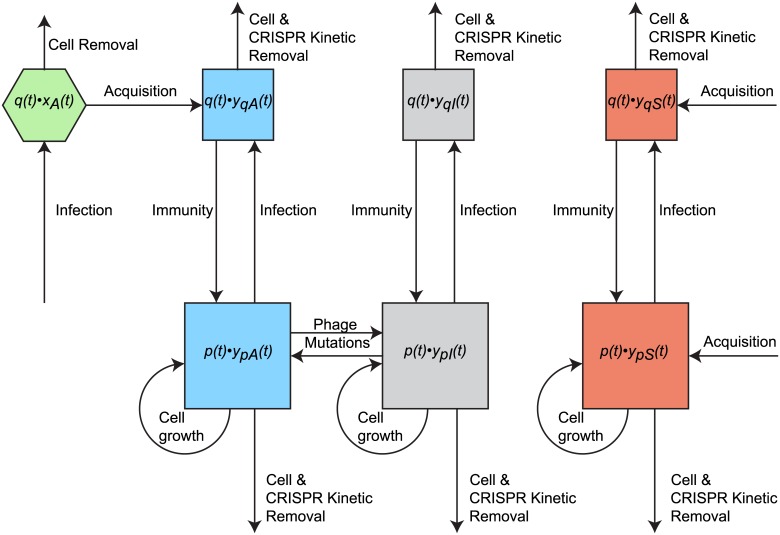
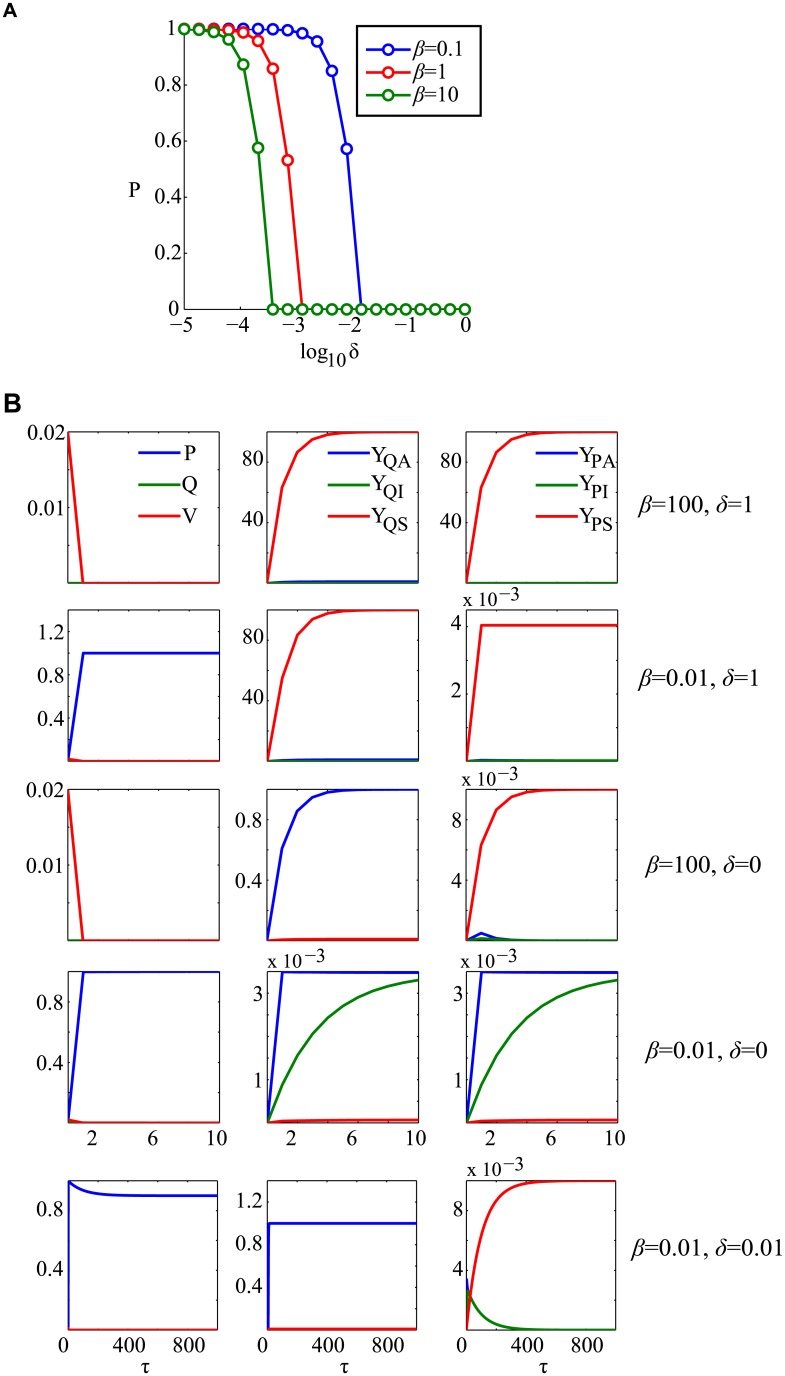
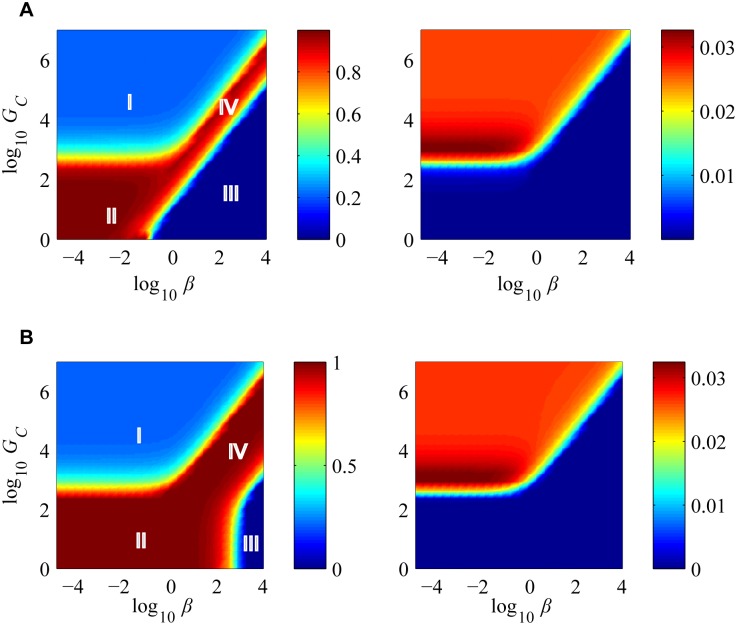
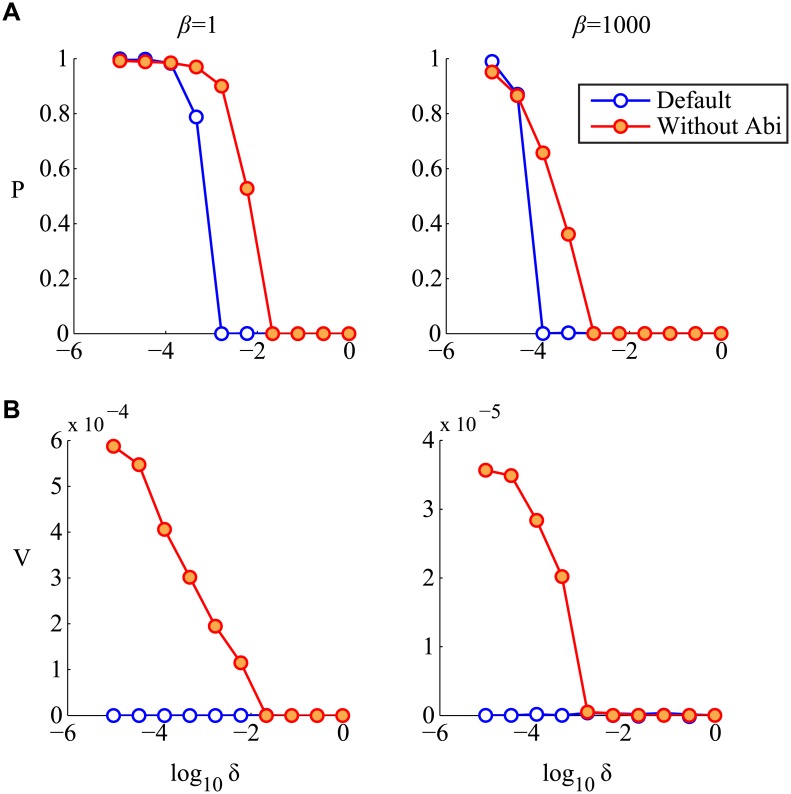
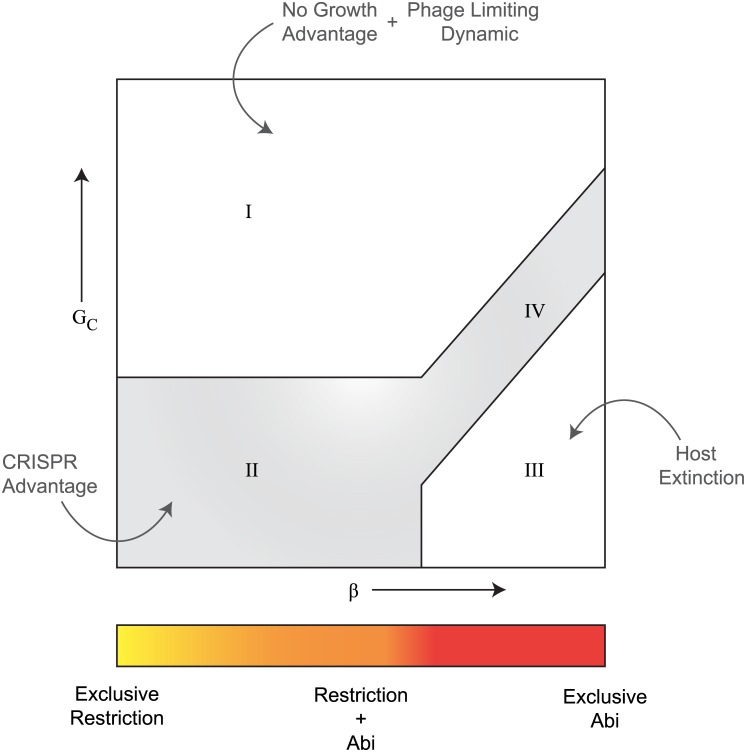
CRISPRs offer adaptive immunity in prokaryotes by acquiring genomic fragments from infecting phage and subsequently exploiting them for phage restriction via an RNAi-like mechanism. Here, we develop and analyze a dynamical model of CRISPR-mediated prokaryote-phage coevolution that incorporates classical CRISPR kinetics along with the recently discovered infection-induced activation and autoimmunity side effects. Our analyses reveal two striking characteristics of the CRISPR defense strategy: that both restriction and abortive infections operate during coevolution with phages, driving phages to much lower densities than possible with restriction alone, and that CRISPR maintenance is determined by a key dimensionless combination of parameters, which upper bounds the activation level of CRISPRs in uninfected populations. We contrast these qualitative observations with experimental data on CRISPR kinetics, which offer insight into the spacer deletion mechanism and the observed low CRISPR prevalence in clinical isolates. More generally, we exploit numerical simulations to delineate four regimes of CRISPR dynamics in terms of its host, kinetic, and regulatory parameters.
CRISPR通过从感染噬菌体获取基因组片段,随后通过类似RNAi的机制利用这些片段进行噬菌体限制,从而在原核生物中提供适应性免疫。在此,我们开发并分析了一个CRISPR介导的原核生物 - 噬菌体共同进化的动力学模型,该模型纳入了经典的CRISPR动力学以及最近发现的感染诱导激活和自身免疫副作用。我们的分析揭示了CRISPR防御策略的两个显著特征:在与噬菌体共同进化过程中,限制和流产感染均起作用,使噬菌体密度降至远低于仅靠限制所能达到的水平;CRISPR的维持由一个关键的无量纲参数组合决定,该组合为未感染群体中CRISPR的激活水平设定了上限。我们将这些定性观察结果与CRISPR动力学的实验数据进行对比,这些数据有助于深入了解间隔序列缺失机制以及临床分离株中观察到的低CRISPR流行率。更一般地,我们利用数值模拟根据其宿主、动力学和调控参数来描绘CRISPR动力学的四种状态。