Huang Deqiang, He Xiaoling, Zou Junrong, Guo Pei, Jiang Shanshan, Lv Nonghua, Alekseyev Yuriy, Luo Lingyu, Luo Zhijun
Research Institute of Digestive Diseases, The First Affiliated Hospital of Nanchang University, Nanchang, Jiangxi, China.
Graduate Program, Jiangxi Medical College, Nanchang University, Nanchang, Jiangxi, P.R. China.
Oncotarget. 2016 Feb 2;7(5):6188-200. doi: 10.18632/oncotarget.6748.
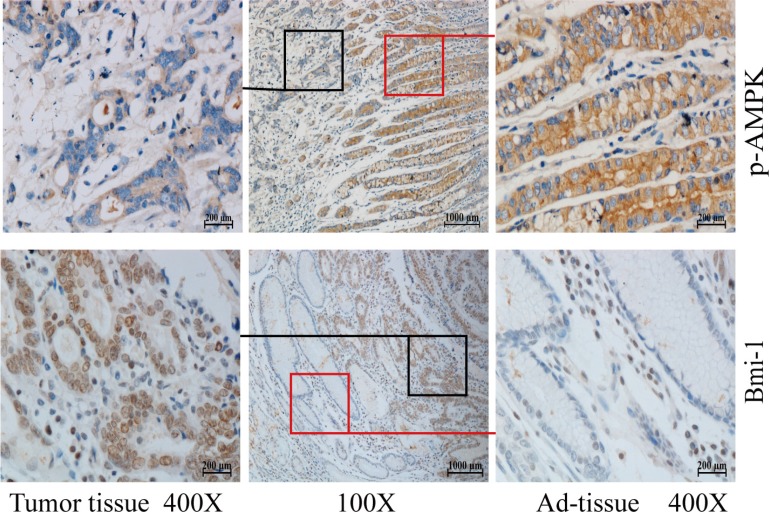
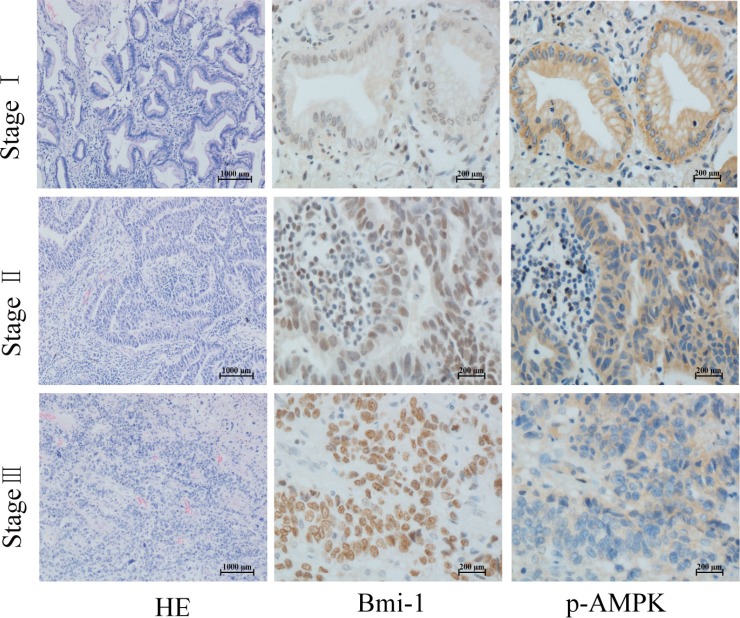
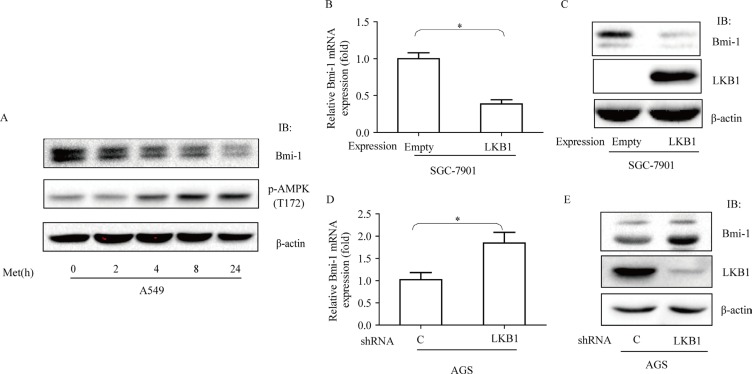
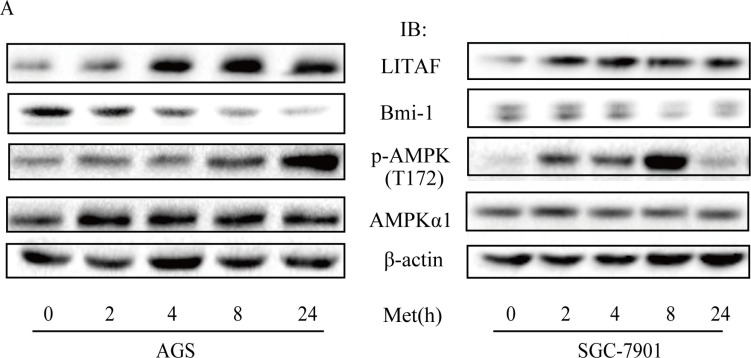
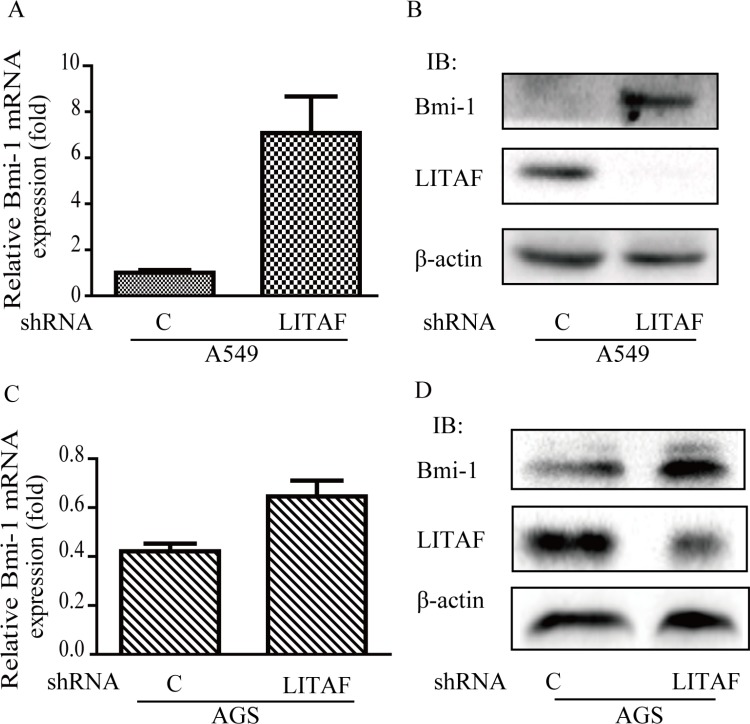
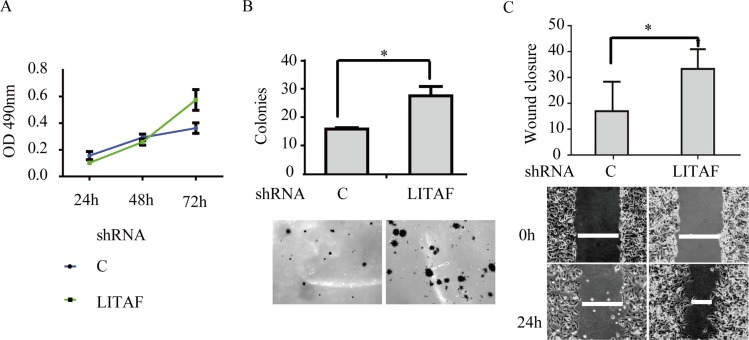
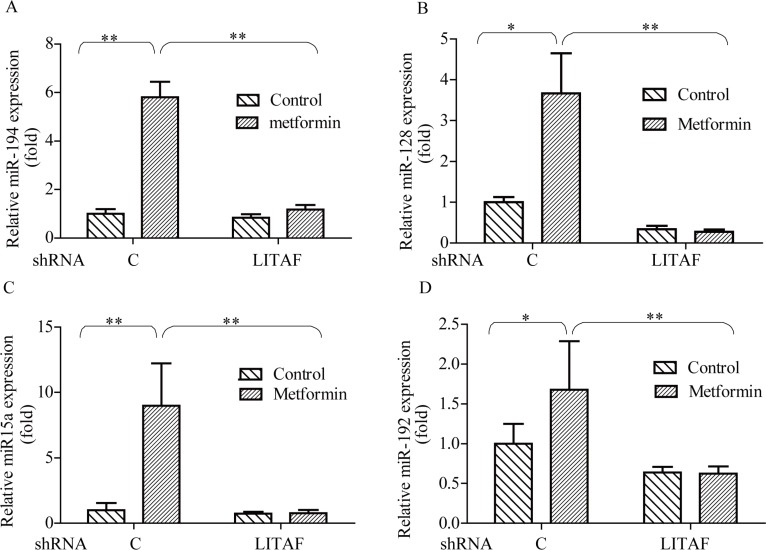
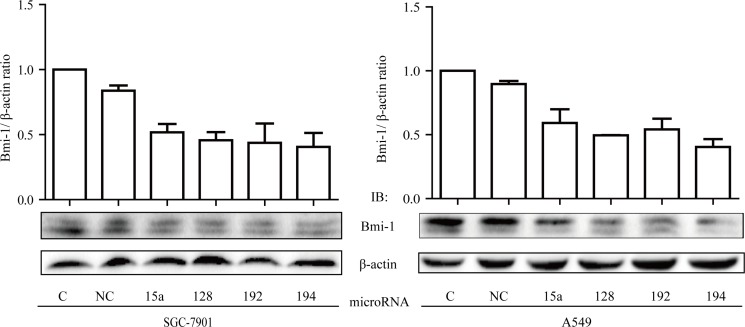
Bmi-1 is a transcriptional regulator that promotes tumor cell self-renewal and epithelial to mesenchymal transition and its upregulation is associated with tumor progression, AMPK is an intracellular fuel-sensing enzyme and plays important roles in tumor cell growth and progression. Thus, the present study aims to examine the regulation of Bmi-1 by AMPK. First, our data revealed that, as compared to adjacent normal tissue, Bmi-1 was highly expressed in gastric cancer, whereas phosphorylation of AMPK (p-AMPK) was reduced. Similar findings were observed in lung adenocarcinomas and appeared that the expression of Bmi-1 was correlated with pathological grades of the cancer, where opposite changes were found in p-AMPK. Second, Metformin, a pharmacological AMPK activator and anti-diabetic drug, or ectopic expression of LKB1, diminished expression of Bmi-1 in cancer cells, an event that was reversed by silencing LKB1. Third, knockdown of LITAF, previously identified as a downstream target of AMPK, upregulated Bmi-1, associated with increased cell viability, colony formation, and migration of cancer cells in vitro. Fourth, metformin increased the abundance of miR-15a, miR-128, miR-192, and miR-194, which was prevented by knockdown of LITAF. Accordingly, transfection of these individual miRNAs downregulated Bmi-1. Altogether, our data for the first time suggest a regulatory axis in cancer cells: AMPK upregulates LITAF, which in turn increases miRNAs, leading to attenuation of Bmi-1 expression.
Bmi-1是一种转录调节因子,可促进肿瘤细胞自我更新和上皮-间质转化,其上调与肿瘤进展相关。AMPK是一种细胞内能量感应酶,在肿瘤细胞生长和进展中起重要作用。因此,本研究旨在探讨AMPK对Bmi-1的调控作用。首先,我们的数据显示,与相邻正常组织相比,Bmi-1在胃癌中高表达,而AMPK的磷酸化(p-AMPK)水平降低。在肺腺癌中也观察到类似的结果,且Bmi-1的表达与癌症的病理分级相关,而p-AMPK则呈现相反的变化。其次,二甲双胍是一种药理学上的AMPK激活剂和抗糖尿病药物,或者LKB1的异位表达,均可降低癌细胞中Bmi-1的表达,而沉默LKB1可逆转这一现象。第三,敲低先前被鉴定为AMPK下游靶点的LITAF可上调Bmi-1,这与体外癌细胞活力增加、集落形成和迁移有关。第四,二甲双胍增加了miR-15a、miR-128、miR-192和miR-194的丰度,而敲低LITAF可阻止这种增加。相应地,转染这些单个miRNA可下调Bmi-1。总之,我们的数据首次表明癌细胞中存在一个调控轴:AMPK上调LITAF,进而增加miRNA,导致Bmi-1表达减弱。