Naumova Ella A, Dickten Christoph, Jung Rico, Krauss Florian, Rübesamen Henrik, Schmütsch Katharina, Sandulescu Tudor, Zimmer Stefan, Arnold Wolfgang H
Dept. of Biological and Material Sciences in Dentistry, Faculty of Health, School of Dentistry, Witten/Herdecke University, Witten, Germany.
Dept. of Operative and Preventive Dentistry, Faculty of Health, School of Dentistry, Witten/Herdecke University, Witten, Germany.
Sci Rep. 2016 Jan 5;6:18729. doi: 10.1038/srep18729.
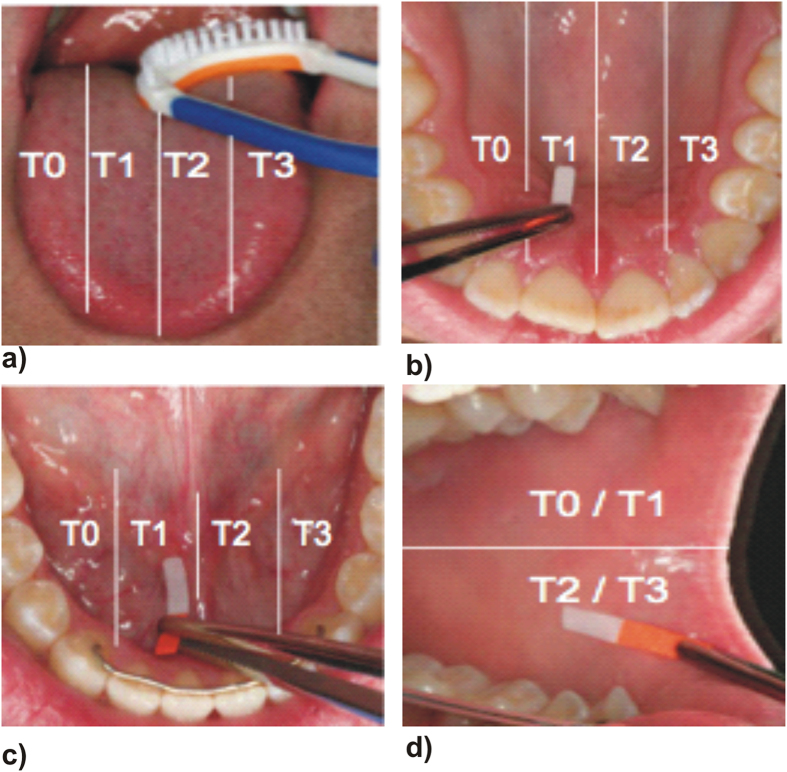
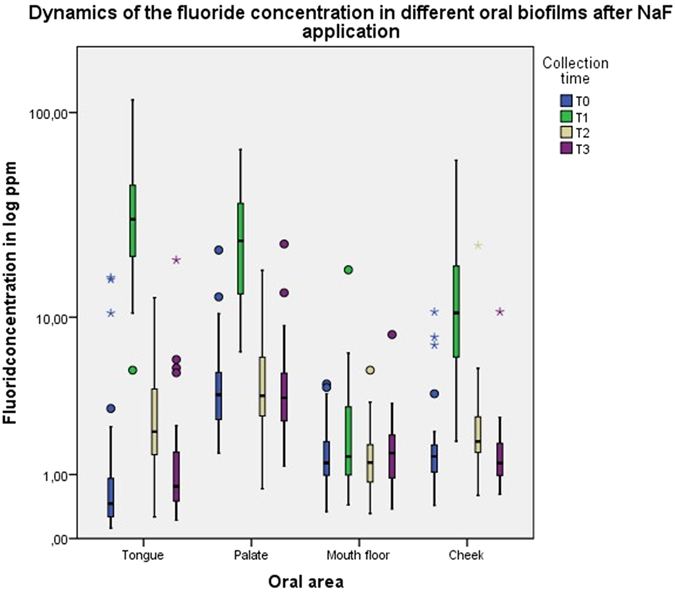
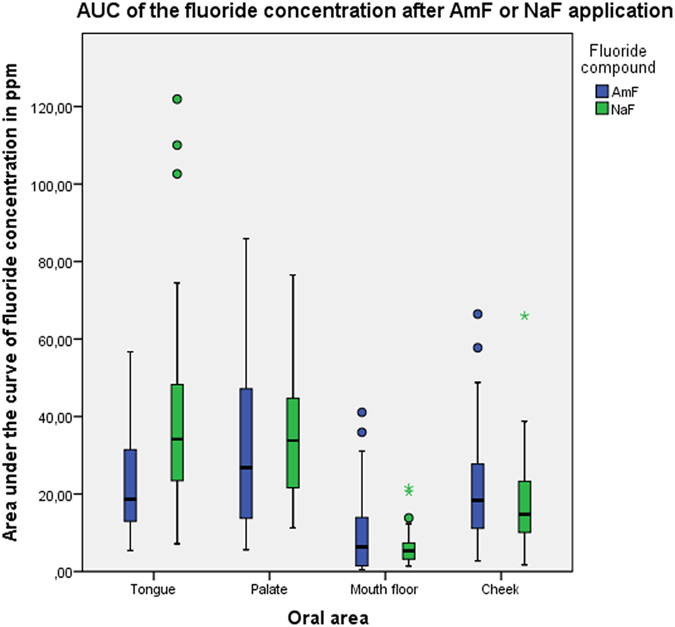
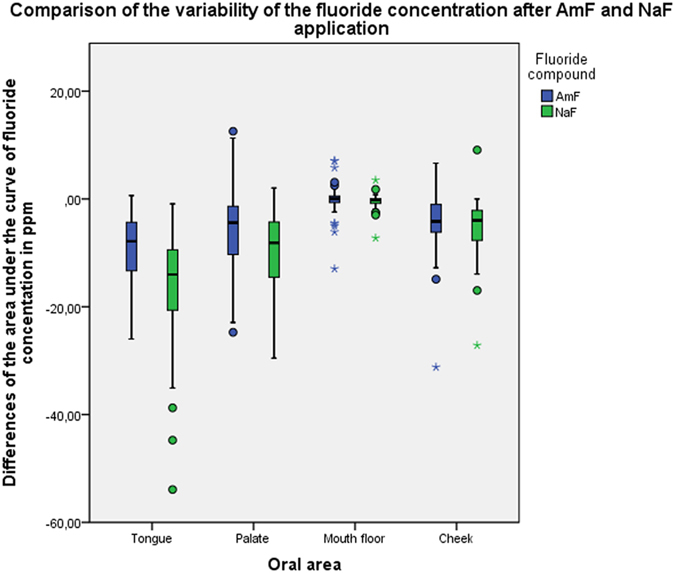
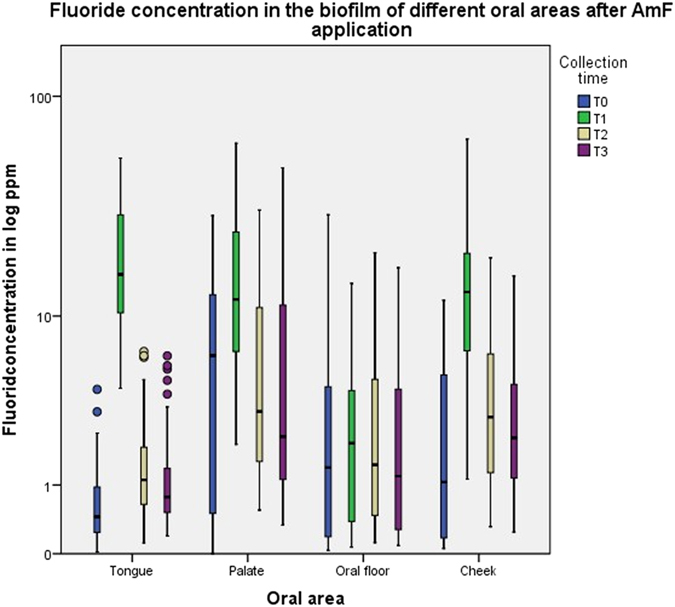
It was the aim of this study to investigate differences in fluoride bioavailability in different oral areas after the application of amine fluoride (AmF) and sodium fluoride (NaF). The null hypothesis suggested no differences in the fluoride bioavailability. The tongue coating was removed and biofilm samples from the palate, oral floor and cheeks were collected. All subjects brushed their teeth with toothpaste containing AmF or NaF. Specimens were collected before, as well as immediately after and at 30 and 120 minutes after tooth brushing. The fluoride concentration was determined. The area under the curve was calculated for each location and compared statistically. In the tongue coating, fluoride concentration increased faster after NaF application than after AmF application. After 30 minutes, the fluoride concentration decreased and remained stable until 120 minutes after AmF application and returned to baseline after NaF application. The difference between the baseline and the endpoint measurements was statistically significant. The fluoride concentration in the tongue coating remained at a higher level compared with the baseline for up to 120 minutes post-brushing. This may indicate that the tongue coating is a major reservoir for fluoride bioavailability. The results also indicate an unequal fluoride distribution in the oral cavity.
本研究旨在调查应用胺氟(AmF)和氟化钠(NaF)后不同口腔区域氟生物利用度的差异。零假设表明氟生物利用度无差异。去除舌苔,并采集腭部、口腔底部和脸颊的生物膜样本。所有受试者使用含AmF或NaF的牙膏刷牙。在刷牙前、刷牙后即刻、30分钟和120分钟采集样本。测定氟浓度。计算每个部位的曲线下面积并进行统计学比较。在舌苔中,应用NaF后氟浓度升高速度比应用AmF后快。30分钟后,应用AmF后氟浓度下降并保持稳定直至120分钟,而应用NaF后氟浓度恢复至基线。基线测量值与终点测量值之间的差异具有统计学意义。刷牙后长达120分钟,舌苔中的氟浓度与基线相比保持在较高水平。这可能表明舌苔是氟生物利用度的主要储存部位。结果还表明口腔内氟分布不均。