Zetzmann Marion, Okshevsky Mira, Endres Jasmin, Sedlag Anne, Caccia Nelly, Auchter Marc, Waidmann Mark S, Desvaux Mickaël, Meyer Rikke L, Riedel Christian U
Institute of Microbiology and Biotechnology, University of Ulm Ulm, Germany.
Interdisciplinary Nanoscience Center and Department of Bioscience, Aarhus University Aarhus, Denmark.
Front Microbiol. 2015 Dec 22;6:1428. doi: 10.3389/fmicb.2015.01428. eCollection 2015.
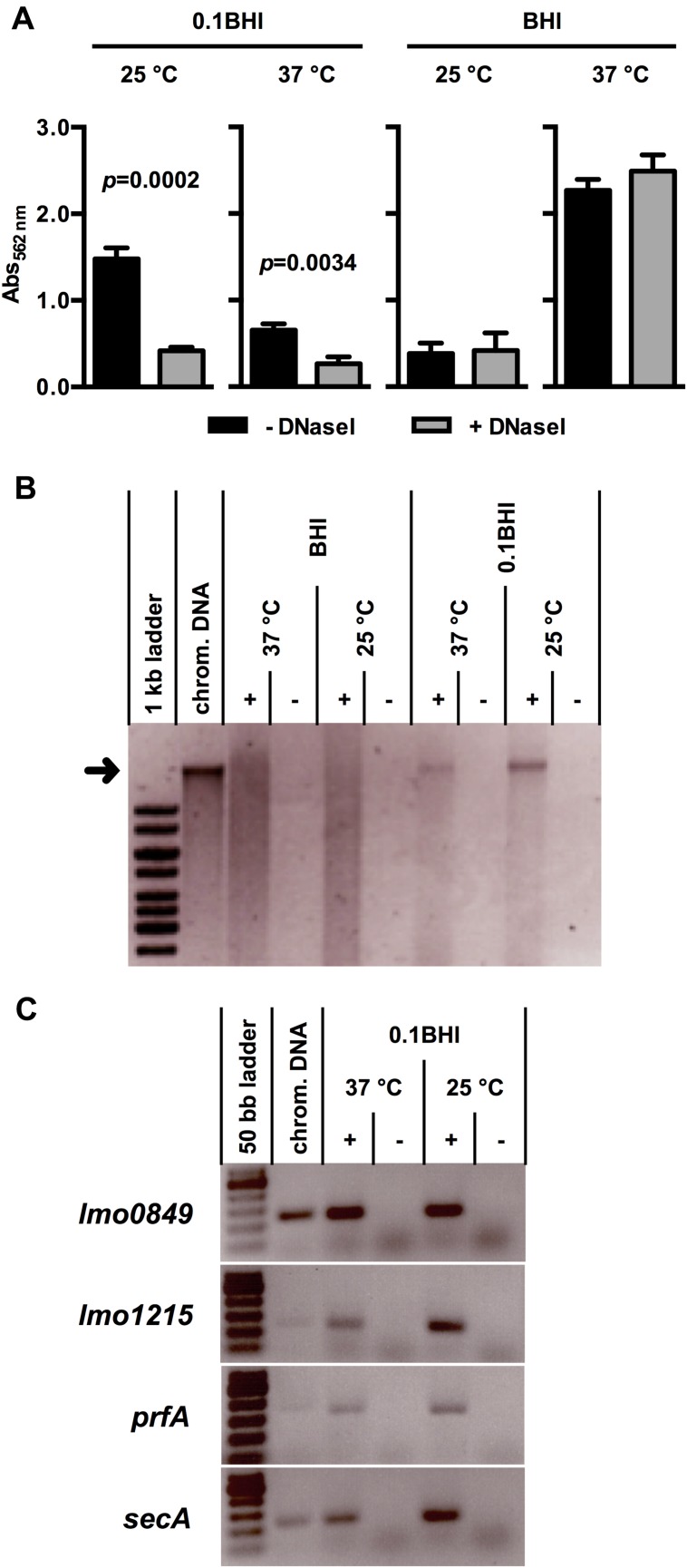
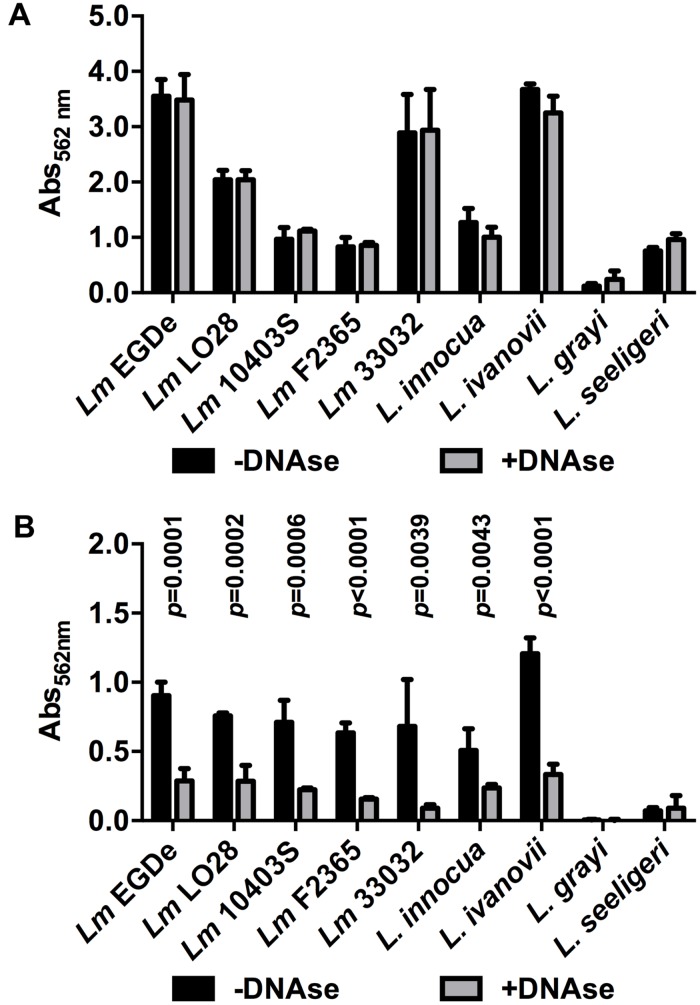
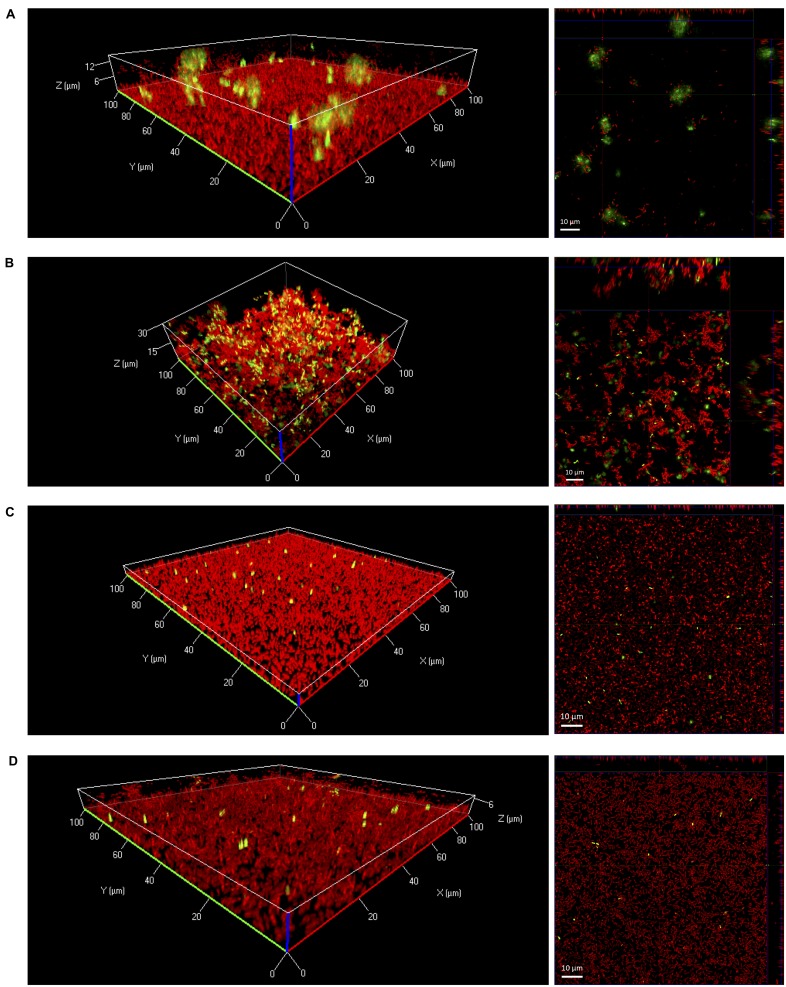
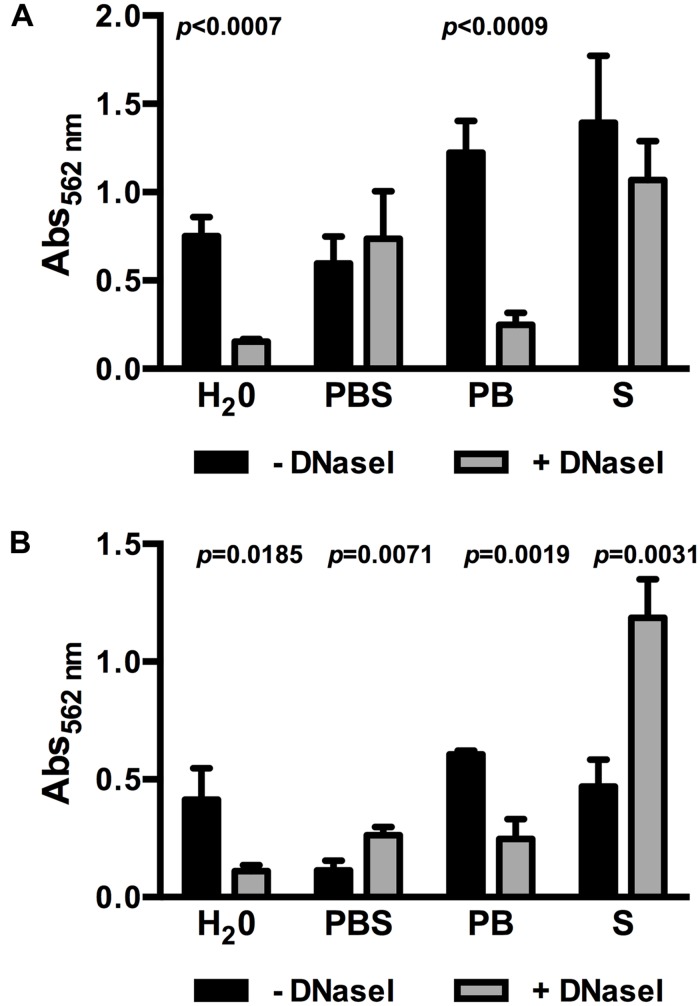
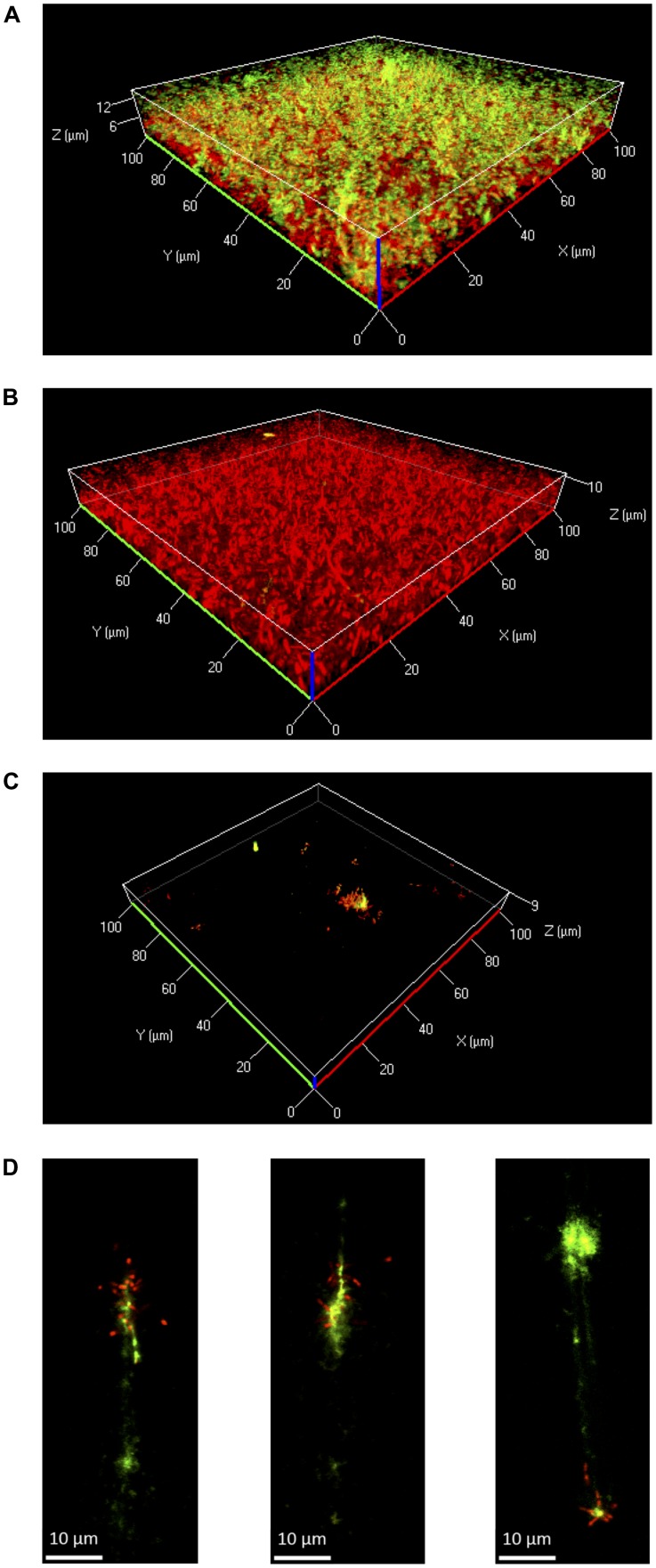
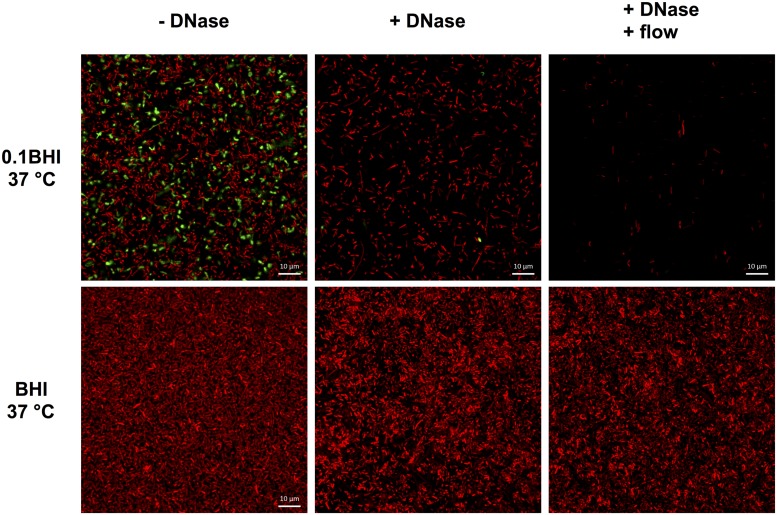
Listeria monocytogenes is able to form biofilms on various surfaces and this ability is thought to contribute to persistence in the environment and on contact surfaces in the food industry. Extracellular DNA (eDNA) is a component of the biofilm matrix of many bacterial species and was shown to play a role in biofilm establishment of L. monocytogenes. In the present study, the effect of DNaseI treatment on biofilm formation of L. monocytogenes EGD-e was investigated under static and dynamic conditions in normal or diluted complex medium at different temperatures. Biofilm formation was quantified by crystal violet staining or visualized by confocal laser scanning microscopy. Biomass of surface-attached L. monocytogenes varies depending on temperature and dilution of media. Interestingly, L. monocytogenes EGD-e forms DNase-sensitive biofilms in diluted medium whereas in full strength medium DNaseI treatment had no effect. In line with these observations, eDNA is present in the matrix of biofilms grown in diluted but not full strength medium and supernatants of biofilms grown in diluted medium contain chromosomal DNA. The DNase-sensitive phenotype could be clearly linked to reduced ionic strength in the environment since dilution of medium in PBS or saline abolished DNase sensitivity. Several other but not all species of the genus Listeria display DNase-sensitive and -resistant modes of biofilm formation. These results indicate that L. monocytogenes biofilms are DNase-sensitive especially at low ionic strength, which might favor bacterial lysis and release of chromosomal DNA. Since low nutrient concentrations with increased osmotic pressure are conditions frequently found in food processing environments, DNaseI treatment represents an option to prevent or remove Listeria biofilms in industrial settings.
单核细胞增生李斯特菌能够在各种表面形成生物膜,这种能力被认为有助于其在环境以及食品工业接触表面上持续存在。细胞外DNA(eDNA)是许多细菌生物膜基质的组成成分,并且已证明其在单核细胞增生李斯特菌生物膜形成过程中发挥作用。在本研究中,在不同温度下,于正常或稀释的复合培养基中,在静态和动态条件下研究了DNaseI处理对单核细胞增生李斯特菌EGD-e生物膜形成的影响。通过结晶紫染色对生物膜形成进行定量,或通过共聚焦激光扫描显微镜进行可视化观察。附着于表面的单核细胞增生李斯特菌的生物量因温度和培养基稀释度而异。有趣的是,单核细胞增生李斯特菌EGD-e在稀释培养基中形成对DNase敏感的生物膜,而在全强度培养基中,DNaseI处理没有效果。与这些观察结果一致,eDNA存在于在稀释而非全强度培养基中生长的生物膜基质中,并且在稀释培养基中生长的生物膜的上清液中含有染色体DNA。DNase敏感表型可能与环境中离子强度降低明显相关,因为在PBS或盐水中稀释培养基消除了DNase敏感性。李斯特菌属的其他几种(但不是全部)菌种表现出对DNase敏感和抗性的生物膜形成模式。这些结果表明,单核细胞增生李斯特菌生物膜对DNase敏感,尤其是在低离子强度下,这可能有利于细菌裂解和染色体DNA的释放。由于在食品加工环境中经常会遇到营养浓度低且渗透压增加的情况,DNaseI处理是在工业环境中预防或去除李斯特菌生物膜的一种选择。