Marciniak Andrzej, Walczyna Beata, Rajtar Grażyna, Marciniak Sebastian, Wojtak Andrzej, Lasiecka Katarzyna
Chair and Department of Pathophysiology, Medical University of Lublin, 20-090 Lublin, Poland.
Chair and Department of Clinical Pathomorphology, Medical University of Lublin, 20-090 Lublin, Poland.
Oxid Med Cell Longev. 2016;2016:4139851. doi: 10.1155/2016/4139851. Epub 2015 Dec 7.
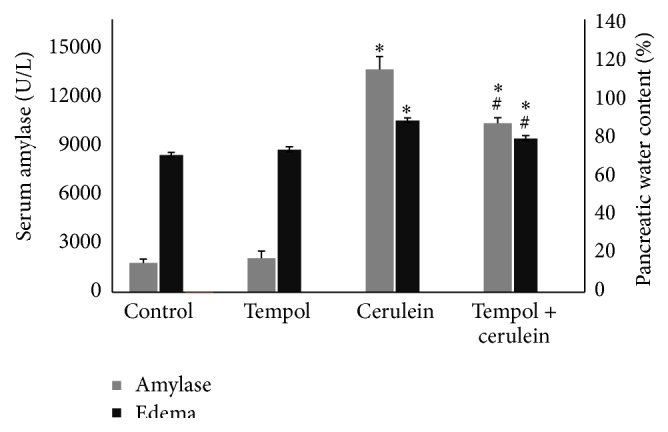
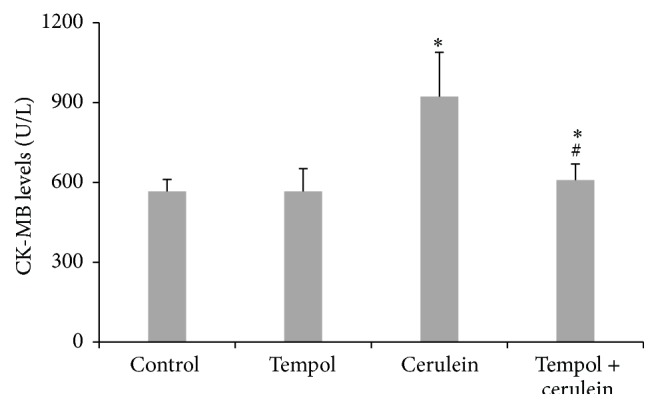
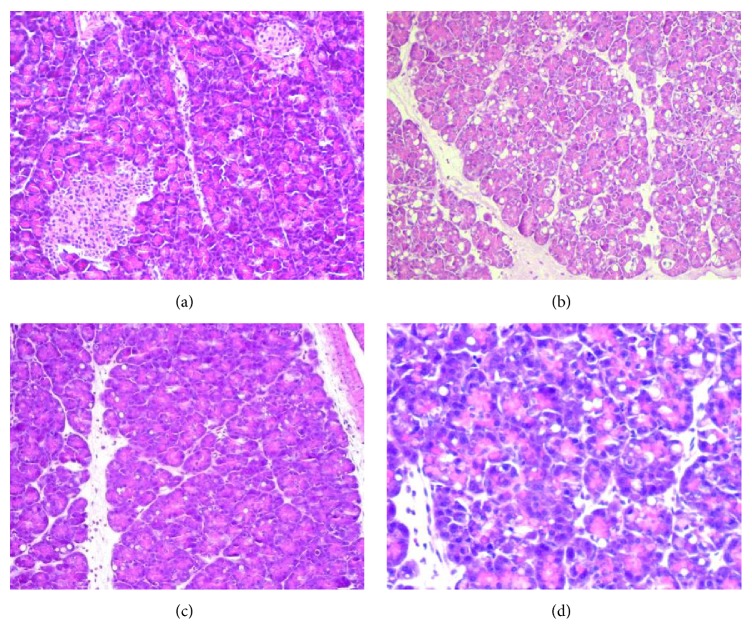
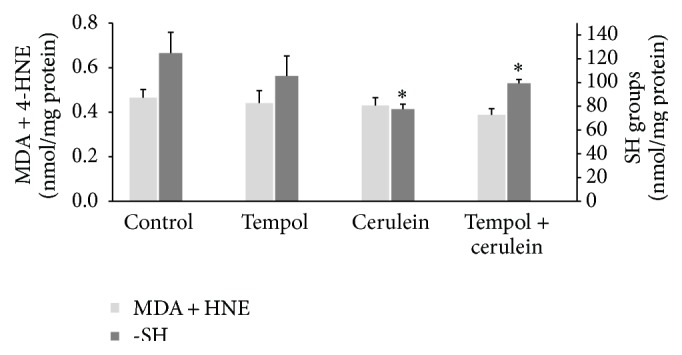
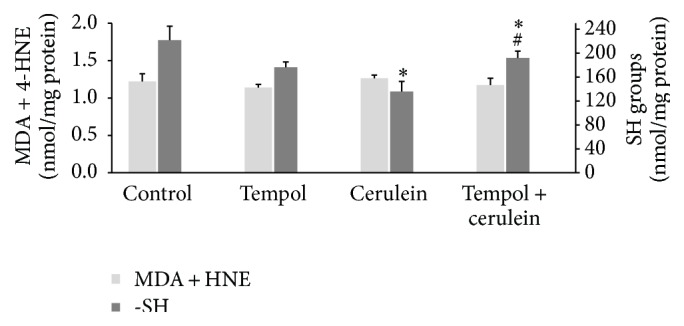
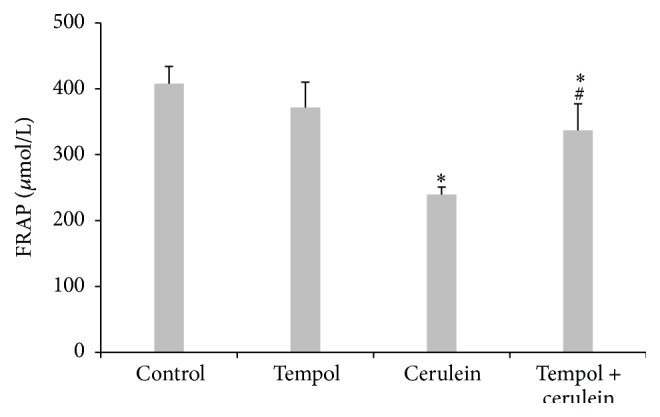
To date, it remains unclear whether mild form of acute pancreatitis (AP) may cause myocardial damage which may be asymptomatic for a long time. Pathogenesis of AP-related cardiac injury may be attributed in part to ROS/RNS overproduction. The aim of the present study was to evaluate the oxidative stress changes in both the pancreas and the heart and to estimate the protective effects of 1-oxyl-2,2,6,6-tetramethyl-4-hydroxypiperidine (tempol) at the early phase of AP. Cerulein-induced AP led to the development of acute edematous pancreatitis with a significant decrease in the level of sulfhydryl (-SH) groups (oxidation marker) both in heart and in pancreatic tissues as well as a substantial increase in plasma creatine kinase isoenzyme (CK-MB) activity (marker of the heart muscle lesion) which confirmed the role of oxidative stress in the pathogenesis of cardiac damage. The tempol treatment significantly reduced the intensity of inflammation and oxidative damage and decreased the morphological evidence of pancreas injury at early AP stages. Moreover, it markedly attenuated AP-induced cardiac damage revealed by normalization of the -SH group levels and CK-MB activity. On the basis of these studies, it is possible to conclude that tempol has a profound protective effect against cardiac and pancreatic damage induced by AP.
迄今为止,轻度急性胰腺炎(AP)是否会导致心肌损伤且这种损伤可能长期无症状仍不清楚。AP相关性心脏损伤的发病机制可能部分归因于活性氧/氮(ROS/RNS)的过度产生。本研究的目的是评估胰腺和心脏中的氧化应激变化,并评估4-羟基-2,2,6,6-四甲基哌啶-1-氧自由基(tempol)在AP早期的保护作用。雨蛙肽诱导的AP导致急性水肿性胰腺炎的发生,心脏和胰腺组织中的巯基(-SH)基团水平(氧化标志物)显著降低,同时血浆肌酸激酶同工酶(CK-MB)活性(心肌损伤标志物)大幅增加,这证实了氧化应激在心脏损伤发病机制中的作用。Tempol治疗显著降低了早期AP阶段的炎症强度和氧化损伤,并减少了胰腺损伤的形态学证据。此外,它还通过使-SH基团水平和CK-MB活性恢复正常,显著减轻了AP诱导的心脏损伤。基于这些研究,可以得出结论,tempol对AP诱导的心脏和胰腺损伤具有深远的保护作用。