Lau Colleen L, Watson Conall H, Lowry John H, David Michael C, Craig Scott B, Wynwood Sarah J, Kama Mike, Nilles Eric J
Children's Health and Environment Program, Centre for Child Health Research, The University of Queensland, Brisbane, Australia.
Queensland Children's Medical Research Institute, Brisbane, Australia.
PLoS Negl Trop Dis. 2016 Jan 28;10(1):e0004405. doi: 10.1371/journal.pntd.0004405. eCollection 2016 Jan.
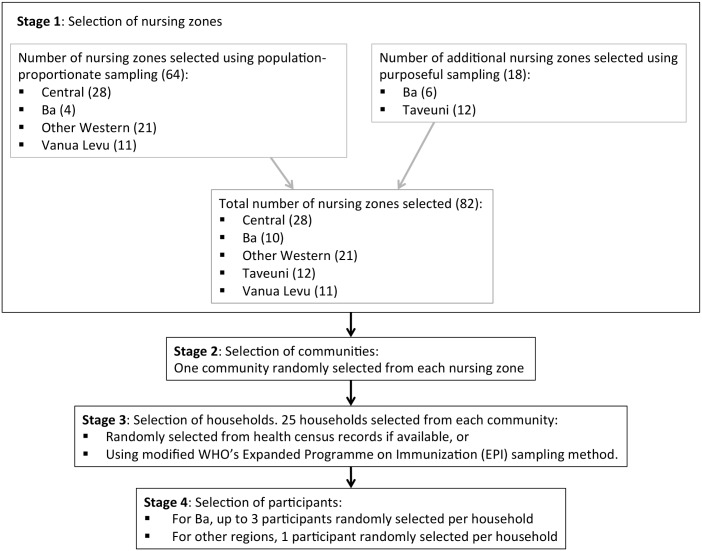
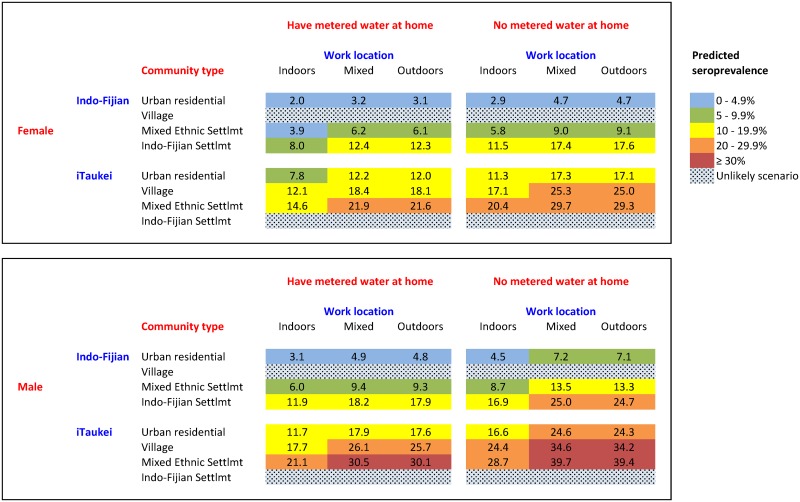
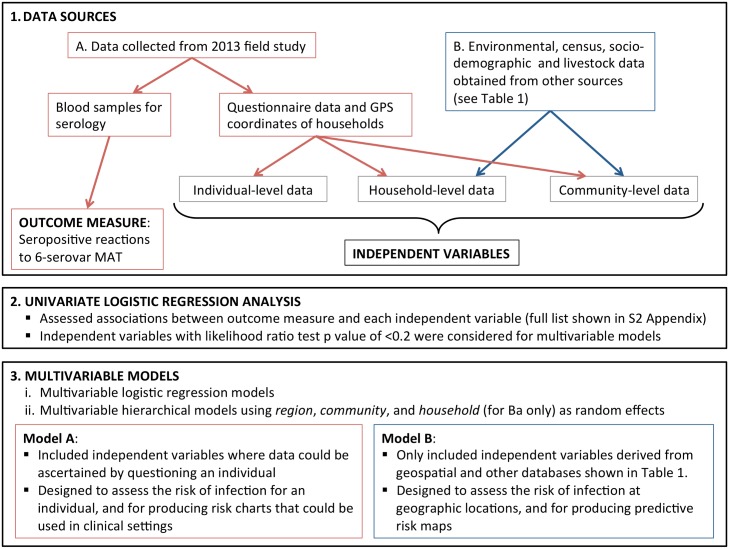
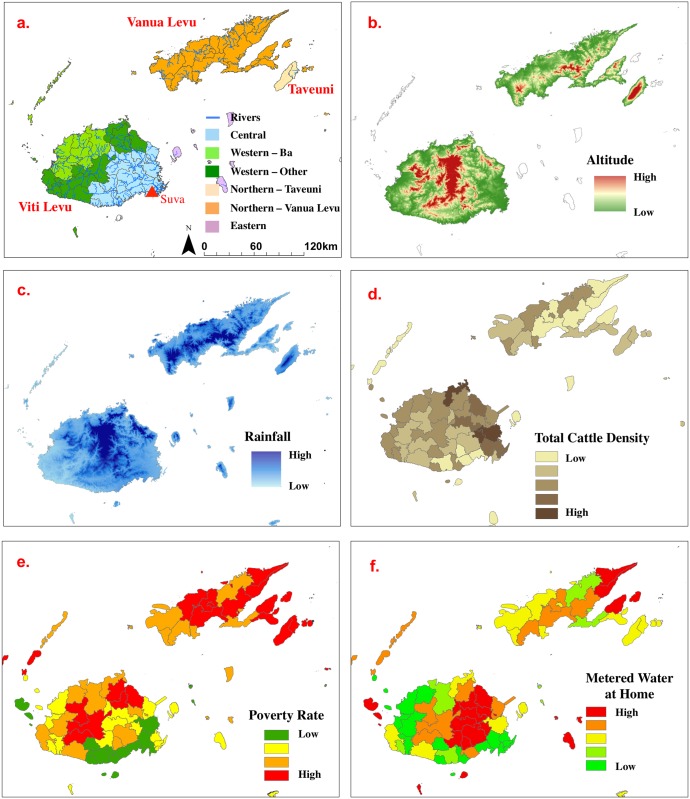
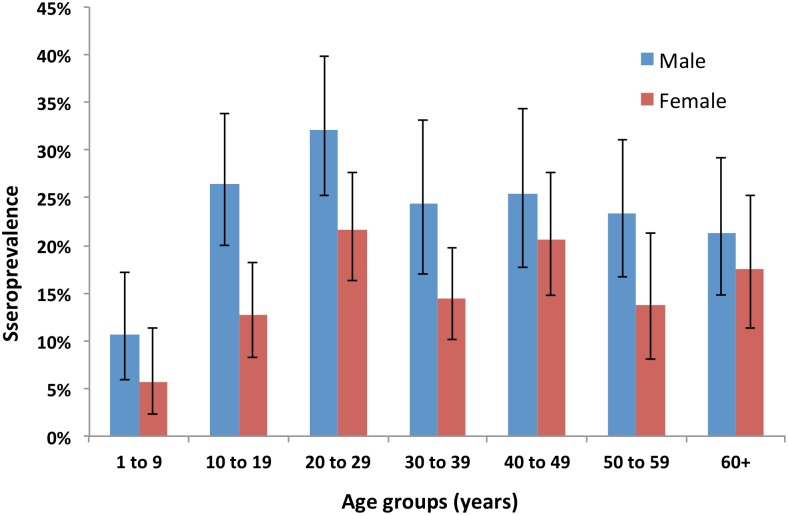
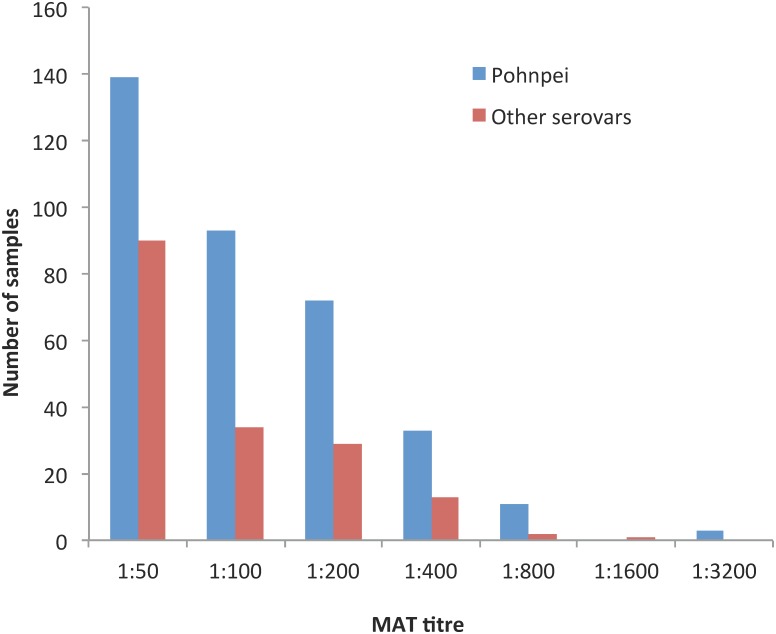
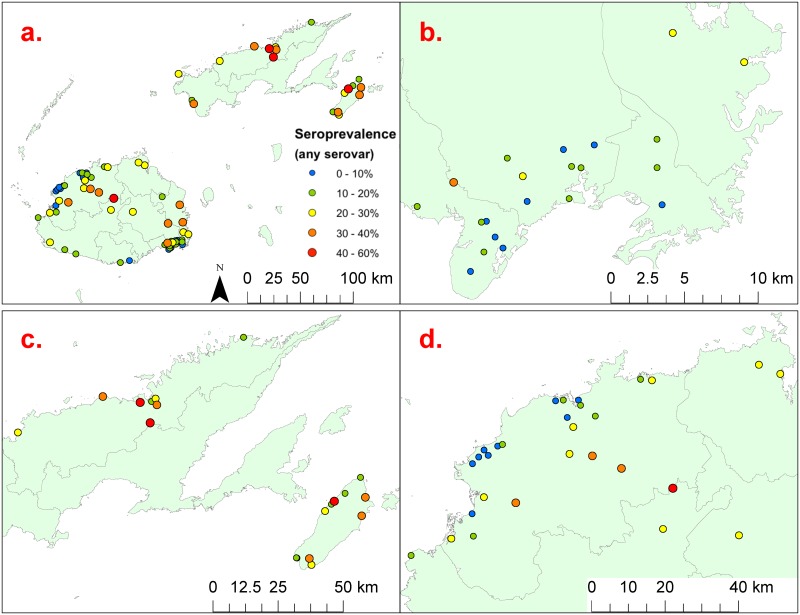
Leptospirosis is an important zoonotic disease in the Pacific Islands. In Fiji, two successive cyclones and severe flooding in 2012 resulted in outbreaks with 576 reported cases and 7% case-fatality. We conducted a cross-sectional seroprevalence study and used an eco-epidemiological approach to characterize risk factors and drivers for human leptospirosis infection in Fiji, and aimed to provide an evidence base for improving the effectiveness of public health mitigation and intervention strategies. Antibodies indicative of previous or recent infection were found in 19.4% of 2152 participants (81 communities on the 3 main islands). Questionnaires and geographic information systems data were used to assess variables related to demographics, individual behaviour, contact with animals, socioeconomics, living conditions, land use, and the natural environment. On multivariable logistic regression analysis, variables associated with the presence of Leptospira antibodies included male gender (OR 1.55), iTaukei ethnicity (OR 3.51), living in villages (OR 1.64), lack of treated water at home (OR 1.52), working outdoors (1.64), living in rural areas (OR 1.43), high poverty rate (OR 1.74), living <100m from a major river (OR 1.41), pigs in the community (OR 1.54), high cattle density in the district (OR 1.04 per head/sqkm), and high maximum rainfall in the wettest month (OR 1.003 per mm). Risk factors and drivers for human leptospirosis infection in Fiji are complex and multifactorial, with environmental factors playing crucial roles. With global climate change, severe weather events and flooding are expected to intensify in the South Pacific. Population growth could also lead to more intensive livestock farming; and urbanization in developing countries is often associated with urban and peri-urban slums where diseases of poverty proliferate. Climate change, flooding, population growth, urbanization, poverty and agricultural intensification are important drivers of zoonotic disease transmission; these factors may independently, or potentially synergistically, lead to enhanced leptospirosis transmission in Fiji and other similar settings.
钩端螺旋体病是太平洋岛屿地区一种重要的人畜共患病。在斐济,2012年连续两次气旋和严重洪灾导致疫情爆发,报告病例达576例,病死率为7%。我们开展了一项横断面血清流行率研究,并采用生态流行病学方法来确定斐济人类钩端螺旋体病感染的风险因素和驱动因素,旨在为提高公共卫生缓解措施和干预策略的有效性提供证据基础。在2152名参与者(来自3个主要岛屿的81个社区)中,19.4%的人检测出表明既往或近期感染的抗体。通过问卷调查和地理信息系统数据来评估与人口统计学、个人行为、与动物接触、社会经济状况、生活条件、土地利用和自然环境相关的变量。多变量逻辑回归分析显示,与钩端螺旋体抗体存在相关的变量包括男性(比值比1.55)、斐济原住民(比值比3.51)、居住在村庄(比值比1.64)、家中无经过处理的水(比值比1.52)、户外工作(1.64)、居住在农村地区(比值比1.43)、高贫困率(比值比1.74)、居住在距主要河流<100米处(比值比1.41)、社区中有猪(比值比1.54)、该地区牛的高密度(每平方公里1.04头)以及最潮湿月份的高最大降雨量(每毫米1.003)。斐济人类钩端螺旋体病感染的风险因素和驱动因素复杂且具有多因素性,环境因素起着关键作用。随着全球气候变化,预计南太平洋的极端天气事件和洪水将加剧。人口增长也可能导致更集约化的畜牧业发展;发展中国家的城市化往往与城市及周边贫民窟相关,在这些地方贫困相关疾病肆虐。气候变化、洪水、人口增长、城市化、贫困和农业集约化是动物源性疾病传播的重要驱动因素;这些因素可能单独或潜在地协同导致斐济及其他类似地区钩端螺旋体病传播的增强。