Adhikari Rishi R, Glombitza Clemens, Nickel Julia C, Anderson Chloe H, Dunlea Ann G, Spivack Arthur J, Murray Richard W, D'Hondt Steven, Kallmeyer Jens
MARUM - Center for Marine Environmental Sciences, University of BremenBremen, Germany; Geomicrobiology Group, Institute of Earth and Environmental Science, University of PotsdamPotsdam, Germany.
Center for Geomicrobiology, Department of Bioscience, Aarhus University Aarhus C, Denmark.
Front Microbiol. 2016 Jan 26;7:8. doi: 10.3389/fmicb.2016.00008. eCollection 2016.
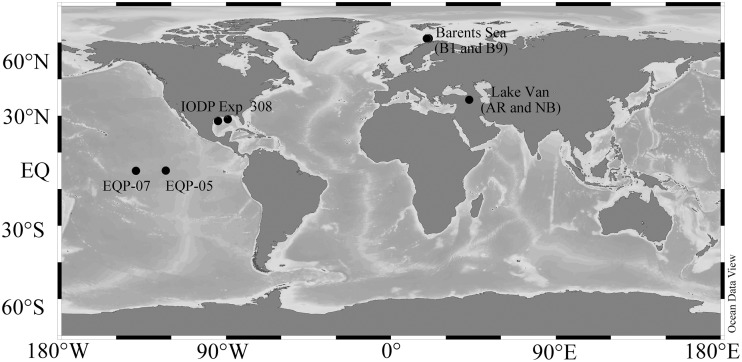
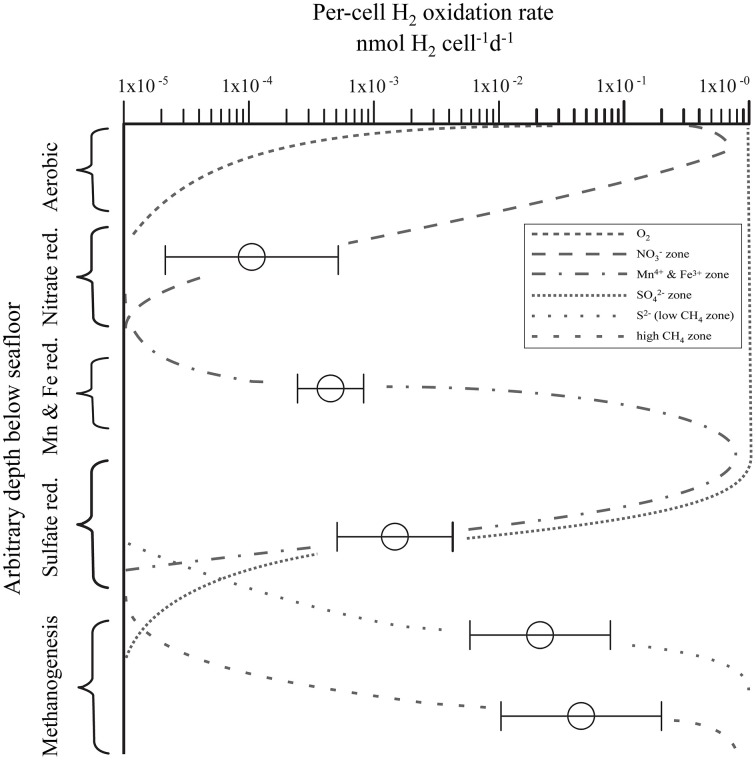
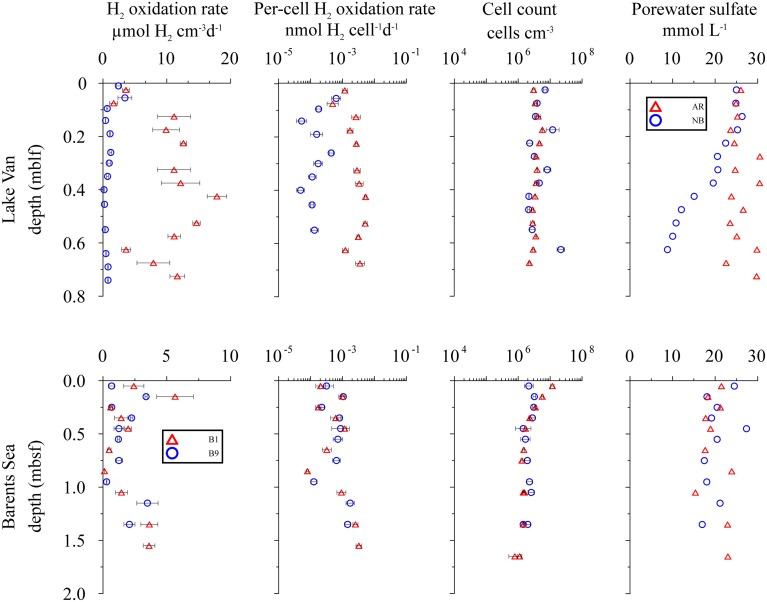
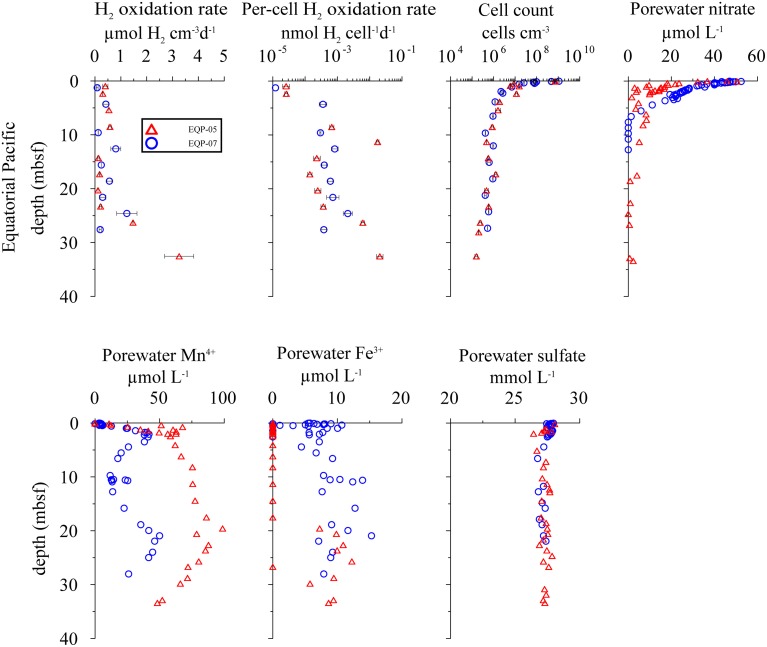
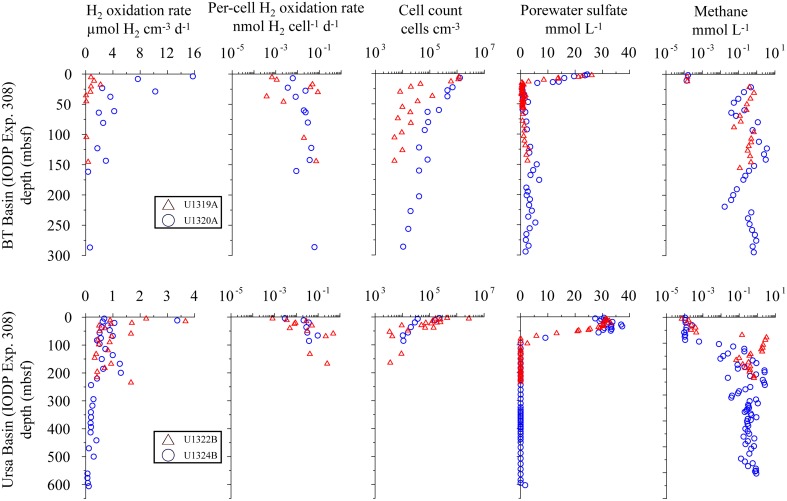
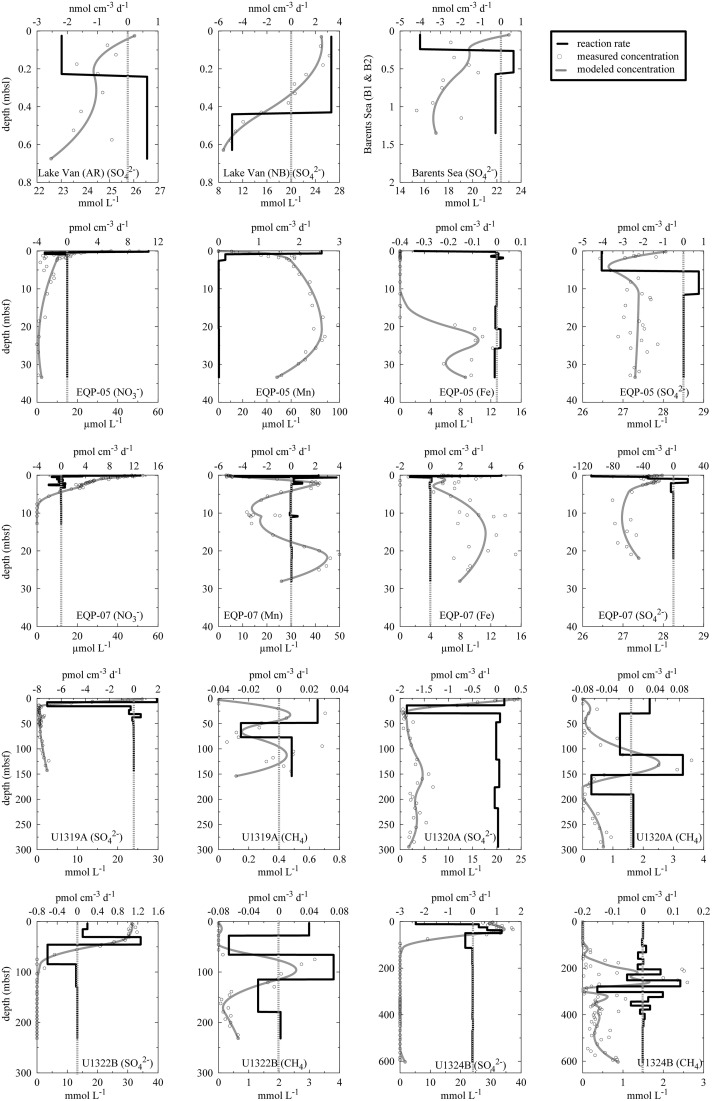
Subsurface microbial communities undertake many terminal electron-accepting processes, often simultaneously. Using a tritium-based assay, we measured the potential hydrogen oxidation catalyzed by hydrogenase enzymes in several subsurface sedimentary environments (Lake Van, Barents Sea, Equatorial Pacific, and Gulf of Mexico) with different predominant electron-acceptors. Hydrogenases constitute a diverse family of enzymes expressed by microorganisms that utilize molecular hydrogen as a metabolic substrate, product, or intermediate. The assay reveals the potential for utilizing molecular hydrogen and allows qualitative detection of microbial activity irrespective of the predominant electron-accepting process. Because the method only requires samples frozen immediately after recovery, the assay can be used for identifying microbial activity in subsurface ecosystems without the need to preserve live material. We measured potential hydrogen oxidation rates in all samples from multiple depths at several sites that collectively span a wide range of environmental conditions and biogeochemical zones. Potential activity normalized to total cell abundance ranges over five orders of magnitude and varies, dependent upon the predominant terminal electron acceptor. Lowest per-cell potential rates characterize the zone of nitrate reduction and highest per-cell potential rates occur in the methanogenic zone. Possible reasons for this relationship to predominant electron acceptor include (i) increasing importance of fermentation in successively deeper biogeochemical zones and (ii) adaptation of H2ases to successively higher concentrations of H2 in successively deeper zones.
地下微生物群落通常同时进行多种末端电子接受过程。我们使用基于氚的测定方法,在几个以不同主要电子受体为主的地下沉积环境(凡湖、巴伦支海、赤道太平洋和墨西哥湾)中,测量了氢化酶催化的潜在氢氧化作用。氢化酶是微生物表达的一类多样的酶,这些微生物利用分子氢作为代谢底物、产物或中间体。该测定方法揭示了利用分子氢的潜力,并能够定性检测微生物活性,而不论主要的电子接受过程如何。由于该方法只需要在样品采集后立即冷冻,因此该测定可用于识别地下生态系统中的微生物活性,而无需保存活的样本。我们在多个地点的多个深度的所有样品中测量了潜在的氢氧化速率,这些地点共同涵盖了广泛的环境条件和生物地球化学带。以总细胞丰度归一化后的潜在活性范围跨越五个数量级,并且取决于主要的末端电子受体而变化。最低的单细胞潜在速率出现在硝酸盐还原区,最高的单细胞潜在速率出现在产甲烷区。这种与主要电子受体的关系的可能原因包括:(i)在依次更深的生物地球化学带中发酵的重要性增加;(ii)氢化酶在依次更深的区域中对依次更高浓度的氢气的适应性。