Bartlett David B, Fox Oliver, McNulty Clare L, Greenwood Hannah L, Murphy Laura, Sapey Elizabeth, Goodman Martin, Crabtree Nicola, Thøgersen-Ntoumani Cecilie, Fisher James P, Wagenmakers Anton J M, Lord Janet M
MRC-ARUK Centre for Musculoskeletal Ageing Research, Institute of Inflammation and Ageing, University of Birmingham, Birmingham B15 2TT, United Kingdom.
MRC-ARUK Centre for Musculoskeletal Ageing Research, Institute of Inflammation and Ageing, University of Birmingham, Birmingham B15 2TT, United Kingdom.
Brain Behav Immun. 2016 Aug;56:12-20. doi: 10.1016/j.bbi.2016.02.024. Epub 2016 Feb 27.
Dysfunctional neutrophils with advanced age are a hallmark of immunosenescence. Reduced migration and bactericidal activity increase the risk of infection. It remains unclear why neutrophil dysfunction occurs with age. Physical activity and structured exercise have been suggested to improve immune function in the elderly. The aim of this study was to assess a comprehensive range of neutrophil functions and determine their association with habitual physical activity.
Physical activity levels were determined in 211 elderly (67±5years) individuals by 7-days of accelerometry wear. Twenty of the most physically active men and women were matched for age and gender to twenty of the least physically active individuals. Groups were compared for neutrophil migration, phagocytosis, oxidative burst, cell surface receptor expression, metabolic health parameters and systemic inflammation. Groups were also compared against ten young participants (23±4years).
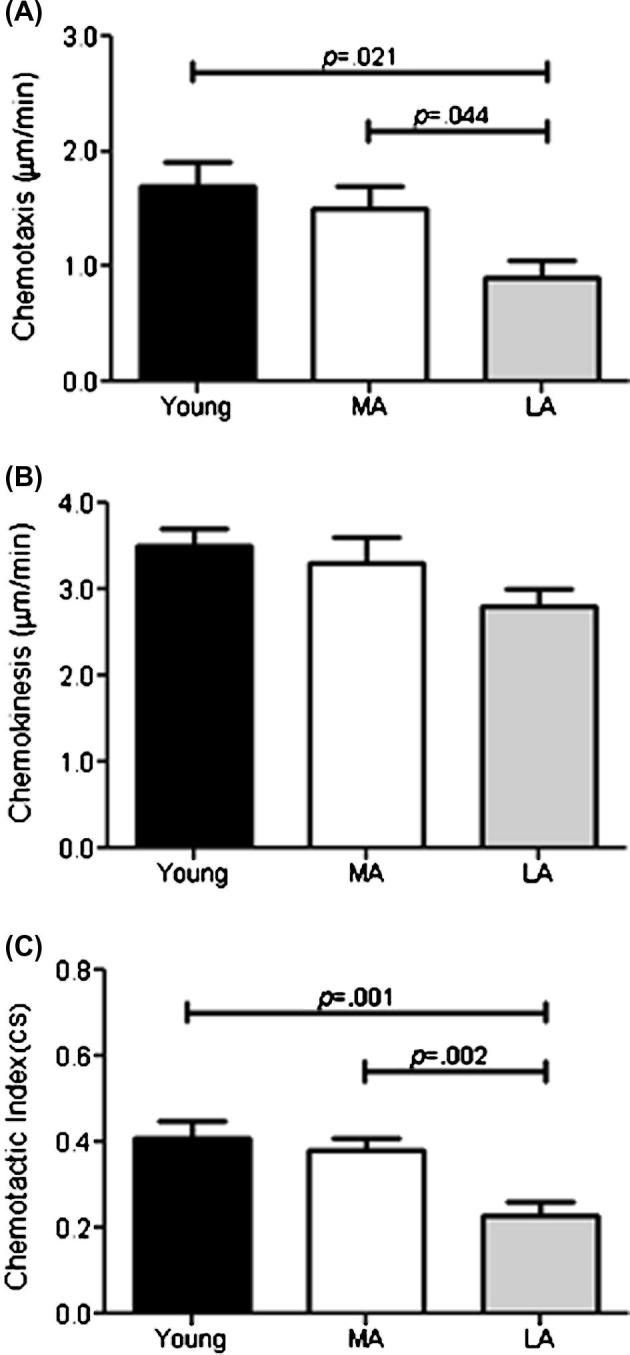
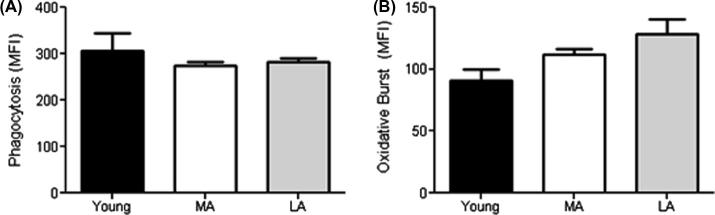
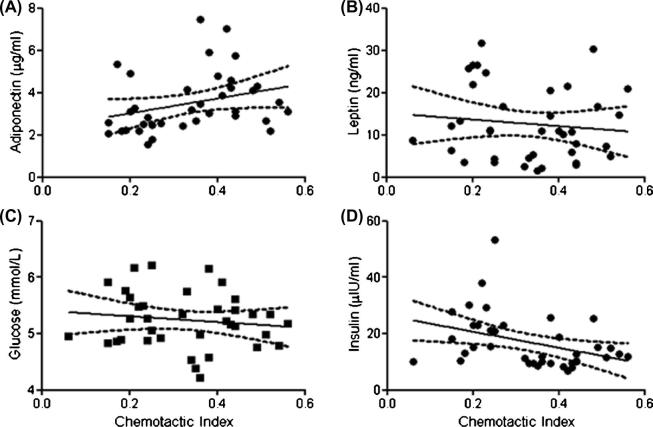
The most active group completed over twice as many steps/day as the least active group (p<0.001), had lower BMI's (p=0.007) and body fat percentages (p=0.029). Neutrophils migrated towards IL-8 better in the most active group compared to the least active (p<0.05) and was comparable to that of the young (p>0.05). These differences remained after adjusting for BMI, body fat and plasma metabolic markers which were different between groups. Correlations revealed that steps/day, higher adiponectin and lower insulin were positively associated with migratory ability (p<0.05). There was no difference in expression of the chemokine receptors CXCR1 or CXCR2 (p>0.05 for both). CD11b was higher in the most active group compared to the least active (p=0.048). No differences between activity groups or young controls were observed for neutrophil phagocytosis or oxidative burst in response to Escherichia coli (p>0.05). The young group had lower concentrations of IL-6, IL-8, MCP-1, CRP, IL-10 and IL-13 (p<0.05 for all) with no differences between the two older groups.
These data suggest that impaired neutrophil migration, but not bactericidal function, in older adults may be, in part, the result of reduced physical activity. A 2-fold difference in physical activity is associated with better preserved neutrophil migratory dynamics in healthy older people. As a consequence increasing habitual physical activity may be beneficial for neutrophil mediated immunity.
中性粒细胞功能随年龄增长而失调是免疫衰老的一个标志。迁移和杀菌活性降低会增加感染风险。中性粒细胞功能为何会随年龄增长而出现失调仍不清楚。有研究表明,体育活动和有组织的锻炼可改善老年人的免疫功能。本研究的目的是评估中性粒细胞的一系列综合功能,并确定它们与习惯性体育活动之间的关联。
通过佩戴7天加速度计来测定211名老年人(67±5岁)的身体活动水平。从最活跃的男性和女性中挑选出20名,在年龄和性别上与最不活跃的20名个体进行匹配。比较两组在中性粒细胞迁移、吞噬作用、氧化爆发、细胞表面受体表达、代谢健康参数和全身炎症方面的差异。还将这两组与10名年轻参与者(23±4岁)进行比较。
最活跃组每天完成的步数是最不活跃组的两倍多(p<0.001),其体重指数(p=0.007)和体脂百分比更低(p=0.029)。与最不活跃组相比,最活跃组的中性粒细胞向白细胞介素-8的迁移能力更强(p<0.05),且与年轻组相当(p>0.05)。在对两组之间存在差异的体重指数、体脂和血浆代谢标志物进行校正后,这些差异仍然存在。相关性分析显示,每天的步数、较高的脂联素水平和较低的胰岛素水平与迁移能力呈正相关(p<0.05)。趋化因子受体CXCR1或CXCR2的表达没有差异(两者p>0.05)。最活跃组的CD11b水平高于最不活跃组(p=0.048)。在对大肠杆菌的反应中,活动组之间或与年轻对照组相比,中性粒细胞的吞噬作用或氧化爆发没有差异(p>0.05)。年轻组的白细胞介素-6、白细胞介素-8、单核细胞趋化蛋白-1、C反应蛋白、白细胞介素-10和白细胞介素-13浓度较低(所有p<0.05),而两个老年组之间没有差异。
这些数据表明,老年人中性粒细胞迁移受损而非杀菌功能受损,可能部分是由于体育活动减少所致。体育活动量相差两倍与健康老年人中性粒细胞迁移动力学得到更好的保留有关。因此,增加习惯性体育活动可能有利于中性粒细胞介导的免疫。