Moslonka-Lefebvre Mathieu, Gilligan Christopher A, Monod Hervé, Belloc Catherine, Ezanno Pauline, Filipe João A N, Vergu Elisabeta
MaIAGE, INRA, Université Paris-Saclay, Jouy-en-Josas 78350, France Department of Plant Sciences, University of Cambridge, Downing Street, Cambridge CB2 3EA, UK AgroParisTech, Paris 75005, France
Department of Plant Sciences, University of Cambridge, Downing Street, Cambridge CB2 3EA, UK.
J R Soc Interface. 2016 Mar;13(116). doi: 10.1098/rsif.2015.1099.
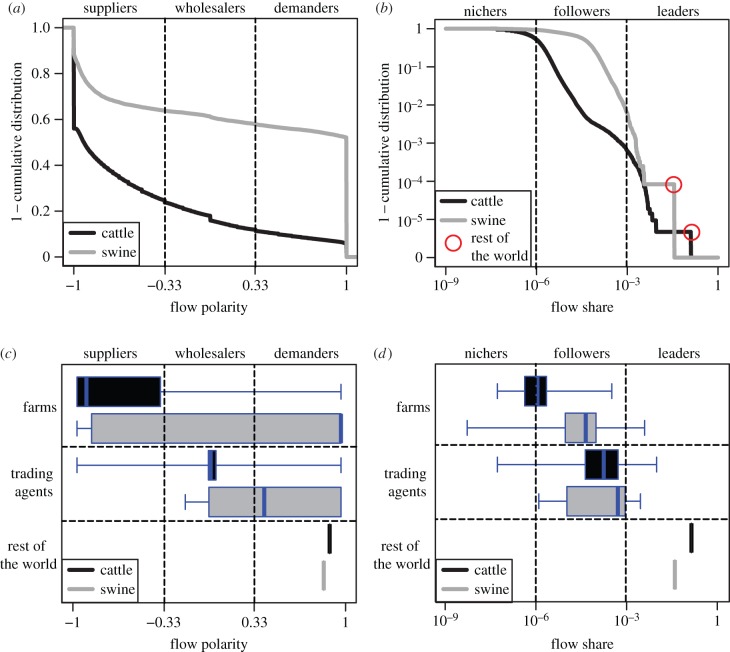
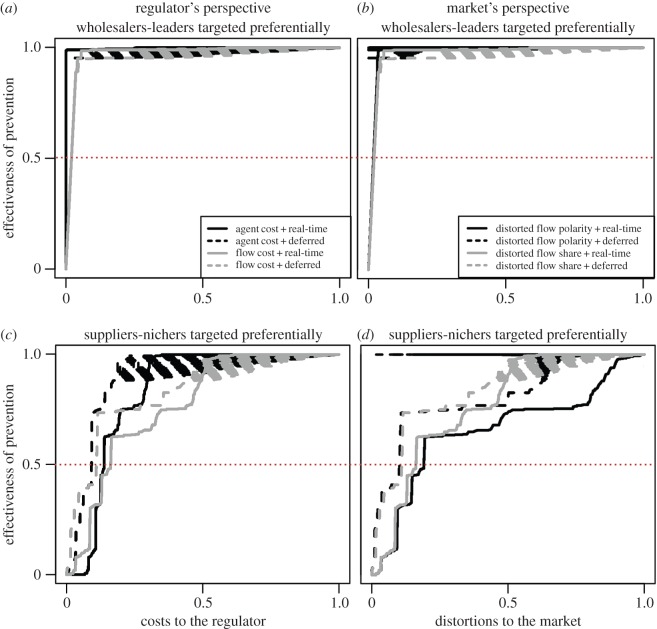
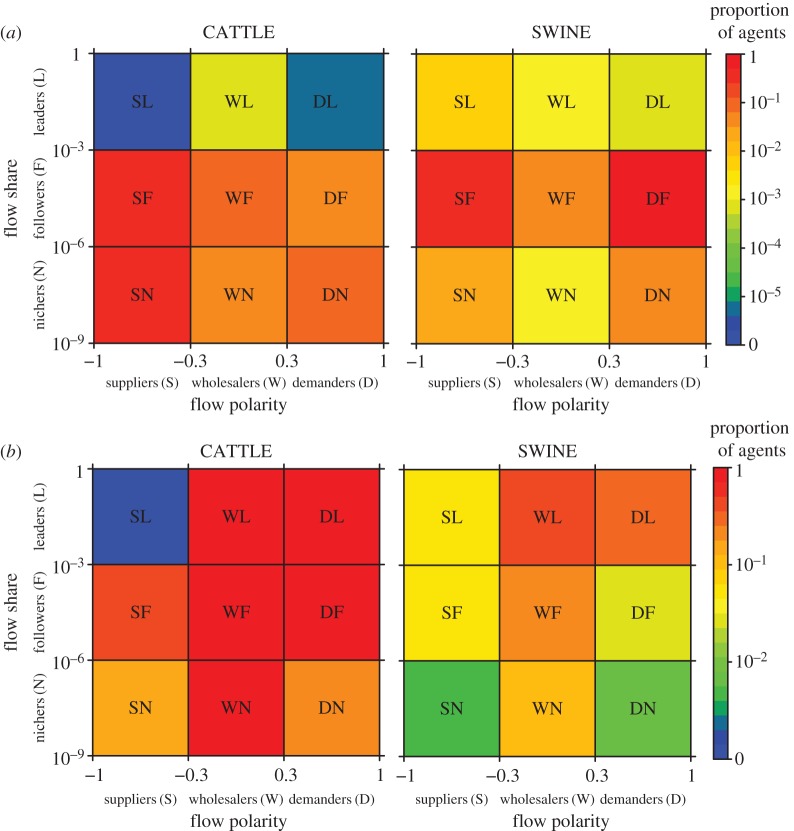
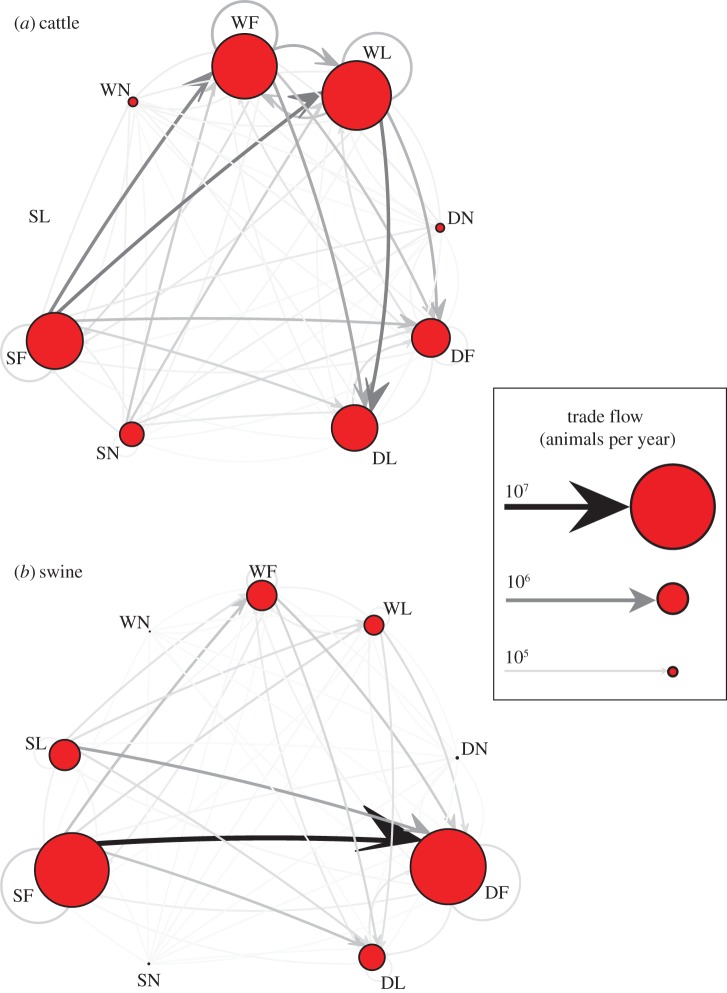
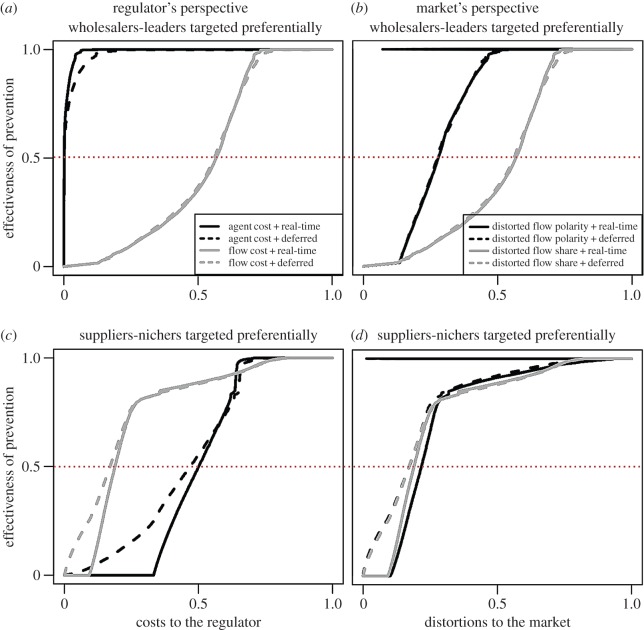
Conventional epidemiological studies of infections spreading through trade networks, e.g., via livestock movements, generally show that central large-size holdings (hubs) should be preferentially surveyed and controlled in order to reduce epidemic spread. However, epidemiological strategies alone may not be economically optimal when costs of control are factored in together with risks of market disruption from targeting core holdings in a supply chain. Using extensive data on animal movements in supply chains for cattle and swine in France, we introduce a method to identify effective strategies for preventing outbreaks with limited budgets while minimizing the risk of market disruptions. Our method involves the categorization of holdings based on position along the supply chain and degree of market share. Our analyses suggest that trade has a higher risk of propagating epidemics through cattle networks, which are dominated by exchanges involving wholesalers, than for swine. We assess the effectiveness of contrasting interventions from the perspectives of regulators and the market, using percolation analysis. We show that preferentially targeting minor, non-central agents can outperform targeting of hubs when the costs to stakeholders and the risks of market disturbance are considered. Our study highlights the importance of assessing joint economic-epidemiological risks in networks underlying pathogen propagation and trade.
通过贸易网络(例如通过牲畜流动)传播感染的传统流行病学研究通常表明,为了减少疫情传播,应优先对中央大型养殖场(枢纽)进行调查和控制。然而,当将控制成本与供应链中针对核心养殖场导致市场中断的风险一起考虑时,仅靠流行病学策略在经济上可能并非最优。利用法国牛和猪供应链中动物流动的广泛数据,我们引入了一种方法,以确定在预算有限的情况下预防疫情爆发的有效策略,同时将市场中断的风险降至最低。我们的方法包括根据供应链中的位置和市场份额程度对养殖场进行分类。我们的分析表明,与猪相比,贸易通过以涉及批发商的交易为主的牛网络传播疫情的风险更高。我们使用渗流分析从监管机构和市场的角度评估对比干预措施的有效性。我们表明,当考虑到利益相关者的成本和市场干扰风险时,优先针对次要的、非中央的主体可能比针对枢纽更有效。我们的研究强调了在病原体传播和贸易的基础网络中评估联合经济 - 流行病学风险的重要性。