Khatri Vinay, Hébert-Ouellet Yannick, Meddeb-Mouelhi Fatma, Beauregard Marc
Centre de recherche sur les matériaux lignocellulosiques, Université du Québec à Trois-Rivières, C.P. 500, Trois-Rivières, QC G9A 5H7 Canada ; PROTEO, Université Laval, Quebec, QC G1V 4G2 Canada.
Centre de recherche sur les matériaux lignocellulosiques, Université du Québec à Trois-Rivières, C.P. 500, Trois-Rivières, QC G9A 5H7 Canada ; PROTEO, Université Laval, Quebec, QC G1V 4G2 Canada ; Buckman North America, Vaudreuil-Dorion, QC J7V 5V5 Canada.
Biotechnol Biofuels. 2016 Mar 25;9:74. doi: 10.1186/s13068-016-0486-1. eCollection 2016.
Xylan has been identified as a physical barrier which limits cellulose accessibility by covering the outer surface of fibers and interfibrillar space. Therefore, tracking xylan is a prerequisite for understanding and optimizing lignocellulosic biomass processes.
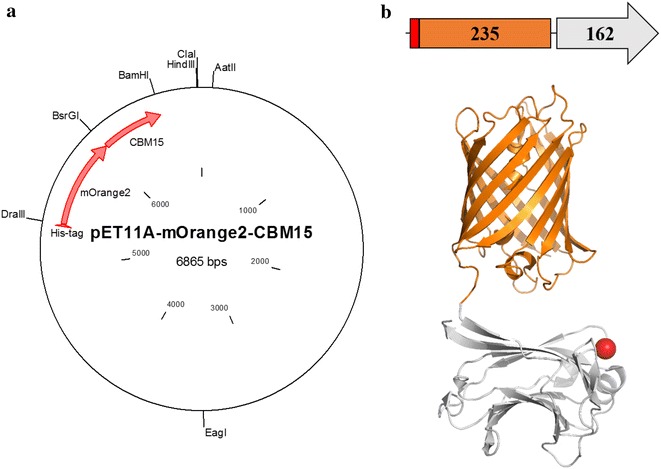
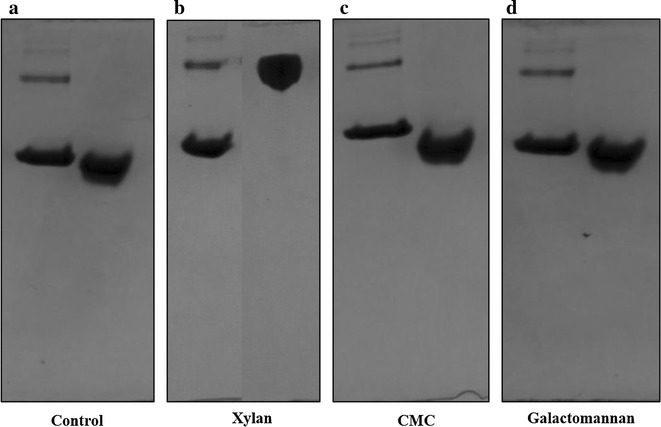
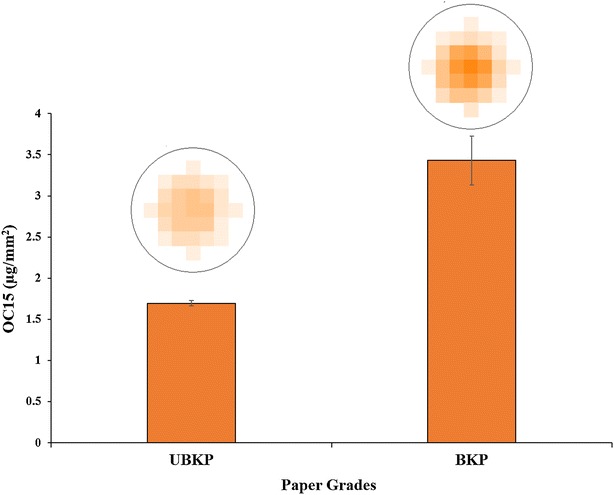
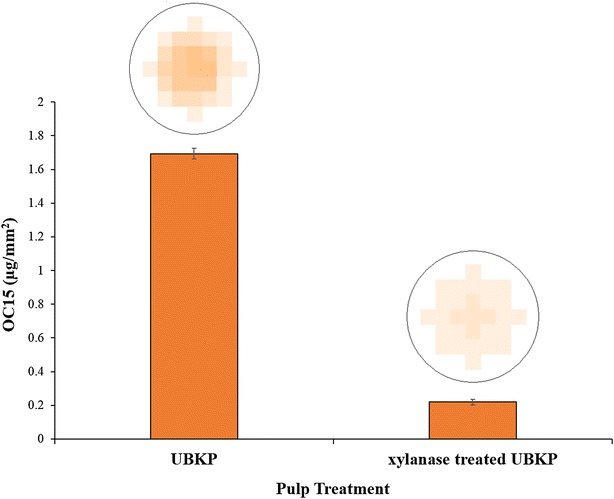
In this study, we developed a novel xylan tracking approach using a two-domain probe called OC15 which consists of a fusion of Cellvibrio japonicus carbohydrate-binding domain 15 with the fluorescent protein mOrange2. The new probe specifically binds to xylan with an affinity similar to that of CBM15. The sensitivity of the OC15-xylan detection approach was compared to that of standard methods such as X-ray photoelectron spectroscopy (XPS) and chemical composition analysis (NREL/TP-510-42618). All three approaches were used to analyze the variations of xylan content of kraft pulp fibers. XPS, which allows for surface analysis of fibers, did not clearly indicate changes in xylan content. Chemical composition analysis responded to the changes in xylan content, but did not give any specific information related to the fibers surface. Interestingly, only the OC15 probe enabled the highly sensitive detection of xylan variations at the surface of kraft pulp fibers. At variance with the other methods, the OC15 probe can be used in a high throughput format.
We developed a rapid and high throughput approach for the detection of changes in xylan exposure at the surface of paper fibers. The introduction of this method into the lignocellulosic biomass-based industries should revolutionize the understanding and optimization of most wood biomass processes.
木聚糖已被确定为一种物理屏障,它通过覆盖纤维的外表面和纤维间空间来限制纤维素的可及性。因此,追踪木聚糖是理解和优化木质纤维素生物质加工过程的先决条件。
在本研究中,我们开发了一种新型的木聚糖追踪方法,使用一种名为OC15的双结构域探针,它由日本纤维弧菌碳水化合物结合结构域15与荧光蛋白mOrange2融合而成。这种新探针与木聚糖特异性结合,亲和力与CBM15相似。将OC15-木聚糖检测方法的灵敏度与标准方法如X射线光电子能谱(XPS)和化学成分分析(NREL/TP-510-42618)进行了比较。所有这三种方法都用于分析硫酸盐浆纤维木聚糖含量的变化。XPS可对纤维进行表面分析,但未明确显示木聚糖含量的变化。化学成分分析对木聚糖含量的变化有响应,但未给出与纤维表面相关的任何具体信息。有趣的是,只有OC15探针能够高度灵敏地检测硫酸盐浆纤维表面木聚糖的变化。与其他方法不同,OC15探针可用于高通量检测。
我们开发了一种快速且高通量的方法来检测纸纤维表面木聚糖暴露的变化。将该方法引入基于木质纤维素生物质 的行业应会彻底改变对大多数木材生物质加工过程的理解和优化。