Cohen Gregory K, Orchard Garrick, Leng Sio-Hoi, Tapson Jonathan, Benosman Ryad B, van Schaik André
Biomedical Engineering and Neuroscience, The MARCS Institute, Western Sydney UniversitySydney, NSW, Australia; Natural Vision and Computation Team, Vision Institute, University Pierre and Marie Curie-Centre National de la Recherche ScientifiqueParis, France.
Temasek Labs (TLAB), National University of SingaporeSingapore, Singapore; Neuromorphic Engineering and Robotics, Singapore Institute for Neurotechnology (SINAPSE), National University of SingaporeSingapore, Singapore.
Front Neurosci. 2016 Apr 28;10:184. doi: 10.3389/fnins.2016.00184. eCollection 2016.
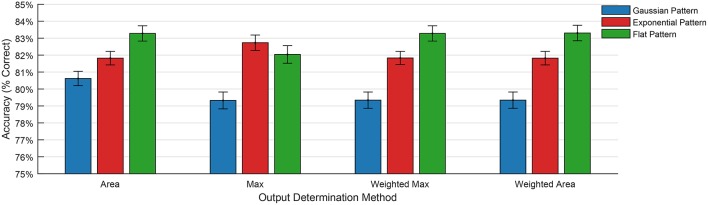
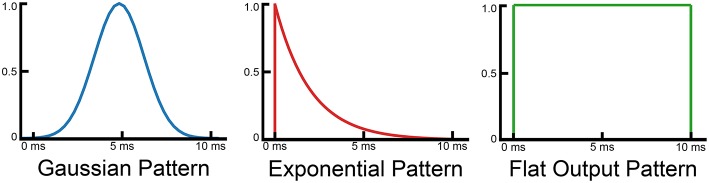
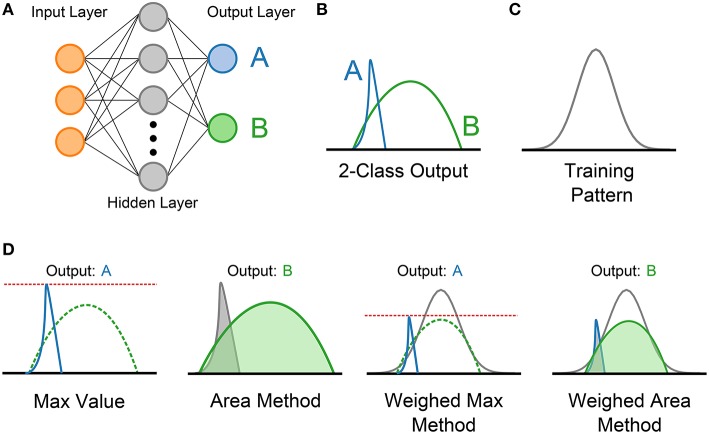
The growing demands placed upon the field of computer vision have renewed the focus on alternative visual scene representations and processing paradigms. Silicon retinea provide an alternative means of imaging the visual environment, and produce frame-free spatio-temporal data. This paper presents an investigation into event-based digit classification using N-MNIST, a neuromorphic dataset created with a silicon retina, and the Synaptic Kernel Inverse Method (SKIM), a learning method based on principles of dendritic computation. As this work represents the first large-scale and multi-class classification task performed using the SKIM network, it explores different training patterns and output determination methods necessary to extend the original SKIM method to support multi-class problems. Making use of SKIM networks applied to real-world datasets, implementing the largest hidden layer sizes and simultaneously training the largest number of output neurons, the classification system achieved a best-case accuracy of 92.87% for a network containing 10,000 hidden layer neurons. These results represent the highest accuracies achieved against the dataset to date and serve to validate the application of the SKIM method to event-based visual classification tasks. Additionally, the study found that using a square pulse as the supervisory training signal produced the highest accuracy for most output determination methods, but the results also demonstrate that an exponential pattern is better suited to hardware implementations as it makes use of the simplest output determination method based on the maximum value.
计算机视觉领域不断增长的需求,重新聚焦于替代视觉场景表示和处理范式。硅视网膜提供了一种对视觉环境进行成像的替代方法,并产生无帧的时空数据。本文介绍了一项使用N-MNIST(一个用硅视网膜创建的神经形态数据集)和突触核逆方法(SKIM,一种基于树突计算原理的学习方法)进行基于事件的数字分类的研究。由于这项工作代表了首次使用SKIM网络执行的大规模多类分类任务,它探索了将原始SKIM方法扩展以支持多类问题所需的不同训练模式和输出确定方法。通过将SKIM网络应用于真实世界数据集,实现最大的隐藏层大小并同时训练最多数量的输出神经元,该分类系统对于包含10,000个隐藏层神经元的网络,实现了92.87%的最佳准确率。这些结果代表了迄今为止针对该数据集所取得的最高准确率,并有助于验证SKIM方法在基于事件的视觉分类任务中的应用。此外,研究发现,对于大多数输出确定方法,使用方波作为监督训练信号可产生最高准确率,但结果也表明指数模式更适合硬件实现,因为它使用基于最大值的最简单输出确定方法。