Barbado David, Lopez-Valenciano Alejandro, Juan-Recio Casto, Montero-Carretero Carlos, van Dieën Jaap H, Vera-Garcia Francisco J
Sport Research Centre, Miguel Hernández University, Elche, Spain.
MOVE Research Institute Amsterdam, Department of Human Movement Sciences, Vrije Universiteit Amsterdam, Amsterdam, the Netherlands.
PLoS One. 2016 May 27;11(5):e0156267. doi: 10.1371/journal.pone.0156267. eCollection 2016.
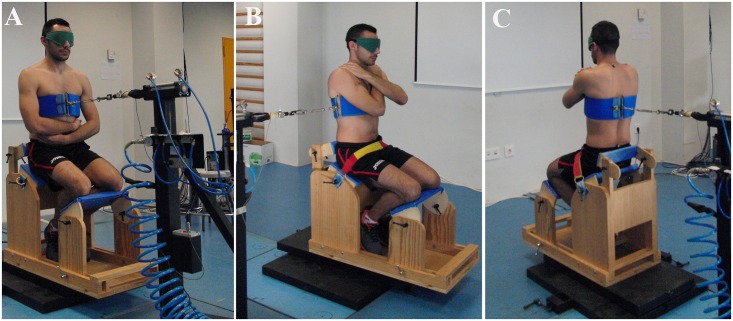
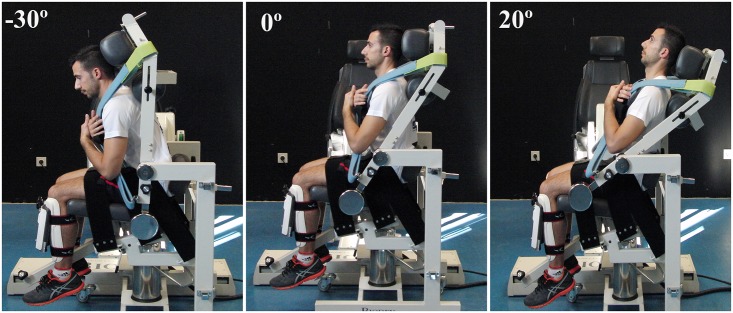
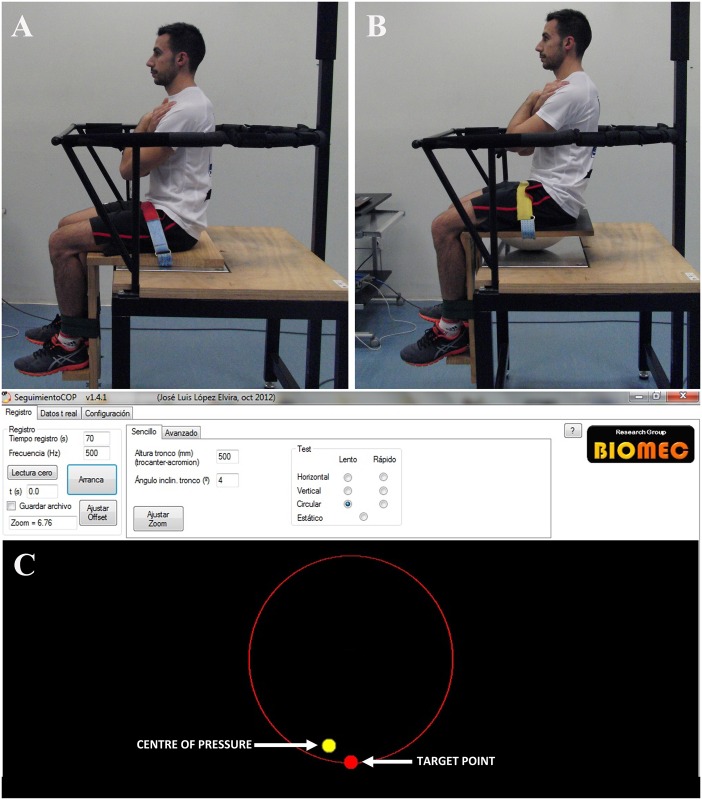
Although trunk muscle function has been suggested to be a determinant of judo performance, its contribution to high-level performance in this sport has been poorly studied. Therefore, several tests were used to assess the differences in trunk muscle function between 11 international and 14 national level judo practitioners (judokas). Trunk strength and endurance were assessed using isokinetic tests and core stability was assessed using two protocols: 1) sudden loading, to assess trunk responses to unexpected external perturbations; 2) stable and unstable sitting, to assess the participants' ability to control trunk balance. No differences between groups were found for trunk flexor isokinetic strength, trunk responses against lateral and posterior loading and trunk control while sitting. However, international level judokas showed significantly higher trunk extensor isokinetic strength (p <0.05) and lower trunk angular displacement after anterior trunk loading (p <0.05) than national level judokas. Few and low (r < 0.512) significant correlations were found between strength, endurance and stability parameters, which suggests that trunk strength and endurance are not limiting factors for trunk stability in competitive judokas. These results support the importance of trunk extensor strength and trunk stability against forward perturbations in elite judo performance.
尽管有人认为躯干肌肉功能是柔道表现的一个决定因素,但对其在这项运动的高水平表现中的作用却鲜有研究。因此,我们使用了多项测试来评估11名国际水平和14名国家水平的柔道运动员(柔道选手)之间躯干肌肉功能的差异。通过等速测试评估躯干力量和耐力,并使用两种方案评估核心稳定性:1)突然加载,以评估躯干对意外外部扰动的反应;2)稳定和不稳定坐姿,以评估参与者控制躯干平衡的能力。在躯干屈肌等速力量、躯干对侧向和后向负荷的反应以及坐姿时的躯干控制方面,两组之间未发现差异。然而,国际水平的柔道选手比国家水平的柔道选手表现出显著更高的躯干伸肌等速力量(p<0.05)和前躯干加载后更低的躯干角位移(p<0.05)。在力量、耐力和稳定性参数之间发现的显著相关性很少且较低(r<0.512),这表明躯干力量和耐力不是竞技柔道选手躯干稳定性的限制因素。这些结果支持了躯干伸肌力量和躯干抵抗向前扰动的稳定性在精英柔道表现中的重要性。