Su Xinming, Ren Yuan, Li Menglu, Zhao Xuan, Kong Lingfei, Kang Jian
From the Department of Respiratory Medicine, Institute of Respiratory Diseases, The First Affiliated Hospital of China Medical University, Shenyang, China.
Medicine (Baltimore). 2016 May;95(22):e3459. doi: 10.1097/MD.0000000000003459.
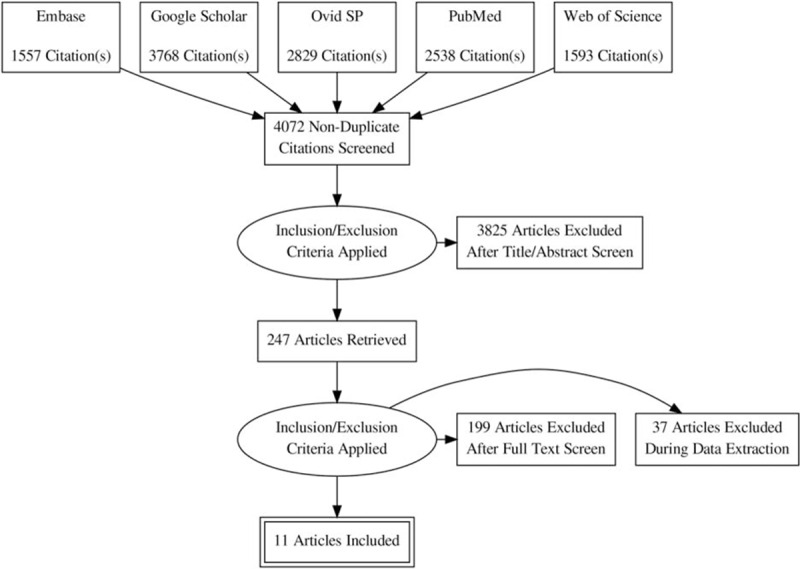
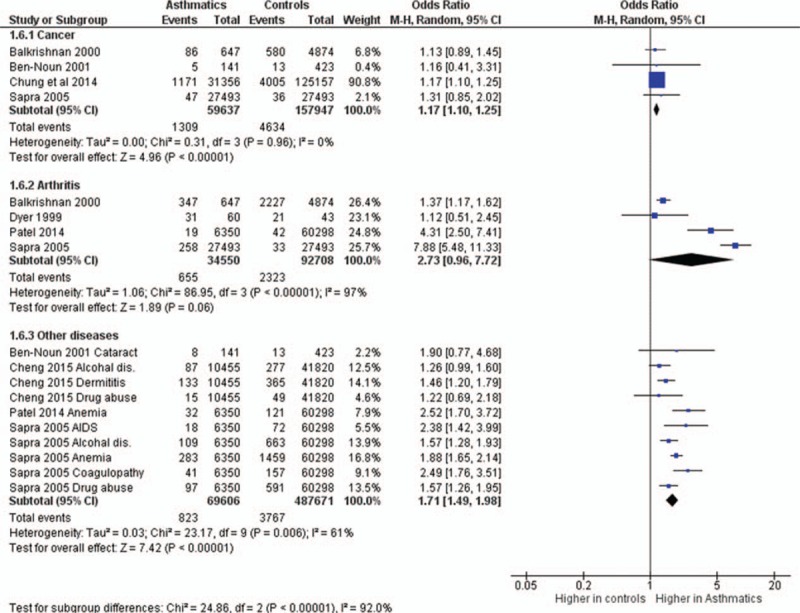
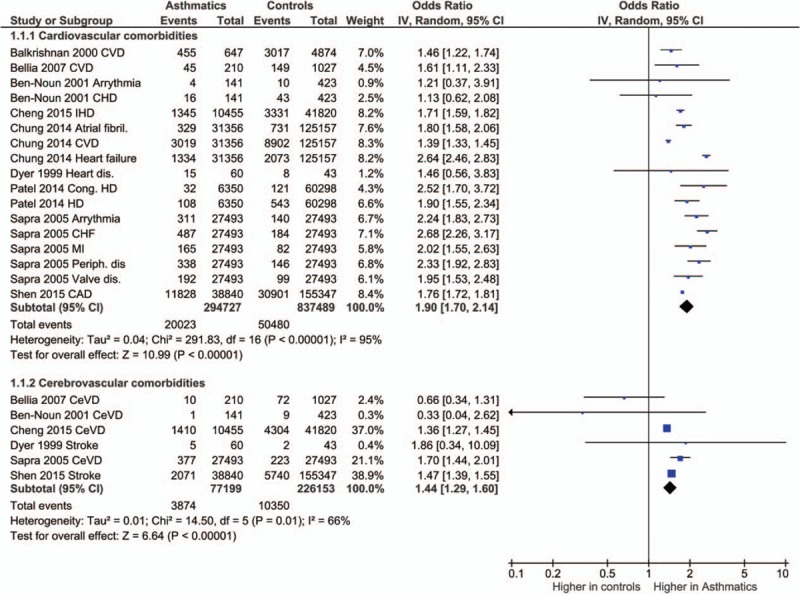
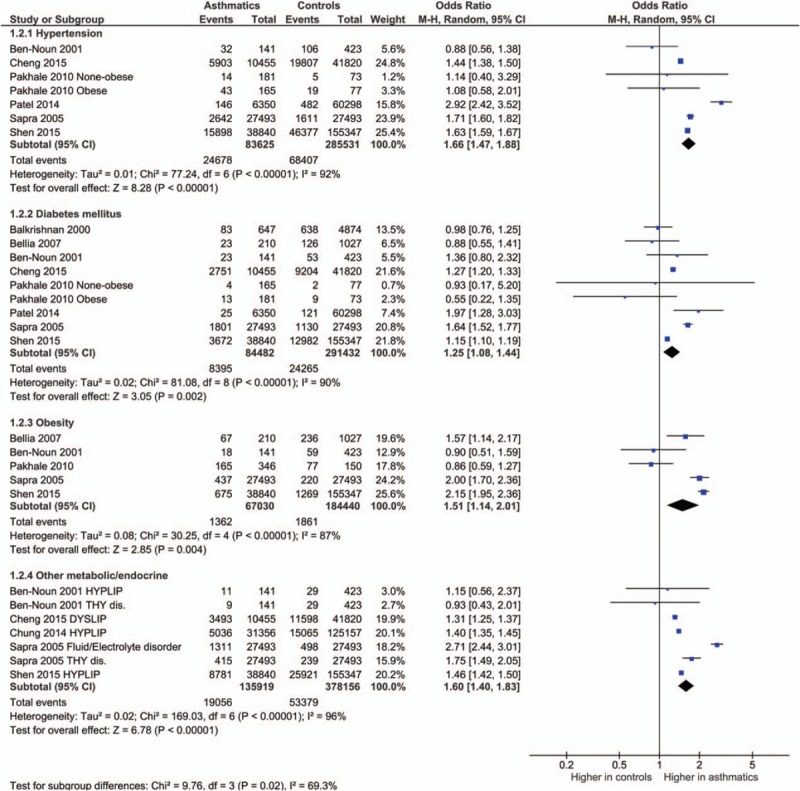
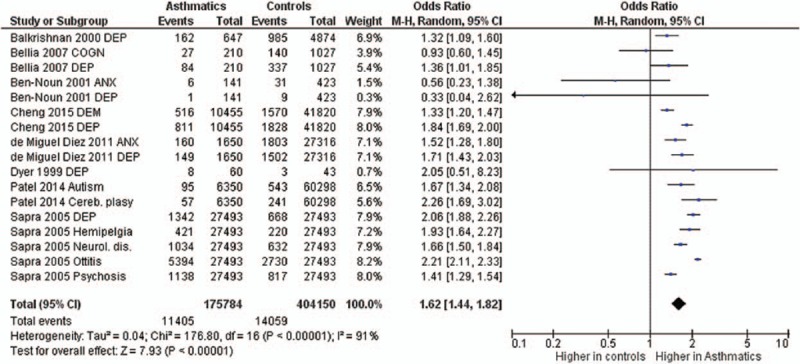
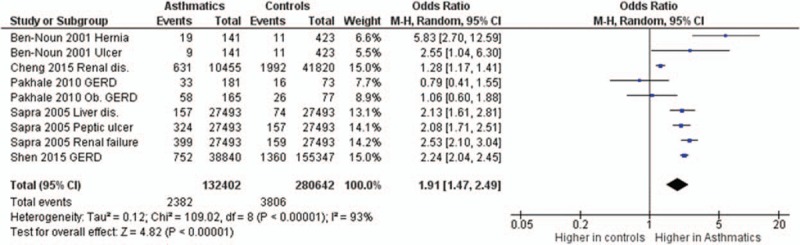
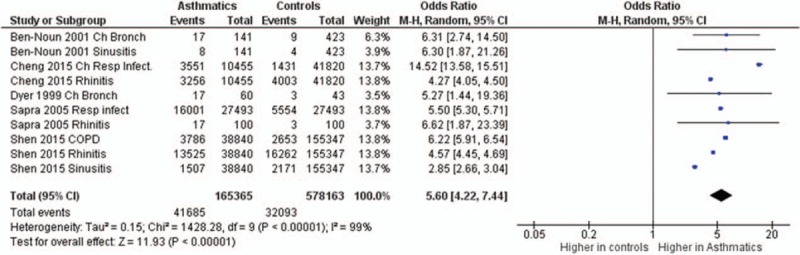
This study compares the prevalence rates of comorbidities between asthma and nonasthma control patients reported in the literature.Literature was searched in several electronic databases. After the selection of studies by following précised eligibility criteria, meta-analyses of odds ratios were carried out with subgroup and sensitivity analyses.Eleven studies studying 117,548 asthma patients compared with 443,948 non-asthma controls were included in the meta-analysis. The prevalence of cardiovascular comorbidities (odds ratio (OR): [95% CI] 1.90 [1.70, 2.14]; P < 0.00001), cerebrovascular comorbidities (OR 1.44 [1.29, 1.60]; P < 0.00001), obesity (OR 1.51 [1.14, 2.01]; P < 0.00001), hypertension (OR 1.66 [1.47, 1.88]; P < 0.00001, diabetes (OR 1.25 [1.08, 1.44]; P < 0.00001), other metabolic and endocrine comorbidities (OR 1.60 [1.40, 1.83]; P < 0.00001), psychiatric and neurological comorbidities (OR 1.62 [1.44, 1.82]; P < 0.00001), gut and urinary comorbidities (OR 1.91 [1.47, 2.49]; P < 0.00001),), cancer (OR 1.17 [1.10, 1.25]; P < 0.00001), and respiratory comorbidities (OR 5.60 [4.22, 7.44]; P < 0.00001) were significantly higher in the asthma patients in comparison with nonasthma controls.Asthma is associated with significantly higher comorbidities including cardio-/cerebrovascular diseases, obesity, hypertension, diabetes, psychiatric and neurological comorbidities, gut and urinary conditions, cancer, and respiratory problems other than asthma. Respiratory comorbidities are found 5 times more prevalent in asthma than in non-asthma patients.
本研究比较了文献报道的哮喘患者与非哮喘对照患者中合并症的患病率。在多个电子数据库中进行了文献检索。按照精确的纳入标准筛选研究后,进行了比值比的荟萃分析,并进行了亚组分析和敏感性分析。荟萃分析纳入了11项研究,共117,548例哮喘患者与443,948例非哮喘对照。哮喘患者中心血管合并症(比值比(OR):[95%可信区间]1.90[1.70, 2.14];P<0.00001)、脑血管合并症(OR 1.44[1.29, 1.60];P<0.00001)、肥胖(OR 1.51[1.14, 2.01];P<0.00001)、高血压(OR 1.66[1.47, 1.88];P<0.00001)、糖尿病(OR 1.25[1.08, 1.44];P<0.00001)、其他代谢和内分泌合并症(OR 1.60[1.40, 1.83];P<0.00001)、精神和神经合并症(OR 1.62[1.44, 1.82];P<0.00001)、肠道和泌尿系统合并症(OR 1.91[1.47, 2.49];P<0.00001)、癌症(OR 1.17[1.10, 1.25];P<0.00001)以及呼吸合并症(OR 5.60[4.22, 7.44];P<0.00001)的患病率显著高于非哮喘对照。哮喘与包括心血管/脑血管疾病、肥胖、高血压、糖尿病、精神和神经合并症、肠道和泌尿系统疾病、癌症以及除哮喘外的呼吸问题等显著更高的合并症相关。哮喘患者中呼吸合并症的患病率是非哮喘患者的5倍。