Kuan Guillermina, Ramirez Stephania, Gresh Lionel, Ojeda Sergio, Melendez Marlon, Sanchez Nery, Collado Damaris, Garcia Nadezna, Mercado Juan Carlos, Gordon Aubree, Balmaseda Angel, Harris Eva
Centro de Salud Sócrates Flores Vivas, Ministry of Health, Managua, Nicaragua.
Sustainable Sciences Institute, Managua, Nicaragua.
PLoS Negl Trop Dis. 2016 Jun 20;10(6):e0004773. doi: 10.1371/journal.pntd.0004773. eCollection 2016 Jun.
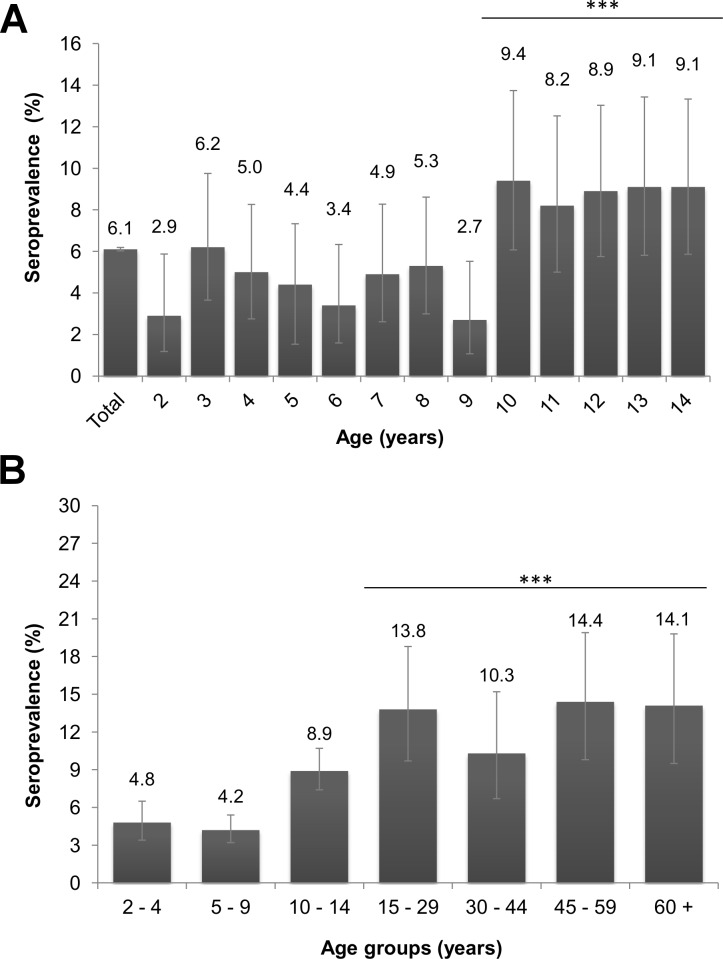
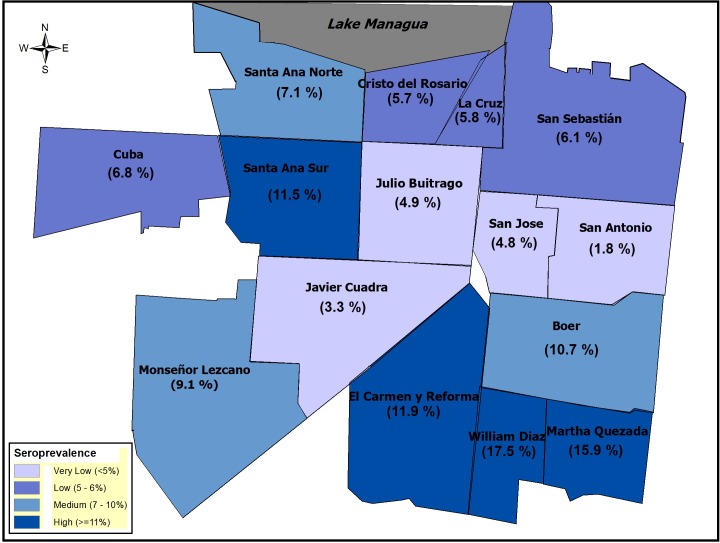
Chikungunya is a viral disease transmitted by Aedes aegypti and Ae. albopictus mosquitoes. In late 2013, chikungunya virus (CHIKV) was introduced into the Caribbean island of St. Martin. Since then, approximately 2 million chikungunya cases have been reported by the Pan American Health Organization, and most countries in the Americas report autochthonous transmission of CHIKV. In Nicaragua, the first imported case was described in July 2014 and the first autochthonous case in September 2014. Here, we conducted two studies to analyze the seroprevalence of anti-CHIKV antibodies after the first chikungunya epidemic in a community-based cohort study (ages 2-14 years) and in a cross-sectional survey of persons aged ≥15 years in the same area of Managua, Nicaragua. Routine annual serum samples collected from 3,362 cohort participants in March/April 2014 and 2015, and 848 age-stratified samples collected from persons ≥15 years old at the end of May-beginning of June 2015 were used to estimate the seroprevalence of anti-CHIKV antibodies after the first epidemic (October 2014 to February 2015 in the study population). Using an Inhibition ELISA assay that measures total anti-CHIKV antibodies, the seroprevalence was significantly higher in those aged ≥15 (13.1% (95%CI: 10.9, 15.5)) than in the pediatric population (6.1% (95%CI: 5.3, 6.9)). The proportion of inapparent infections was 58.3% (95%CI: 51.5, 65.1) in children and 64.9% (95%CI: 55.2, 73.7) in the ≥15 study population. We identified age, water availability, household size, and socioeconomic status as factors associated with the presence of anti-CHIKV antibodies. Overall, this is the first report of CHIKV seropositivity in continental Latin America and provides useful information for public health authorities in the region.
基孔肯雅热是一种由埃及伊蚊和白纹伊蚊传播的病毒性疾病。2013年末,基孔肯雅病毒(CHIKV)传入加勒比海岛国圣马丁岛。自那时起,泛美卫生组织报告了约200万例基孔肯雅热病例,美洲大多数国家都报告了基孔肯雅病毒的本地传播情况。在尼加拉瓜,2014年7月报告了首例输入性病例,2014年9月报告了首例本地病例。在此,我们开展了两项研究,在一项基于社区的队列研究(2至14岁)以及对尼加拉瓜马那瓜同一地区≥15岁人群的横断面调查中,分析首次基孔肯雅热疫情后抗基孔肯雅病毒抗体的血清阳性率。使用2014年3月/4月和2015年从3362名队列参与者中收集的年度常规血清样本,以及2015年5月底至6月初从≥15岁人群中收集的848份按年龄分层的样本,来估计首次疫情(研究人群中为2014年10月至2015年2月)后抗基孔肯雅病毒抗体的血清阳性率。使用一种测量总抗基孔肯雅病毒抗体的抑制酶联免疫吸附测定法,≥15岁人群的血清阳性率(13.1%(95%置信区间:10.9,15.5))显著高于儿童人群(6.1%(95%置信区间:5.3,6.9))。儿童中隐性感染的比例为58.3%(95%置信区间:51.5,65.1),≥15岁研究人群中为64.9%(95%置信区间:55.2,73.7)。我们确定年龄、水的可获得性、家庭规模和社会经济地位为与抗基孔肯雅病毒抗体存在相关的因素。总体而言,这是拉丁美洲大陆关于基孔肯雅病毒血清阳性的首份报告,为该地区的公共卫生当局提供了有用信息。