Ecosystem Services and Management Program, International Institute for Applied Systems Analysis, 2361 Laxenburg, Austria.
Department of Geography, Ludwig Maximilian University, 80333 Munich, Germany.
Nat Commun. 2016 Jun 21;7:11872. doi: 10.1038/ncomms11872.
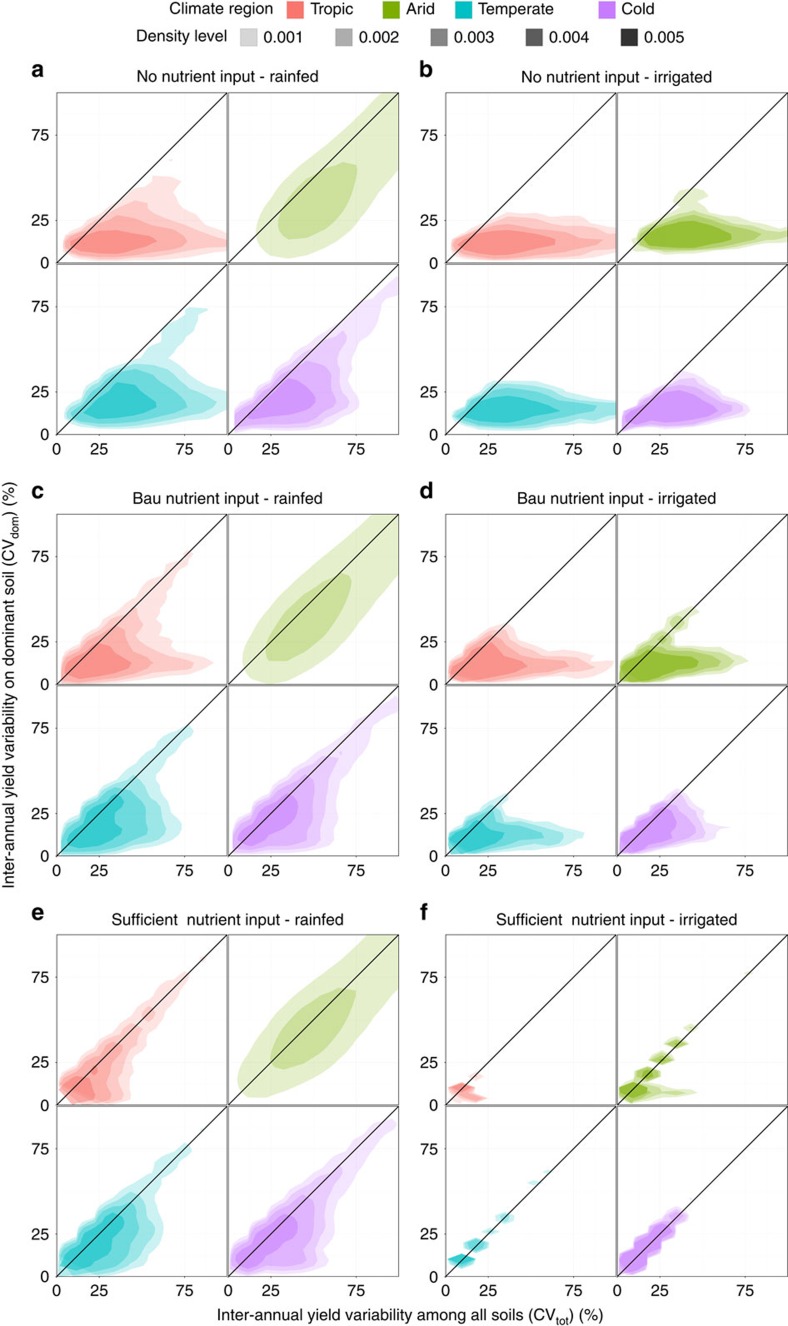
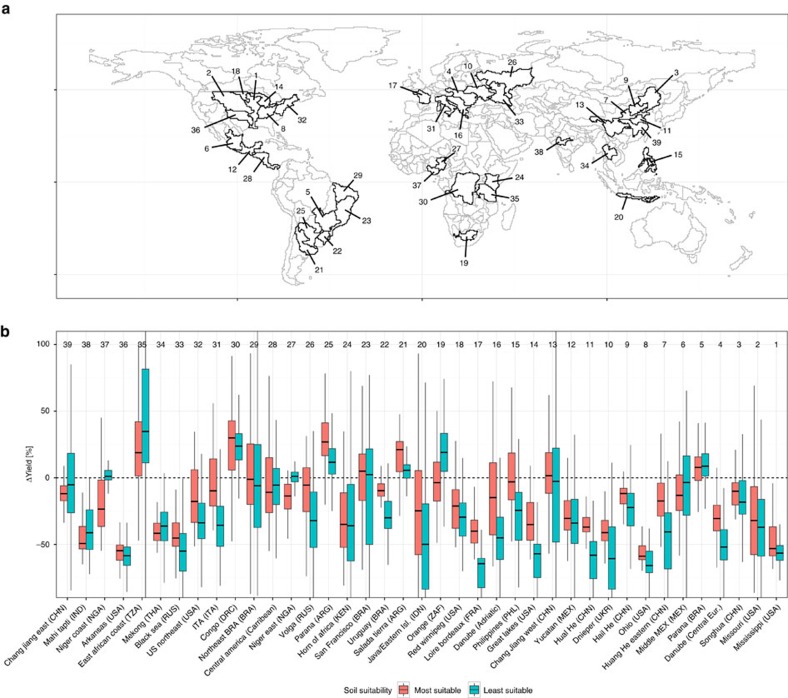
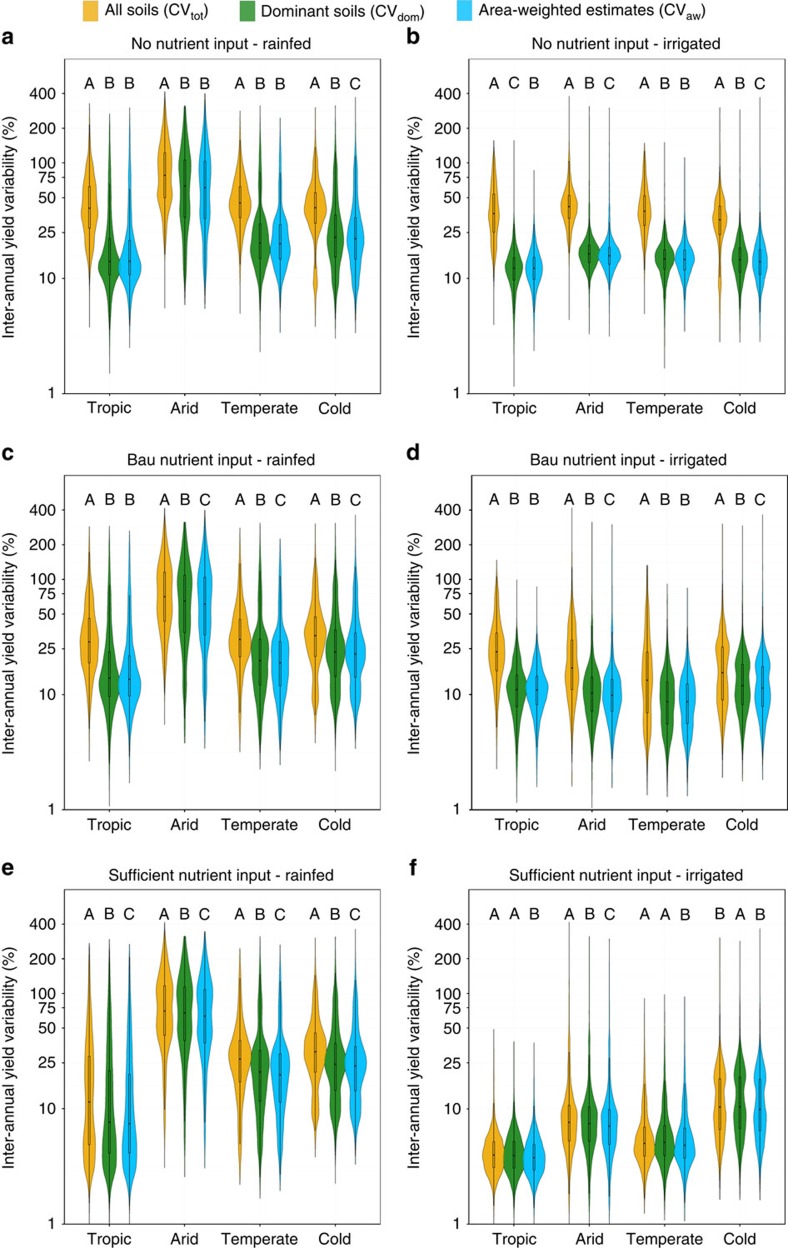
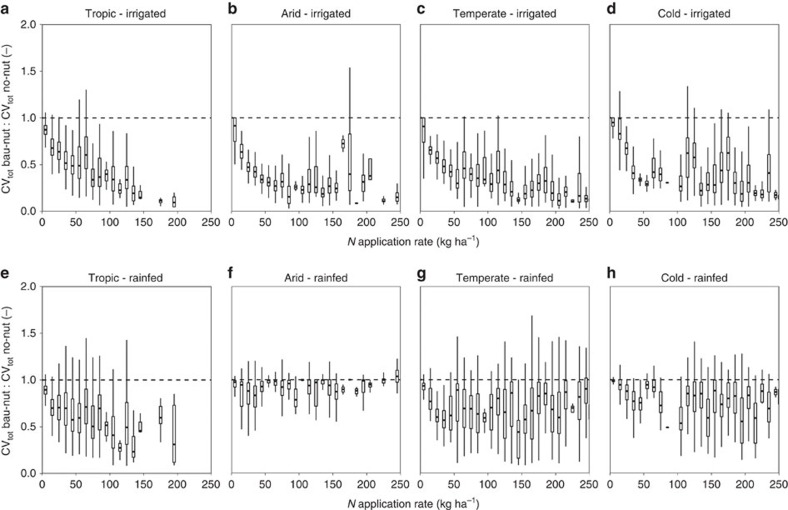
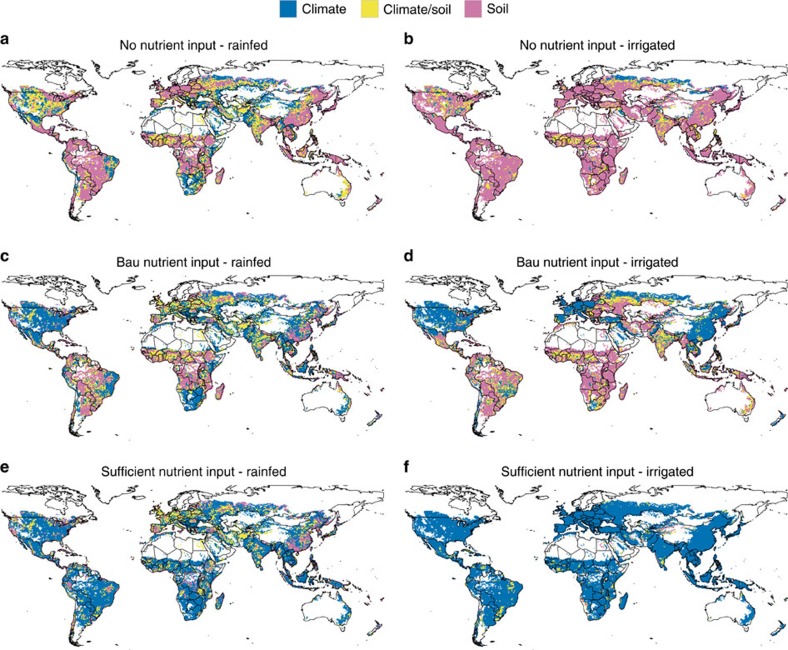
Global gridded crop models (GGCMs) are increasingly used for agro-environmental assessments and estimates of climate change impacts on food production. Recently, the influence of climate data and weather variability on GGCM outcomes has come under detailed scrutiny, unlike the influence of soil data. Here we compare yield variability caused by the soil type selected for GGCM simulations to weather-induced yield variability. Without fertilizer application, soil-type-related yield variability generally outweighs the simulated inter-annual variability in yield due to weather. Increasing applications of fertilizer and irrigation reduce this variability until it is practically negligible. Importantly, estimated climate change effects on yield can be either negative or positive depending on the chosen soil type. Soils thus have the capacity to either buffer or amplify these impacts. Our findings call for improvements in soil data available for crop modelling and more explicit accounting for soil variability in GGCM simulations.
全球网格化作物模型(GGCMs)越来越多地用于农业环境评估和估计气候变化对粮食生产的影响。最近,与土壤数据不同,气候数据和天气变化对 GGCM 结果的影响受到了详细的审查。在这里,我们比较了 GGCM 模拟中选择的土壤类型引起的产量变化与天气引起的产量变化。在不施用化肥的情况下,土壤类型相关的产量变化通常大于由于天气导致的模拟年际产量变化。随着化肥和灌溉的应用增加,这种变异性会降低,直到实际上可以忽略不计。重要的是,由于所选土壤类型的不同,估计的气候变化对产量的影响可能是负面的也可能是正面的。因此,土壤具有缓冲或放大这些影响的能力。我们的研究结果呼吁改进作物模型中可用的土壤数据,并在 GGCM 模拟中更明确地考虑土壤变异性。