van Ravenzwaaij Don, Donkin Chris, Vandekerckhove Joachim
University of Groningen, Department of Psychology, Grote Kruisstraat 2/1, Heymans Building, room 169, 9712, TS, Groningen, The Netherlands.
University of New South Wales, Sydney, Australia.
Psychon Bull Rev. 2017 Apr;24(2):547-556. doi: 10.3758/s13423-016-1081-y.
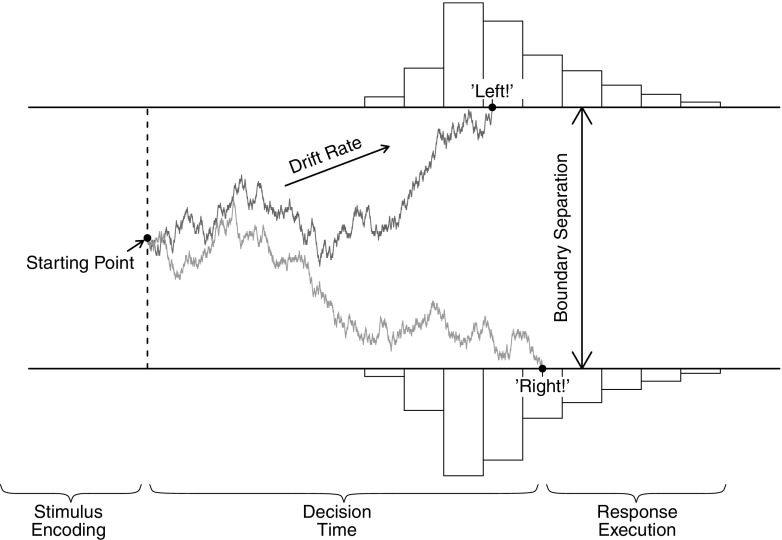
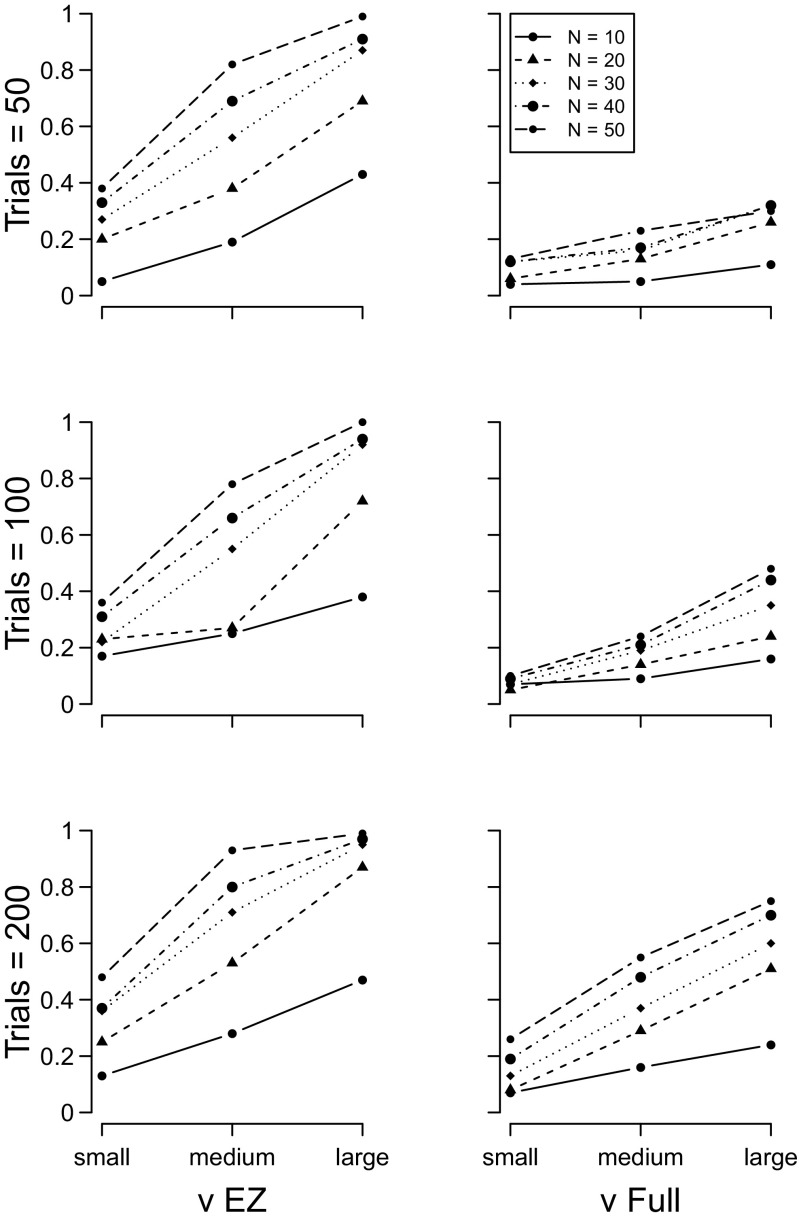
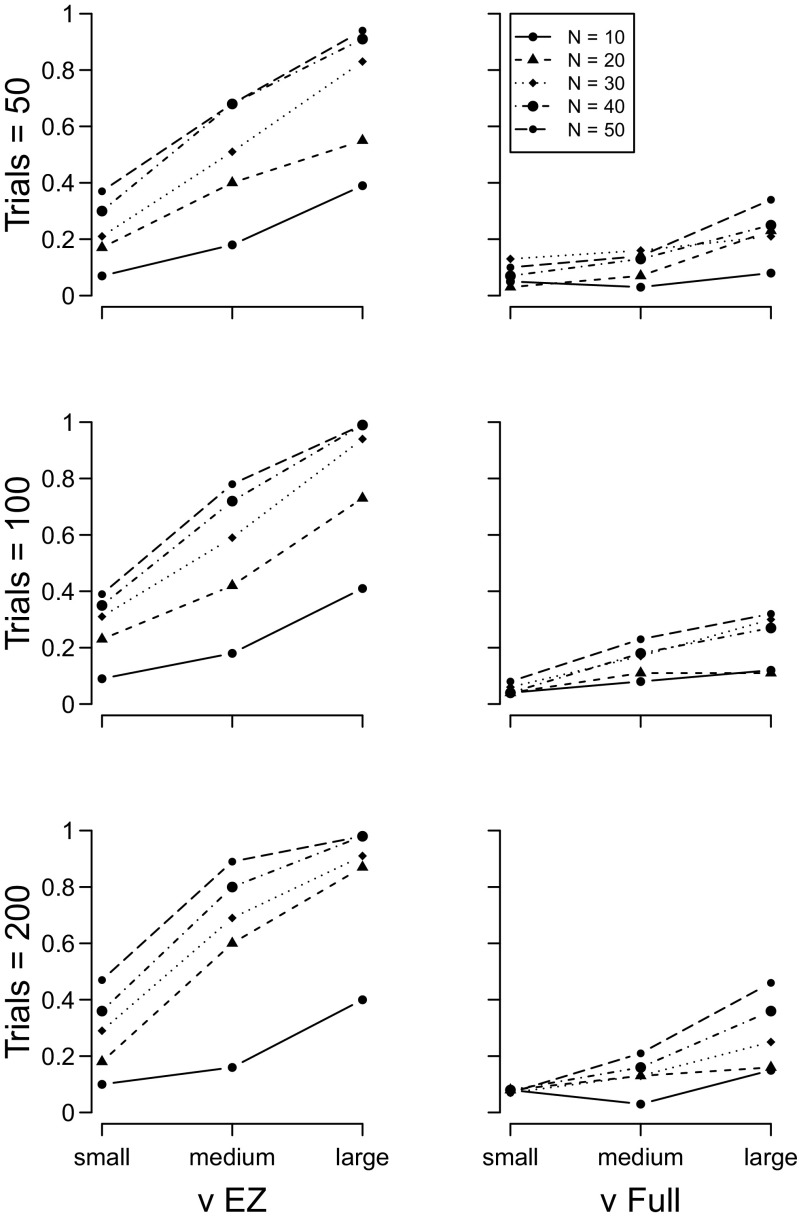
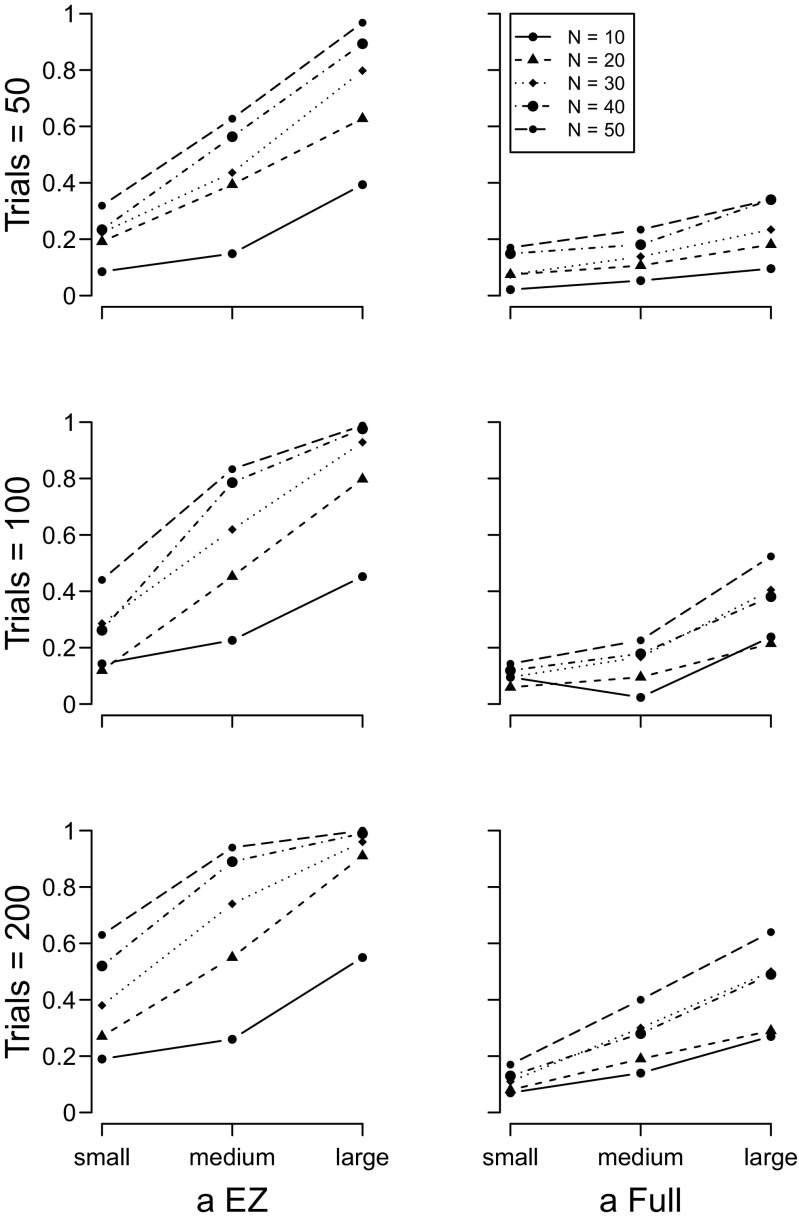
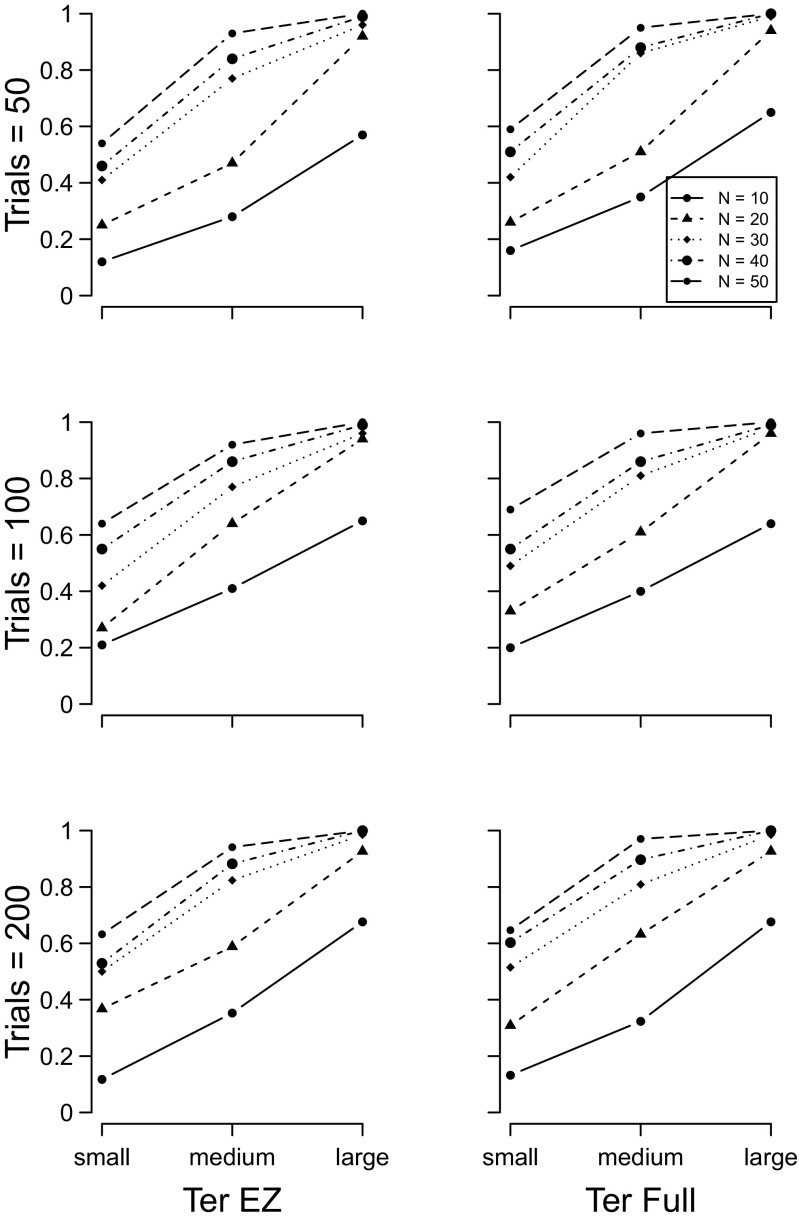
Over the last four decades, sequential accumulation models for choice response times have spread through cognitive psychology like wildfire. The most popular style of accumulator model is the diffusion model (Ratcliff Psychological Review, 85, 59-108, 1978), which has been shown to account for data from a wide range of paradigms, including perceptual discrimination, letter identification, lexical decision, recognition memory, and signal detection. Since its original inception, the model has become increasingly complex in order to account for subtle, but reliable, data patterns. The additional complexity of the diffusion model renders it a tool that is only for experts. In response, Wagenmakers et al. (Psychonomic Bulletin & Review, 14, 3-22, 2007) proposed that researchers could use a more basic version of the diffusion model, the EZ diffusion. Here, we simulate experimental effects on data generated from the full diffusion model and compare the power of the full diffusion model and EZ diffusion to detect those effects. We show that the EZ diffusion model, by virtue of its relative simplicity, will be sometimes better able to detect experimental effects than the data-generating full diffusion model.
在过去的四十年里,用于选择反应时间的序列累积模型如野火般在认知心理学领域广泛传播。最流行的累积器模型类型是扩散模型(拉特克利夫,《心理学评论》,第85卷,第59 - 108页,1978年),该模型已被证明能够解释来自广泛范式的数据,包括知觉辨别、字母识别、词汇判断、识别记忆和信号检测。自最初提出以来,为了解释细微但可靠的数据模式,该模型变得越来越复杂。扩散模型的额外复杂性使其成为一种只有专家才能使用的工具。作为回应,瓦根梅克斯等人(《心理物理学通报与评论》,第14卷,第3 - 22页,2007年)提出研究人员可以使用扩散模型的一个更基本版本,即EZ扩散模型。在此,我们模拟了对由完整扩散模型生成的数据的实验效应,并比较了完整扩散模型和EZ扩散模型检测这些效应的能力。我们表明,EZ扩散模型由于其相对简单性,有时将比生成数据的完整扩散模型更能检测出实验效应。