Sobkow Agata, Traczyk Jakub, Zaleskiewicz Tomasz
Department of Cognitive and Individual Differences Psychology, Faculty in Wroclaw, SWPS University of Social Sciences and Humanities Wroclaw, Poland.
Department of Economic Psychology, Faculty in Wroclaw, SWPS University of Social Sciences and Humanities Wroclaw, Poland.
Front Psychol. 2016 Jun 24;7:932. doi: 10.3389/fpsyg.2016.00932. eCollection 2016.
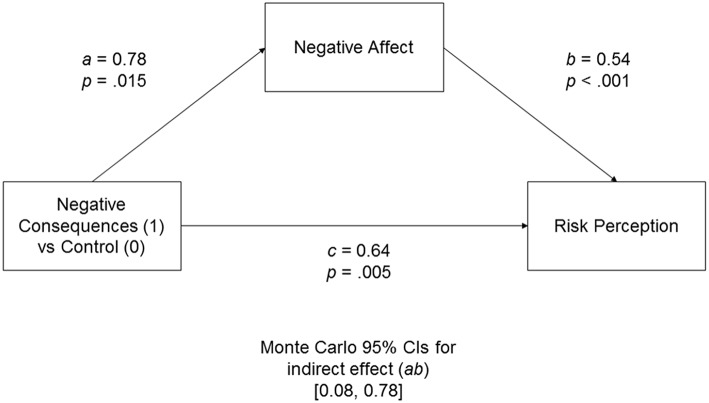
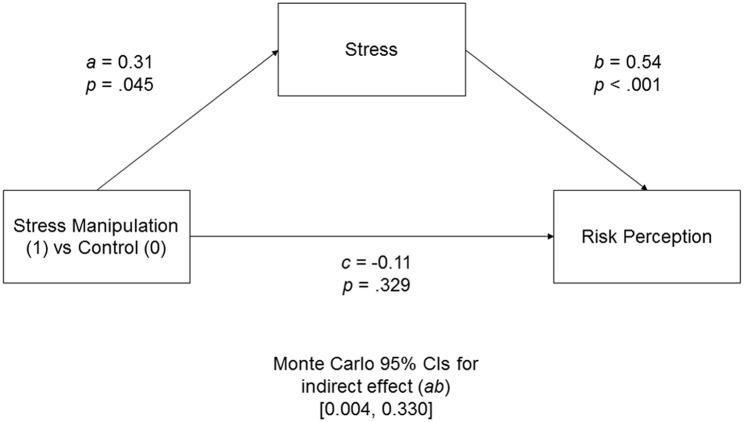
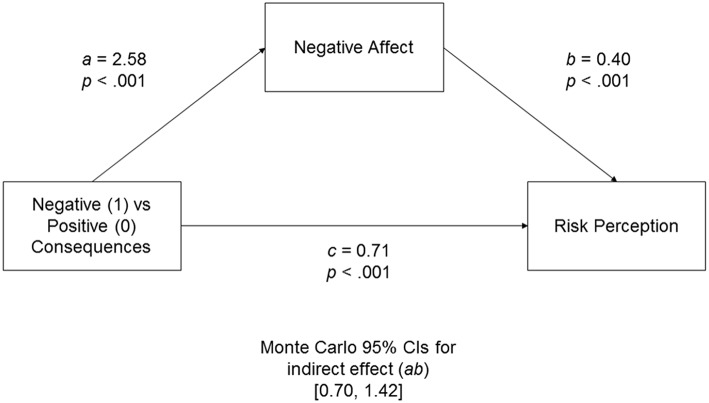
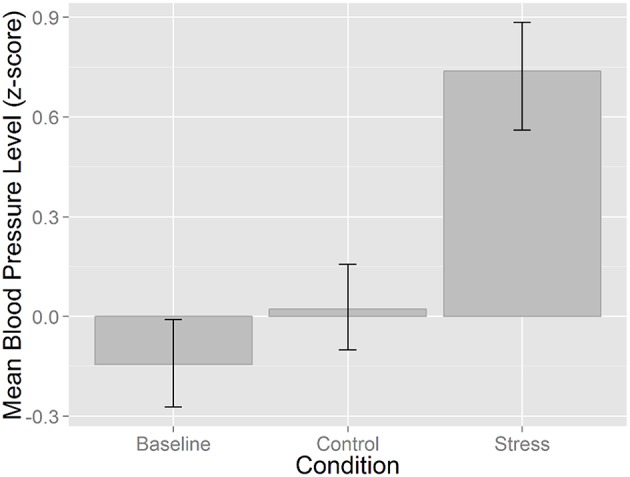
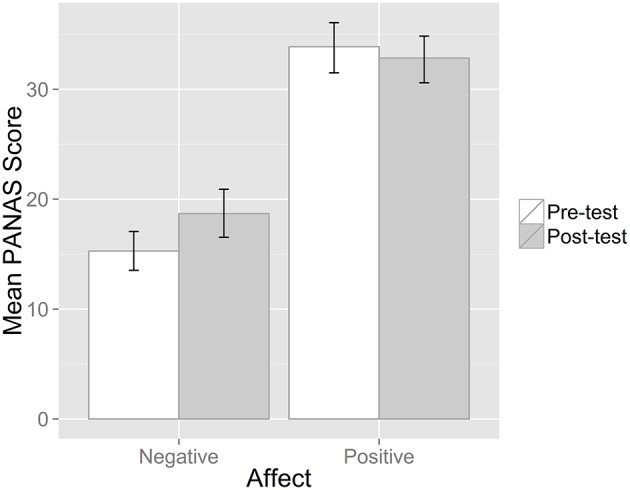
Recent research has documented that affect plays a crucial role in risk perception. When no information about numerical risk estimates is available (e.g., probability of loss or magnitude of consequences), people may rely on positive and negative affect toward perceived risk. However, determinants of affective reactions to risks are poorly understood. In a series of three experiments, we addressed the question of whether and to what degree mental imagery eliciting negative affect and stress influences risk perception. In each experiment, participants were instructed to visualize consequences of risk taking and to rate riskiness. In Experiment 1, participants who imagined negative risk consequences reported more negative affect and perceived risk as higher compared to the control condition. In Experiment 2, we found that this effect was driven by affect elicited by mental imagery rather than its vividness and intensity. In this study, imagining positive risk consequences led to lower perceived risk than visualizing negative risk consequences. Finally, we tested the hypothesis that negative affect related to higher perceived risk was caused by negative feelings of stress. In Experiment 3, we introduced risk-irrelevant stress to show that participants in the stress condition rated perceived risk as higher in comparison to the control condition. This experiment showed that higher ratings of perceived risk were influenced by psychological stress. Taken together, our results demonstrate that affect-laden mental imagery dramatically changes risk perception through negative affect (i.e., psychological stress).
最近的研究表明,情感在风险认知中起着至关重要的作用。当没有关于数值风险估计的信息时(例如,损失的概率或后果的严重程度),人们可能会依赖对感知到的风险的积极和消极情感。然而,对风险情感反应的决定因素却知之甚少。在一系列三个实验中,我们探讨了引发负面情感和压力的心理意象是否以及在多大程度上会影响风险认知这一问题。在每个实验中,参与者被要求设想冒险行为的后果并对风险程度进行评级。在实验1中,与对照组相比,想象负面风险后果的参与者报告了更多的负面情感,并认为风险更高。在实验2中,我们发现这种效应是由心理意象引发的情感驱动的,而不是其生动性和强度。在这项研究中,想象积极的风险后果导致的感知风险低于想象消极的风险后果。最后,我们检验了这样一个假设,即与较高感知风险相关的负面情感是由压力的负面情绪引起的。在实验3中,我们引入了与风险无关的压力,结果表明,与对照组相比,处于压力状态下的参与者对感知风险的评级更高。该实验表明,较高的感知风险评级受到心理压力的影响。综上所述,我们的研究结果表明,充满情感的心理意象会通过负面情感(即心理压力)显著改变风险认知。