Halliwell Joanna, Borrill Philippa, Gordon Anna, Kowalczyk Radoslaw, Pagano Marina L, Saccomanno Benedetta, Bentley Alison R, Uauy Cristobal, Cockram James
Crop Genetics Department, John Innes CentreNorwich, UK; John Bingham Laboratory, National Institute of Agricultural BotanyCambridge, UK.
Crop Genetics Department, John Innes Centre Norwich, UK.
Front Plant Sci. 2016 Jun 22;7:857. doi: 10.3389/fpls.2016.00857. eCollection 2016.
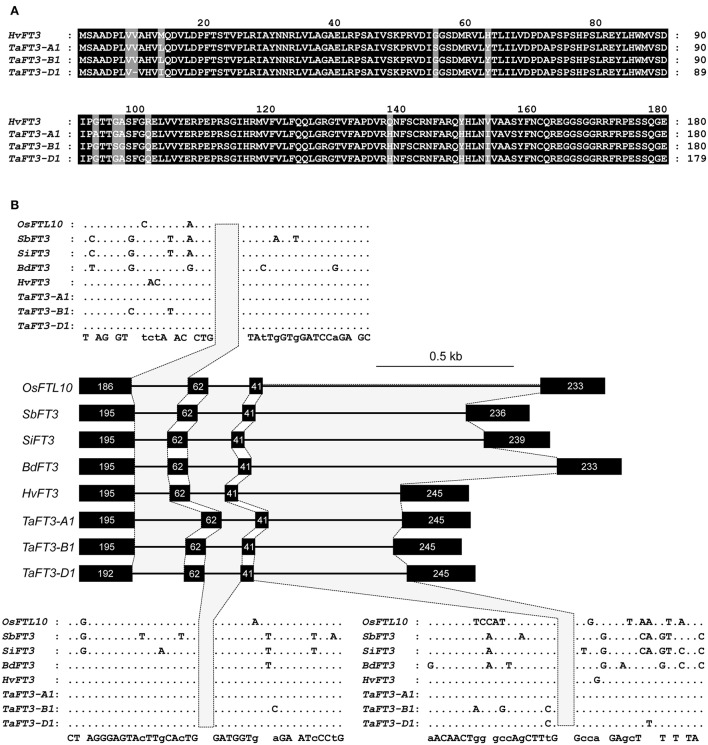
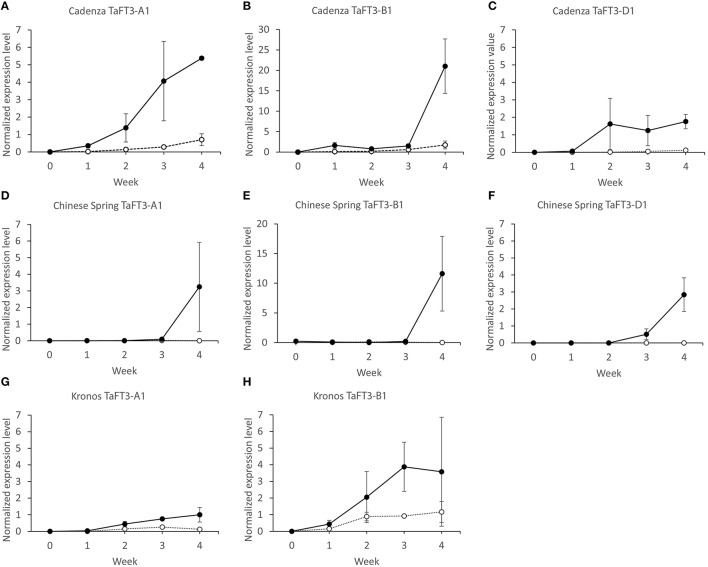
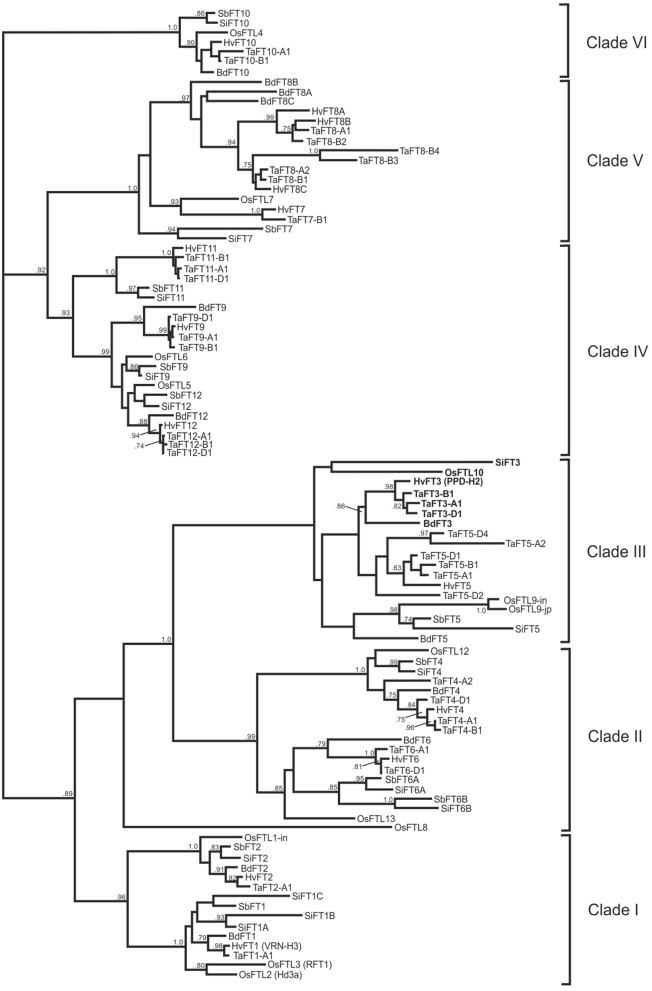
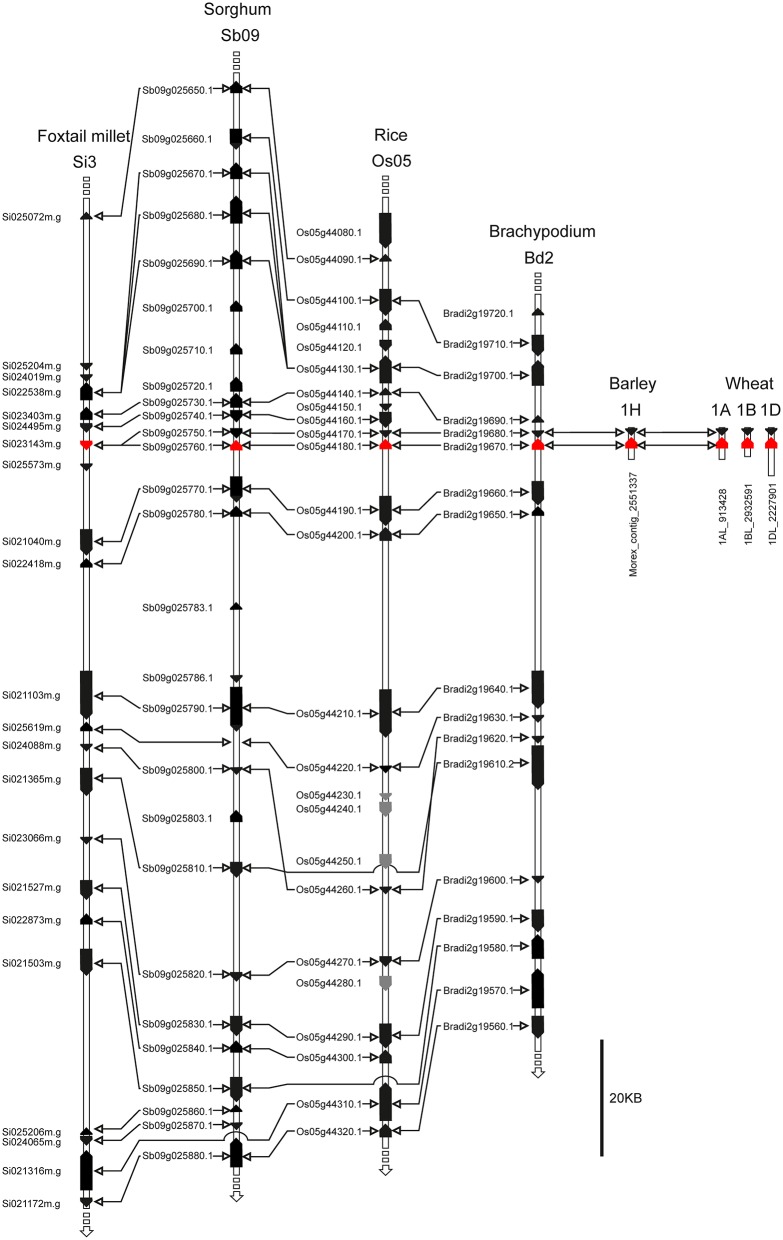
To date, a small number of major flowering time loci have been identified in the related Triticeae crops, bread wheat (Triticum aestivum), durum wheat (T. durum), and barley (Hordeum vulgare). Natural genetic variants at these loci result in major phenotypic changes which have adapted crops to the novel environments encountered during the spread of agriculture. The polyploid nature of bread and durum wheat means that major flowering time loci in which recessive alleles confer adaptive advantage in related diploid species have not been readily identified. One such example is the PPD-H2 flowering time locus encoded by FLOWERING LOCUS T 3 (HvFT3) in the diploid crop barley, for which recessive mutant alleles confer delayed flowering under short day (SD) photoperiods. In autumn-sown barley, such alleles aid the repression of flowering over the winter, which help prevent the development of cold-sensitive floral organs until the onset of inductive long day (LD) photoperiods the following spring. While the identification of orthologous loci in wheat could provide breeders with alternative mechanisms to fine tune flowering time, systematic identification of wheat orthologs of HvFT3 has not been reported. Here, we characterize the FT gene families in six Poaceae species, identifying novel members in all taxa investigated, as well as FT3 homoeologs from the A, B and D genomes of hexaploid (TaFT3) and tetraploid wheat. Sequence analysis shows TaFT3 homoeologs display high similarity to the HvFT3 coding region (95-96%) and predicted protein (96-97%), with conservation of intron/exon structure across the five cereal species investigated. Genetic mapping and comparative analyses in hexaploid and tetraploid wheat find TaFT3 homoeologs map to the long arms of the group 1 chromosomes, collinear to HvFT3 in barley and FT3 orthologs in rice, foxtail millet and brachypodium. Genome-specific expression analyses show FT3 homoeologs in tetraploid and hexaploid wheat are upregulated under SD photoperiods, but not under LDs, analogous to the expression of HvFT3. Collectively, these results indicate that functional wheat orthologs of HvFT3 have been identified. The molecular resources generated here provide the foundation for engineering a novel major flowering time locus in wheat using forward or reverse genetics approaches.
迄今为止,在相关的小麦族作物,如面包小麦(普通小麦)、硬粒小麦和大麦中,已鉴定出少数几个主要的开花时间基因座。这些基因座上的自然遗传变异导致了主要的表型变化,使作物适应了农业传播过程中遇到的新环境。面包小麦和硬粒小麦的多倍体性质意味着,在相关二倍体物种中,隐性等位基因具有适应性优势的主要开花时间基因座尚未被轻易鉴定出来。一个这样的例子是二倍体作物大麦中由开花位点T 3(HvFT3)编码的PPD-H2开花时间基因座,其隐性突变等位基因在短日照(SD)光周期下导致开花延迟。在秋播大麦中,这些等位基因有助于在冬季抑制开花,这有助于防止对低温敏感的花器官发育,直到次年春天诱导长日照(LD)光周期开始。虽然在小麦中鉴定直系同源基因座可以为育种者提供微调开花时间的替代机制,但尚未有关于系统鉴定HvFT3小麦直系同源基因的报道。在这里,我们对六个禾本科物种中的FT基因家族进行了表征,在所有研究的分类群中鉴定出了新成员,以及来自六倍体(TaFT3)和四倍体小麦A、B和D基因组的FT3同源基因。序列分析表明,TaFT3同源基因与HvFT3编码区(95-96%)和预测蛋白(96-97%)具有高度相似性,在所研究的五个谷类物种中内含子/外显子结构保守。在六倍体和四倍体小麦中的遗传定位和比较分析发现,TaFT3同源基因定位于第1组染色体的长臂上,与大麦中的HvFT3以及水稻、谷子和短柄草中的FT3直系同源基因共线。基因组特异性表达分析表明,四倍体和六倍体小麦中的FT3同源基因在SD光周期下上调,但在LD光周期下不上调,这与HvFT3的表达类似。总体而言,这些结果表明已鉴定出HvFT3的功能性小麦直系同源基因。这里产生的分子资源为利用正向或反向遗传学方法在小麦中构建一个新的主要开花时间基因座奠定了基础。