Dharmasena Madushini N, Feuille Catherine M, Starke Carly Elizabeth C, Bhagwat Arvind A, Stibitz Scott, Kopecko Dennis J
Laboratory of Mucosal Pathogens and Cellular Immunology, Food and Drug Administration-Center for Biologics Evaluation and Research, New Hampshire Avenue, Silver Spring, Maryland, United States of America.
Environmental Microbial and Food Safety Laboratory, Agricultural Research Service, United States Department of Agriculture, Beltsville, Maryland, United States of America.
PLoS One. 2016 Sep 27;11(9):e0163511. doi: 10.1371/journal.pone.0163511. eCollection 2016.
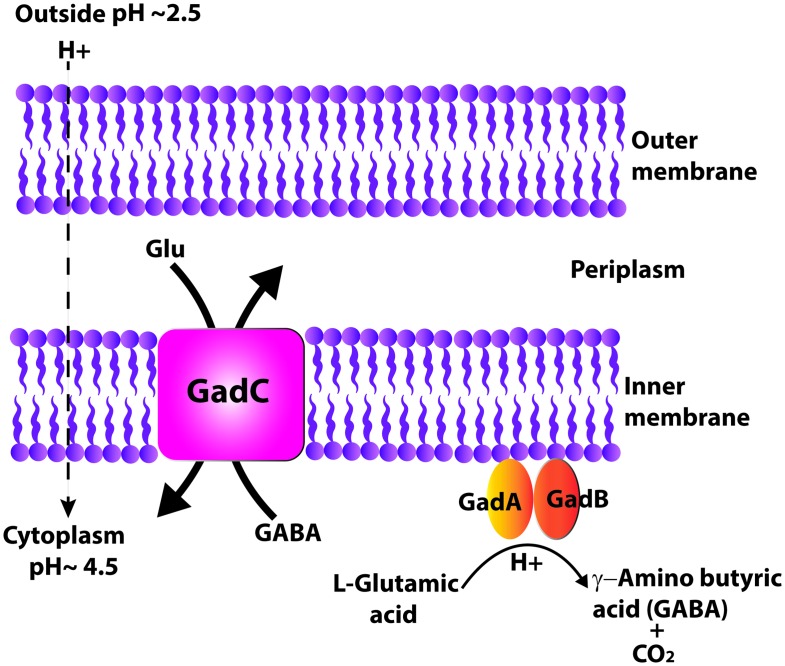
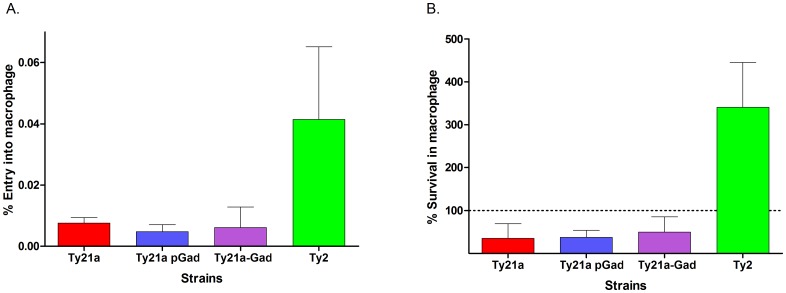
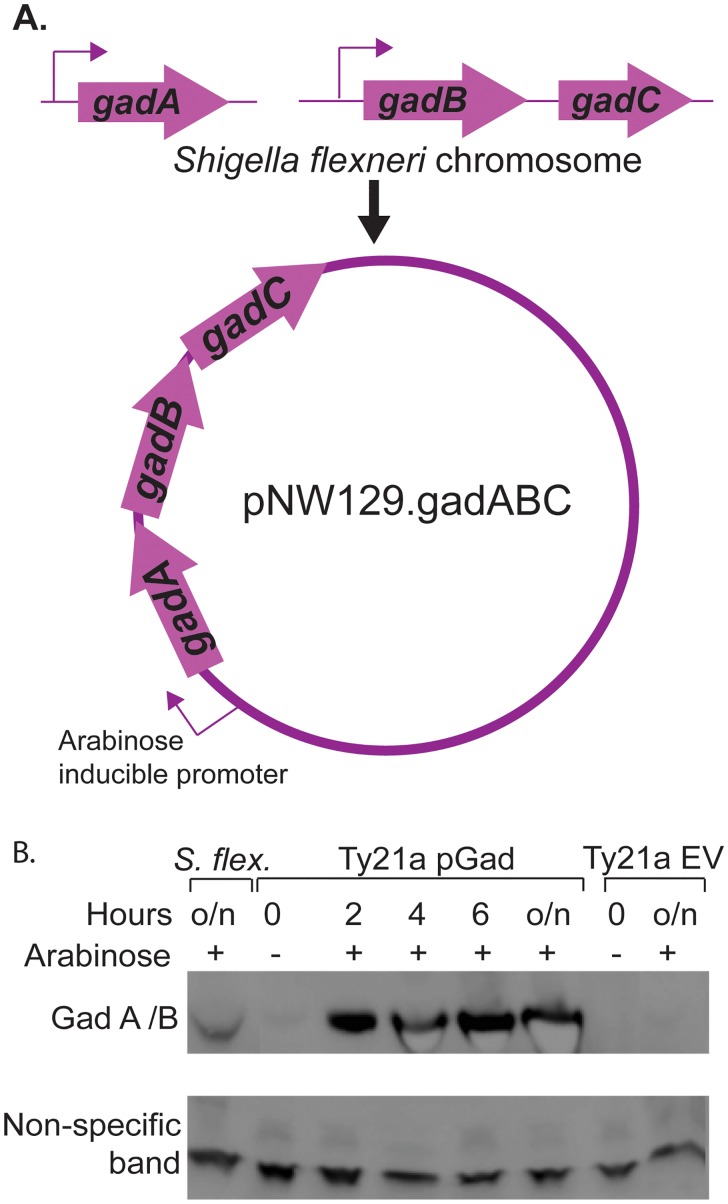
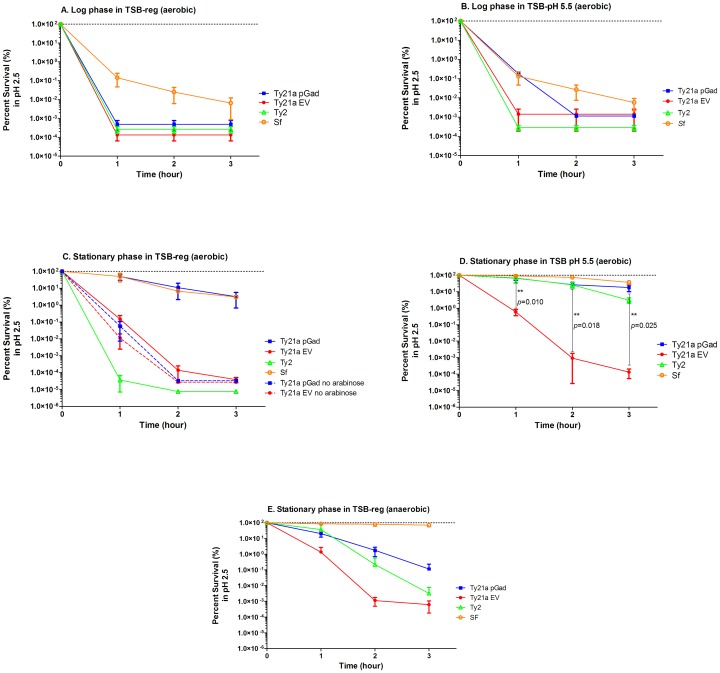
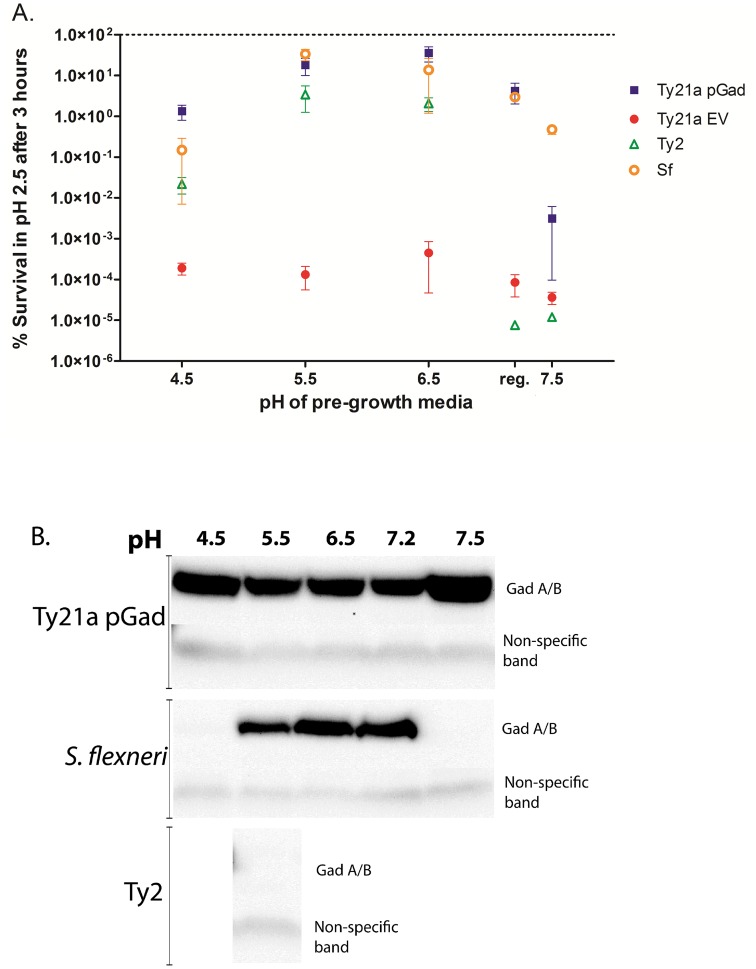
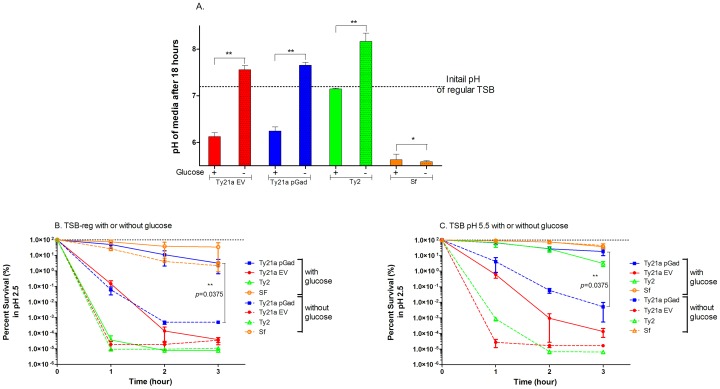
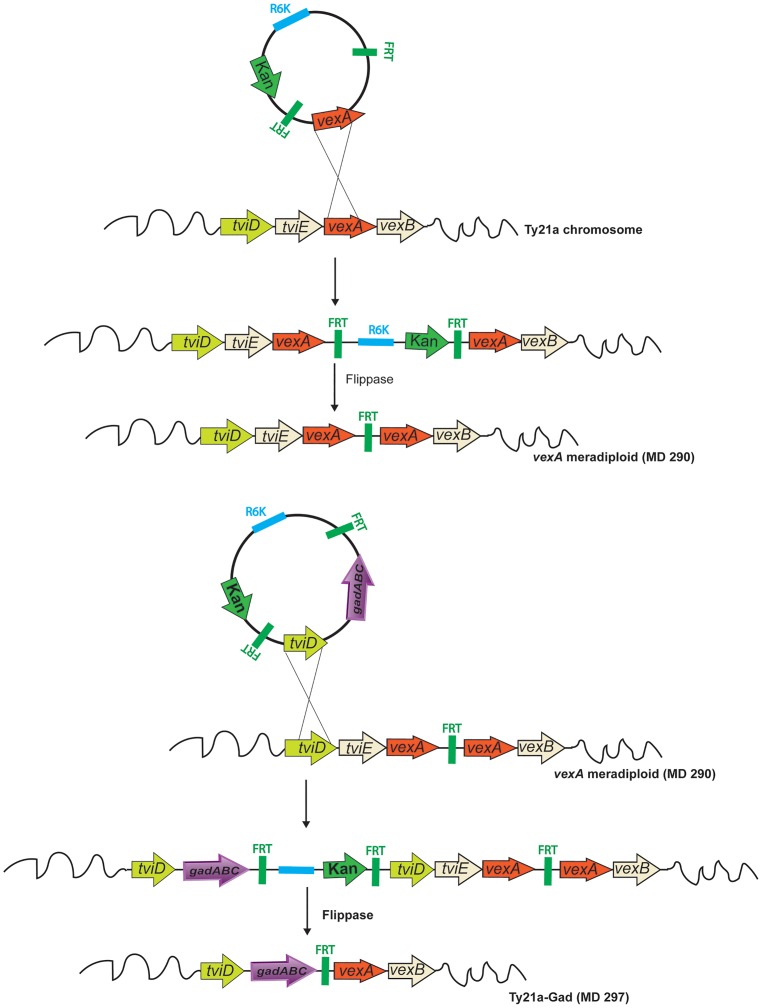
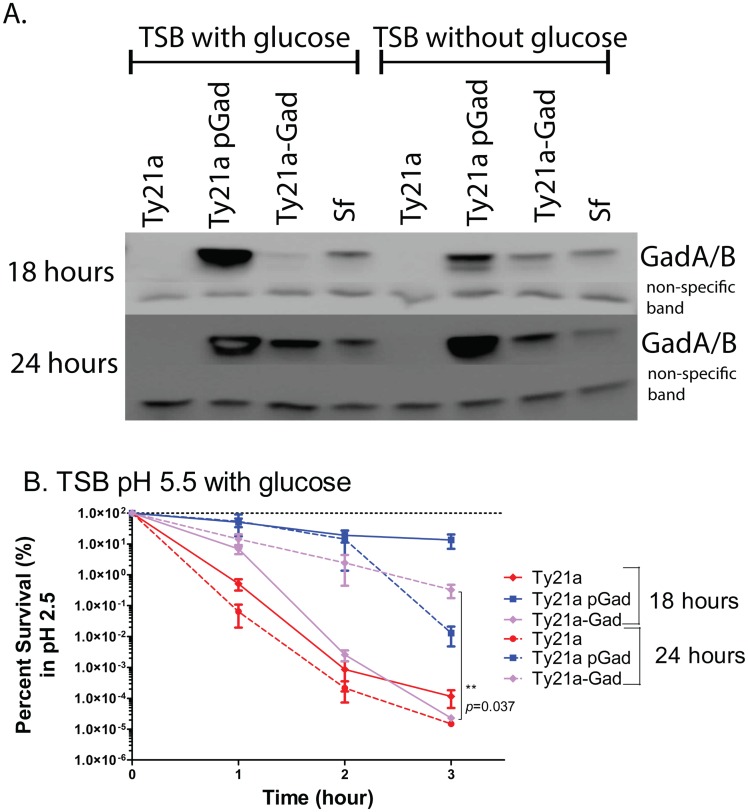
The licensed oral, live-attenuated bacterial vaccine for typhoid fever, Salmonella enterica serovar Typhi strain Ty21a, has also been utilized as a vaccine delivery platform for expression of diverse foreign antigens that stimulate protection against shigellosis, anthrax, plague, or human papilloma virus. However, Ty21a is acid-labile and, for effective oral immunization, stomach acidity has to be either neutralized with buffer or by-passed with Ty21a in an enteric-coated capsule (ECC). Several studies have shown that efficacy is reduced when Ty21a is administered in an ECC versus as a buffered liquid formulation, the former limiting exposure to GI tract lymphoid tissues. However, the ECC was selected as a more practical delivery format for both packaging/shipping and vaccine administration ease. We have sought to increase Ty21a acid-resistance to allow for removal from the ECC and immune enhancement. To improve Ty21a acid-resistance, glutamate-dependent acid resistance genes (GAD; responsible for Shigella spp. survival at very low pH) were cloned on a multi-copy plasmid (pGad) under a controllable arabinose-inducible promoter. pGad enhanced acid survival of Ty21a by 5 logs after 3 hours at pH 2.5, when cells were pre-grown in arabinose and under conditions that promote an acid-tolerance response (ATR). For genetically 100% stable expression, we inserted the gad genes into the Ty21a chromosome, using a method that allowed for subsequent removal of a selectable antibiotic resistance marker. Further, both bacterial growth curves and survival assays in cultured human monocytes/macrophages suggest that neither the genetic methods employed nor the resulting acid-resistance conferred by expression of the Gad proteins in Ty21a had any effect on the existing attenuation of this vaccine strain.
用于伤寒热的口服减毒活细菌疫苗——伤寒沙门氏菌血清型伤寒菌株Ty21a,也已被用作疫苗递送平台,用于表达多种外源抗原,这些抗原可刺激机体产生针对志贺氏菌病、炭疽、鼠疫或人乳头瘤病毒的保护作用。然而,Ty21a对酸不稳定,为了实现有效的口服免疫,必须用缓冲液中和胃酸,或者将Ty21a装入肠溶胶囊(ECC)以绕过胃酸。多项研究表明,与缓冲液液体剂型相比,以ECC形式给药时Ty21a的效力会降低,前者限制了其与胃肠道淋巴组织的接触。然而,出于包装/运输以及疫苗接种便利性的考虑,ECC被选为更实用的递送形式。我们试图提高Ty21a的耐酸性,以便能够从ECC中去除并增强免疫效果。为了提高Ty21a的耐酸性,将谷氨酸依赖性耐酸基因(GAD;负责志贺氏菌属在极低pH值下的存活)克隆到一个多拷贝质粒(pGad)上,该质粒受可控的阿拉伯糖诱导型启动子调控。当细胞在阿拉伯糖中预培养并处于促进耐酸反应(ATR)的条件下时,在pH 2.5的环境中培养3小时后,pGad使Ty21a的耐酸性提高了5个对数。为了实现100%的基因稳定表达,我们使用一种方法将gad基因插入Ty21a染色体,该方法允许随后去除一个可选的抗生素抗性标记。此外,细菌生长曲线以及在培养的人单核细胞/巨噬细胞中的存活试验表明,所采用的基因方法以及Ty21a中Gad蛋白表达所产生的耐酸性,均未对该疫苗菌株现有的减毒效果产生任何影响。