Álvarez-García David, García Trinidad, Barreiro-Collazo Alejandra, Dobarro Alejandra, Antúnez Ángela
Department of Psychology, University of Oviedo Oviedo, Spain.
Front Psychol. 2016 Sep 13;7:1383. doi: 10.3389/fpsyg.2016.01383. eCollection 2016.
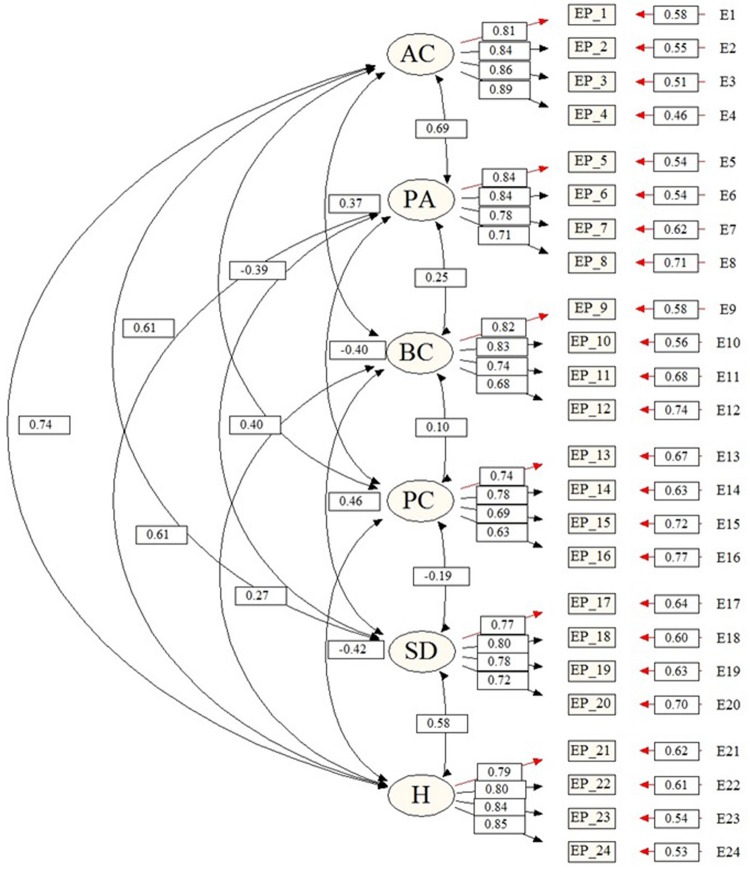
Antisocial behavior is strongly associated with academic failure in adolescence. There is a solid body of evidence that points to parenting style as one of its main predictors. The objective of this work is to elaborate a reduced, valid, and reliable version of the questionnaire by Oliva et al. (2007) to evaluate the dimensions of parenting style and to analyze its psychometric properties in a sample of Spanish adolescents. To that end, the designed questionnaire was applied to 1974 adolescents 12-18 years of age from Asturias (Spain). Regarding construct validity, the results show that the model that best represents the data is composed of six dimensions of parenting style, just as in the original scale, namely affection and communication; promotion of autonomy; behavioral control; psychological control; self-disclosure; and humor. The psychological control factor negatively correlates with the other factors, with the exception of behavioral control, with which it positively correlates. The remaining correlations among the factors in the parenting style questionnaire are positive. Regarding internal consistency, the reliability analysis for each factor supports the suitability of this six-factor model. With regard to criterion validity, as expected based on the evidence available, the six dimensions of parenting style correlate in a statistically significant manner with the three antisocial behavior measures used as criteria (off-line school aggression, antisocial behavior, and antisocial friendships). Specifically, all dimensions negatively correlate with the three variables, except for psychological control. In the latter case, the correlation is positive. The theoretical and practical implications of these results are discussed.
反社会行为与青少年学业失败密切相关。有确凿的证据表明,养育方式是其主要预测因素之一。这项工作的目的是对奥利瓦等人(2007年)编制的问卷进行精简、有效且可靠的版本,以评估养育方式的维度,并分析其在西班牙青少年样本中的心理测量特性。为此,将设计好的问卷应用于来自西班牙阿斯图里亚斯的1974名12至18岁的青少年。关于结构效度,结果表明,最能代表数据的模型由养育方式的六个维度组成,与原始量表一样,即情感与沟通;自主性促进;行为控制;心理控制;自我表露;以及幽默。心理控制因素与其他因素呈负相关,但与行为控制呈正相关,行为控制除外。养育方式问卷中各因素之间的其余相关性为正。关于内部一致性,每个因素的信度分析支持了这个六因素模型的适用性。关于效标效度,根据现有证据预期,养育方式的六个维度与用作标准的三种反社会行为测量指标(校内线下攻击行为、反社会行为和反社会友谊)存在统计学上的显著相关性。具体而言,除心理控制外,所有维度与这三个变量均呈负相关。在后一种情况下,相关性为正。讨论了这些结果的理论和实际意义。