González-Aguilera Karla L, Saad Carolina F, Chávez Montes Ricardo A, Alves-Ferreira Marcio, de Folter Stefan
Unidad de Genómica Avanzada - Laboratorio Nacional de Genómica para la Biodiversidad, Centro de Investigación y de Estudios Avanzados del Instituto Politécnico Nacional Irapuato, Mexico.
Laboratório de Genética Molecular Vegetal, Universidade Federal do Rio de Janeiro Rio de Janeiro, Brazil.
Front Plant Sci. 2016 Sep 13;7:1386. doi: 10.3389/fpls.2016.01386. eCollection 2016.
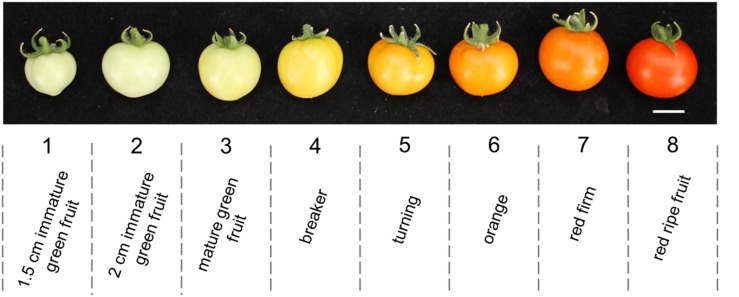
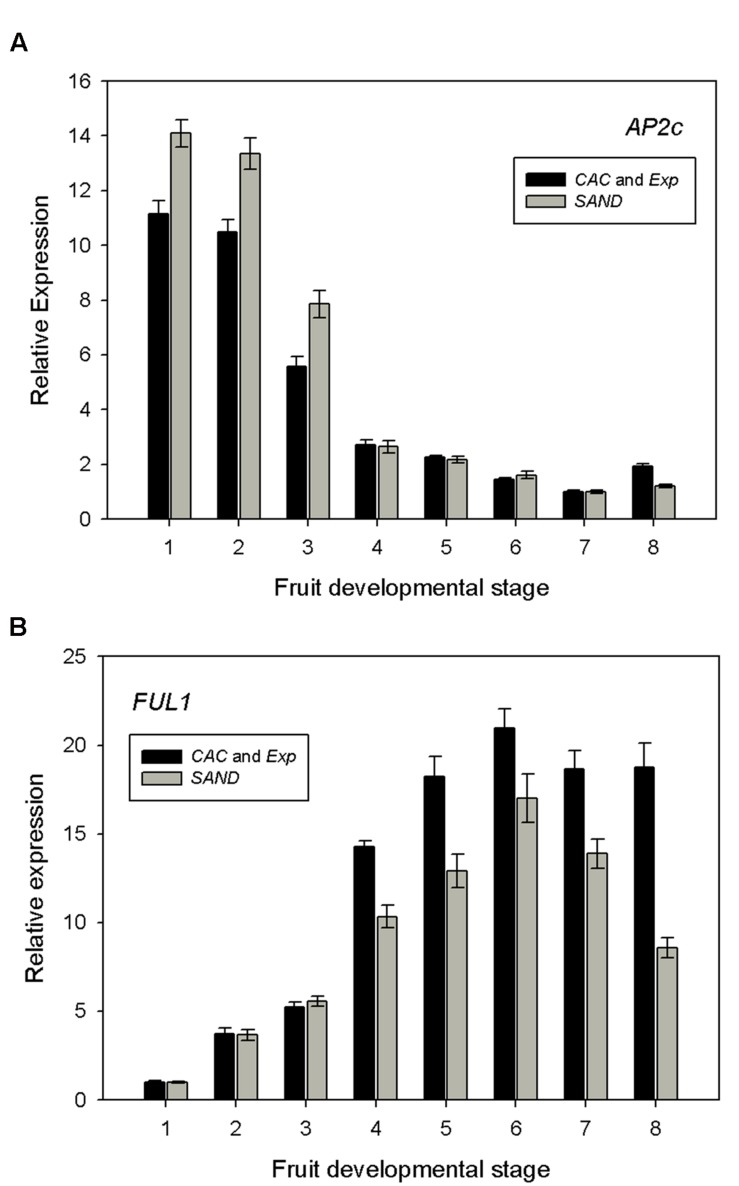
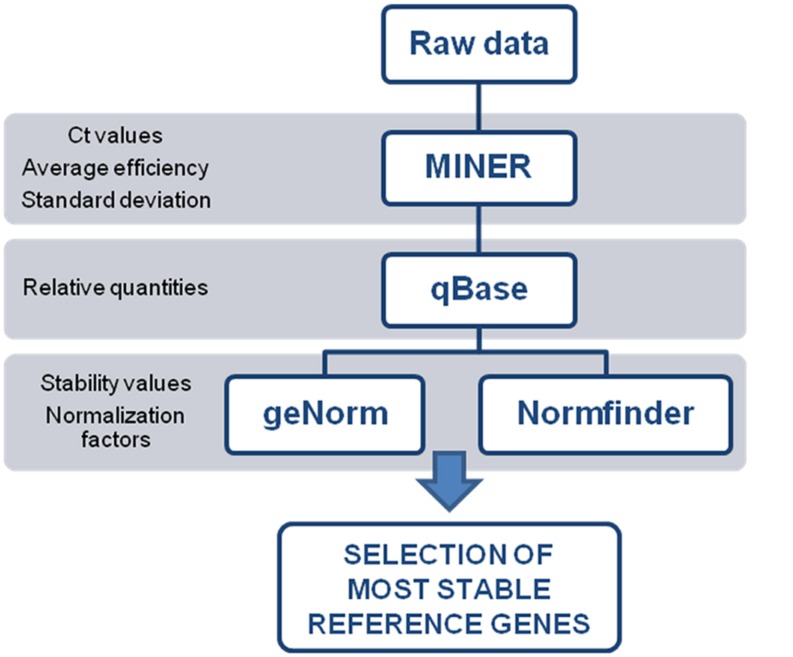
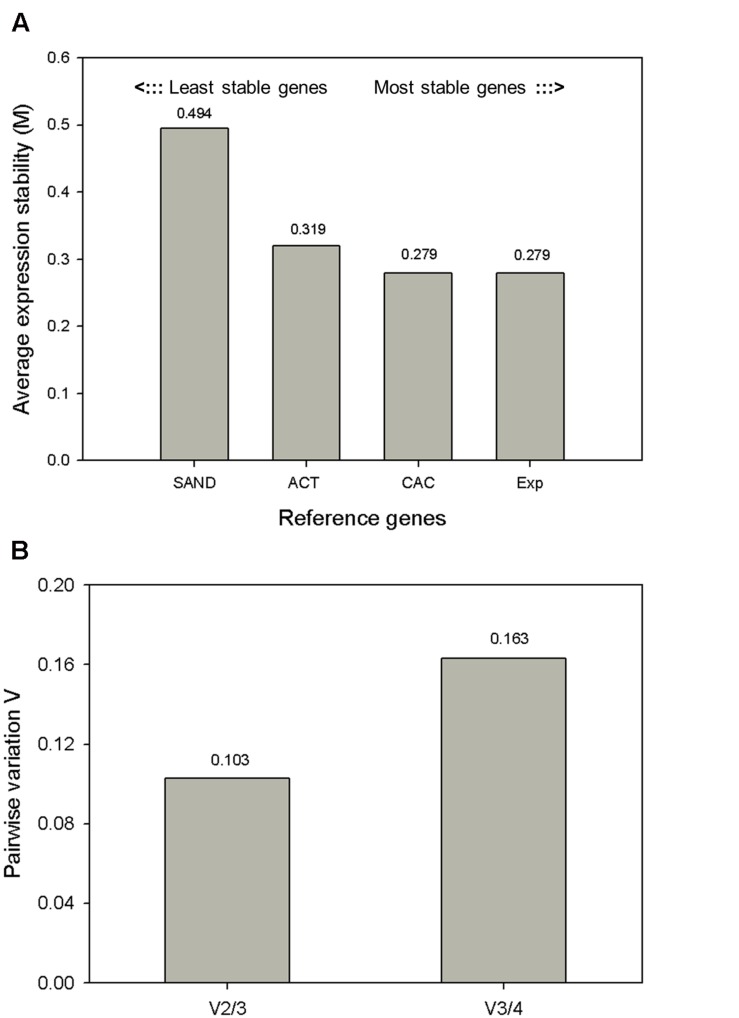
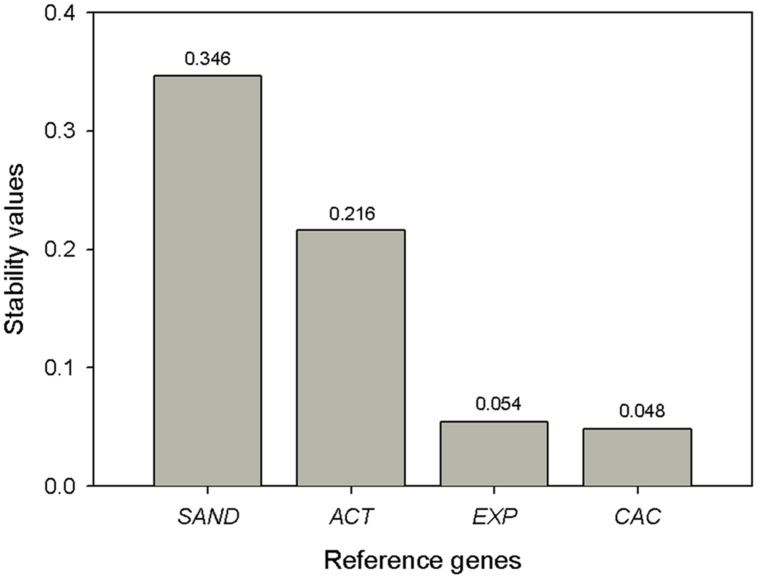
Quantitative real-time RT-PCR (qRT-PCR) has become one of the most widely used methods for accurate quantification of gene expression. Since there are no universal reference genes for normalization, the optimal strategy to normalize raw qRT-PCR data is to perform an initial comparison of a set of independent reference genes to assess the most stable ones in each biological model. Normalization of a qRT-PCR experiment helps to ensure that the results are both statistically significant and biologically meaningful. Tomato is the model of choice to study fleshy fruit development. The miniature tomato (Solanum lycopersicum L.) cultivar Micro-Tom (MT) is considered a model system for tomato genetics and functional genomics. A new genotype, containing the Rg1 allele, improves tomato in vitro regeneration. In this work, we evaluated the expression stability of four tomato reference genes, namely CAC, SAND, Expressed, and ACTIN2. We showed that the genes CAC and Exp are the best reference genes of the four we tested during fruit development in the MT-Rg1 genotype. Furthermore, we validated the reference genes by showing that the expression profiles of the transcription factors FRUITFULL1 and APETALA2c during fruit development are comparable to previous reports using other tomato cultivars.
定量实时逆转录聚合酶链反应(qRT-PCR)已成为最广泛使用的准确量化基因表达的方法之一。由于不存在用于标准化的通用参考基因,对原始qRT-PCR数据进行标准化的最佳策略是对一组独立参考基因进行初步比较,以评估每个生物学模型中最稳定的基因。qRT-PCR实验的标准化有助于确保结果在统计学上具有显著性且在生物学上具有意义。番茄是研究肉质果实发育的首选模型。微型番茄(Solanum lycopersicum L.)品种Micro-Tom(MT)被认为是番茄遗传学和功能基因组学的模型系统。一种含有Rg1等位基因的新基因型提高了番茄的离体再生能力。在这项工作中,我们评估了四个番茄参考基因的表达稳定性,即CAC、SAND、Expressed和ACTIN2。我们表明,在MT-Rg1基因型果实发育过程中,基因CAC和Exp是我们测试的四个基因中最佳的参考基因。此外,我们通过证明在果实发育过程中转录因子FRUITFULL1和APETALA2c的表达谱与使用其他番茄品种的先前报道相当,验证了这些参考基因。