Yu Hongyou, Moran Corey S, Trollope Alexandra F, Woodward Lynn, Kinobe Robert, Rush Catherine M, Golledge Jonathan
Queensland Research Centre for Peripheral Vascular Disease, College of Medicine and Dentistry, James Cook University, Townsville, 4811, Australia.
Discipline of Anatomy, College of Medicine and Dentistry, James Cook University, Townsville, 4811, Australia.
Sci Rep. 2016 Oct 21;6:35190. doi: 10.1038/srep35190.
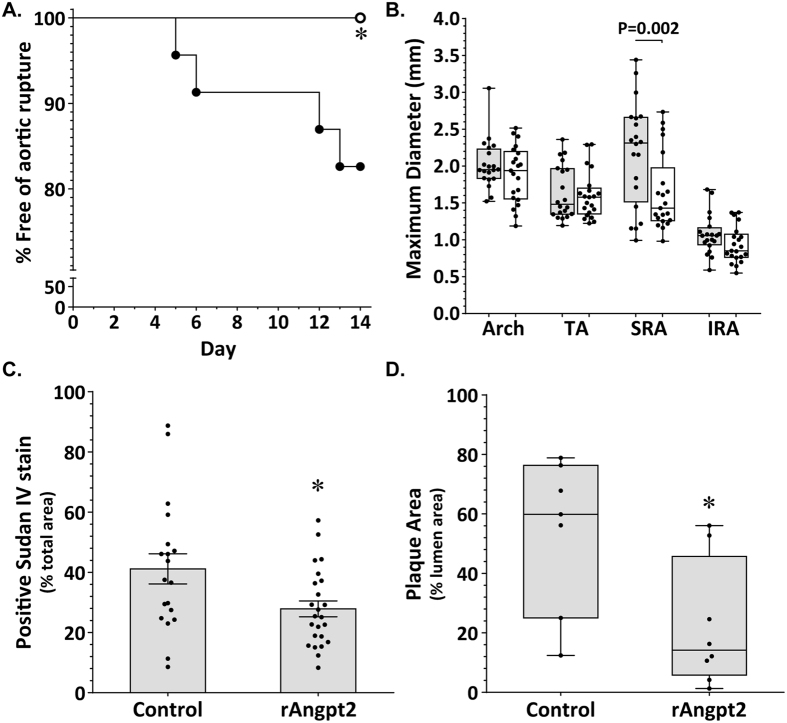
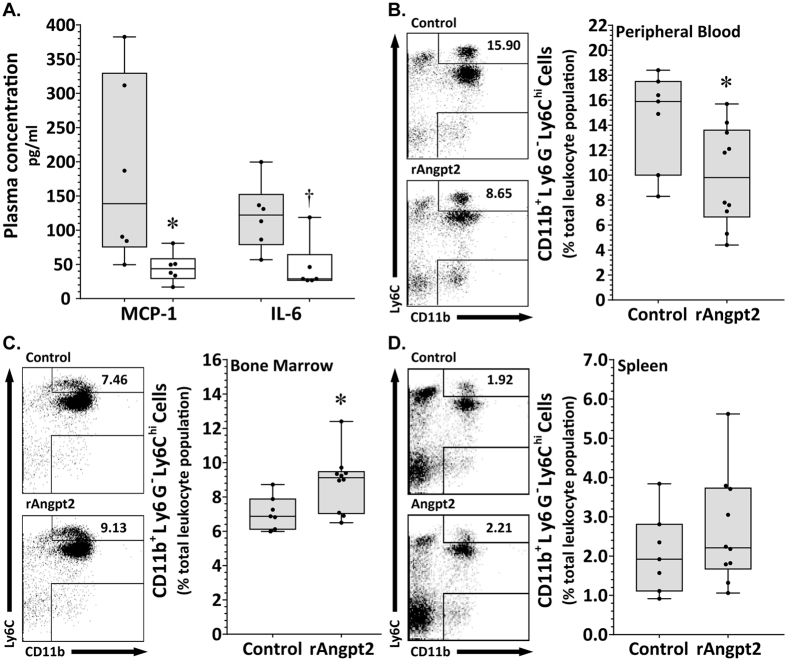
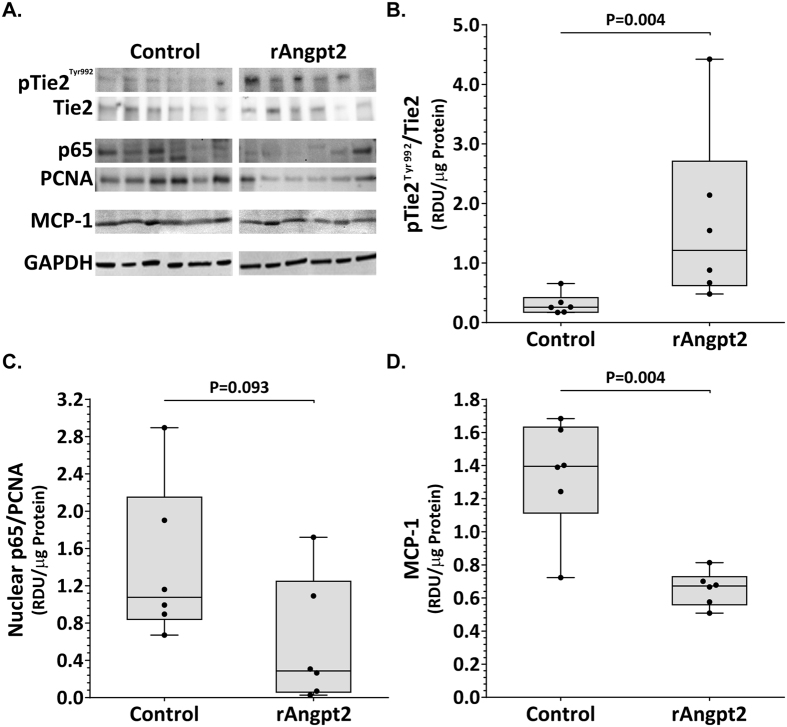
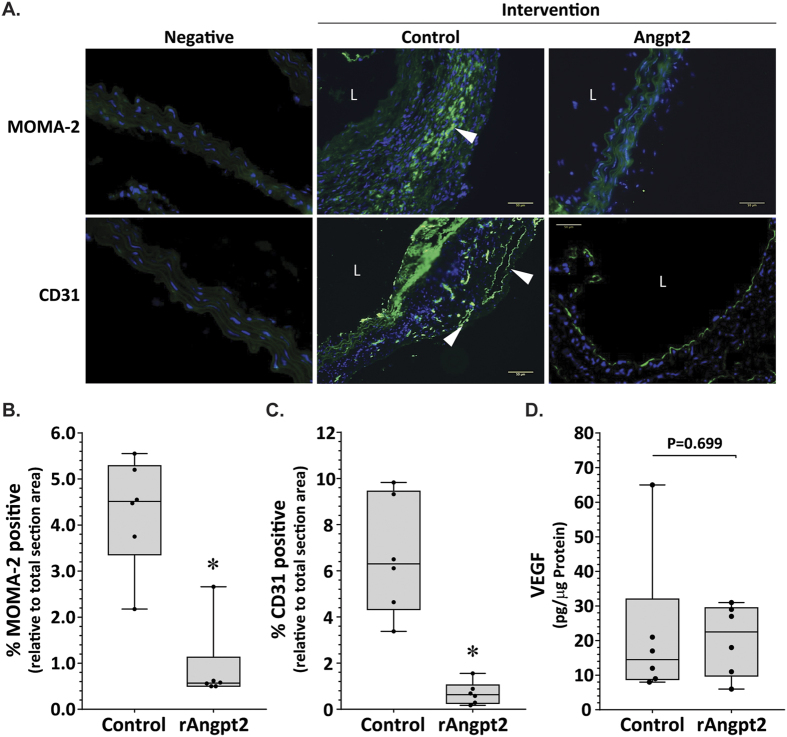
Angiogenesis and inflammation are implicated in aortic aneurysm and atherosclerosis and regulated by angiopoietin-2 (Angpt2). The effect of Angpt2 administration on experimental aortic aneurysm and atherosclerosis was examined. Six-month-old male apolipoprotein E deficient (ApoE) mice were infused with angiotensin II (AngII) and administered subcutaneous human Fc-protein (control) or recombinant Angpt2 (rAngpt2) over 14 days. Administration of rAngpt2 significantly inhibited AngII-induced aortic dilatation and rupture of the suprarenal aorta (SRA), and development of atherosclerosis within the aortic arch. These effects were blood pressure and plasma lipoprotein independent and associated with Tie2 activation and down-regulation of monocyte chemotactic protein-1 (MCP-1) within the SRA. Plasma concentrations of MCP-1 and interleukin-6 were significantly lower in mice receiving rAngpt2. Immunostaining for the monocyte/macrophage marker MOMA-2 and the angiogenesis marker CD31 within the SRA were less in mice receiving rAngpt2 than controls. The percentage of inflammatory (Ly6C) monocytes within the bone marrow was increased while that in peripheral blood was decreased by rAngpt2 administration. In conclusion, administration of rAngpt2 attenuated angiotensin II-induced aortic aneurysm and atherosclerosis in ApoE mice associated with reduced aortic inflammation and angiogenesis. Up-regulation of Angpt2 may have potential therapeutic value in patients with aortic aneurysm and atherosclerosis.
血管生成和炎症参与主动脉瘤和动脉粥样硬化的发生,并受血管生成素-2(Angpt2)调控。本研究检测了给予Angpt2对实验性主动脉瘤和动脉粥样硬化的影响。给6月龄雄性载脂蛋白E缺陷(ApoE)小鼠输注血管紧张素II(AngII),并在14天内皮下给予人Fc蛋白(对照组)或重组Angpt2(rAngpt2)。给予rAngpt2可显著抑制AngII诱导的主动脉扩张和肾上腺主动脉(SRA)破裂,以及主动脉弓内动脉粥样硬化的发展。这些作用与血压和血浆脂蛋白无关,与Tie2激活及SRA内单核细胞趋化蛋白-1(MCP-1)的下调有关。接受rAngpt2的小鼠血浆中MCP-1和白细胞介素-6浓度显著降低。接受rAngpt2的小鼠SRA内单核细胞/巨噬细胞标志物MOMA-2和血管生成标志物CD31的免疫染色较对照组减少。给予rAngpt2可使骨髓中炎性(Ly6C)单核细胞百分比增加,而外周血中该细胞百分比降低。总之,给予rAngpt2可减轻AngII诱导的ApoE小鼠主动脉瘤和动脉粥样硬化,这与主动脉炎症和血管生成减少有关。上调Angpt2可能对主动脉瘤和动脉粥样硬化患者具有潜在治疗价值。