Celma Cristina C, Stewart Meredith, Wernike Kerstin, Eschbaumer Michael, Gonzalez-Molleda Lorenzo, Breard Emmanuel, Schulz Claudia, Hoffmann Bernd, Haegeman Andy, De Clercq Kris, Zientara Stephan, van Rijn Piet A, Beer Martin, Roy Polly
Department of Pathogen Molecular Biology, London School of Hygiene and Tropical Medicine, London, United Kingdom.
Institute of Diagnostic Virology, Friedrich-Loeffler-Institut, Greifswald, Insel Riems, Germany.
J Virol. 2016 Dec 16;91(1). doi: 10.1128/JVI.01892-16. Print 2017 Jan 1.
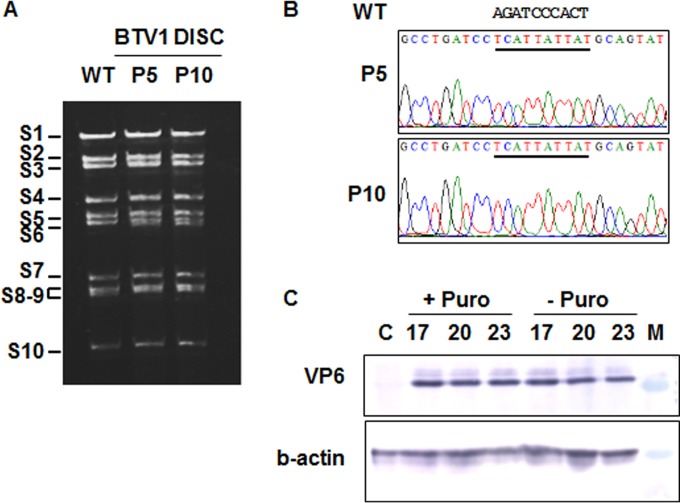
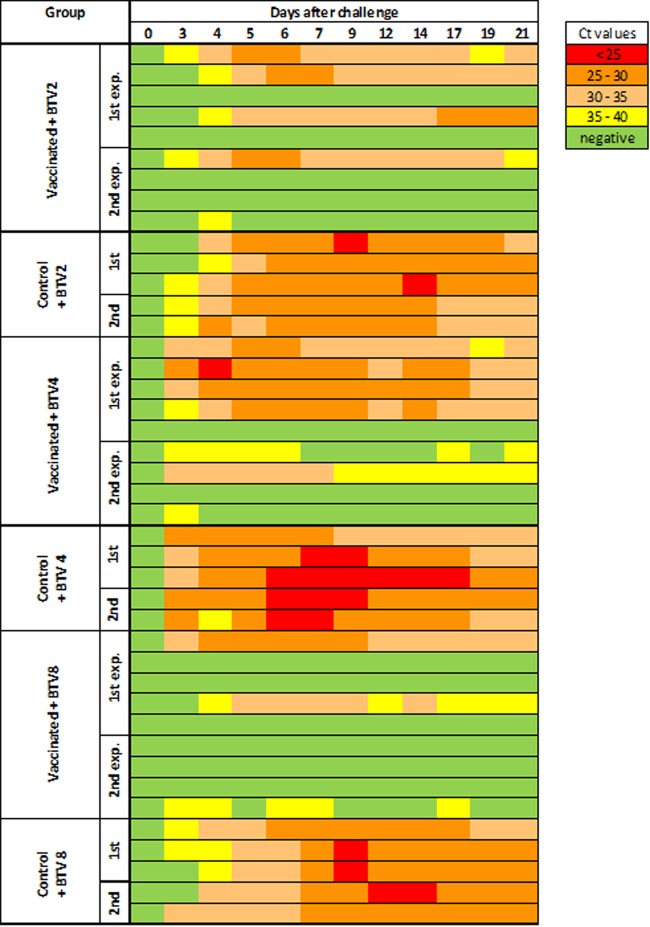
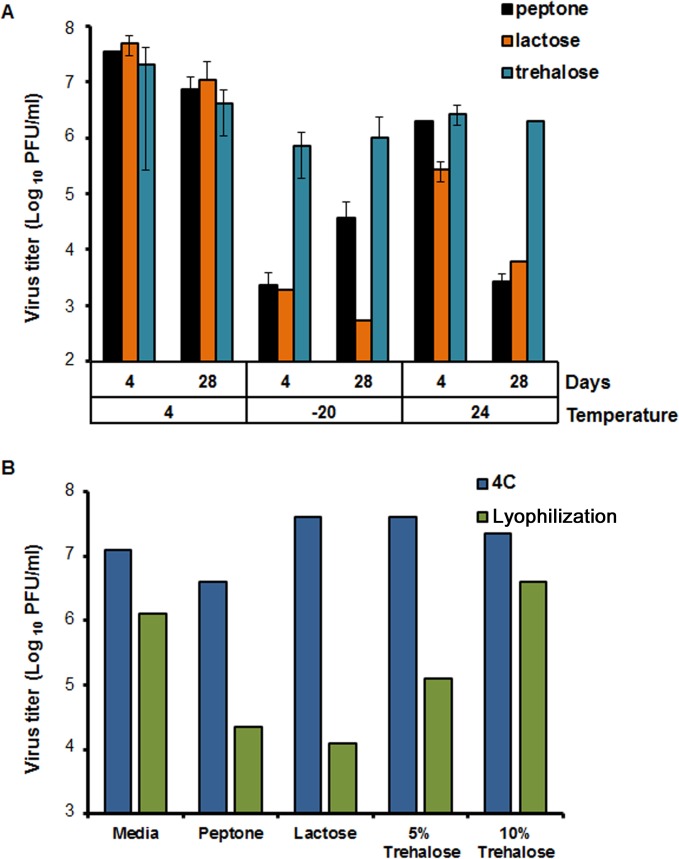
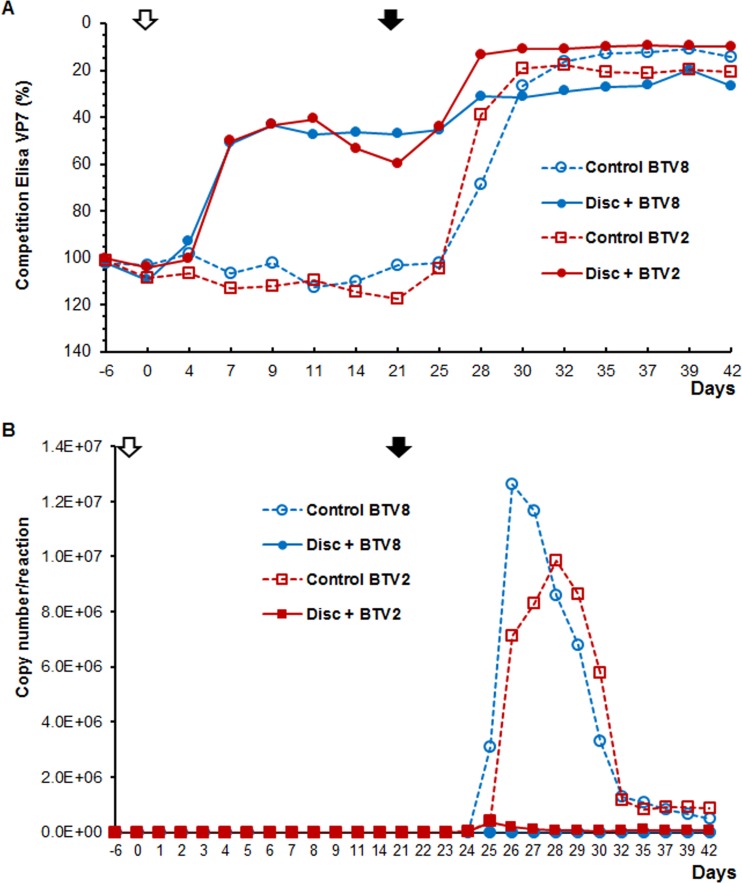
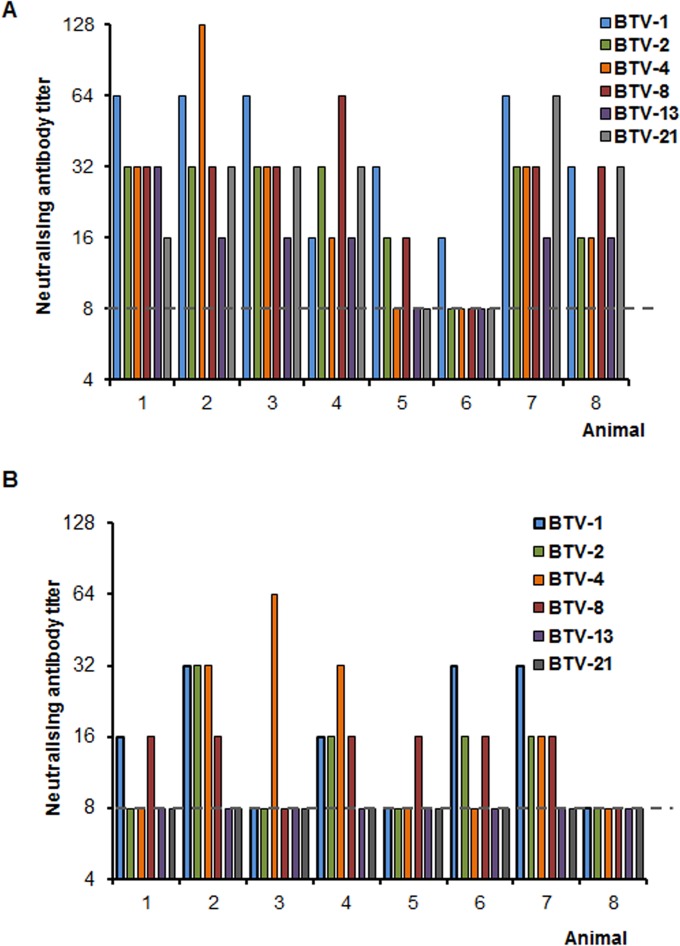
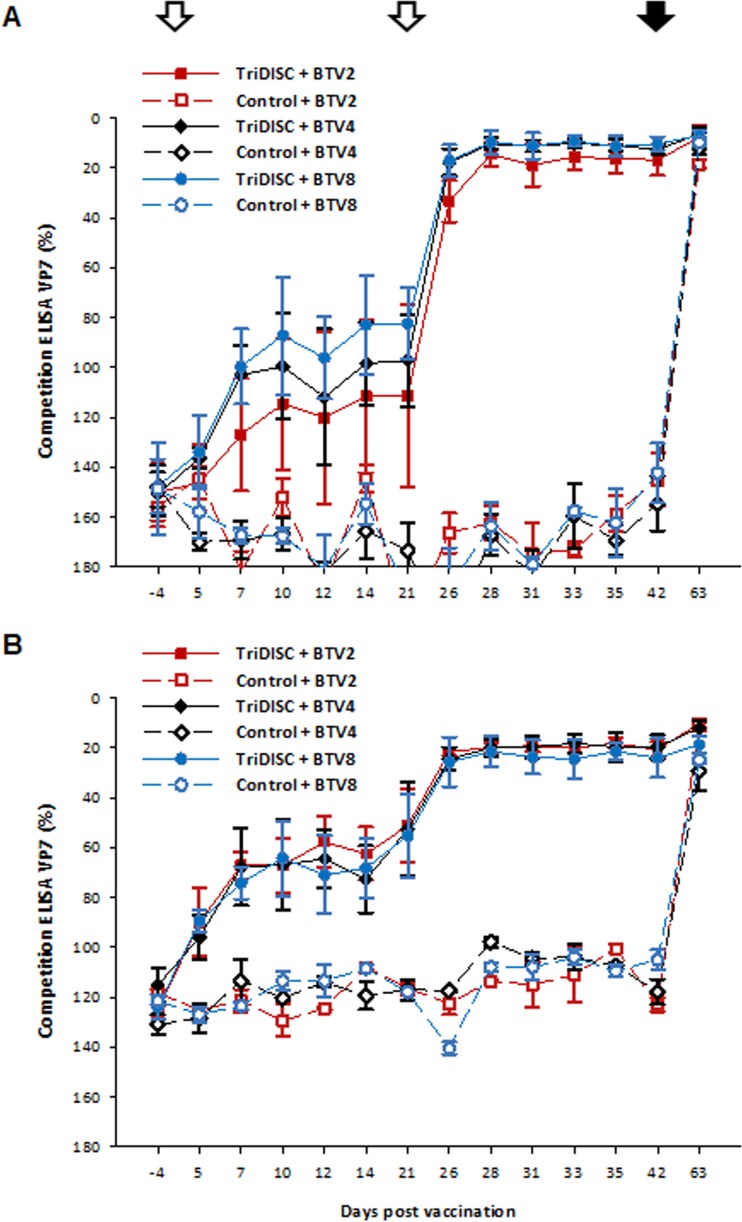
Bluetongue virus (BTV) is endemic in many parts of the world, often causing severe hemorrhagic disease in livestock. To date, at least 27 different serotypes have been recognized. Vaccination against all serotypes is necessary to protect susceptible animals and to prevent onward spread of the virus by insect vectors. In our previous studies, we generated replication-deficient (disabled infectious single-cycle [DISC]) virus strains for a number of serotypes and reported preliminary data on their protective efficacy in animals. In this report, to advance the DISC vaccines to the marketplace, we investigated different parameters of these DISC vaccines. First, we demonstrated the genetic stabilities of these vaccine strains and also the complementing cell line. Subsequently, the optimal storage conditions of vaccines, including additives, temperature, and desiccation, were determined and their protective efficacies in animals confirmed. Furthermore, to test if mixtures of different vaccine strains could be tolerated, we tested cocktails of DISC vaccines in combinations of three or six different serotypes in sheep and cattle, the two natural hosts of BTV. Groups of sheep vaccinated with a cocktail of six different vaccines were completely protected from challenge with individual virulent serotypes, both in early challenge and after 5 months of challenge without any clinical disease. There was no interference in protection between the different vaccines. Protection was also achieved in cattle with a mixture of three vaccine strains, albeit at a lesser level than in sheep. Our data support and validate the suitability of these virus strains as the next-generation vaccines for BTV.
Bluetongue (BT) is a debilitating and in many cases lethal disease that affects ruminants of economic importance. Classical vaccines that afford protection against bluetongue virus, the etiological agent, are not free from secondary and undesirable effects. A surge in new approaches to produce highly attenuated, safer vaccines was evident after the development of the BTV reverse-genetics system that allows the introduction of targeted mutations in the virus genome. We targeted an essential gene to develop disabled virus strains as vaccine candidates. The results presented in this report further substantiate our previous evidence and support the suitability of these virus strains as the next-generation BTV vaccines.
蓝舌病病毒(BTV)在世界许多地区呈地方性流行,常导致家畜严重出血性疾病。迄今为止,已识别出至少27种不同血清型。为保护易感动物并防止病毒通过昆虫媒介进一步传播,有必要针对所有血清型进行疫苗接种。在我们之前的研究中,我们针对多种血清型构建了复制缺陷型(失活感染单周期[DISC])病毒株,并报告了它们在动物体内保护效力的初步数据。在本报告中,为将DISC疫苗推向市场,我们研究了这些DISC疫苗的不同参数。首先,我们证明了这些疫苗株以及互补细胞系的遗传稳定性。随后,确定了疫苗的最佳储存条件,包括添加剂、温度和干燥条件,并确认了它们在动物体内的保护效力。此外,为测试不同疫苗株的混合物是否可耐受,我们在BTV的两种天然宿主绵羊和牛中,测试了三种或六种不同血清型组合的DISC疫苗鸡尾酒。用六种不同疫苗的鸡尾酒接种的绵羊组,在早期攻毒和攻毒5个月后,均完全免受单个强毒株血清型的攻击,且无任何临床疾病。不同疫苗之间在保护方面没有干扰。用三种疫苗株的混合物也使牛获得了保护,尽管保护水平低于绵羊。我们的数据支持并验证了这些病毒株作为BTV下一代疫苗的适用性。
蓝舌病(BT)是一种使具有经济重要性的反刍动物衰弱且在许多情况下致死的疾病。针对蓝舌病病毒(病原体)提供保护的传统疫苗并非没有副作用和不良影响。在BTV反向遗传学系统开发之后,出现了大量生产高度减毒、更安全疫苗的新方法,该系统允许在病毒基因组中引入靶向突变。我们针对一个必需基因开发失活病毒株作为候选疫苗。本报告中的结果进一步证实了我们之前的证据,并支持这些病毒株作为下一代BTV疫苗的适用性。