von Känel Roland, van Nuffel Marc, Fuchs Walther J
Department of Psychosomatic Medicine, Clinic Barmelweid, CH-5017 Barmelweid, Switzerland.
Department of Neurology, Inselspital, Bern University Hospital, and University of Bern, Bern, Switzerland.
Biopsychosoc Med. 2016 Nov 2;10:31. doi: 10.1186/s13030-016-0082-4. eCollection 2016.
Job burnout has become a rampant epidemic in working societies, causing high productivity loss and healthcare costs. An easy accessible tool to detect clinically relevant risk may bear the potential to timely avert the dire sequelae of burnout. As a start, we performed a proof of concept study to test the utilization of a mobile health web application for a free and anonymous burnout risk assessment with established questionnaires.
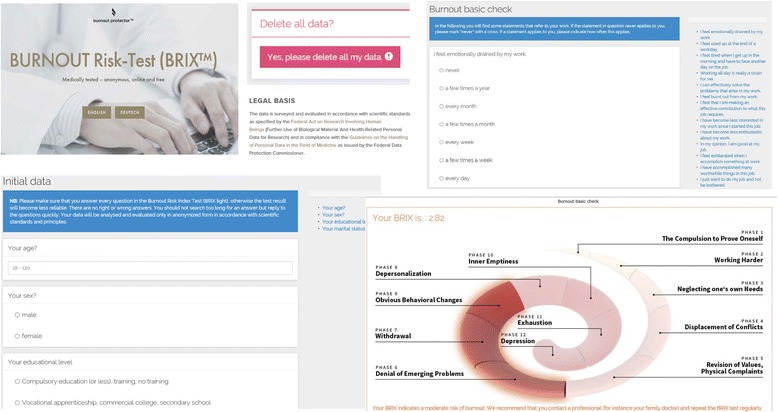
We designed a client-side javascript web application for users who filled out demographic and psychometric data forms over the internet. Users were recruited through social media, back links from hospital websites, and search engine optimization. Similar to population-based studies, we used the Maslach Burnout Inventory-General Survey (MBI-GS) to calculate a burnout risk index (BRIX). As additional mental health burden indices, users filled out the Perceived Stress Scale, Insomina Severity Index, and Profile of Mood States.
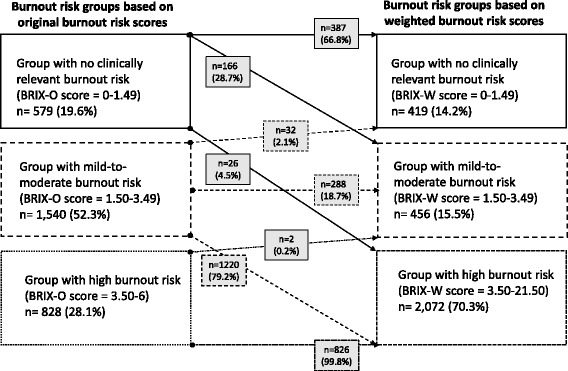
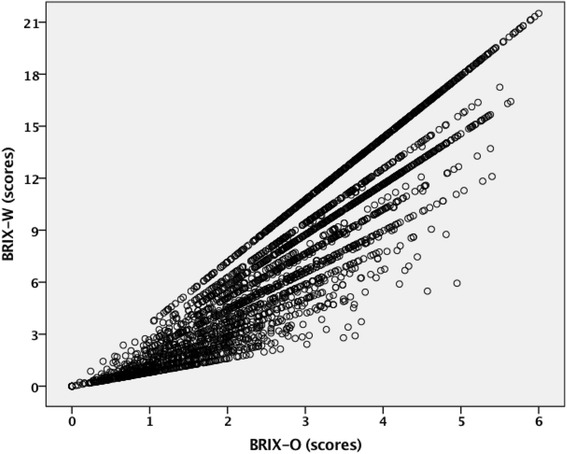
Within six months, the MBI-GS was completed by 11,311 users (median age 33 years, 85 % women) of whom 20.0 % had no clinically relevant burnout risk, 54.7 % had mild-to-moderate risk, and 25.3 % had high risk. In the 2947 users completing all questionnaires, female sex ( = -0.03), cohabiting ( = -0.03), negative affect ( = 0.46), positive affect ( = -0.20), perceived stress ( = 0.18), and insomnia symptoms ( = 0.04) explained 56.2 % of the variance in the continuously scaled BRIX. The reliability was good to excellent for all psychometric scales. The weighting of the BRIX with mental health burden indices primarily modified the risk in users with mild-to-moderate burnout risk.
A low-threshold web application can reliably assess the risk of job burnout. As the bulk of users had clinically relevant burnout scores, a web application may be useful to target employees at risk. The clinical value of the BRIX and its modification with coexistent/absent mental health burden awaits evaluation with work and health outcomes.
职业倦怠已成为工作人群中一种蔓延的流行病,导致生产力大幅损失和医疗成本增加。一种易于获取的用于检测临床相关风险的工具可能具有及时避免职业倦怠严重后果的潜力。作为开端,我们开展了一项概念验证研究,以测试使用移动健康网络应用程序,通过既定问卷进行免费且匿名的职业倦怠风险评估。
我们为通过互联网填写人口统计学和心理测量数据表单的用户设计了一个客户端JavaScript网络应用程序。通过社交媒体、医院网站的反向链接以及搜索引擎优化招募用户。与基于人群的研究类似,我们使用马氏职业倦怠量表通用版(MBI-GS)来计算职业倦怠风险指数(BRIX)。作为额外的心理健康负担指标,用户填写了感知压力量表、失眠严重程度指数和情绪状态剖面图。
在六个月内,11311名用户(中位年龄33岁,85%为女性)完成了MBI-GS,其中20.0%没有临床相关的职业倦怠风险,54.7%有轻度至中度风险,25.3%有高风险。在完成所有问卷的2947名用户中,女性(=-0.03)、同居(=-0.03)、消极情绪(=0.46)、积极情绪(=-0.20)、感知压力(=0.18)和失眠症状(=0.04)解释了连续量表化的BRIX中56.2%的方差。所有心理测量量表的信度良好至优秀。BRIX与心理健康负担指标的加权主要改变了轻度至中度职业倦怠风险用户的风险。
一个低门槛的网络应用程序能够可靠地评估职业倦怠风险。由于大部分用户有临床相关的职业倦怠评分,网络应用程序可能有助于针对有风险的员工。BRIX的临床价值及其与并存/不存在的心理健康负担的修正有待通过工作和健康结果进行评估。