Healey Priscilla, Stager Megan L, Woodmass Kyler, Dettlaff Alan J, Vergara Andrew, Janke Robert, Wells Susan J
Centre for the Study of Services to Children and Families, University of British Columbia, ASC 453, 3187 University Way, Kelowna, BC, V1V 1V7, Canada.
University of Houston Graduate College of Social Work, 3511 Cullen Blvd Room 110HA, Houston, TX, 77204-4013, USA.
BMC Health Serv Res. 2017 Jan 5;17(1):8. doi: 10.1186/s12913-016-1953-x.
Membership in diverse racial, ethnic, and cultural groups is often associated with inequitable health and mental health outcomes for diverse populations. Yet, little is known about how cultural adaptations of standard services affect health and mental health outcomes for service recipients. This systematic review identified extant themes in the research regarding cultural adaptations across a broad range of health and mental health services and synthesized the most rigorous experimental research available to isolate and evaluate potential efficacy gains of cultural adaptations to service delivery.
MEDLINE, PsycINFO, CINAHL, EMBASE, and grey literature sources were searched for English-language studies published between January 1955 and January 2015. Cultural adaptations to any aspect of a service delivery were considered. Outcomes of interest included changes in service provider behavior or changes in the behavioral, medical, or self-reported experience of recipients.
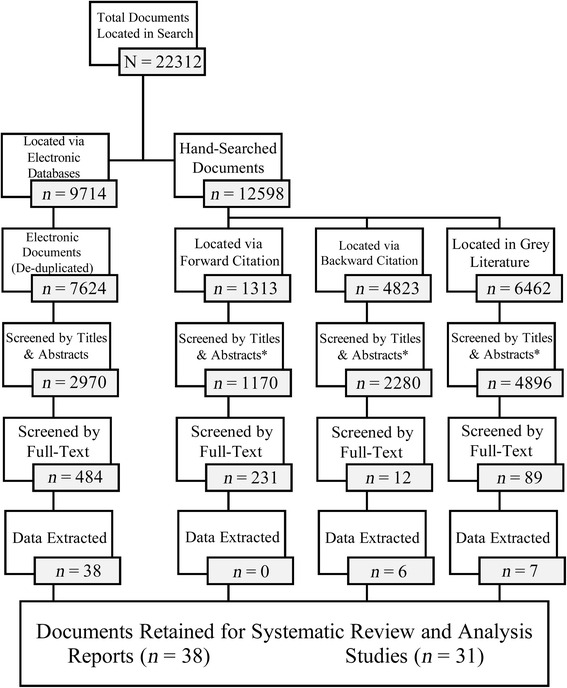
Thirty-one studies met the inclusion criteria. The most frequently tested adaptation occurred in preventive services and consisted of modifying the content of materials or services delivered. None of the included studies focused on making changes in the provider's behavior. Many different populations were studied but most research was concerned with the experiences and outcomes of African Americans. Seventeen of the 31 retained studies observed at least one significant effect in favor of a culturally adapted service. However there were also findings that favored the control group or showed no difference. Researchers did not find consistent evidence supporting implementation of any specific type of adaptation nor increased efficacy with any particular cultural group.
Conceptual frameworks to classify cultural adaptations and their resultant health/mental health outcomes were developed and applied in a variety of ways. This review synthesizes the most rigorous research in the field and identifies implications for policy, practice, and research, including individualization, cost considerations, and patient or client satisfaction, among others.
不同种族、民族和文化群体的成员身份往往与不同人群的健康和心理健康结果不平等相关。然而,关于标准服务的文化适应如何影响服务接受者的健康和心理健康结果,人们知之甚少。本系统综述确定了关于广泛的健康和心理健康服务中文化适应的研究中现有的主题,并综合了最严格的实验研究,以分离和评估文化适应服务提供的潜在疗效增益。
检索了MEDLINE、PsycINFO、CINAHL、EMBASE和灰色文献来源,以查找1955年1月至2015年1月发表的英文研究。考虑对服务提供的任何方面进行文化适应。感兴趣的结果包括服务提供者行为的变化或接受者的行为、医疗或自我报告经历的变化。
31项研究符合纳入标准。最常测试的适应发生在预防服务中,包括修改提供的材料或服务的内容。纳入的研究均未关注改变提供者的行为。研究了许多不同的人群,但大多数研究关注非裔美国人的经历和结果。31项保留研究中的17项观察到至少一项有利于文化适应服务的显著效果。然而,也有一些结果支持对照组或显示无差异。研究人员没有找到一致的证据支持实施任何特定类型的适应,也没有发现对任何特定文化群体的疗效增加。
开发了对文化适应及其产生的健康/心理健康结果进行分类的概念框架,并以多种方式应用。本综述综合了该领域最严格的研究,并确定了对政策、实践和研究的影响,包括个性化、成本考虑以及患者或客户满意度等。