Laget Sophie, Broncy Lucile, Hormigos Katia, Dhingra Dalia M, BenMohamed Fatima, Capiod Thierry, Osteras Magne, Farinelli Laurent, Jackson Stephen, Paterlini-Bréchot Patrizia
Rarecells Diagnostics, Paris, France.
Unité INSERM U1151 (Eq 13), Faculté de Médecine Paris Descartes, Paris, France.
PLoS One. 2017 Jan 6;12(1):e0169427. doi: 10.1371/journal.pone.0169427. eCollection 2017.
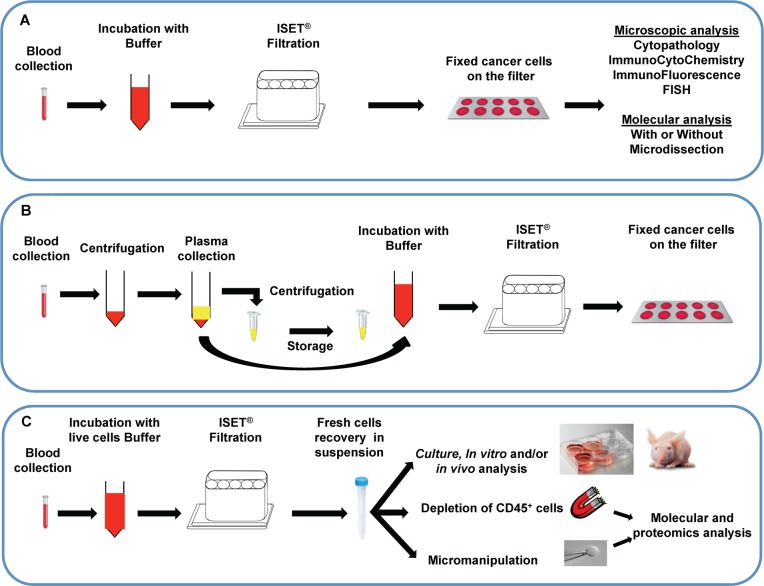
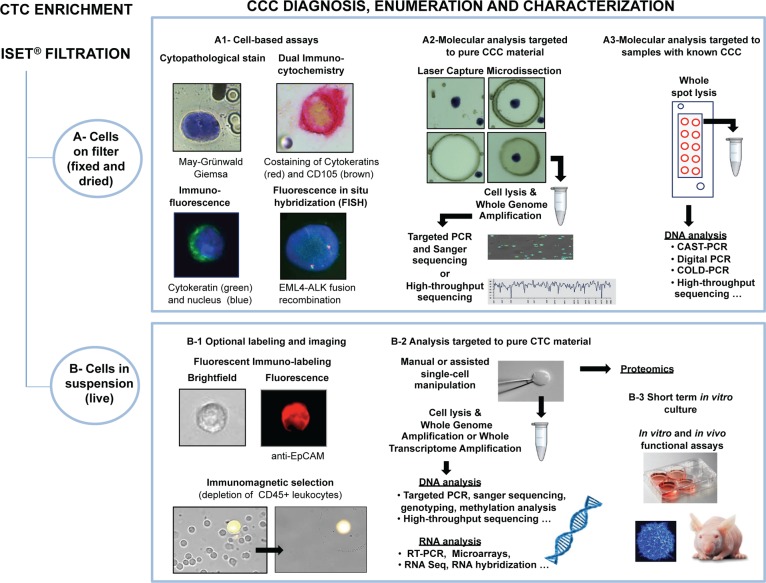
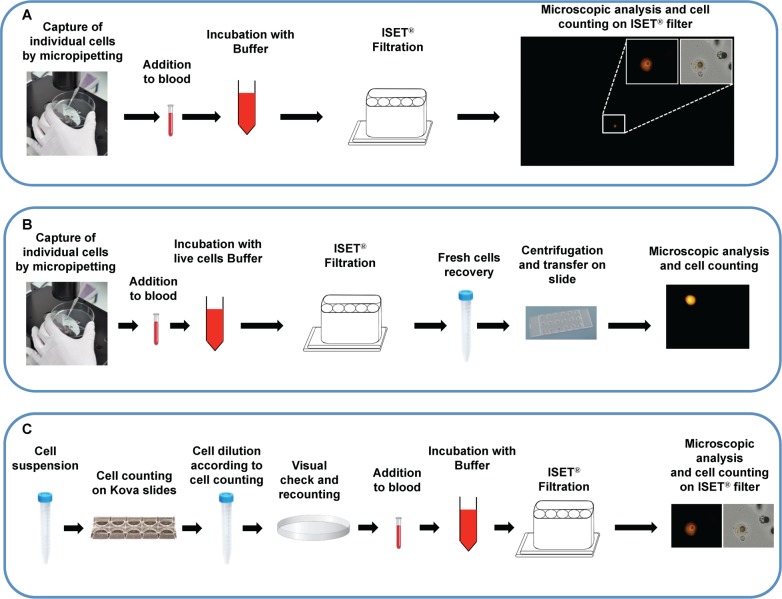
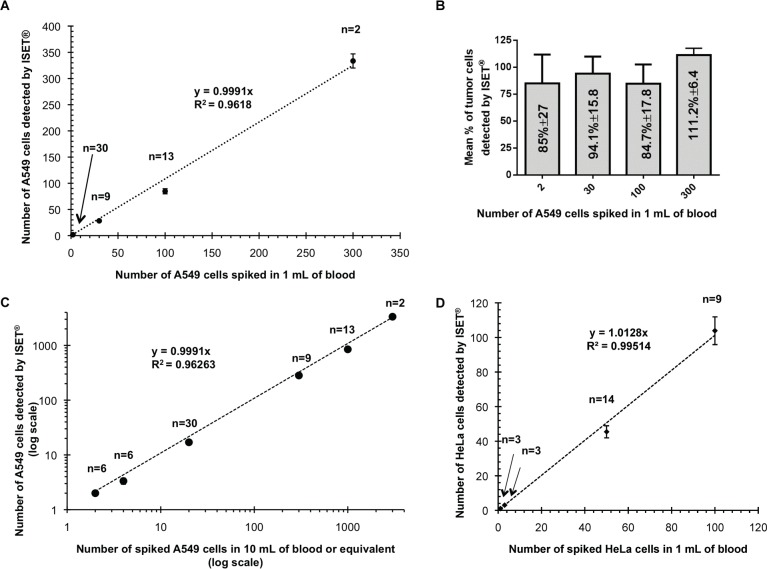
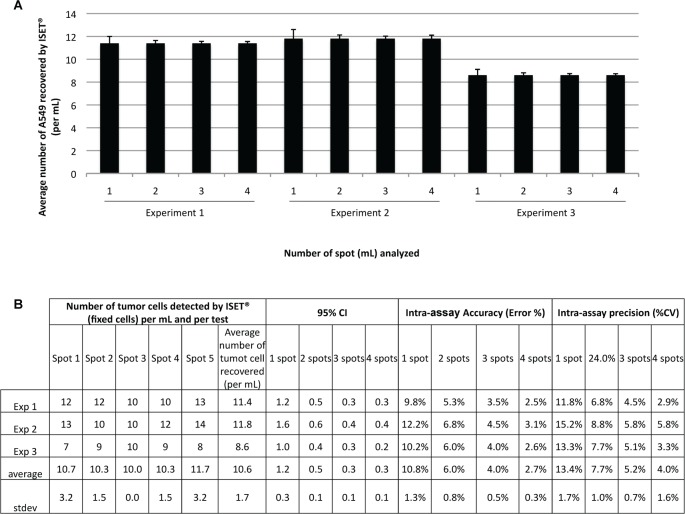
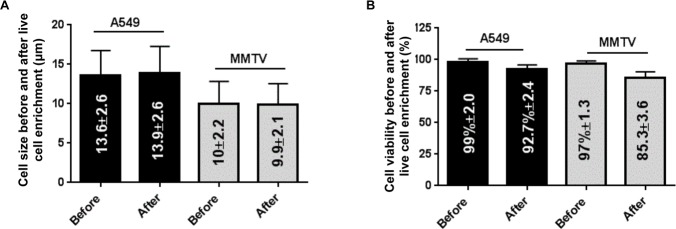
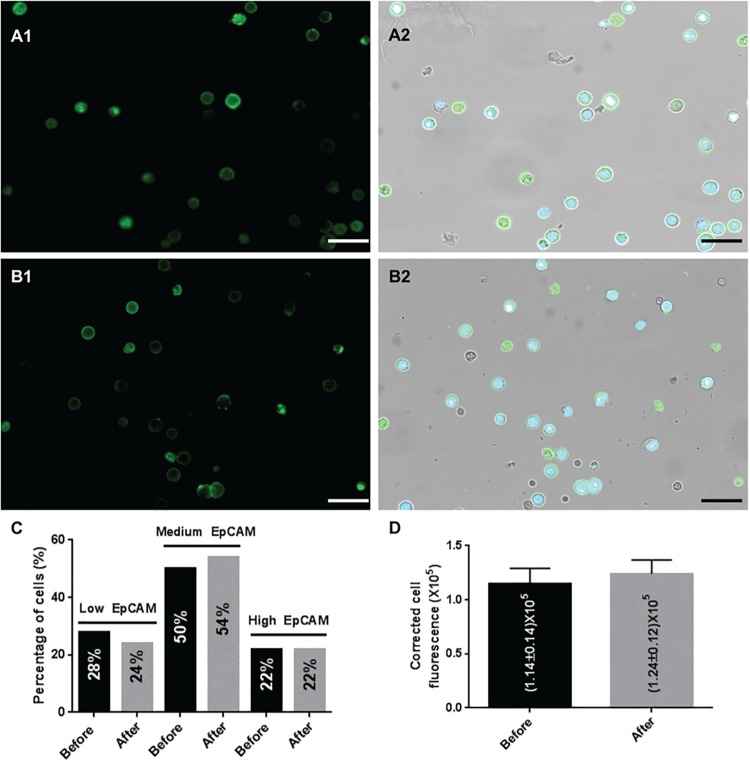
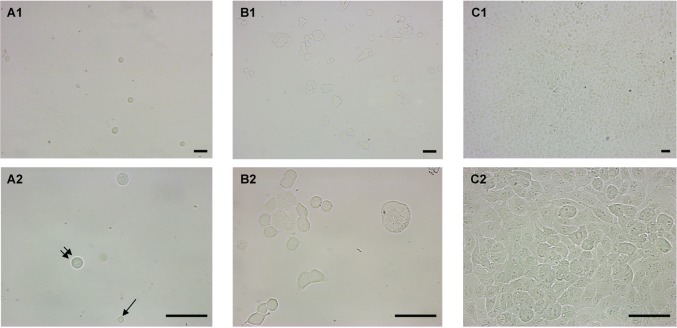
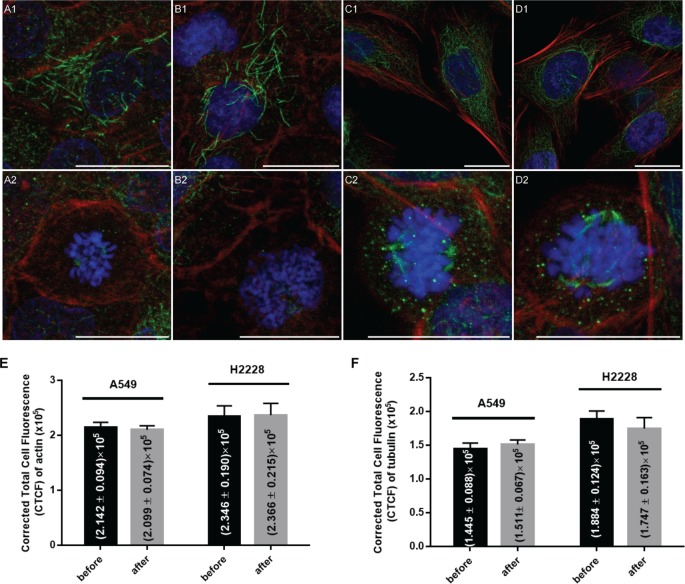
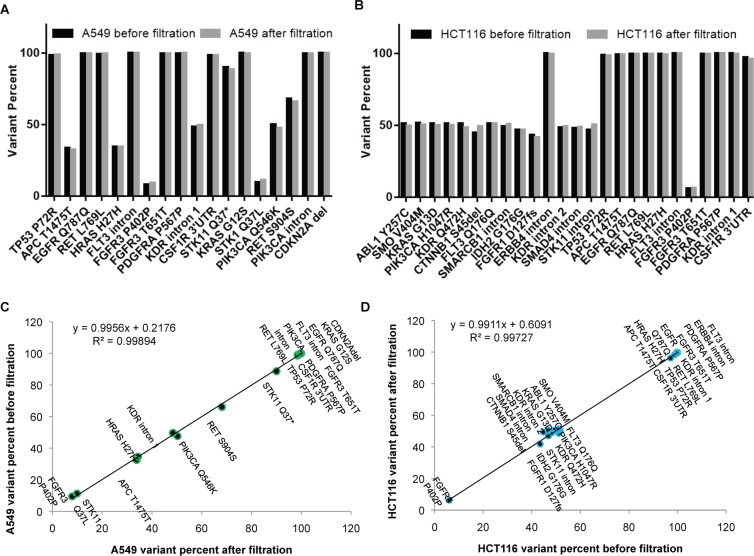
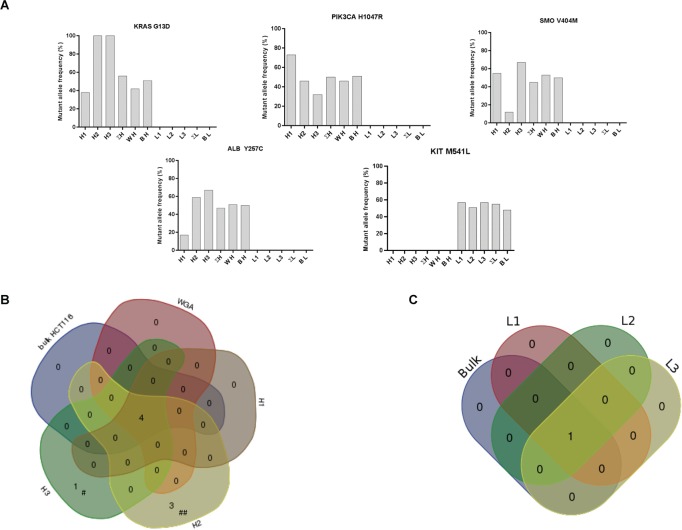
Circulating Tumor Cells (CTC) and Circulating Tumor Microemboli (CTM) are Circulating Rare Cells (CRC) which herald tumor invasion and are expected to provide an opportunity to improve the management of cancer patients. An unsolved technical issue in the CTC field is how to obtain highly sensitive and unbiased collection of these fragile and heterogeneous cells, in both live and fixed form, for their molecular study when they are extremely rare, particularly at the beginning of the invasion process. We report on a new protocol to enrich from blood live CTC using ISET® (Isolation by SizE of Tumor/Trophoblastic Cells), an open system originally developed for marker-independent isolation of fixed tumor cells. We have assessed the impact of our new enrichment method on live tumor cells antigen expression, cytoskeleton structure, cell viability and ability to expand in culture. We have also explored the ISET® in vitro performance to collect intact fixed and live cancer cells by using spiking analyses with extremely low number of fluorescent cultured cells. We describe results consistently showing the feasibility of isolating fixed and live tumor cells with a Lower Limit of Detection (LLOD) of one cancer cell per 10 mL of blood and a sensitivity at LLOD ranging from 83 to 100%. This very high sensitivity threshold can be maintained when plasma is collected before tumor cells isolation. Finally, we have performed a comparative next generation sequencing (NGS) analysis of tumor cells before and after isolation from blood and culture. We established the feasibility of NGS analysis of single live and fixed tumor cells enriched from blood by our system. This study provides new protocols for detection and characterization of CTC collected from blood at the very early steps of tumor invasion.
循环肿瘤细胞(CTC)和循环肿瘤微栓子(CTM)是循环稀有细胞(CRC),它们预示着肿瘤侵袭,有望为改善癌症患者的治疗提供契机。CTC领域一个尚未解决的技术问题是,当这些脆弱且异质性的细胞极其稀少时,尤其是在侵袭过程开始时,如何以高灵敏度且无偏差的方式收集它们的活细胞和固定细胞形式,用于分子研究。我们报告了一种使用ISET®(通过肿瘤/滋养层细胞大小进行分离)从血液中富集活CTC的新方案,ISET®是一种最初为独立于标记物分离固定肿瘤细胞而开发的开放系统。我们评估了这种新富集方法对活肿瘤细胞抗原表达、细胞骨架结构、细胞活力以及体外扩增能力的影响。我们还通过使用极少量荧光培养细胞进行加标分析,探索了ISET®收集完整固定和活癌细胞的体外性能。我们描述的结果一致表明,每10毫升血液中检测限低至一个癌细胞时,分离固定和活肿瘤细胞具有可行性,且检测限下的灵敏度范围为83%至100%。在肿瘤细胞分离前收集血浆时,可维持这一非常高的灵敏度阈值。最后,我们对从血液和培养物中分离前后的肿瘤细胞进行了比较性下一代测序(NGS)分析。我们证实了通过我们的系统对从血液中富集的单个活肿瘤细胞和固定肿瘤细胞进行NGS分析的可行性。本研究为在肿瘤侵袭的早期阶段从血液中收集的CTC的检测和表征提供了新方案。