Albritton Jacob L, Miller Jordan S
Department of Bioengineering, Rice University, Houston, TX 77005, USA.
Department of Bioengineering, Rice University, Houston, TX 77005, USA
Dis Model Mech. 2017 Jan 1;10(1):3-14. doi: 10.1242/dmm.025049.
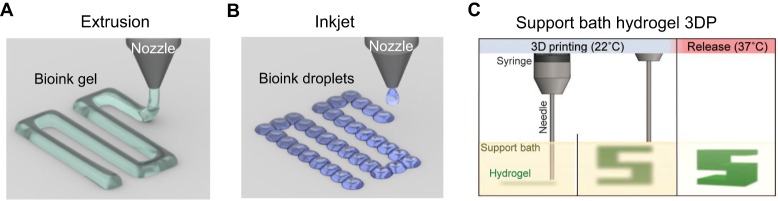
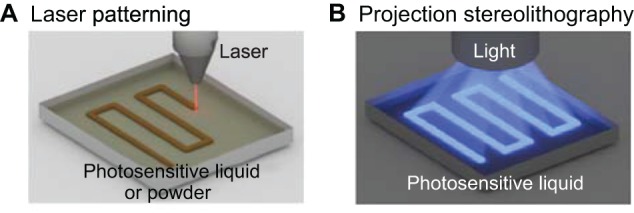
Even with many advances in treatment over the past decades, cancer still remains a leading cause of death worldwide. Despite the recognized relationship between metastasis and increased mortality rate, surprisingly little is known about the exact mechanism of metastatic progression. Currently available in vitro models cannot replicate the three-dimensionality and heterogeneity of the tumor microenvironment sufficiently to recapitulate many of the known characteristics of tumors in vivo Our understanding of metastatic progression would thus be boosted by the development of in vitro models that could more completely capture the salient features of cancer biology. Bioengineering groups have been working for over two decades to create in vitro microenvironments for application in regenerative medicine and tissue engineering. Over this time, advances in 3D printing technology and biomaterials research have jointly led to the creation of 3D bioprinting, which has improved our ability to develop in vitro models with complexity approaching that of the in vivo tumor microenvironment. In this Review, we give an overview of 3D bioprinting methods developed for tissue engineering, which can be directly applied to constructing in vitro models of heterogeneous tumor microenvironments. We discuss considerations and limitations associated with 3D printing and highlight how these advances could be harnessed to better model metastasis and potentially guide the development of anti-cancer strategies.
尽管在过去几十年里治疗方法有了许多进展,但癌症仍然是全球主要的死亡原因。尽管转移与死亡率上升之间的关系已得到公认,但令人惊讶的是,对于转移进展的确切机制却知之甚少。目前可用的体外模型无法充分复制肿瘤微环境的三维性和异质性,以重现体内肿瘤的许多已知特征。因此,开发能够更全面地捕捉癌症生物学显著特征的体外模型,将有助于加深我们对转移进展的理解。生物工程团队已经致力于创建用于再生医学和组织工程的体外微环境二十多年了。在此期间,3D打印技术和生物材料研究的进展共同促成了3D生物打印的诞生,这提高了我们开发复杂性接近体内肿瘤微环境的体外模型的能力。在本综述中,我们概述了为组织工程开发的3D生物打印方法,这些方法可直接应用于构建异质性肿瘤微环境的体外模型。我们讨论了与3D打印相关的注意事项和局限性,并强调如何利用这些进展更好地模拟转移过程,并有可能指导抗癌策略的开发。