Hsueh Yen-Ping, Gronquist Matthew R, Schwarz Erich M, Nath Ravi David, Lee Ching-Han, Gharib Shalha, Schroeder Frank C, Sternberg Paul W
Division of Biology and Biological Engineering, Howard Hughes Medical Institute, California Institute of Technology, Pasadena, United States.
Institute of Molecular Biology, Academia Sinica, Taipei, Taiwan.
Elife. 2017 Jan 18;6:e20023. doi: 10.7554/eLife.20023.
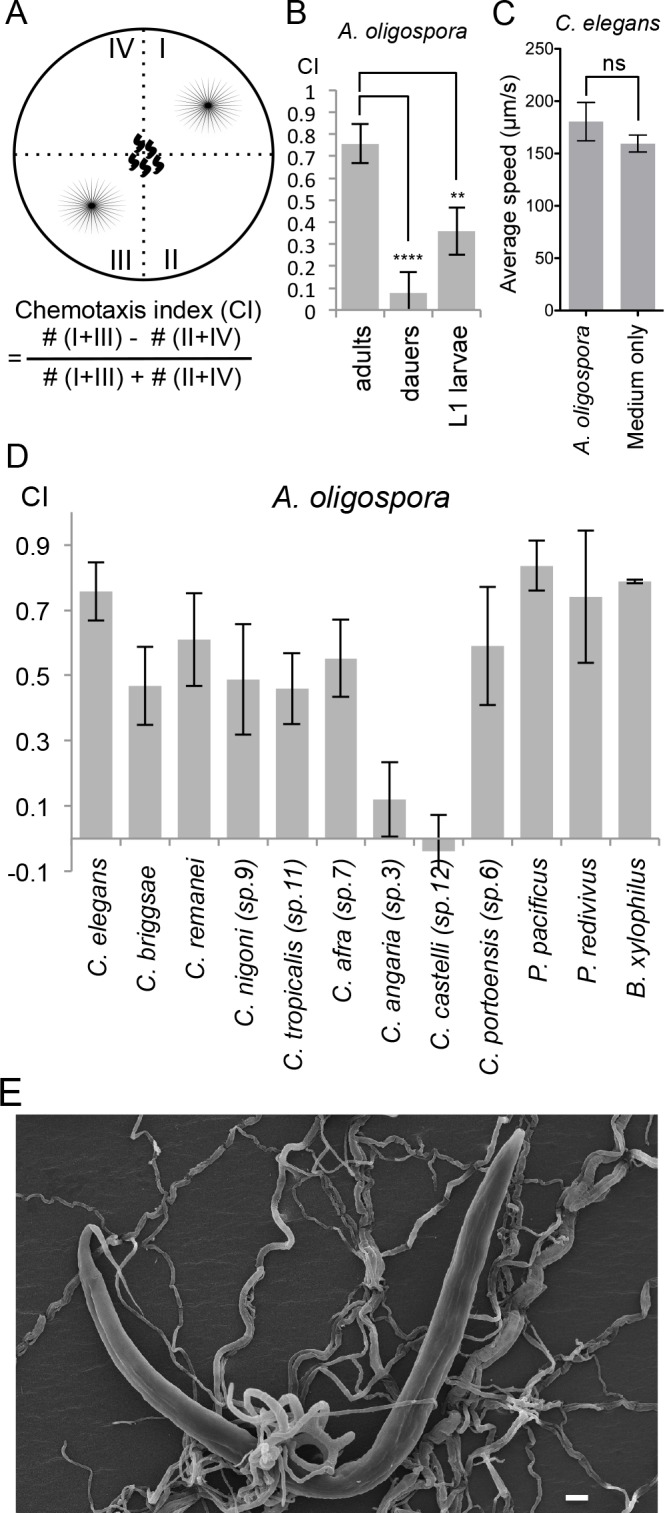
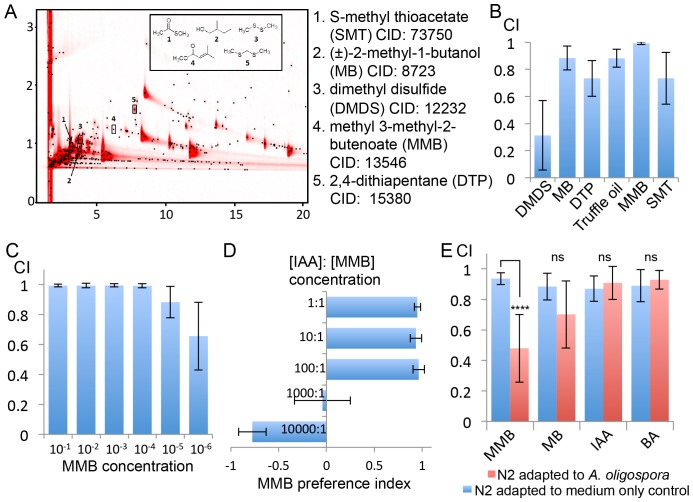
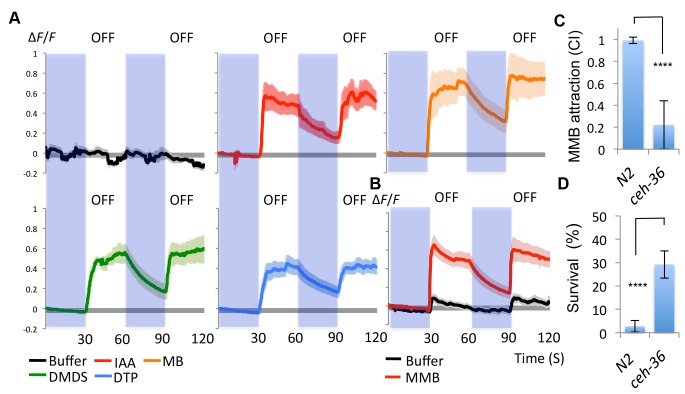
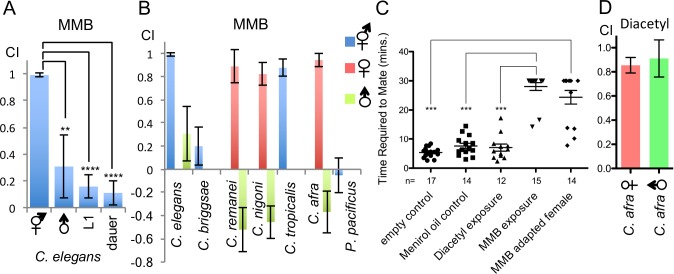
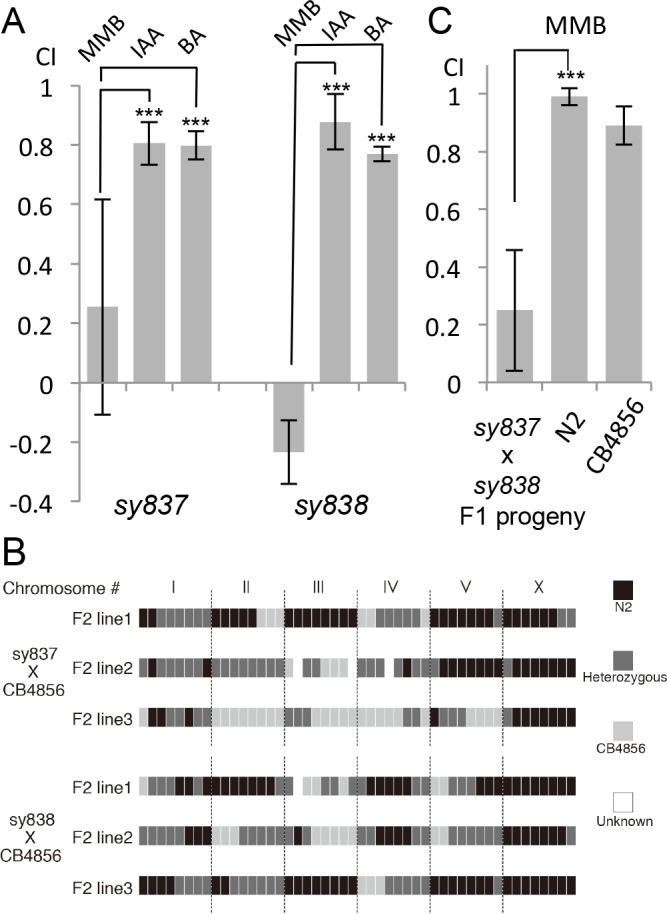
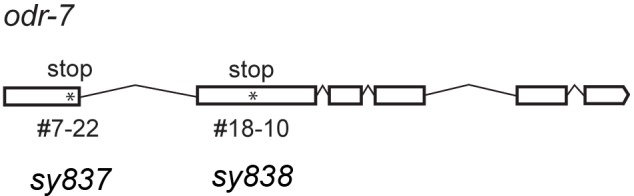
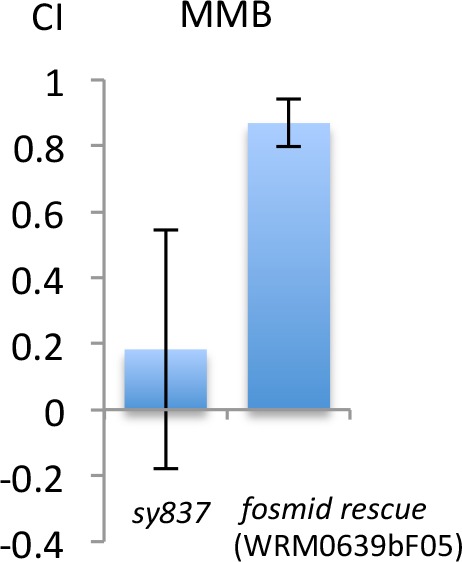
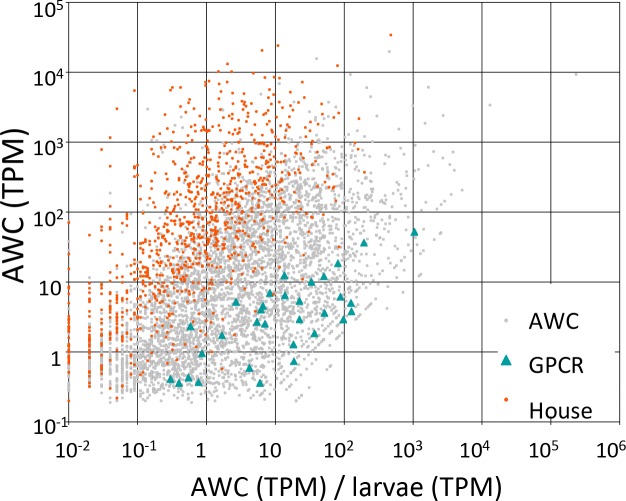
To study the molecular basis for predator-prey coevolution, we investigated how responds to the predatory fungus . and other nematodes were attracted to volatile compounds produced by . Gas-chromatographic mass-spectral analyses of -derived volatile metabolites identified several odors mimicking food cues attractive to nematodes. One compound, methyl 3-methyl-2-butenoate (MMB) additionally triggered strong sex- and stage-specific attraction in several species. Furthermore, when MMB is present, it interferes with nematode mating, suggesting that MMB might mimic sex pheromone in species. Forward genetic screening suggests that multiple receptors are involved in sensing MMB. Response to fungal odors involves the olfactory neuron AWCs. Single-cell RNA-seq revealed the GPCRs expressed in AWC. We propose that likely evolved the means to use olfactory mimicry to attract its nematode prey through the olfactory neurons in and related species.
为了研究捕食者 - 猎物协同进化的分子基础,我们研究了线虫如何对捕食性真菌作出反应。秀丽隐杆线虫和其他线虫会被捕食性真菌产生的挥发性化合物所吸引。对捕食性真菌产生的挥发性代谢产物进行气相色谱 - 质谱分析,鉴定出了几种模仿对线虫有吸引力的食物线索的气味。一种化合物,3 - 甲基 - 2 - 丁烯酸甲酯(MMB),在几种线虫物种中还引发了强烈的性别和阶段特异性吸引。此外,当存在MMB时,它会干扰线虫交配,这表明MMB可能在秀丽隐杆线虫物种中模仿性信息素。正向遗传筛选表明,多种受体参与感知MMB。对真菌气味的反应涉及嗅觉神经元AWC。单细胞RNA测序揭示了在AWC中表达的G蛋白偶联受体(GPCR)。我们提出,捕食性真菌可能进化出了通过秀丽隐杆线虫及相关物种中的嗅觉神经元利用嗅觉拟态来吸引其线虫猎物的方法。