Keng Shian-Ling, Tan Elysia Li Yan, Eisenlohr-Moul Tory A, Smoski Moria J
Department of Psychology, National University of Singapore, Singapore.
Department of Psychology, National University of Singapore, Singapore.
Behav Res Ther. 2017 Apr;91:33-42. doi: 10.1016/j.brat.2017.01.006. Epub 2017 Jan 18.
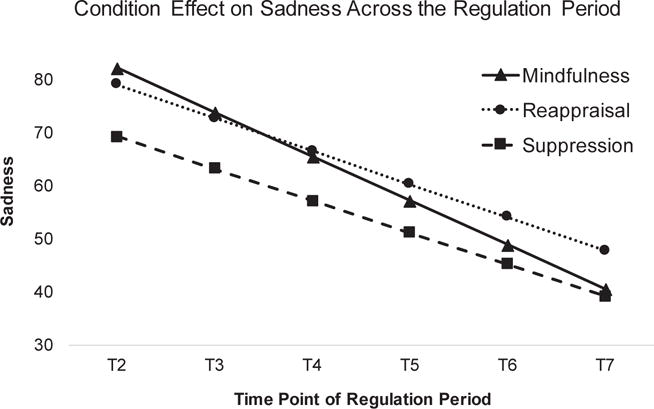
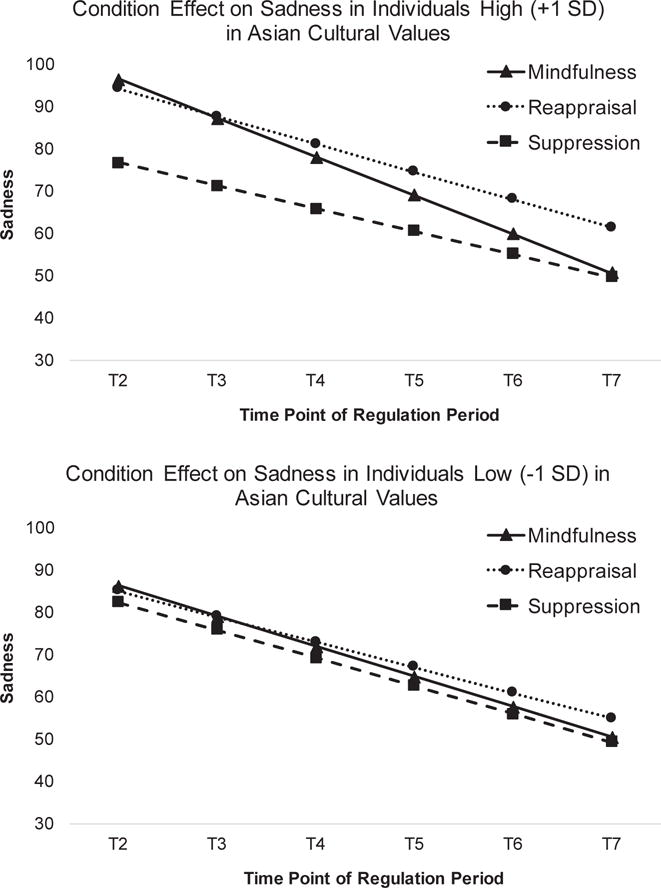
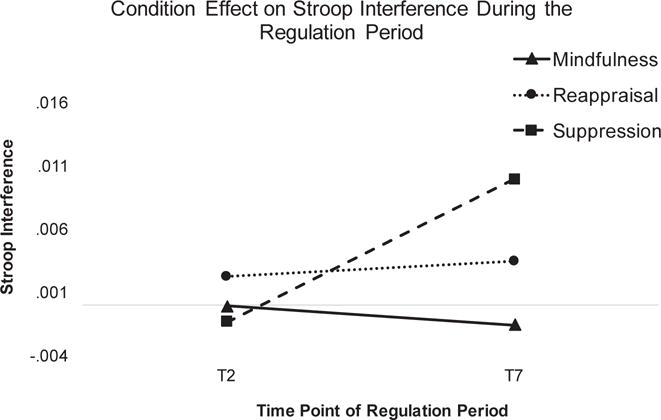
The present study investigated the relative effects of mindfulness, reappraisal and suppression in reducing sadness, and the extent to which implementation of these strategies affects cognitive resources in a laboratory context. A total of 171 Singaporean undergraduate participants were randomly assigned to receive brief training in mindfulness, reappraisal, or suppression prior to undergoing a sad mood induction. Individual adherence to Asian cultural values was assessed as a potential moderator of strategy effectiveness. Participants rated their mood and completed a Color-Word Stroop task before and after mood regulation instructions. Analyses using multi-level modelling showed that the suppression condition caused less robust declines in sadness over time compared to mindfulness. There was also a nonsignificant trend in which mindfulness was associated with greater sadness recovery compared to reappraisal. Suppression resulted in lower average sadness compared to mindfulness among those high on Asian cultural values, but not those low on Asian cultural values. Both mindfulness and reappraisal buffered against increases in Stroop interference from pre-to post-regulation compared to suppression. The findings highlight the advantage of mindfulness as a strategy effective not only in the regulation of sad mood, but also in the preservation of cognitive resources in the context of mood regulation.
本研究调查了正念、重新评价和抑制在减轻悲伤方面的相对效果,以及在实验室环境中实施这些策略对认知资源的影响程度。共有171名新加坡本科参与者在接受悲伤情绪诱导之前被随机分配接受正念、重新评价或抑制的简短训练。将个体对亚洲文化价值观的遵循程度评估为策略有效性的潜在调节因素。参与者在情绪调节指导前后对自己的情绪进行评分,并完成一项颜色-文字斯特鲁普任务。使用多层次模型的分析表明,与正念相比,抑制条件下悲伤情绪随时间的下降不那么显著。与重新评价相比,正念与更大程度的悲伤恢复相关这一趋势也不显著。在亚洲文化价值观得分高的人群中,与正念相比,抑制导致的平均悲伤程度更低,但在得分低的人群中并非如此。与抑制相比,正念和重新评价都能缓冲从调节前到调节后斯特鲁普干扰的增加。研究结果突出了正念作为一种策略的优势,它不仅在调节悲伤情绪方面有效,而且在情绪调节过程中保护认知资源方面也有效。