Park Jeong Ha, Hong Ji Sun, Han Doug Hyun, Min Kyoung Joon, Lee Young Sik, Kee Baik Seok, Kim Sun Mi
Department of Psychiatry, Chung-Ang University Medical Center, Seoul, Korea.
J Korean Med Sci. 2017 Mar;32(3):514-521. doi: 10.3346/jkms.2017.32.3.514.
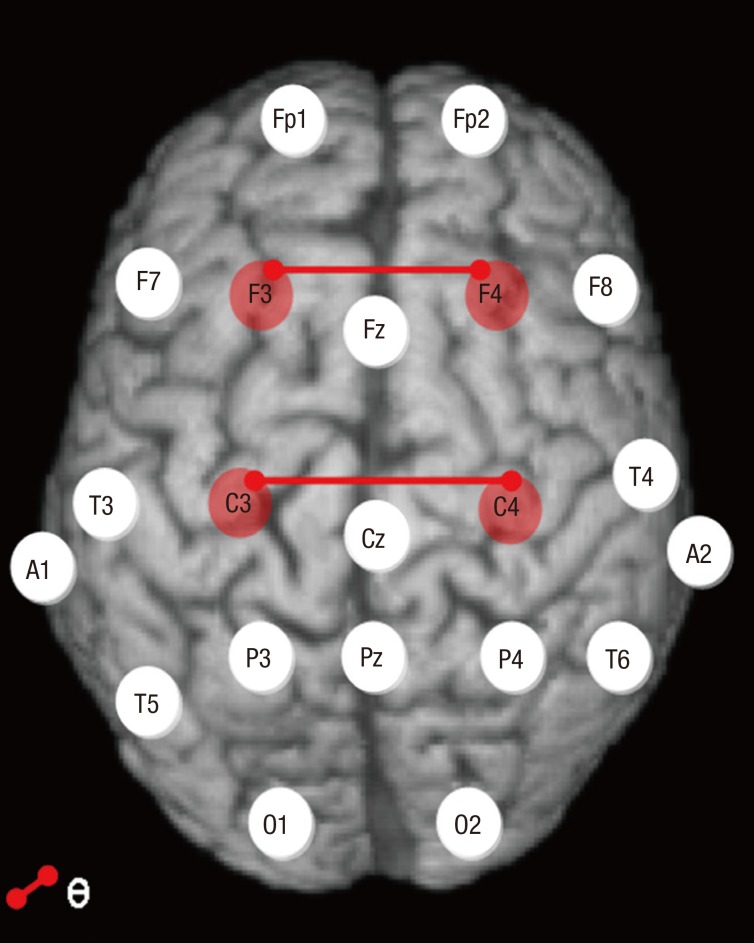
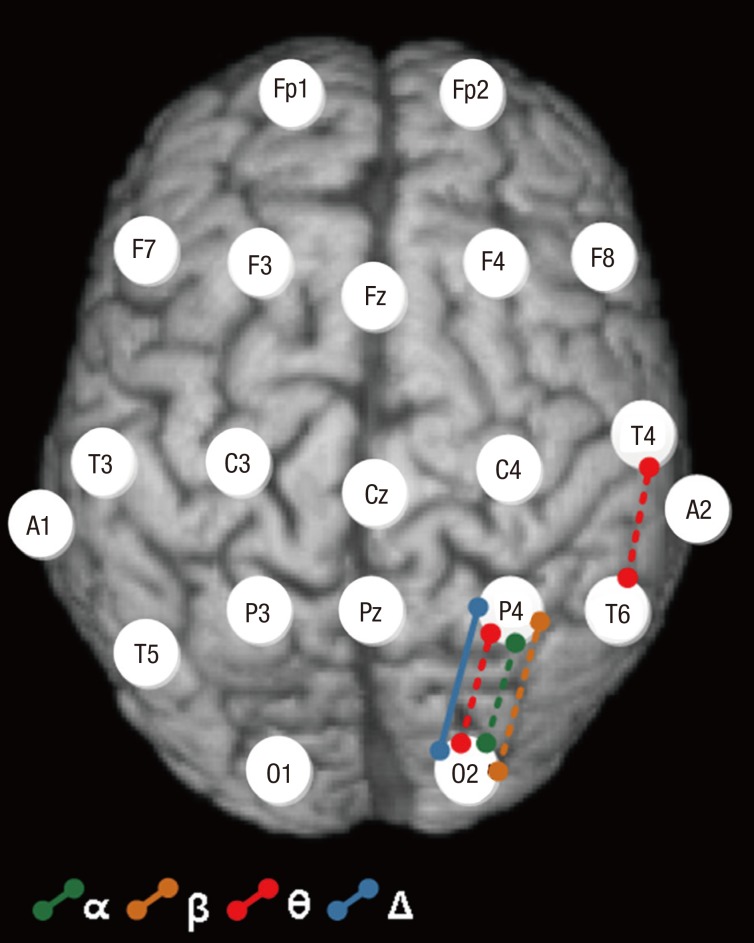
Internet gaming disorder (IGD) is often comorbid with attention deficit hyperactivity disorder (ADHD). In this study, we compared the neurobiological differences between ADHD comorbid with IGD (ADHD+IGD group) and ADHD without comorbidity (ADHD-only group) by analyzing quantitative electroencephalogram (QEEG) findings. We recruited 16 male ADHD+IGD, 15 male ADHD-only adolescent patients, and 15 male healthy controls (HC group). Participants were assessed using Young's Internet Addiction Scale and ADHD Rating Scale. Relative power and inter- and intra-hemispheric coherences of brain waves were measured using a digital electroencephalography (EEG) system. Compared to the ADHD-only group, the ADHD+IGD group showed lower relative delta power and greater relative beta power in temporal regions. The relative theta power in frontal regions were higher in ADHD-only group compared to HC group. Inter-hemispheric coherence values for the theta band between F3-F4 and C3-C4 electrodes were higher in ADHD-only group compared to HC group. Intra-hemispheric coherence values for the delta, theta, alpha, and beta bands between P4-O2 electrodes and intra-hemispheric coherence values for the theta band between Fz-Cz and T4-T6 electrodes were higher in ADHD+IGD group compared to ADHD-only group. Adolescents who show greater vulnerability to ADHD seem to continuously play Internet games to unconsciously enhance attentional ability. In turn, relative beta power in attention deficit in ADHD+IGD group may become similar to that in HC group. Repetitive activation of brain reward and working memory systems during continuous gaming may result in an increase in neuronal connectivity within the parieto-occipital and temporal regions for the ADHD+IGD group.
网络成瘾障碍(IGD)常与注意力缺陷多动障碍(ADHD)共病。在本研究中,我们通过分析定量脑电图(QEEG)结果,比较了合并IGD的ADHD患者(ADHD+IGD组)和未合并IGD的ADHD患者(仅ADHD组)之间的神经生物学差异。我们招募了16名男性ADHD+IGD患者、15名男性仅患ADHD的青少年患者以及15名男性健康对照者(HC组)。使用杨氏网络成瘾量表和ADHD评定量表对参与者进行评估。使用数字脑电图(EEG)系统测量脑电波的相对功率以及半球间和半球内相干性。与仅ADHD组相比,ADHD+IGD组在颞区显示出较低的相对δ波功率和较高的相对β波功率。仅ADHD组额叶区域的相对θ波功率高于HC组。与HC组相比,仅ADHD组F3-F4和C3-C4电极之间θ频段的半球间相干值更高。与仅ADHD组相比,ADHD+IGD组P4-O2电极之间δ、θ、α和β频段的半球内相干值以及Fz-Cz和T4-T6电极之间θ频段的半球内相干值更高。对ADHD更易感的青少年似乎会持续玩网络游戏,以无意识地提高注意力。相应地,ADHD+IGD组注意力缺陷中的相对β波功率可能会变得与HC组相似。在持续游戏过程中,大脑奖赏和工作记忆系统的重复激活可能会导致ADHD+IGD组顶枕叶和颞叶区域内的神经元连接增加。