Liu Tianyang, Hao Xiaoning, Zhang Zhenzhong
China National Health and Development Research Center, Beijing, 100191, China.
BMC Health Serv Res. 2016 Nov 15;16(Suppl 7):626. doi: 10.1186/s12913-016-1863-y.
The Chinese tradition of filial piety, which prioritized family-based care for the elderly, is transitioning and elders can no longer necessarily rely on their children. The purpose of this study was to identify community support for the elderly, and analyze the factors that affect which model of old-age care elderly people dwelling in communities prefer.
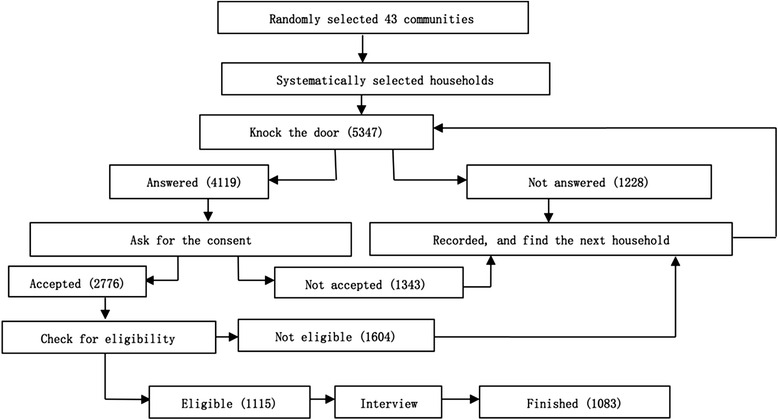
We used the database "Health and Social Support of Elderly Population in Community". Questionnaires were issued in 2013, covering 3 districts in Beijing. A group of 1036 people over 60 years in age were included in the study. The respondents' profile variables were organized in Andersen's Model and community healthcare resource factors were added. A multinomial logistic model was applied to analyze the factors associated with the desired aging care models.
Cohabiting with children and relying on care from family was still the primary desired aging care model for seniors (78 %), followed by living in institutions (14.8 %) and living at home independently while relying on community resources (7.2 %). The regression result indicated that predisposing, enabling and community factors were significantly associated with the aging care model preference. Specifically, compared with those who preferred to cohabit with children, those having higher education, fewer available family and friend helpers, and shorter distance to healthcare center were more likely to prefer to live independently and rely on community support. And compared with choosing to live in institutions, those having fewer available family and friend helpers and those living alone were more likely to prefer to live independently and rely on community. Need factors (health and disability condition) were not significantly associated with desired aging care models, indicating that desired aging care models were passive choices resulted from the balancing of family and social caring resources.
In Beijing, China, aging care arrangement preference is the result of balancing family care resources, economic and social status, and the accessibility of community resources. Community facilities and services supporting elderly were found to be insufficient. For China's future health system, efforts should be made to improve community capacity to provide integrated services to senior citizens.
中国传统的孝道强调以家庭为基础照顾老年人,但这种观念正在转变,老年人不再必然依赖子女。本研究旨在确定社区对老年人的支持,并分析影响社区中老年人偏好何种养老模式的因素。
我们使用了“社区老年人口健康与社会支持”数据库。2013年在北京3个区发放问卷。1036名60岁以上的人群纳入研究。将受访者的基本情况变量按照安德森模型进行整理,并加入社区医疗资源因素。应用多项逻辑回归模型分析与期望养老模式相关的因素。
与子女同住并依靠家庭照顾仍是老年人最期望的养老模式(78%),其次是入住养老机构(14.8%)和独立居家并依靠社区资源(7.2%)。回归结果表明,前置因素、促成因素和社区因素与养老模式偏好显著相关。具体而言,与那些倾向于与子女同住的人相比,受教育程度较高、可获得的家人和朋友帮助较少且距离医疗中心较近的人更倾向于独立生活并依靠社区支持。与选择入住养老机构相比,可获得的家人和朋友帮助较少以及独居的人更倾向于独立生活并依靠社区。需求因素(健康和残疾状况)与期望的养老模式没有显著关联,这表明期望的养老模式是家庭和社会照料资源平衡后的被动选择。
在中国北京,养老安排偏好是家庭照料资源、经济和社会地位以及社区资源可及性平衡的结果。发现支持老年人的社区设施和服务不足。对于中国未来的卫生系统,应努力提高社区为老年人提供综合服务的能力。