Turner Vivian M, Mabbott Neil A
The Roslin Institute and Royal (Dick) School of Veterinary Sciences, University of Edinburgh, Midlothian, UK.
Immunology. 2017 Jun;151(2):239-247. doi: 10.1111/imm.12727. Epub 2017 Mar 16.
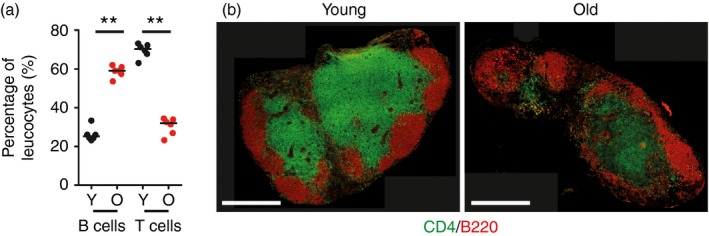
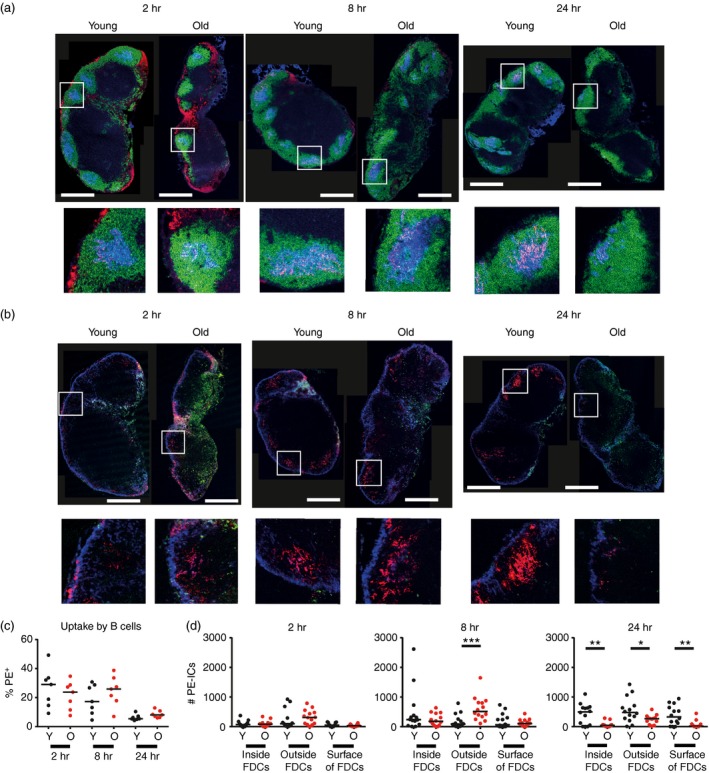
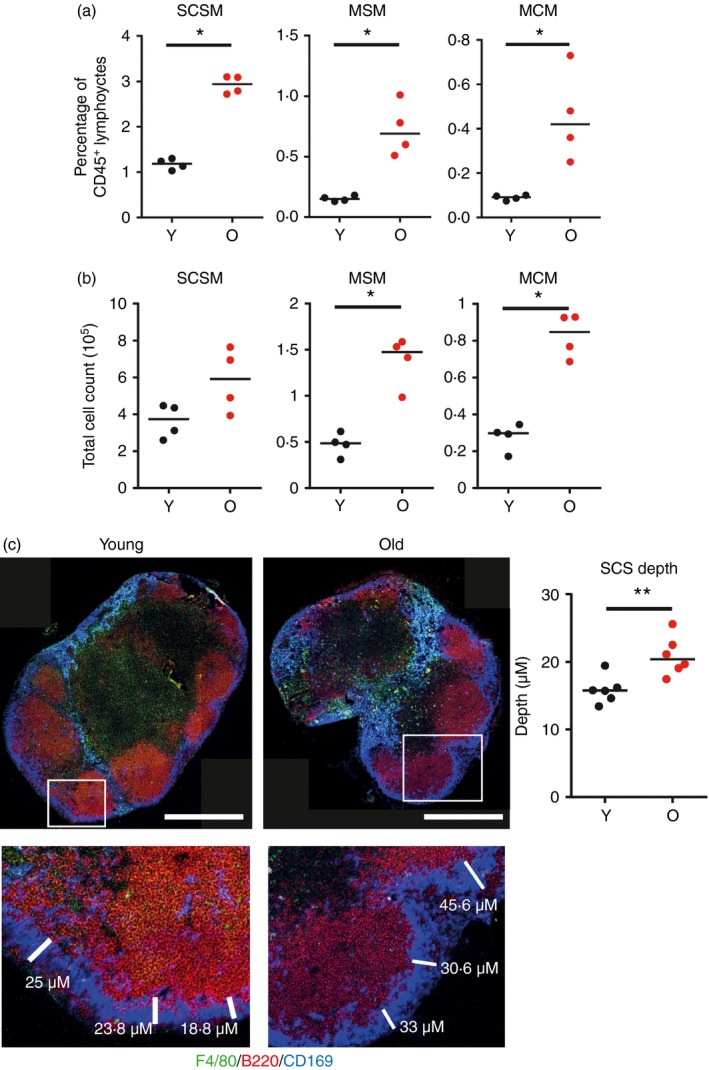
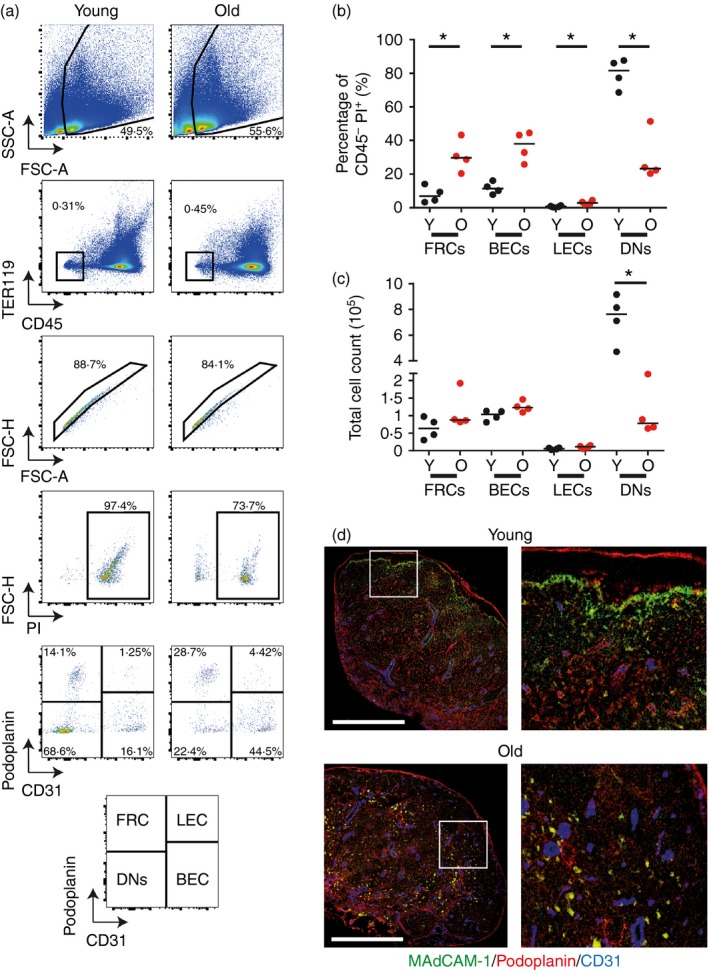
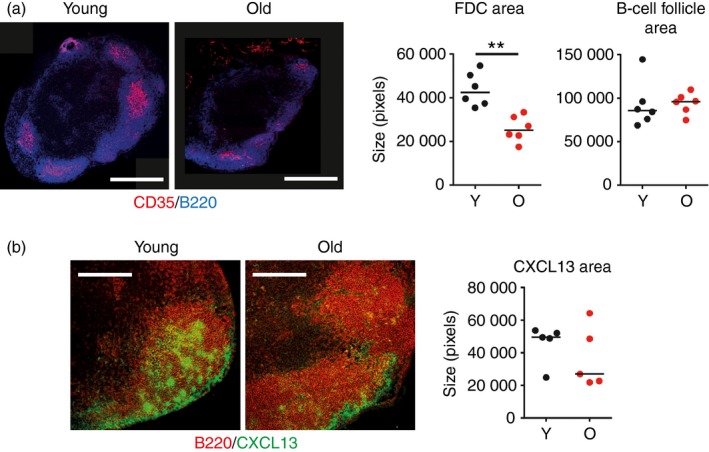
Lymph nodes (LN) are secondary lymphoid organs spread throughout the lymphatic system. They function to filter pathogenic material from the lymphatic fluid to maintain the health of the organism. Subcapsular sinus macrophages (SCSM) are among the first-responders within the LN due to their strategic location within the subcapsular sinus region. These macrophages aid the delivery of immune complexes to B cells and follicular dendritic cells (FDC) within the LN. Here we show an increase in SCSM and other macrophage populations within aged LN. However, immune complex uptake by macrophages within LN was not altered with age, nor was immune complex uptake by B cells. LN stromal cell populations, important in immune responses and the localization and survival of leucocytes, were altered in their representation and distribution in aged LN. In particular, FDC regions were decreased in size and had decreased chemokine CXCL13 expression. Furthermore, the retention of immune complexes by FDC was decreased in aged LN at 24 hr post-injection. As FDC are important in the maintenance of germinal centre responses, the decreased retention of immune complex in aged LN may contribute to the reduced germinal centre responses observed in aged mice.
淋巴结(LN)是遍布淋巴系统的二级淋巴器官。它们的功能是过滤淋巴液中的致病物质,以维持机体的健康。由于被膜下窦巨噬细胞(SCSM)位于被膜下窦区域的战略位置,它们是淋巴结内最早做出反应的细胞之一。这些巨噬细胞有助于将免疫复合物递送至淋巴结内的B细胞和滤泡树突状细胞(FDC)。在此我们发现,老年淋巴结内的被膜下窦巨噬细胞和其他巨噬细胞群体有所增加。然而,淋巴结内巨噬细胞对免疫复合物的摄取并未随年龄增长而改变,B细胞对免疫复合物的摄取也未改变。淋巴结基质细胞群体在免疫反应以及白细胞的定位和存活中起重要作用,其在老年淋巴结中的表现和分布发生了改变。特别是,滤泡树突状细胞区域的大小减小,趋化因子CXCL13的表达降低。此外,在注射后24小时,老年淋巴结中滤泡树突状细胞对免疫复合物的保留能力下降。由于滤泡树突状细胞在维持生发中心反应中很重要,老年淋巴结中免疫复合物保留能力的下降可能导致老年小鼠生发中心反应减弱。