Yu Sheng, Yan Hui, Zhang Li, Shan Mingqiu, Chen Peidong, Ding Anwei, Li Sam Fong Yau
Jiangsu Collaborative Innovation Center of Chinese Medicinal Resources Industrialization, College of Pharmacy, Nanjing University of Chinese Medicine, 138 Xianlin Road, Nanjing 210023, China.
Department of Chemistry, National University of Singapore, Singapore 117543, Singapore.
Molecules. 2017 Feb 16;22(2):299. doi: 10.3390/molecules22020299.
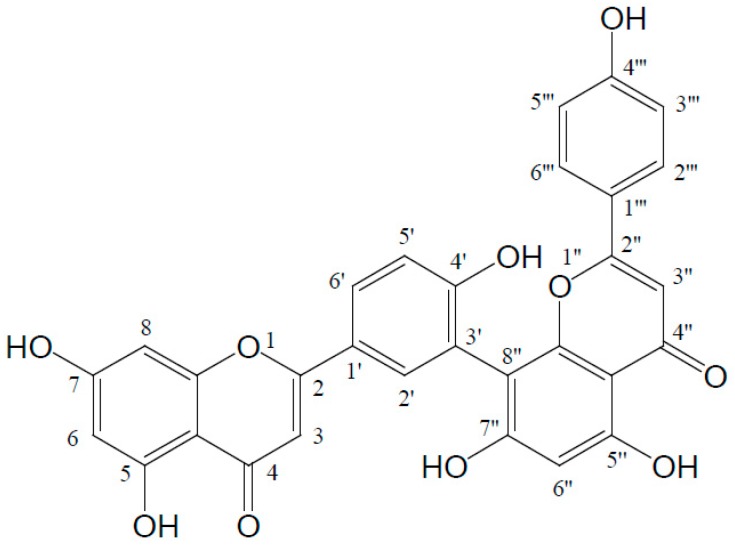
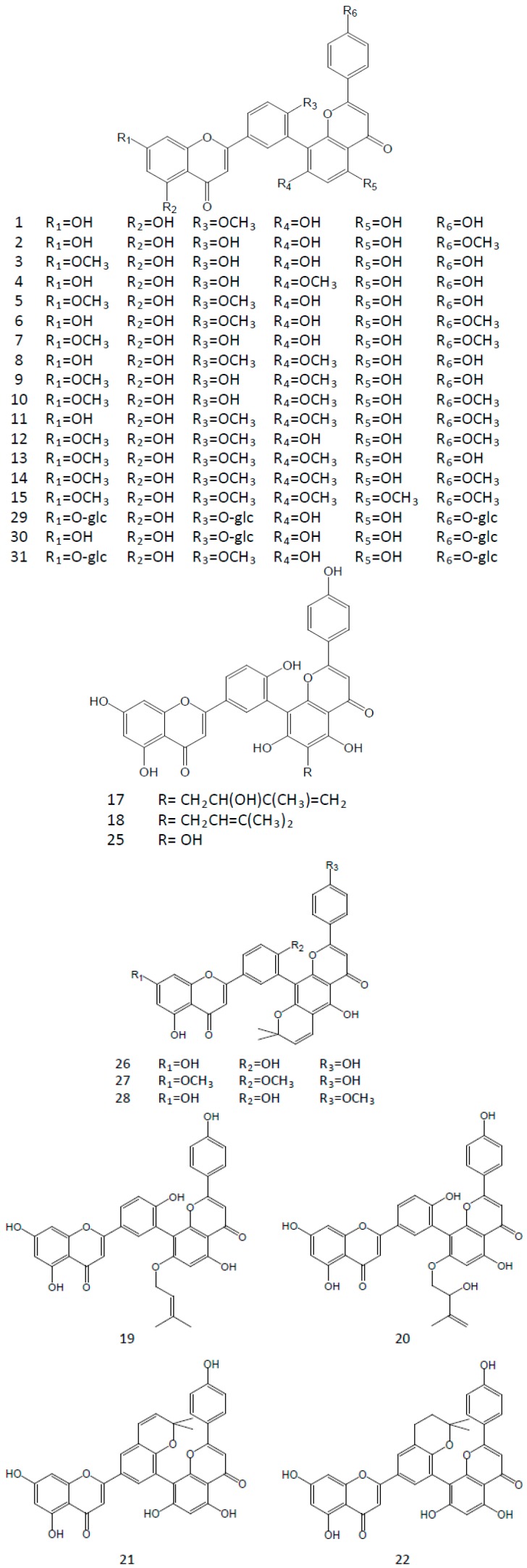
Amentoflavone (CHO) is a well-known biflavonoid occurring in many natural plants. This polyphenolic compound has been discovered to have some important bioactivities, including anti-inflammation, anti-oxidation, anti-diabetes, and anti-senescence effects on many important reactions in the cardiovascular and central nervous system, etc. Over 120 plants have been found to contain this bioactive component, such as Selaginellaceae, Cupressaceae, Euphorbiaceae, Podocarpaceae, and Calophyllaceae plant families. This review paper aims to profile amentoflavone on its plant sources, natural derivatives, pharmacology, and pharmacokinetics, and to highlight some existing issues and perspectives in the future.
穗花杉双黄酮(CHO)是一种存在于许多天然植物中的著名双黄酮类化合物。这种多酚类化合物已被发现具有一些重要的生物活性,包括对心血管和中枢神经系统等许多重要反应的抗炎、抗氧化、抗糖尿病和抗衰老作用。已发现超过120种植物含有这种生物活性成分,如卷柏科、柏科、大戟科、罗汉松科和红厚壳科植物家族。这篇综述文章旨在概述穗花杉双黄酮的植物来源、天然衍生物、药理学和药代动力学,并突出一些现存问题和未来展望。