Duijzer Carolien A C G, Shayan Shakila, Bakker Arthur, Van der Schaaf Marieke F, Abrahamson Dor
Faculty of Social and Behavioural Sciences, Education and Learning, Utrecht University Utrecht, Netherlands.
Faculty of Science, Freudenthal Institute, Utrecht University Utrecht, Netherlands.
Front Psychol. 2017 Feb 8;8:144. doi: 10.3389/fpsyg.2017.00144. eCollection 2017.
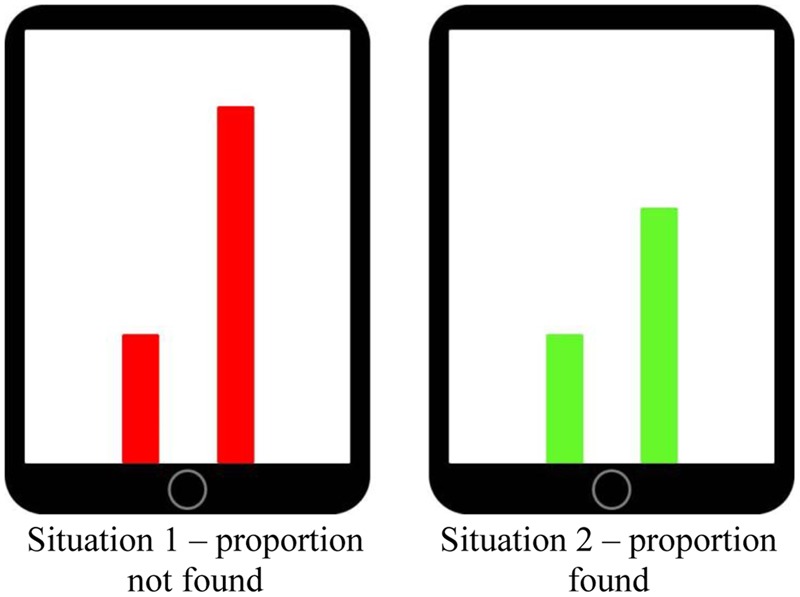
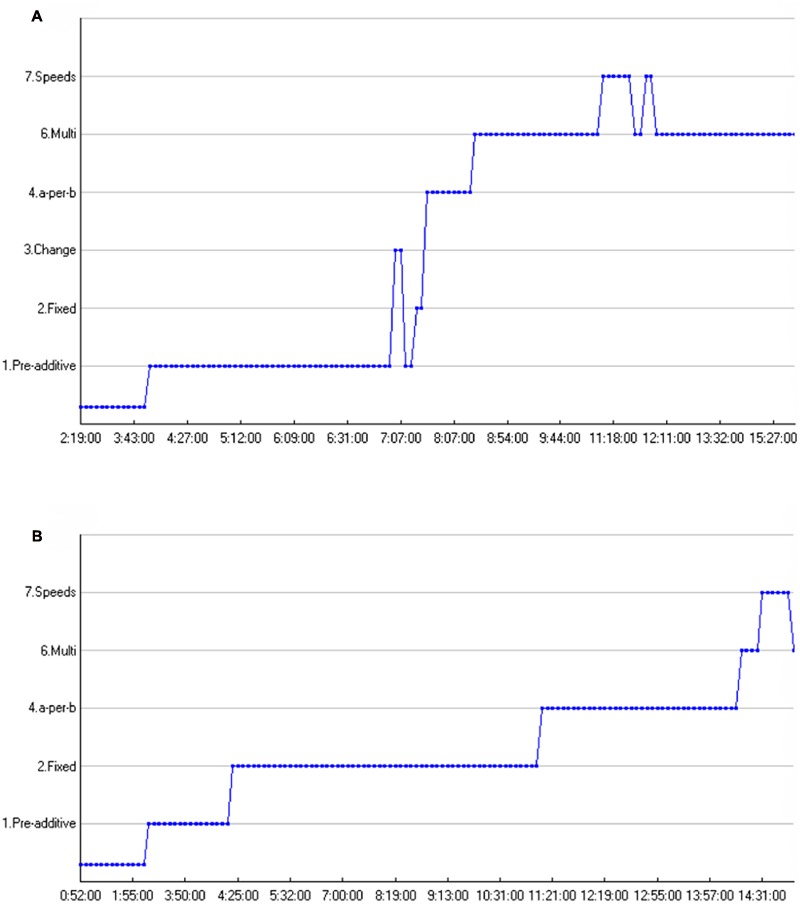
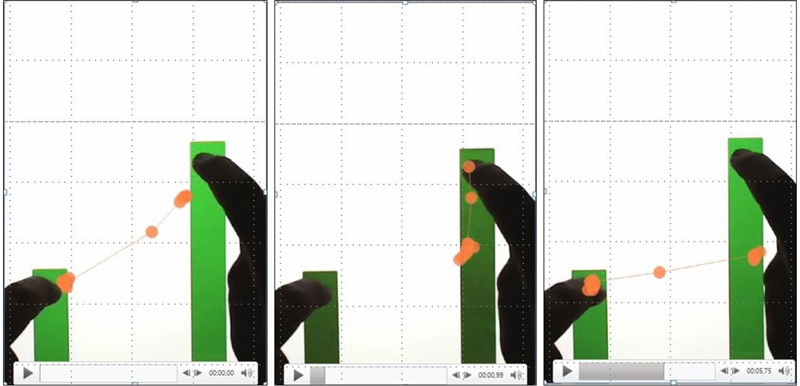
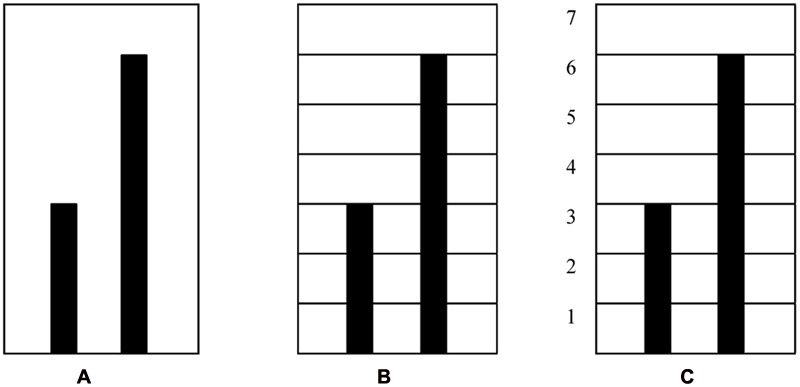
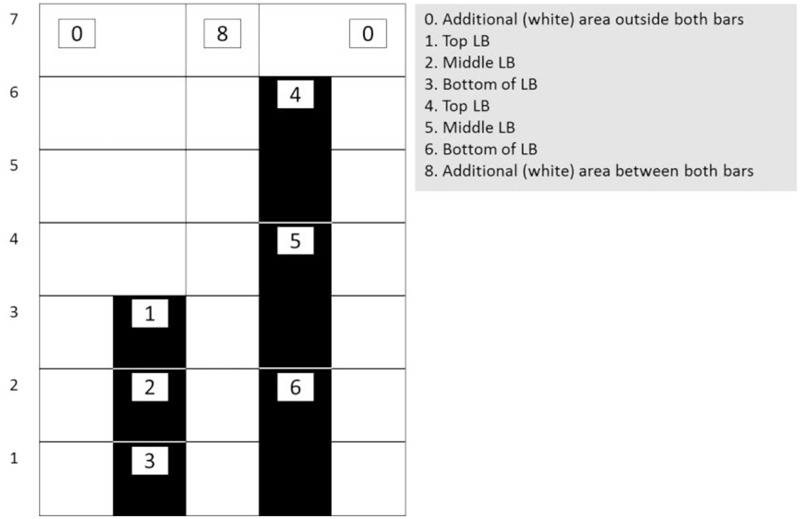
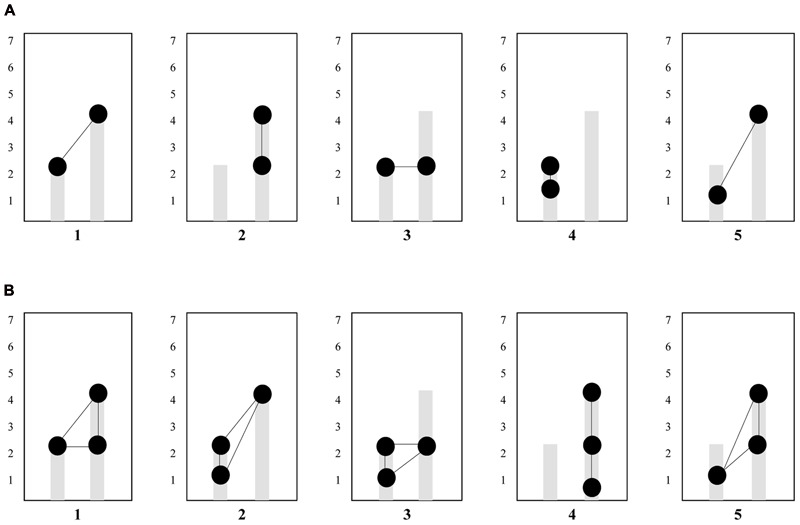
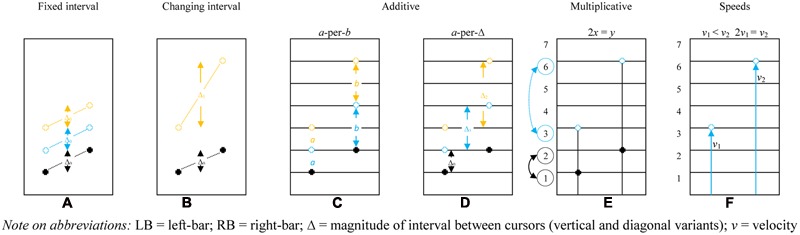
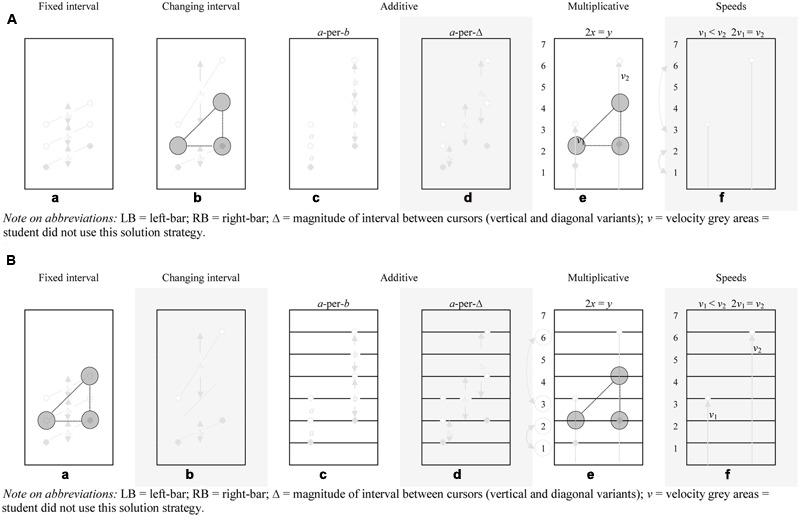
Proportional reasoning is important and yet difficult for many students, who often use additive strategies, where multiplicative strategies are better suited. In our research we explore the potential of an interactive touchscreen tablet application to promote proportional reasoning by creating conditions that steer students toward multiplicative strategies. The design of this application (Mathematical Imagery Trainer) was inspired by arguments from embodied-cognition theory that mathematical understanding is grounded in sensorimotor schemes. This study draws on a corpus of previously treated data of 9-11 year-old students, who participated individually in semi-structured clinical interviews, in which they solved a manipulation task that required moving two vertical bars at a constant ratio of heights (1:2). Qualitative analyses revealed the frequent emergence of visual attention to the screen location halfway along the bar that was twice as high as the short bar. The hypothesis arose that students used so-called "attentional anchors" (AAs)-psychological constructions of new perceptual structures in the environment that people invent spontaneously as their heuristic means of guiding effective manual actions for managing an otherwise overwhelming task, in this case keeping vertical bars at the same proportion while moving them. We assumed that students' AAs on the mathematically relevant points were crucial in progressing from additive to multiplicative strategies. Here we seek farther to promote this line of research by reanalyzing data from 38 students (aged 9-11). We ask: (1) What quantitative evidence is there for the emergence of AAs?; and (2) How does the transition from additive to multiplicative reasoning take place when solving embodied proportions tasks in interaction with the touchscreen tablet app? We found that: (a) AAs appeared for all students; (b) the AA-types were few across the students; (c) the AAs were mathematically relevant (top of the bars and halfway along the tall bar); (d) interacting with the tablet was crucial for the AAs' emergence; and (e) the vast majority of students progressed from additive to multiplicative strategies (as corroborated with oral utterances). We conclude that touchscreen applications have the potential to create interaction conditions for coordinating action and perception into mathematical cognition.
比例推理对许多学生来说既重要又困难,他们常常使用加法策略,而乘法策略才更适用。在我们的研究中,我们探索了一款交互式触摸屏平板电脑应用程序的潜力,通过创造条件引导学生采用乘法策略来促进比例推理。这款应用程序(数学图像训练器)的设计灵感来自具身认知理论的观点,即数学理解基于感觉运动图式。本研究利用了一组之前处理过的9至11岁学生的数据,这些学生分别参加了半结构化临床访谈,在访谈中他们解决了一项操作任务,即按高度的固定比例(1:2)移动两根垂直的杆。定性分析表明,学生们经常会将视觉注意力集中在较高杆长度一半处的屏幕位置,该杆的高度是短杆的两倍。由此产生了一个假设,即学生们使用了所谓的“注意力锚点”(AAs)——人们在环境中自发构建的新知觉结构的心理构建,作为他们指导有效手动操作以应对原本艰巨任务的启发式手段,在这种情况下,就是在移动垂直杆时保持它们的相同比例。我们假设学生在数学相关点上的注意力锚点对于从加法策略向乘法策略的转变至关重要。在此,我们通过重新分析38名9至11岁学生的数据,进一步推进这一研究方向。我们提出问题:(1)有哪些定量证据表明注意力锚点的出现?(2)在与触摸屏平板电脑应用程序交互解决具身比例任务时,从加法推理到乘法推理的转变是如何发生的?我们发现:(a)所有学生都出现了注意力锚点;(b)学生们的注意力锚点类型很少;(c)注意力锚点在数学上是相关的(杆的顶部和高杆长度的一半处);(d)与平板电脑交互对于注意力锚点的出现至关重要;(e)绝大多数学生从加法策略转变为乘法策略(口头表述也证实了这一点)。我们得出结论,触摸屏应用程序有潜力创造交互条件,将行动和感知协调为数学认知。