• 文献检索
  • 文档翻译
  • 深度研究
  • 学术资讯
  • Suppr Zotero 插件Zotero 插件
  • 邀请有礼
  • 套餐&价格
  • 历史记录
应用&插件
Suppr Zotero 插件Zotero 插件浏览器插件Mac 客户端Windows 客户端微信小程序
定价
高级版会员购买积分包购买API积分包
服务
文献检索文档翻译深度研究API 文档MCP 服务
关于我们
关于 Suppr公司介绍联系我们用户协议隐私条款
关注我们

Suppr 超能文献

核心技术专利:CN118964589B侵权必究
粤ICP备2023148730 号-1Suppr @ 2026

文献检索

告别复杂PubMed语法,用中文像聊天一样搜索,搜遍4000万医学文献。AI智能推荐,让科研检索更轻松。

立即免费搜索

文件翻译

保留排版,准确专业,支持PDF/Word/PPT等文件格式,支持 12+语言互译。

免费翻译文档

深度研究

AI帮你快速写综述,25分钟生成高质量综述,智能提取关键信息,辅助科研写作。

立即免费体验

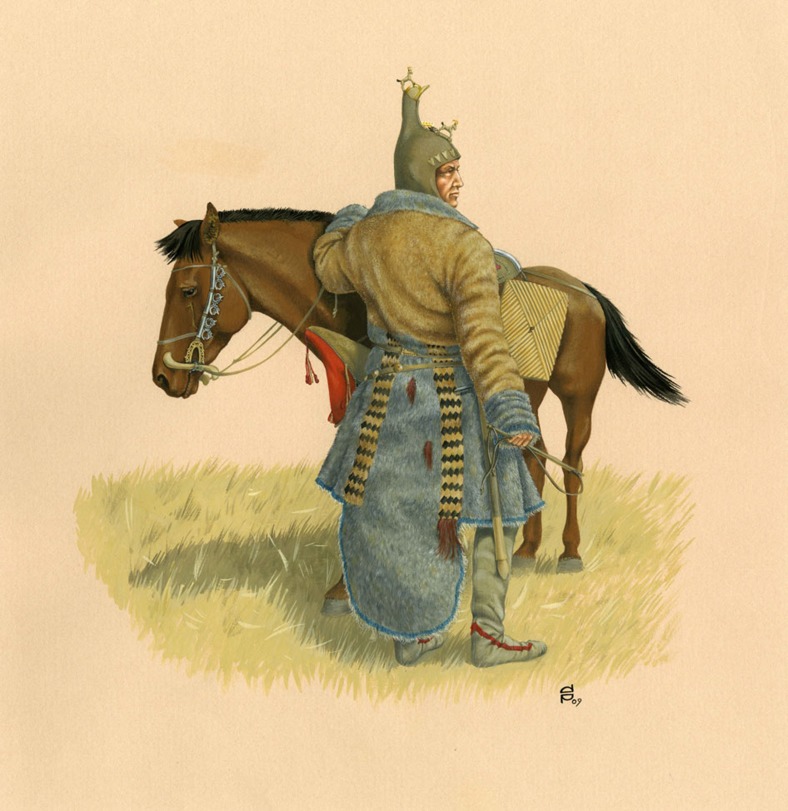
欧亚草原铁器时代游牧民族的祖先和人口统计学以及后代。

Ancestry and demography and descendants of Iron Age nomads of the Eurasian Steppe.

机构信息

Palaeogenetics Group, Institute of Evolutionary Biology, Johannes Gutenberg University Mainz, 55099 Mainz, Germany.

CNRS UMR 7206 Eco-anthropologie, Muséum National d'Histoire Naturelle, 75016 Paris, France.

出版信息

Nat Commun. 2017 Mar 3;8:14615. doi: 10.1038/ncomms14615.

DOI:10.1038/ncomms14615
PMID:28256537
原文链接:https://pmc.ncbi.nlm.nih.gov/articles/PMC5337992/
Abstract

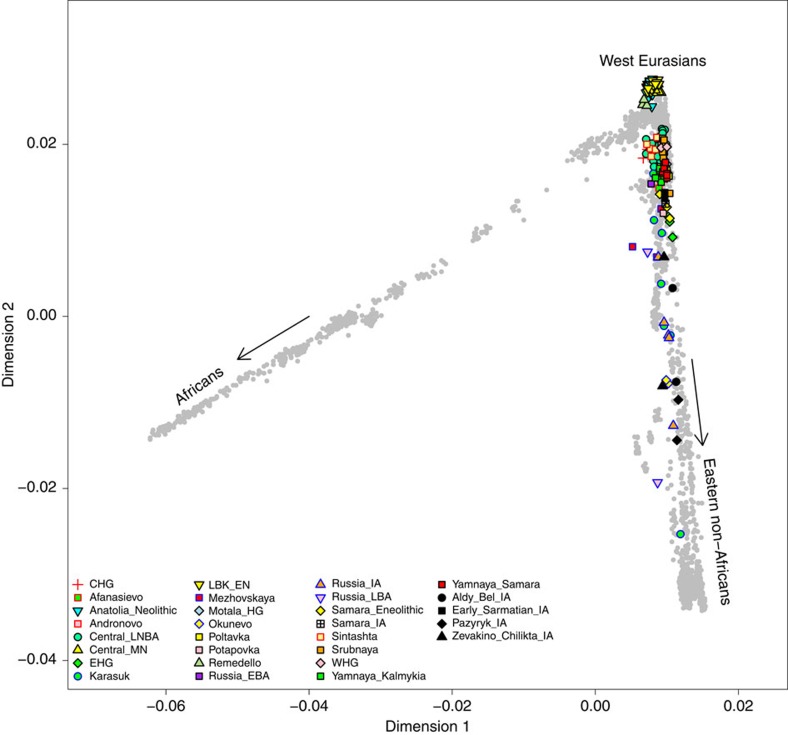
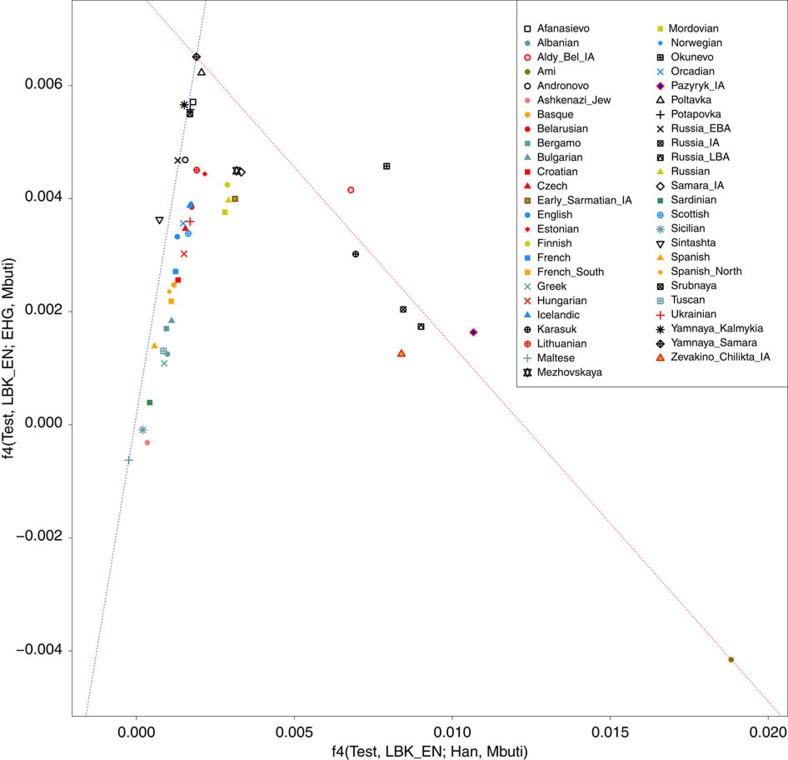
During the 1 millennium before the Common Era (BCE), nomadic tribes associated with the Iron Age Scythian culture spread over the Eurasian Steppe, covering a territory of more than 3,500 km in breadth. To understand the demographic processes behind the spread of the Scythian culture, we analysed genomic data from eight individuals and a mitochondrial dataset of 96 individuals originating in eastern and western parts of the Eurasian Steppe. Genomic inference reveals that Scythians in the east and the west of the steppe zone can best be described as a mixture of Yamnaya-related ancestry and an East Asian component. Demographic modelling suggests independent origins for eastern and western groups with ongoing gene-flow between them, plausibly explaining the striking uniformity of their material culture. We also find evidence that significant gene-flow from east to west Eurasia must have occurred early during the Iron Age.

摘要

在公元前 1000 年以前的一千年中,与铁器时代斯基泰文化相关的游牧部落遍布欧亚草原,其领土宽度超过 3500 公里。为了了解斯基泰文化传播背后的人口过程,我们分析了来自欧亚草原东部和西部的 8 个人的基因组数据和 96 个人的线粒体数据集。基因组推断表明,草原东部和西部的斯基泰人可以最好地被描述为与雅利安人相关的祖先和东亚成分的混合体。人口统计学模型表明,东部和西部群体具有独立的起源,它们之间存在持续的基因流动,这合理地解释了它们物质文化的惊人一致性。我们还发现证据表明,在铁器时代早期,来自欧亚大陆东部到西部的大量基因流动肯定发生了。
https://cdn.ncbi.nlm.nih.gov/pmc/blobs/a699/5337992/ea794d98aba9/ncomms14615-f7.jpg
https://cdn.ncbi.nlm.nih.gov/pmc/blobs/a699/5337992/79edb150948d/ncomms14615-f1.jpg
https://cdn.ncbi.nlm.nih.gov/pmc/blobs/a699/5337992/1eba08f68083/ncomms14615-f2.jpg
https://cdn.ncbi.nlm.nih.gov/pmc/blobs/a699/5337992/708c23be593d/ncomms14615-f3.jpg
https://cdn.ncbi.nlm.nih.gov/pmc/blobs/a699/5337992/9942d6624f66/ncomms14615-f4.jpg
https://cdn.ncbi.nlm.nih.gov/pmc/blobs/a699/5337992/fdcff928b401/ncomms14615-f5.jpg
https://cdn.ncbi.nlm.nih.gov/pmc/blobs/a699/5337992/870852044dfd/ncomms14615-f6.jpg
https://cdn.ncbi.nlm.nih.gov/pmc/blobs/a699/5337992/ea794d98aba9/ncomms14615-f7.jpg
https://cdn.ncbi.nlm.nih.gov/pmc/blobs/a699/5337992/79edb150948d/ncomms14615-f1.jpg
https://cdn.ncbi.nlm.nih.gov/pmc/blobs/a699/5337992/1eba08f68083/ncomms14615-f2.jpg
https://cdn.ncbi.nlm.nih.gov/pmc/blobs/a699/5337992/708c23be593d/ncomms14615-f3.jpg
https://cdn.ncbi.nlm.nih.gov/pmc/blobs/a699/5337992/9942d6624f66/ncomms14615-f4.jpg
https://cdn.ncbi.nlm.nih.gov/pmc/blobs/a699/5337992/fdcff928b401/ncomms14615-f5.jpg
https://cdn.ncbi.nlm.nih.gov/pmc/blobs/a699/5337992/870852044dfd/ncomms14615-f6.jpg
https://cdn.ncbi.nlm.nih.gov/pmc/blobs/a699/5337992/ea794d98aba9/ncomms14615-f7.jpg

相似文献

1
Ancestry and demography and descendants of Iron Age nomads of the Eurasian Steppe.欧亚草原铁器时代游牧民族的祖先和人口统计学以及后代。
Nat Commun. 2017 Mar 3;8:14615. doi: 10.1038/ncomms14615.
2
137 ancient human genomes from across the Eurasian steppes.来自欧亚草原的 137 个古人类基因组。
Nature. 2018 May;557(7705):369-374. doi: 10.1038/s41586-018-0094-2. Epub 2018 May 9.
3
Shifts in the Genetic Landscape of the Western Eurasian Steppe Associated with the Beginning and End of the Scythian Dominance.与斯基泰统治的开始和结束相关的,西欧亚草原遗传景观的转变。
Curr Biol. 2019 Jul 22;29(14):2430-2441.e10. doi: 10.1016/j.cub.2019.06.019. Epub 2019 Jul 11.
4
Ancient Genomes Reveal Yamnaya-Related Ancestry and a Potential Source of Indo-European Speakers in Iron Age Tianshan.古代基因组揭示了与雅利安人有关的祖先以及在铁器时代天山地区的印欧语系使用者的潜在来源。
Curr Biol. 2019 Aug 5;29(15):2526-2532.e4. doi: 10.1016/j.cub.2019.06.044. Epub 2019 Jul 25.
5
Ancient genomes suggest the eastern Pontic-Caspian steppe as the source of western Iron Age nomads.古代基因组表明,东欧草原是西方铁器时代游牧民族的起源地。
Sci Adv. 2018 Oct 3;4(10):eaat4457. doi: 10.1126/sciadv.aat4457. eCollection 2018 Oct.
6
The first horse herders and the impact of early Bronze Age steppe expansions into Asia.最早的牧马人以及早期青铜时代草原扩张对亚洲的影响。
Science. 2018 Jun 29;360(6396). doi: 10.1126/science.aar7711. Epub 2018 May 9.
7
Maternal genetic features of the Iron Age Tagar population from Southern Siberia (1st millennium BC).南西伯利亚铁器时代塔加尔人群的母系遗传特征(公元前 1 世纪)。
PLoS One. 2018 Sep 20;13(9):e0204062. doi: 10.1371/journal.pone.0204062. eCollection 2018.
8
Tracing the origin of the east-west population admixture in the Altai region (Central Asia).追溯阿尔泰山地区(中亚)东西部人口混合的起源。
PLoS One. 2012;7(11):e48904. doi: 10.1371/journal.pone.0048904. Epub 2012 Nov 9.
9
The genetic history of the Southern Arc: A bridge between West Asia and Europe.南亚弧形地带的遗传历史:连接西亚和欧洲的桥梁。
Science. 2022 Aug 26;377(6609):eabm4247. doi: 10.1126/science.abm4247.
10
Mitochondrial DNA of ancient Cumanians: culturally Asian steppe nomadic immigrants with substantially more western Eurasian mitochondrial DNA lineages.古代库曼人的线粒体DNA:文化上属于亚洲草原游牧移民,拥有大量更多的西欧亚线粒体DNA谱系。
Hum Biol. 2005 Oct;77(5):639-62.

引用本文的文献

1
Genetic history of Scythia.斯基泰人的遗传史。
Sci Adv. 2025 Jul 25;11(30):eads8179. doi: 10.1126/sciadv.ads8179. Epub 2025 Jul 23.
2
Urbanization and genetic homogenization in the medieval Low Countries revealed through a ten-century paleogenomic study of the city of Sint-Truiden.通过对圣特吕登市长达十个世纪的古基因组研究揭示中世纪低地国家的城市化与基因同质化
Genome Biol. 2025 May 20;26(1):127. doi: 10.1186/s13059-025-03580-z.
3
Ancient genomes shed light on the genetic history of the Iron Age to historical central Xinjiang, northwest China.

本文引用的文献

1
Genome-wide patterns of selection in 230 ancient Eurasians.230名古代欧亚人的全基因组选择模式
Nature. 2015 Dec 24;528(7583):499-503. doi: 10.1038/nature16152. Epub 2015 Nov 23.
2
Upper Palaeolithic genomes reveal deep roots of modern Eurasians.旧石器时代晚期基因组揭示了现代欧亚人的深厚根源。
Nat Commun. 2015 Nov 16;6:8912. doi: 10.1038/ncomms9912.
3
An early modern human from Romania with a recent Neanderthal ancestor.一名来自罗马尼亚的早期现代人,拥有较近的尼安德特人祖先。
古代基因组揭示了中国西北部新疆中部从铁器时代到历史时期的遗传史。
BMC Biol. 2025 Apr 7;23(1):93. doi: 10.1186/s12915-025-02195-x.
4
Ancient DNA analysis of elite nomadic warrior from Chinge-Tey I funerary commemorative complex in the "Valley of the Kings", Tuva.对图瓦“帝王谷”钦格 - 泰伊一号丧葬纪念建筑群中精英游牧武士的古DNA分析。
BMC Genomics. 2025 Mar 5;26(1):220. doi: 10.1186/s12864-025-11361-y.
5
North Pontic crossroads: Mobility in Ukraine from the Bronze Age to the early modern period.北黑海十字路口:从青铜时代到近代早期乌克兰的人口流动
Sci Adv. 2025 Jan 10;11(2):eadr0695. doi: 10.1126/sciadv.adr0695. Epub 2025 Jan 8.
6
Archaeogenetic analysis revealed East Eurasian paternal origin to the Aba royal family of Hungary.古遗传学分析揭示了匈牙利阿巴王室的父系起源于东亚欧亚大陆。
iScience. 2024 Sep 14;27(10):110892. doi: 10.1016/j.isci.2024.110892. eCollection 2024 Oct 18.
7
Pervasive findings of directional selection realize the promise of ancient DNA to elucidate human adaptation.定向选择的普遍发现实现了古DNA阐明人类适应性的前景。
bioRxiv. 2024 Sep 15:2024.09.14.613021. doi: 10.1101/2024.09.14.613021.
8
Long shared haplotypes identify the Southern Urals as a primary source for the 10th century Hungarians.长期共享的单倍型表明南乌拉尔地区是10世纪匈牙利人的主要来源地。
bioRxiv. 2024 Jul 23:2024.07.21.599526. doi: 10.1101/2024.07.21.599526.
9
Reconstructing the Genetic Relationship between Ancient and Present-Day Siberian Populations.重建古代和现代西伯利亚人群之间的遗传关系。
Genome Biol Evol. 2024 Apr 2;16(4). doi: 10.1093/gbe/evae063.
10
The Allen Ancient DNA Resource (AADR) a curated compendium of ancient human genomes.Allen 古代 DNA 资源 (AADR) 是一个经过策展的古代人类基因组纲要。
Sci Data. 2024 Feb 10;11(1):182. doi: 10.1038/s41597-024-03031-7.
Nature. 2015 Aug 13;524(7564):216-9. doi: 10.1038/nature14558. Epub 2015 Jun 22.
4
Population genomics of Bronze Age Eurasia.青铜时代欧亚大陆的人口基因组学。
Nature. 2015 Jun 11;522(7555):167-72. doi: 10.1038/nature14507.
5
Massive migration from the steppe was a source for Indo-European languages in Europe.来自草原的大规模迁徙是欧洲印欧语系的一个源头。
Nature. 2015 Jun 11;522(7555):207-11. doi: 10.1038/nature14317. Epub 2015 Mar 2.
6
Statistical inference on genetic data reveals the complex demographic history of human populations in central Asia.遗传数据的统计推断揭示了中亚人群复杂的人口历史。
Mol Biol Evol. 2015 Jun;32(6):1411-24. doi: 10.1093/molbev/msv030. Epub 2015 Feb 11.
7
Paleogenomics. Genomic structure in Europeans dating back at least 36,200 years.古基因组学。追溯到至少 36200 年前的欧洲人基因组结构。
Science. 2014 Nov 28;346(6213):1113-8. doi: 10.1126/science.aaa0114. Epub 2014 Nov 6.
8
Genome sequence of a 45,000-year-old modern human from western Siberia.来自西西伯利亚的一名生活在45000年前的现代人的基因组序列。
Nature. 2014 Oct 23;514(7523):445-9. doi: 10.1038/nature13810.
9
Ancient human genomes suggest three ancestral populations for present-day Europeans.古代人类基因组表明当今欧洲人有三个祖先群体。
Nature. 2014 Sep 18;513(7518):409-13. doi: 10.1038/nature13673.
10
Strong genetic admixture in the Altai at the Middle Bronze Age revealed by uniparental and ancestry informative markers.中青铜时代阿尔泰山的强烈基因混合:来自单倍体和祖先信息标记的证据。
Forensic Sci Int Genet. 2014 Sep;12:199-207. doi: 10.1016/j.fsigen.2014.05.012. Epub 2014 Jun 2.