Raina Abhay, Zhao Xiaoping, Grove Megan L, Bressler Jan, Gottesman Rebecca F, Guan Weihua, Pankow James S, Boerwinkle Eric, Mosley Thomas H, Fornage Myriam
Institute of Molecular Medicine, McGovern Medical School, University of Texas Health Science Center at Houston, 1825 Pressler Street, 77030 Houston, TX USA.
Division of Epidemiology, Human Genetics, and Environmental Sciences, School of Public Health, University of Texas Health Science Center at Houston, Houston, TX USA.
Clin Epigenetics. 2017 Feb 14;9:21. doi: 10.1186/s13148-016-0302-6. eCollection 2017.
Cerebral white matter hyperintensities (WMH) on magnetic resonance imaging (MRI) are part of the spectrum of brain vascular injury accompanying aging and are associated with a substantial risk of stroke and dementia. We investigated the association of cerebral WMH burden on MRI with a DNA methylation-based biomarker of aging, termed DNA methylation age acceleration, which represents the deviation of the DNA methylation-predicted age from the chronologic age.
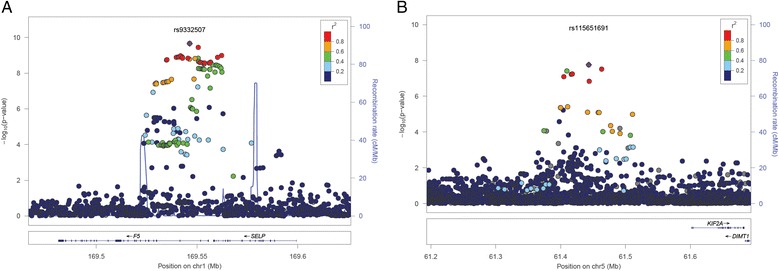
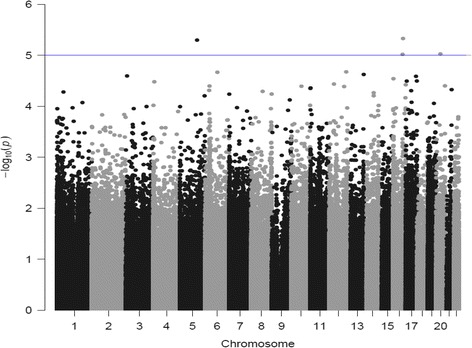
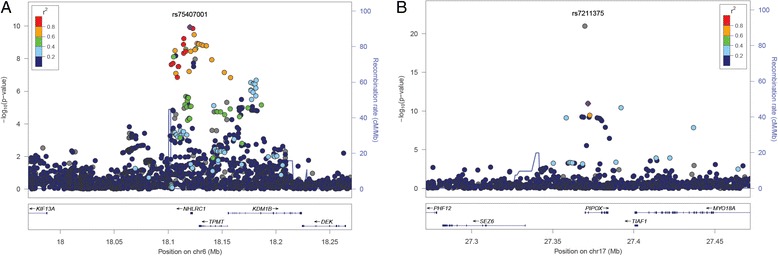
In this cross-sectional observational study of 713 African-American participants of the Atherosclerosis Risk in Communities study, aged 51-73 years, estimates of predicted age were obtained based on two algorithms (Hannum et al. and Horvath) from DNA methylation measured using the Illumina HM450 array on genomic DNA extracted from blood. Age acceleration, calculated as the residual values from the regression of each of the predicted age measures onto the chronologic age, was significantly associated with WMH burden after accounting for chronologic age and sex, body mass index, systolic blood pressure, hypertension, diabetes, current smoking, and blood cell composition, and results were similar for either Hannum et al.- or Horvath-derived estimates ( = 0.016 and 0.026). An age acceleration increase by 1 year was associated with an increase of WMH burden by ~1 grade. To shed light on possible biological mechanisms underlying this association, we conducted a genome-wide association study of age acceleration and identified four loci harboring genes implicated in hemostasis, cell proliferation, protein degradation, and histone methylation. However, none of these loci were associated with WMH burden.
In this population-based study of middle-aged to older African-American adults, we report an association between accelerated epigenetic aging and increased WMH burden, independent of known risk factors, including chronologic age. Additional studies are needed to clarify whether DNA methylation age reflects biological mechanisms implicated in the aging of the cerebral white matter.
磁共振成像(MRI)上的脑白质高信号(WMH)是伴随衰老的脑血管损伤谱的一部分,并且与中风和痴呆的重大风险相关。我们研究了MRI上脑WMH负担与基于DNA甲基化的衰老生物标志物(称为DNA甲基化年龄加速)之间的关联,该标志物代表DNA甲基化预测年龄与实际年龄的偏差。
在这项对社区动脉粥样硬化风险研究中713名年龄在51 - 73岁的非裔美国参与者进行的横断面观察性研究中,基于两种算法(Hannum等人和Horvath算法),从使用Illumina HM450芯片对从血液中提取的基因组DNA测量的DNA甲基化数据获得预测年龄估计值。年龄加速定义为每个预测年龄测量值与实际年龄回归的残差,在考虑实际年龄、性别、体重指数、收缩压、高血压、糖尿病、当前吸烟和血细胞组成后,年龄加速与WMH负担显著相关,并且Hannum等人或Horvath算法得出的估计结果相似(P = 0.016和0.026)。年龄加速增加1岁与WMH负担增加约1个等级相关。为了阐明这种关联背后可能的生物学机制,我们对年龄加速进行了全基因组关联研究,并确定了四个含有与止血、细胞增殖、蛋白质降解和组蛋白甲基化相关基因的基因座。然而,这些基因座均与WMH负担无关。
在这项针对中年至老年非裔美国成年人的基于人群的研究中,我们报告了表观遗传衰老加速与WMH负担增加之间的关联,该关联独立于包括实际年龄在内的已知风险因素。需要进一步研究以阐明DNA甲基化年龄是否反映了与脑白质衰老相关的生物学机制。