Fadda Roberta, Lucarelli Loredana
Department of Pedagogy, Psychology, Philosophy, University of CagliariCagliari, Italy.
Front Psychol. 2017 Apr 11;8:436. doi: 10.3389/fpsyg.2017.00436. eCollection 2017.
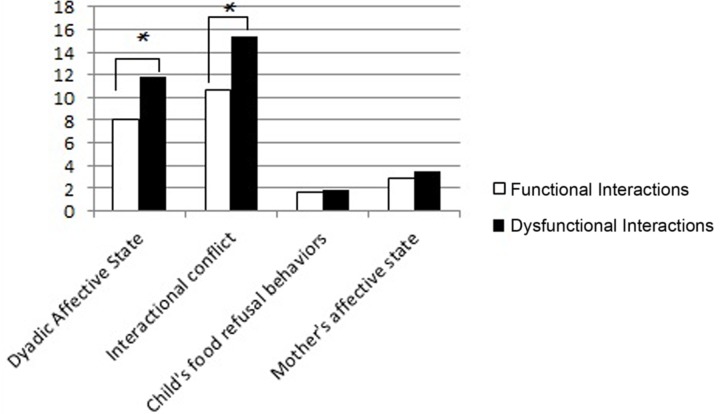
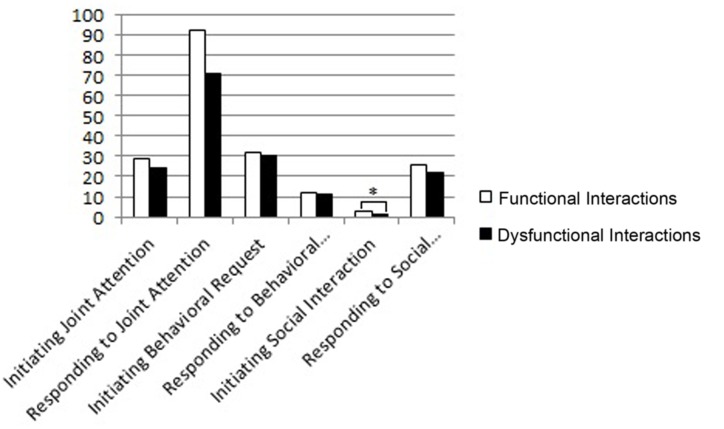
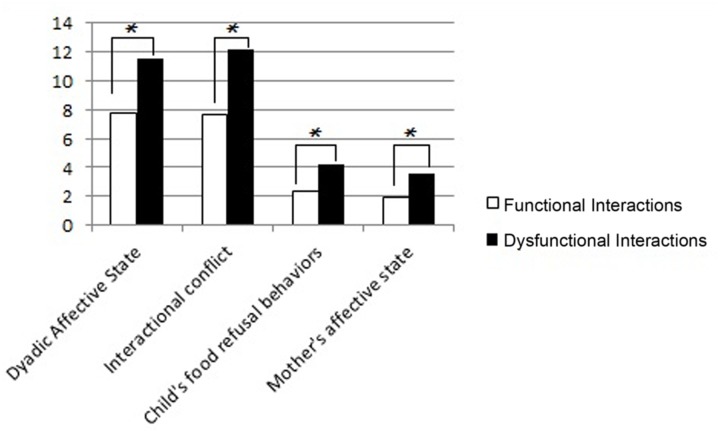
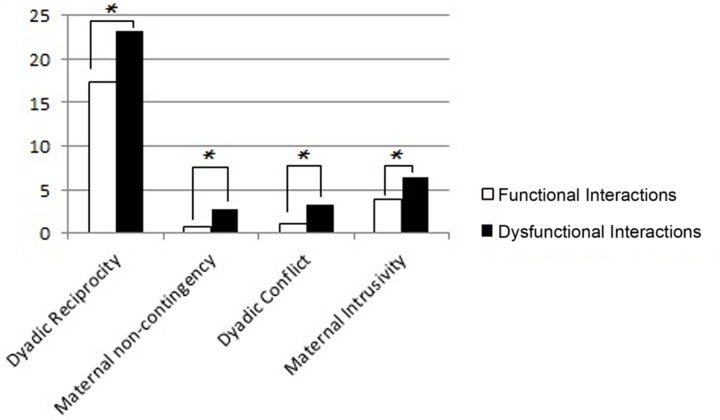
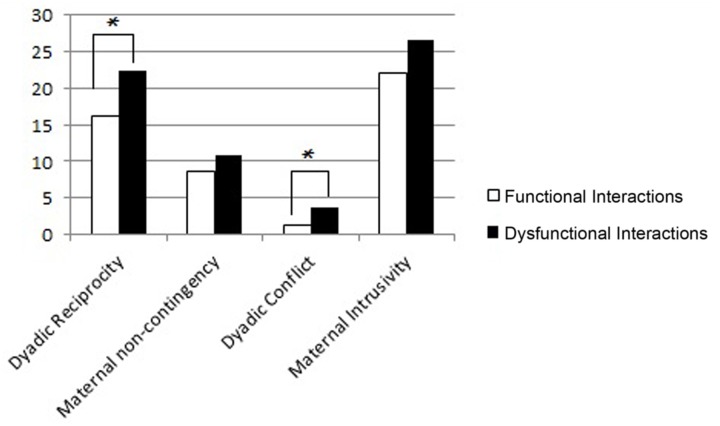
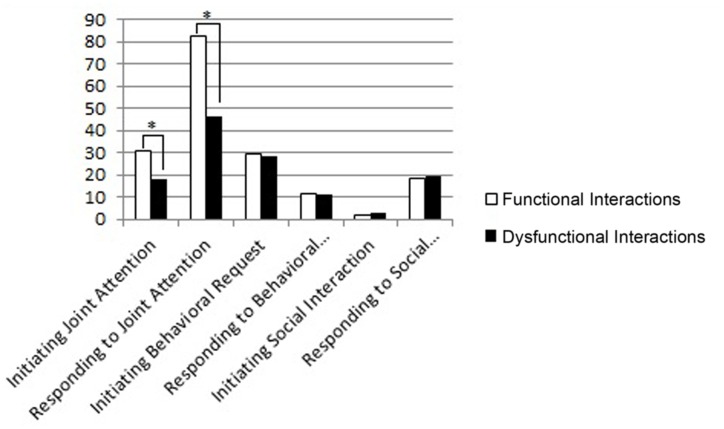
Mother-infant interactions during feeding and play are pivotal experiences in the development of infants' early social abilities (Stern, 1985, 1995; Biringen, 2000). Stern indicated distinctive characteristics of mother-infant interactions, respectively, during feeding and play, suggesting to evaluate both to better describe the complexity of such early affective and social experiences (Stern, 1996). Moreover, during the first years of life, infants acquire cognitive and social skills that allow them to interact with new social partners in extra-dyadic interactions. However, the relations between mother-child interactions and infants' social skills in extra-dyadic interactions are still unknown. We investigated longitudinally the relations between mother-child interactions during feeding and play and child's pre-verbal communicative abilities in extra-dyadic interactions during play. 20 dyads were evaluated at T (infants aged between 9-22 months) and 6 months later, at T. The interdyadic differences in mother-infant interactions during feeding and play were evaluated, respectively, with the "Feeding Scale" (Chatoor et al., 1997) and with the "Play Scale" (Chatoor, 2006) and the socio-communicative abilities of children with a new social partner during play were evaluated with the "Early Social Communication Scales" (Mundy et al., 2003). We distinguished the dyads into two categories: dyads with functional interactions (high dyadic reciprocity, low dyadic conflict) and dyads with dysfunctional interactions (lower dyadic reciprocity, higher dyadic conflict). At T, infants belonging to dyads with dysfunctional interactions were significantly lower in "Initiating Joint Attention" and in "Responding to Joint Attention" in interaction with a new social partner compared to the infants belonging to dyads with functional interactions. At T, infants belonging to dyads with dysfunctional interactions were significantly lower in "Initiating Social Interactions" with a new social partner compared to the infants belonging to dyads with functional interactions. There were significant correlations between the quality of mother-infant interactions during feeding and infants' social abilities in interaction with a stranger both at T and at T. This study showed a stable relation over time between mother-child interactions and child's social communicative skills in extra-dyadic interactions.
喂养和玩耍期间的母婴互动是婴儿早期社交能力发展中的关键体验(斯特恩,1985年、1995年;比林根,2000年)。斯特恩指出了喂养和玩耍期间母婴互动的不同特征,建议对两者进行评估,以便更好地描述此类早期情感和社交体验的复杂性(斯特恩,1996年)。此外,在生命的最初几年里,婴儿获得了认知和社交技能,使他们能够在二元外互动中与新的社交伙伴进行互动。然而,母婴互动与婴儿在二元外互动中的社交技能之间的关系仍然未知。我们纵向研究了喂养和玩耍期间的母婴互动与儿童在玩耍期间二元外互动中的前语言交流能力之间的关系。在T(婴儿年龄在9至22个月之间)和6个月后的T对20对母婴进行了评估。分别用“喂养量表”(查托尔等人,1997年)和“玩耍量表”(查托尔,2006年)评估了喂养和玩耍期间母婴互动中的二元间差异,并用“早期社交沟通量表”(蒙迪等人,2003年)评估了儿童在玩耍期间与新社交伙伴的社会沟通能力。我们将这20对母婴分为两类:具有功能性互动的母婴对(高二元互惠性,低二元冲突)和具有功能失调性互动的母婴对(低二元互惠性,高二元冲突)。在T时,与具有功能性互动的母婴对中的婴儿相比,具有功能失调性互动的母婴对中的婴儿在与新社交伙伴互动时的“发起共同注意”和“回应共同注意”方面显著更低。在T时,与具有功能性互动的母婴对中的婴儿相比,具有功能失调性互动的母婴对中的婴儿在与新社交伙伴“发起社交互动”方面显著更低。在T和T时,喂养期间母婴互动的质量与婴儿与陌生人互动时的社交能力之间均存在显著相关性。这项研究表明,母婴互动与儿童在二元外互动中的社会沟通技能之间随着时间推移存在稳定的关系。