MRC Human Genetics Unit, Institute of Genetics and Molecular Medicine, Genome Regulation Section, Western General Hospital, University of Edinburgh, Edinburgh EH4 2XU, UK.
Nat Commun. 2017 May 3;8:15114. doi: 10.1038/ncomms15114.
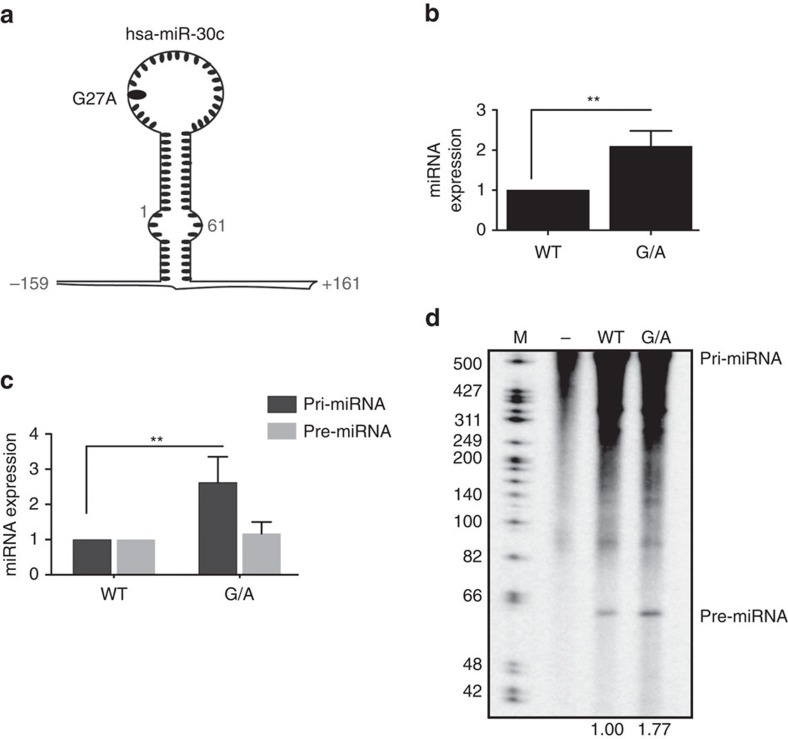
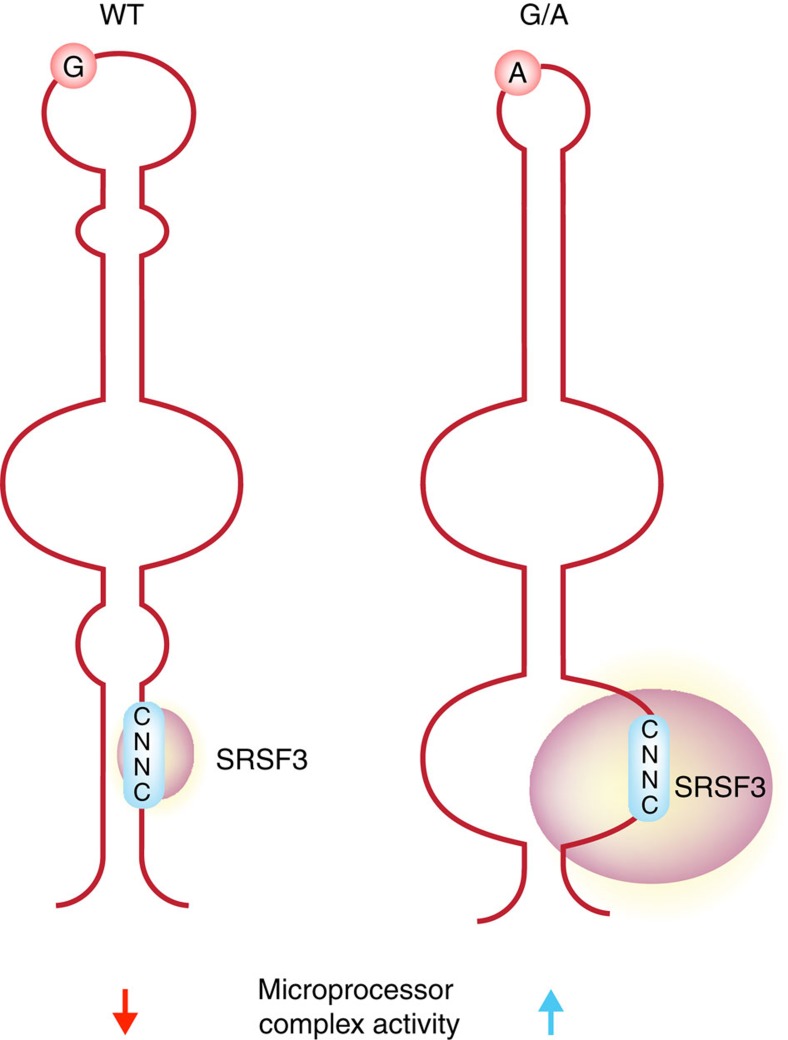
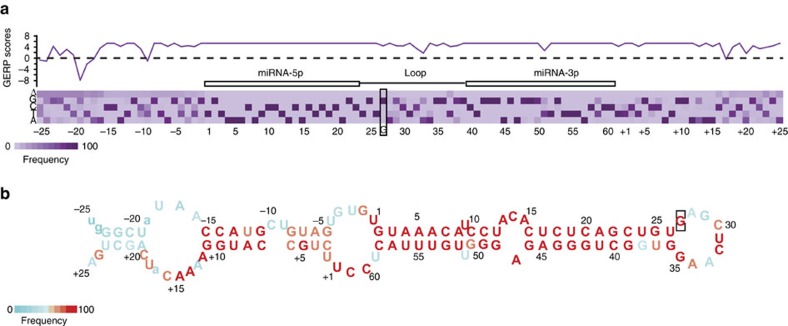
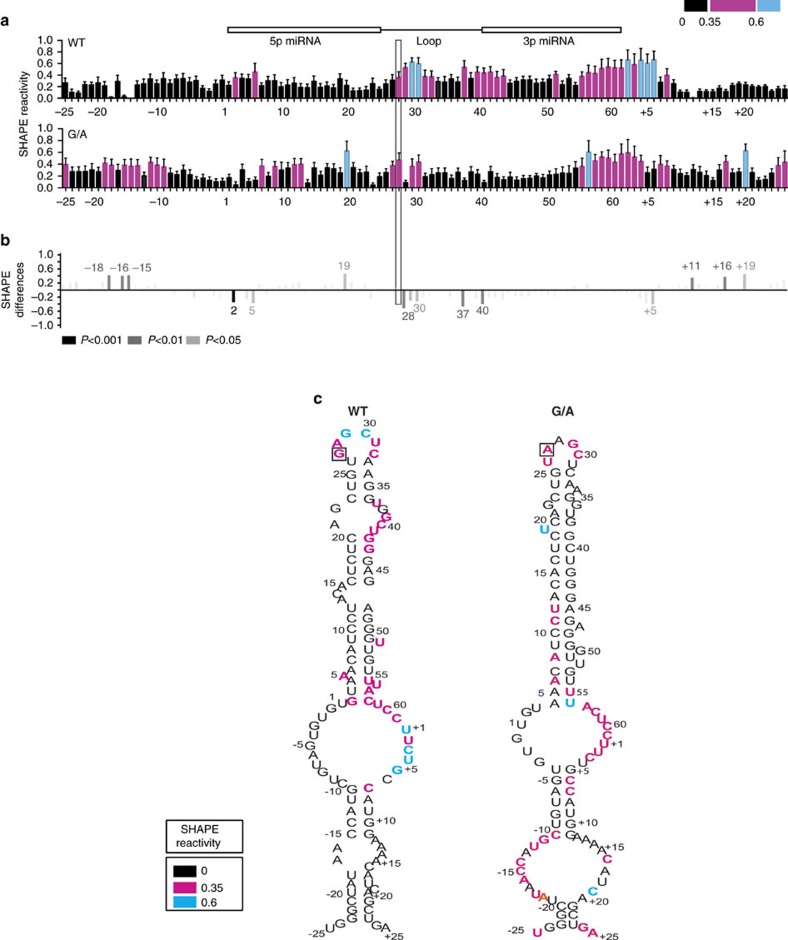
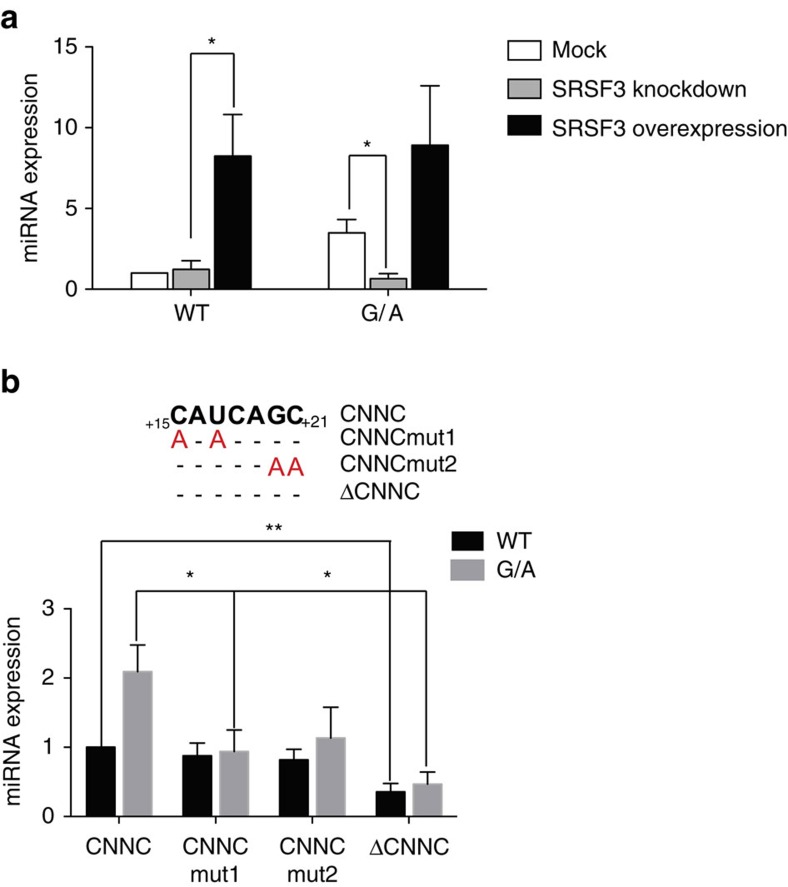
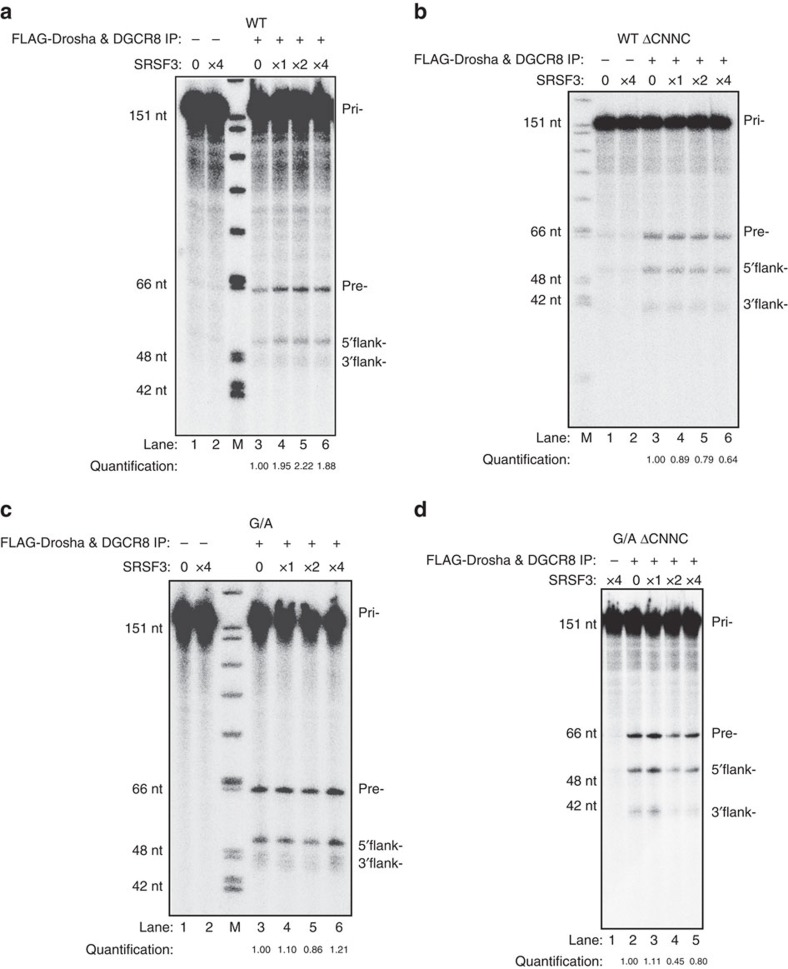
MiRNA biogenesis is highly regulated at the post-transcriptional level; however, the role of sequence and secondary RNA structure in this process has not been extensively studied. A single G to A substitution present in the terminal loop of pri-mir-30c-1 in breast and gastric cancer patients had been previously described to result in increased levels of mature miRNA. Here, we report that this genetic variant directly affects Drosha-mediated processing of pri-mir-30c-1 in vitro and in cultured cells. Structural analysis of this variant revealed an altered RNA structure that facilitates the interaction with SRSF3, an SR protein family member that promotes pri-miRNA processing. Our results are compatible with a model whereby a genetic variant in pri-mir-30c-1 leads to a secondary RNA structure rearrangement that facilitates binding of SRSF3 resulting in increased levels of miR-30c. These data highlight that primary sequence determinants and RNA structure are key regulators of miRNA biogenesis.
miRNA 的生物发生在转录后水平受到高度调控;然而,序列和二级 RNA 结构在这个过程中的作用还没有得到广泛研究。先前已经描述过,乳腺癌和胃癌患者 pri-mir-30c-1 末端环中的单个 G 到 A 取代会导致成熟 miRNA 水平升高。在这里,我们报告说,这种遗传变异直接影响 Drosha 在体外和培养细胞中对 pri-mir-30c-1 的加工。对该变体的结构分析表明,RNA 结构发生改变,从而促进与 SRSF3 的相互作用,SRSF3 是一种促进 pri-miRNA 加工的 SR 蛋白家族成员。我们的结果与这样一种模型一致,即 pri-mir-30c-1 中的遗传变异导致二级 RNA 结构重排,从而促进 SRSF3 的结合,导致 miR-30c 水平升高。这些数据强调了 miRNA 生物发生的主要序列决定因素和 RNA 结构是关键的调节因子。