Hu Jianping, Zhen Shuangju, Yu Chengfu, Zhang Qiuyan, Zhang Wei
Laboratory for Behavioral and Regional Finance, Guangdong University of FinanceGuangzhou, China.
School of Psychology and Center for Studies of Psychological Application, South China Normal UniversityGuangzhou, China.
Front Psychol. 2017 May 5;8:699. doi: 10.3389/fpsyg.2017.00699. eCollection 2017.
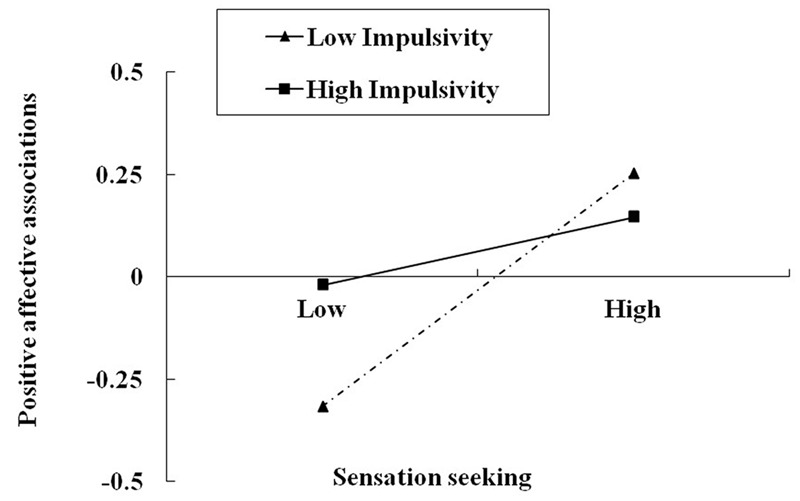
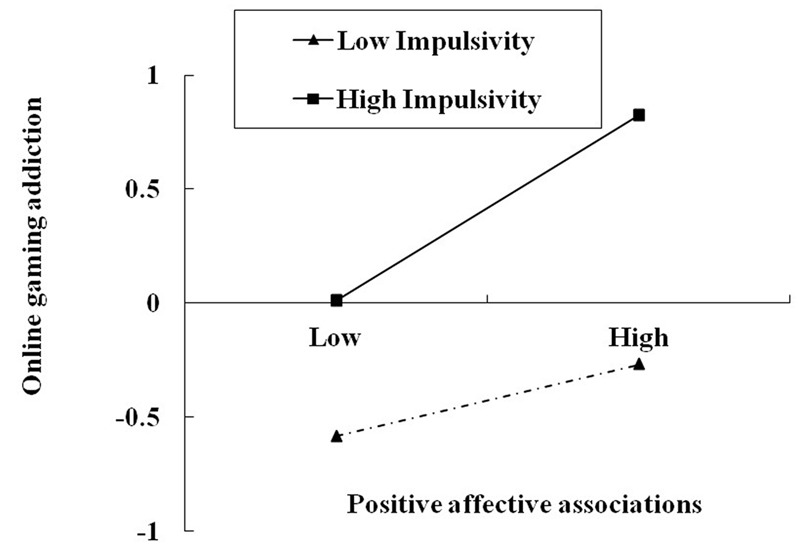
Based on the Dual Systems Model (Somerville et al., 2010; Steinberg, 2010a) and the biosocial-affect model (Romer and Hennessy, 2007) of adolescent sensation seeking and problem behaviors, the present study examined how (affective associations with online games as a mediator) and when (impulsivity as a moderator) did sensation seeking influence online gaming addiction in adolescence. A total of 375 Chinese male adolescents (mean age = 16.02 years, = 0.85) from southern China completed anonymous questionnaires regarding sensation seeking, positive affective associations with online games, impulsivity, and online gaming addiction. Our findings revealed that sensation seeking, positive affective associations with online games and impulsivity were each significantly and positively associated with online gaming addiction in adolescents. Positive affective associations mediated the relationship between sensation seeking and online gaming addiction. Further, impulsivity moderated the relationship between positive affective associations and online gaming addiction, such that the association between positive affective association and online gaming addiction was stronger for high than for low impulsivity adolescents. These findings underscore the importance of integrating the biosocial-affect model and the Dual Systems Model to understand how and when sensation seeking impacts adolescent online gaming addiction.
基于青少年冒险寻求与问题行为的双系统模型(萨默维尔等人,2010年;斯坦伯格,2010年a)和生物社会-情感模型(罗默和轩尼诗,2007年),本研究考察了冒险寻求如何(通过与网络游戏的情感关联作为中介)以及何时(冲动性作为调节变量)影响青少年网络游戏成瘾。来自中国南方的375名中国男性青少年(平均年龄 = 16.02岁,标准差 = 0.85)完成了关于冒险寻求、与网络游戏的积极情感关联、冲动性和网络游戏成瘾的匿名问卷调查。我们的研究结果表明,冒险寻求、与网络游戏的积极情感关联和冲动性均与青少年网络游戏成瘾显著正相关。积极情感关联在冒险寻求与网络游戏成瘾之间起中介作用。此外,冲动性调节了积极情感关联与网络游戏成瘾之间的关系,即对于高冲动性青少年,积极情感关联与网络游戏成瘾之间的关联比低冲动性青少年更强。这些发现强调了整合生物社会-情感模型和双系统模型以理解冒险寻求如何以及何时影响青少年网络游戏成瘾的重要性。