Rao Anand N, Patil Ankita, Black Mark M, Craig Erin M, Myers Kenneth A, Yeung Howard T, Baas Peter W
Department of Neurobiology and Anatomy, Drexel University, Philadelphia, PA 19129, USA.
Department of Anatomy and Cell Biology, Temple University, Philadelphia, PA 19140, USA.
Cell Rep. 2017 Jun 13;19(11):2210-2219. doi: 10.1016/j.celrep.2017.05.064.
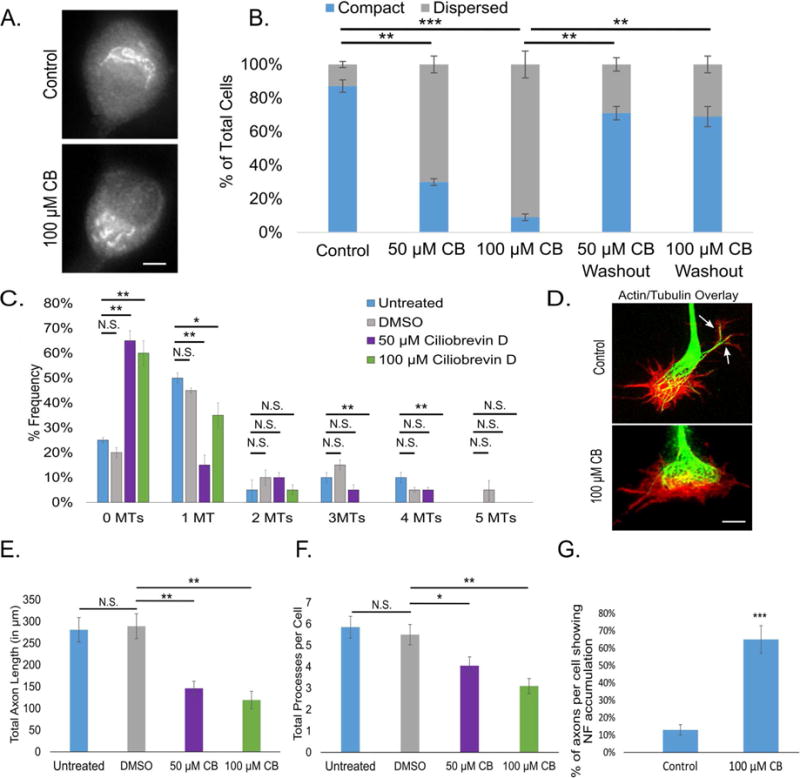
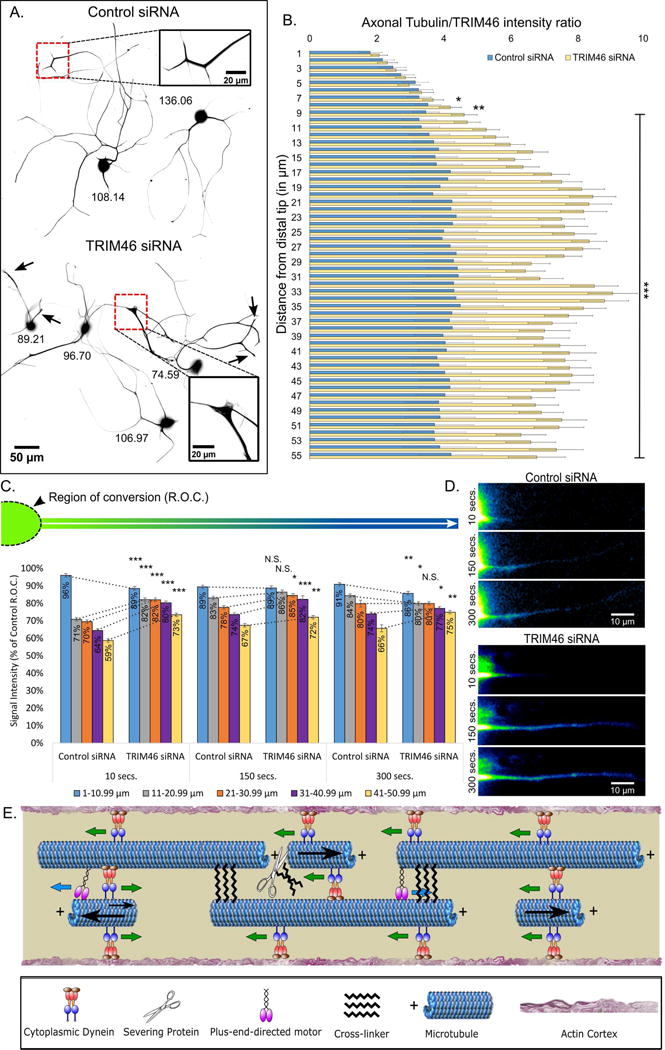
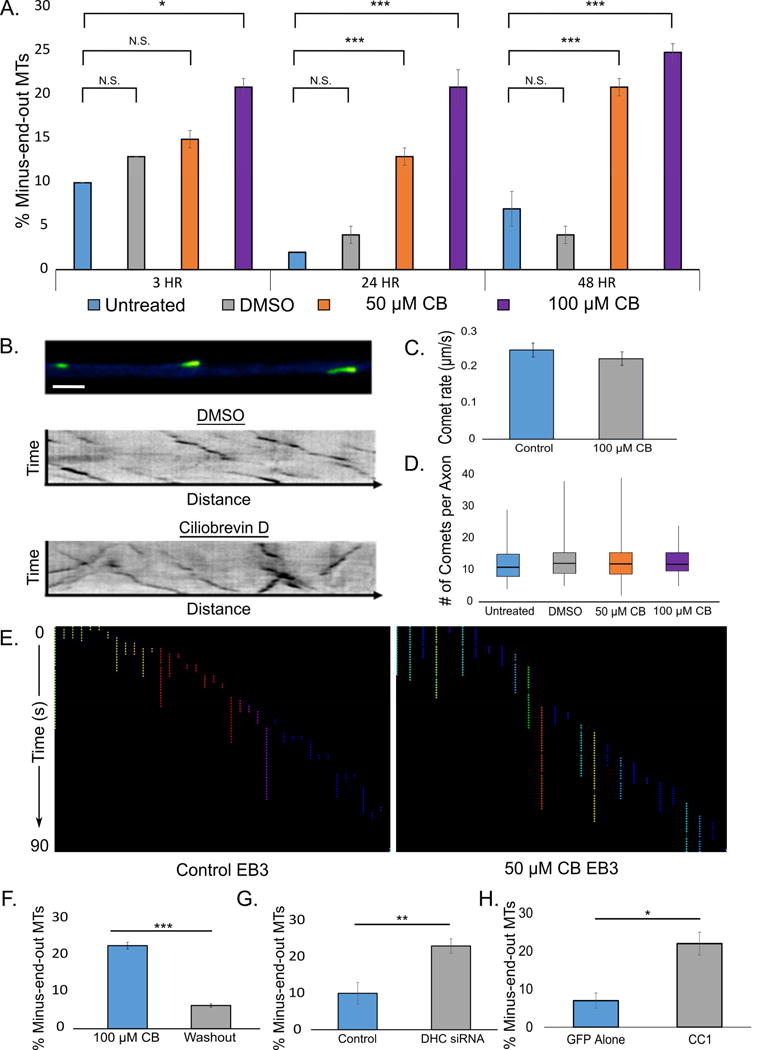
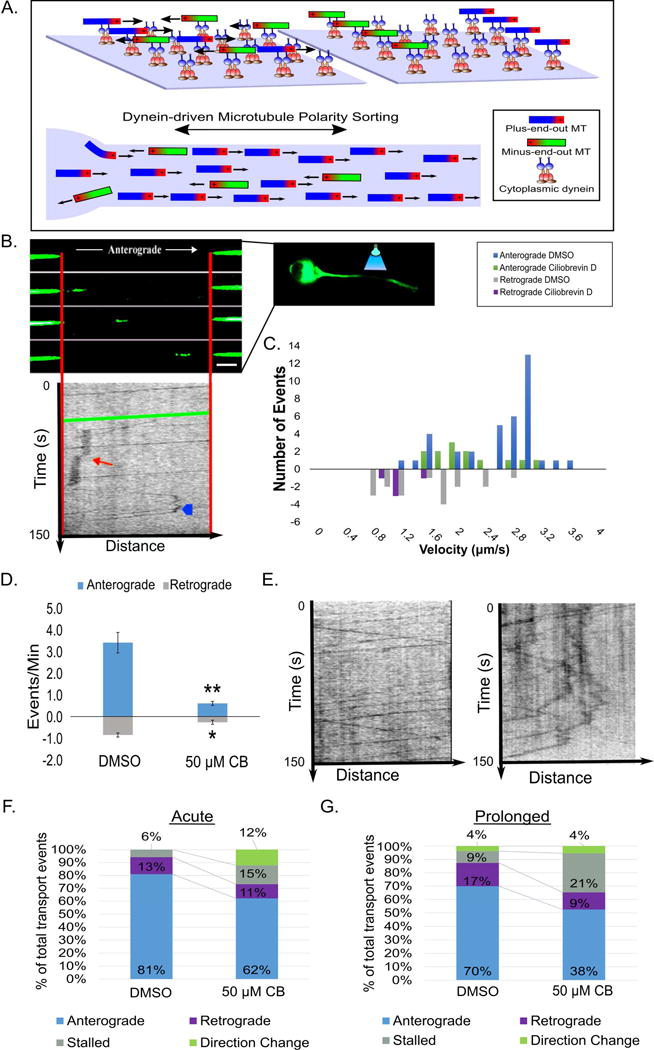
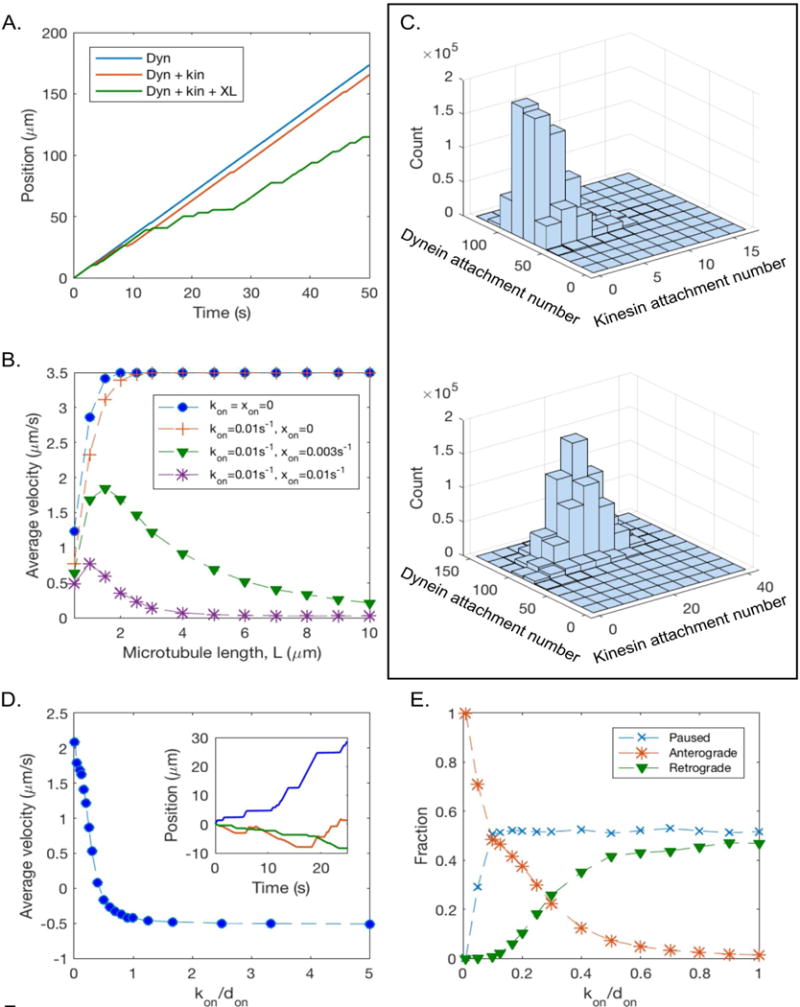
Axonal microtubules are predominantly organized into a plus-end-out pattern. Here, we tested both experimentally and with computational modeling whether a motor-based polarity-sorting mechanism can explain this microtubule pattern. The posited mechanism centers on cytoplasmic dynein transporting plus-end-out and minus-end-out microtubules into and out of the axon, respectively. When cytoplasmic dynein was acutely inhibited, the bi-directional transport of microtubules in the axon was disrupted in both directions, after which minus-end-out microtubules accumulated in the axon over time. Computational modeling revealed that dynein-mediated transport of microtubules can establish and preserve a predominantly plus-end-out microtubule pattern as per the details of the experimental findings, but only if a kinesin motor and a static cross-linker protein are also at play. Consistent with the predictions of the model, partial depletion of TRIM46, a protein that cross-links axonal microtubules in a manner that influences their polarity orientation, leads to an increase in microtubule transport.
轴突微管主要排列成正端向外的模式。在此,我们通过实验和计算建模来测试基于马达蛋白的极性分选机制是否能够解释这种微管模式。假定的机制以胞质动力蛋白分别将正端向外和负端向外的微管转运进轴突和转运出轴突为核心。当胞质动力蛋白被急性抑制时,轴突中微管的双向运输在两个方向上均被破坏,此后负端向外的微管随时间在轴突中积累。计算建模表明,根据实验结果的细节,动力蛋白介导的微管运输可以建立并维持主要为正端向外的微管模式,但前提是驱动蛋白马达蛋白和一种静态交联蛋白也发挥作用。与该模型的预测一致,TRIM46(一种以影响微管极性取向的方式交联轴突微管的蛋白质)的部分缺失会导致微管运输增加。