School of Physics, Indian Institute of Science Education and Research, Thiruvananthapuram, Kerala, 695016, India.
Centre for Nanostructured Media, Queen's University, Belfast, BT7 1NN, United Kingdom.
Sci Rep. 2017 Jun 14;7(1):3530. doi: 10.1038/s41598-017-03766-x.
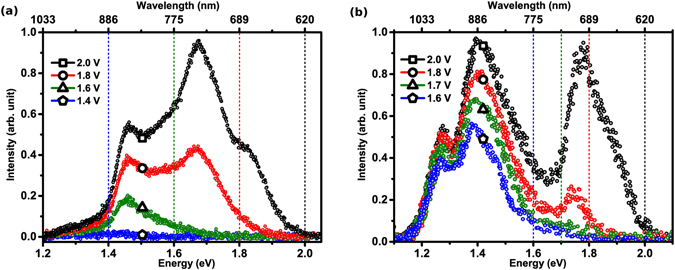
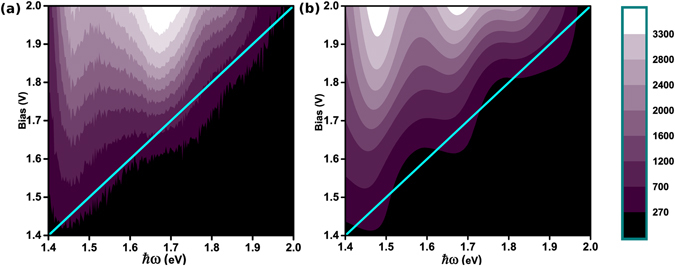
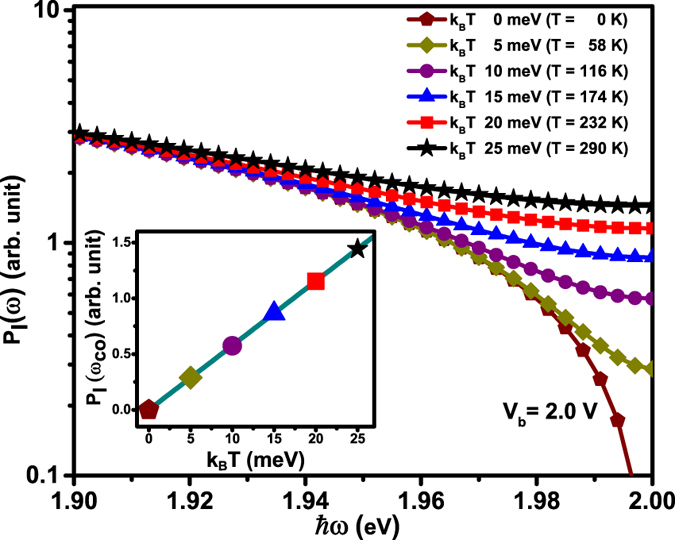
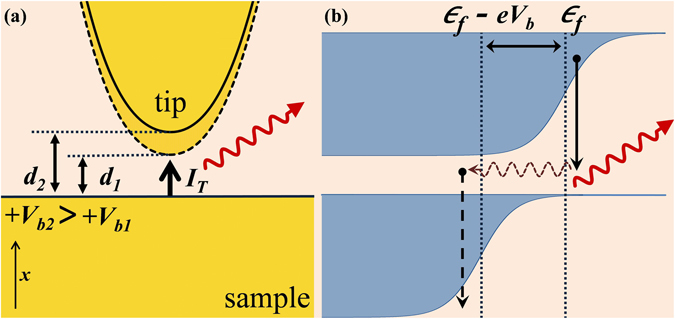
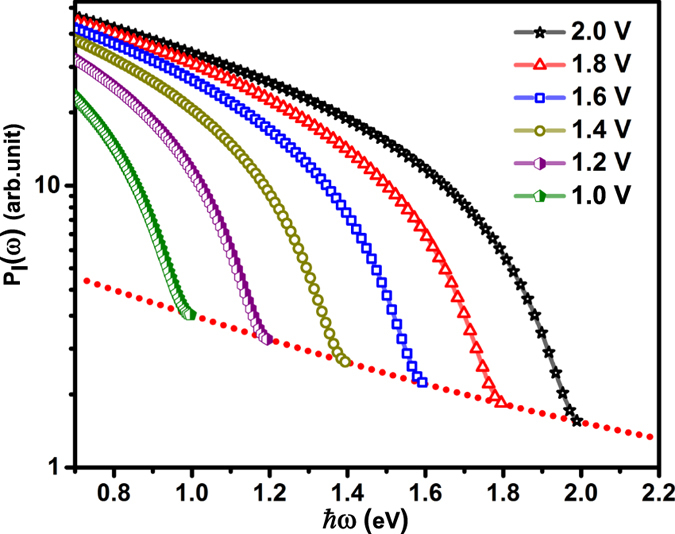
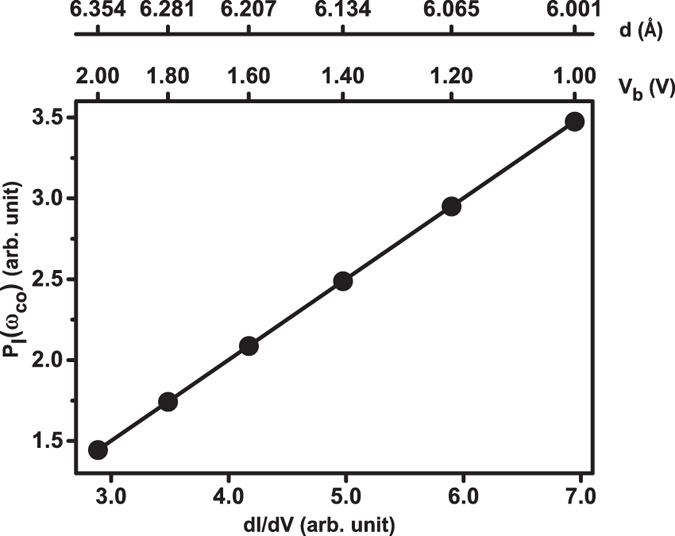
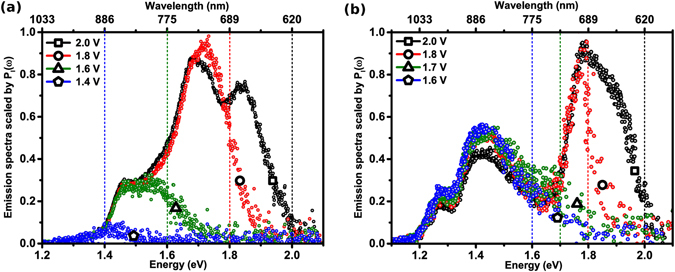
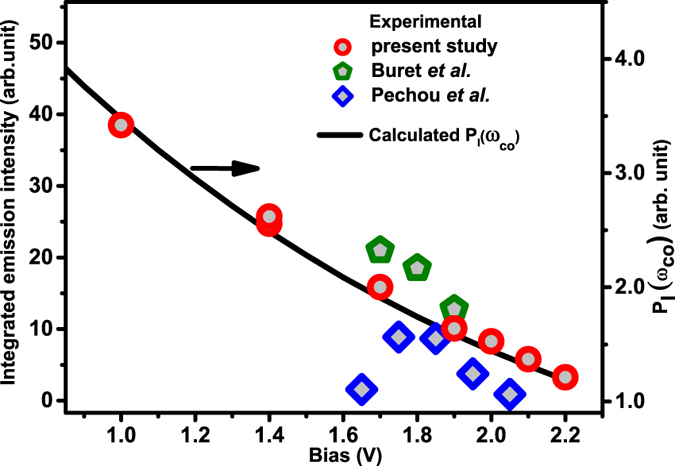
The spectral distribution of light emitted from a scanning tunnelling microscope junction not only bears its intrinsic plasmonic signature but is also imprinted with the characteristics of optical frequency fluc- tuations of the tunnel current. Experimental spectra from gold-gold tunnel junctions are presented that show a strong bias (V ) dependence, curiously with emission at energies higher than the quantum cut-off (eV ); a component that decays monotonically with increasing bias. The spectral evolution is explained by developing a theoretical model for the power spectral density of tunnel current fluctuations, incorporating finite temperature contribution through consideration of the quantum transport in the system. Notably, the observed decay of the over cut-off emission is found to be critically associated with, and well explained in terms of the variation in junction conductance with V . The investigation highlights the scope of plasmon-mediated light emission as a unique probe of high frequency fluctuations in electronic systems that are fundamental to the electrical generation and control of plasmons.
从扫描隧道显微镜结中发射的光的光谱分布不仅带有其固有等离子体的特征,而且还带有隧道电流的光学频率波动的特征。本文给出了金-金隧道结的实验光谱,这些光谱显示出强烈的偏压(V )依赖性,奇怪的是,发射能量高于量子截止(eV );随着偏压的增加,一个单调衰减的分量。通过考虑系统中的量子输运,通过发展隧道电流波动的功率谱密度的理论模型,对光谱的演化进行了解释。值得注意的是,观察到的过截止发射的衰减与结电导随 V 的变化密切相关,并根据该变化得到了很好的解释。这项研究强调了等离子体介导的光发射作为探测电子系统中高频波动的独特探针的范围,这对于等离子体的电产生和控制至关重要。