Université Grenoble Alpes (UGA), Laboratoire de Physiologie Cellulaire et Végétale, UMR 5168, Centre National de la Recherche Scientifique (CNRS), Commissariat à l'Energie Atomique et aux Energies Alternatives (CEA), Institut National de la Recherche Agronomique (INRA), Institut de Biosciences et Biotechnologie de Grenoble (BIG), CEA-Grenoble, 38000 Grenoble, France.
Laboratoire d'Etudes des Matériaux par Microscopie Avancée, Institut Nanosciences et Cryogénie, Service de Physique des Matériaux et Microstructures, CEA-Grenoble, 38000 Grenoble Cédex 9, France.
Nat Commun. 2017 Jun 20;8:15885. doi: 10.1038/ncomms15885.
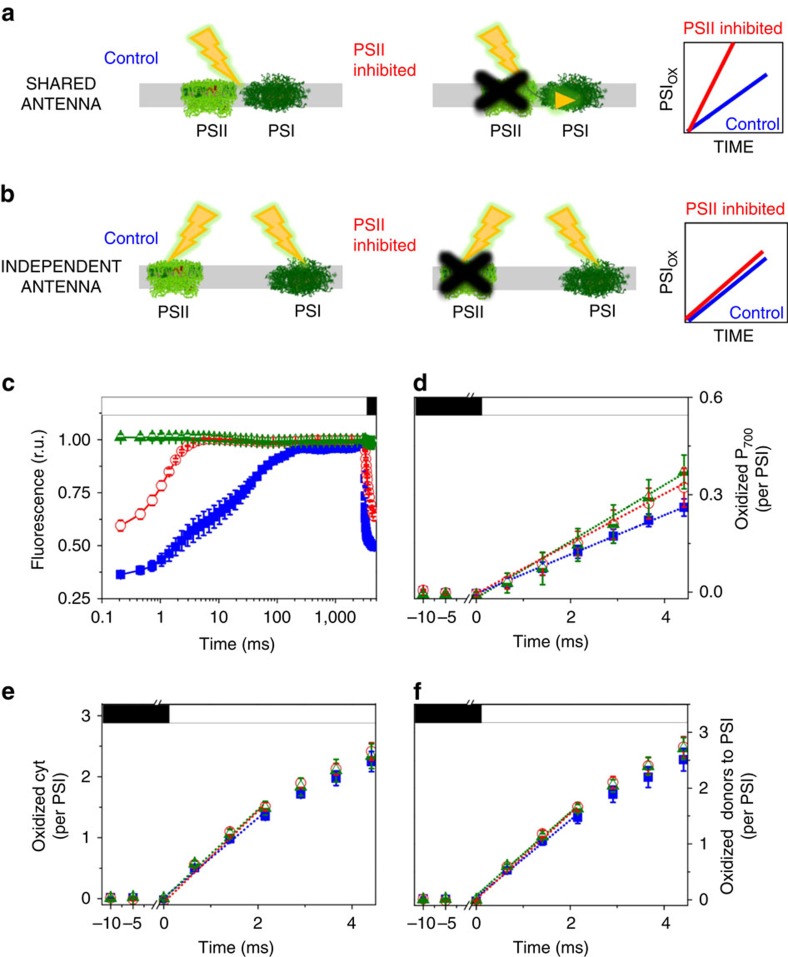
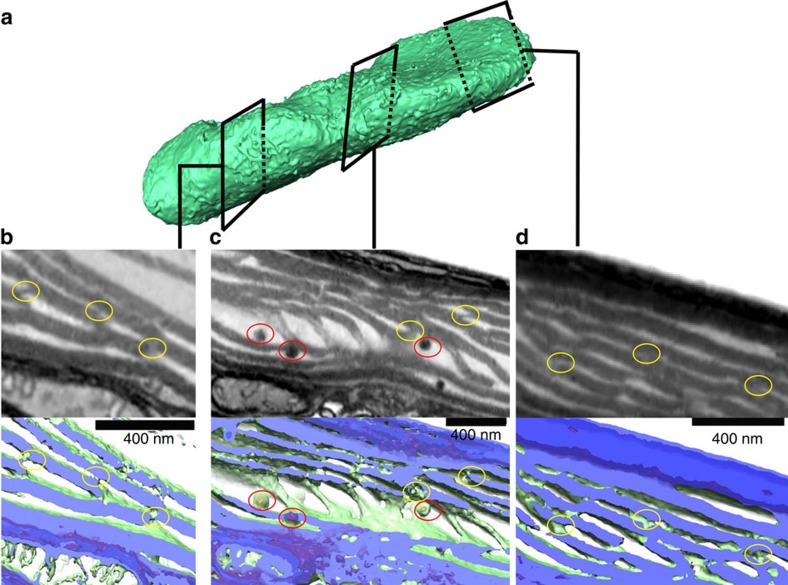
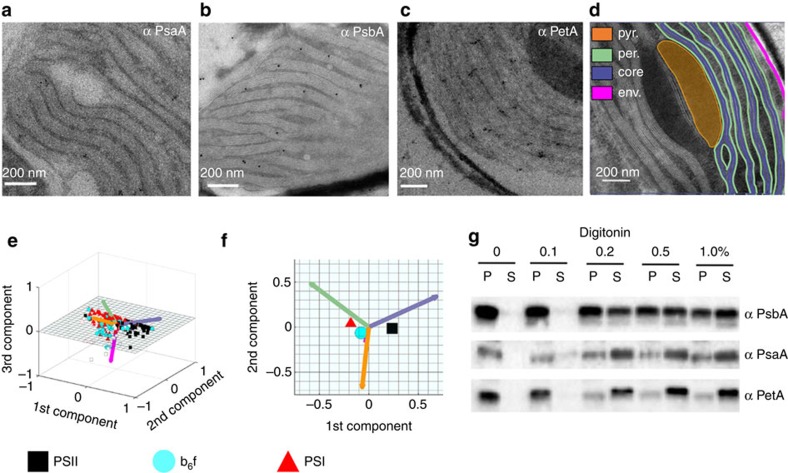
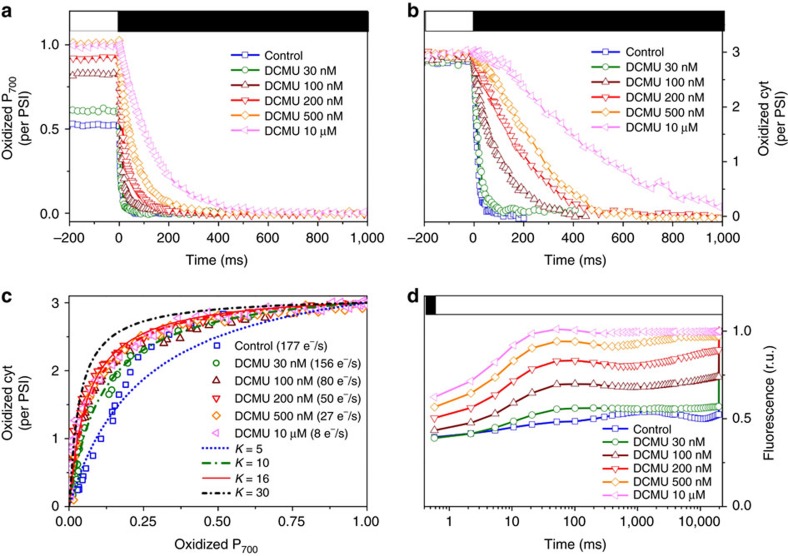
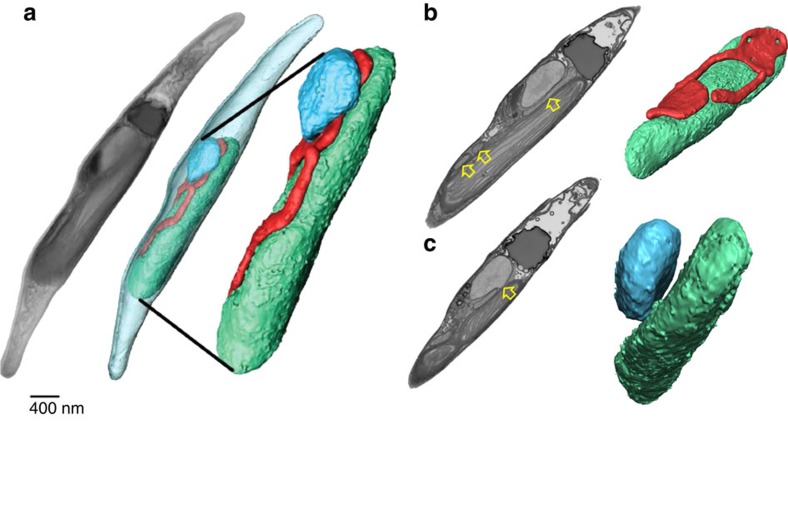
Photosynthesis is a unique process that allows independent colonization of the land by plants and of the oceans by phytoplankton. Although the photosynthesis process is well understood in plants, we are still unlocking the mechanisms evolved by phytoplankton to achieve extremely efficient photosynthesis. Here, we combine biochemical, structural and in vivo physiological studies to unravel the structure of the plastid in diatoms, prominent marine eukaryotes. Biochemical and immunolocalization analyses reveal segregation of photosynthetic complexes in the loosely stacked thylakoid membranes typical of diatoms. Separation of photosystems within subdomains minimizes their physical contacts, as required for improved light utilization. Chloroplast 3D reconstruction and in vivo spectroscopy show that these subdomains are interconnected, ensuring fast equilibration of electron carriers for efficient optimum photosynthesis. Thus, diatoms and plants have converged towards a similar functional distribution of the photosystems although via different thylakoid architectures, which likely evolved independently in the land and the ocean.
光合作用是一种独特的过程,使植物能够独立地在陆地上殖民,浮游植物也能够在海洋中殖民。虽然植物的光合作用过程已经被很好地理解,但我们仍在揭示浮游植物为实现极高效率的光合作用而进化出的机制。在这里,我们结合生化、结构和体内生理学研究,揭示了硅藻(海洋真核生物的重要代表)的质体结构。生化和免疫定位分析揭示了光合作用复合物在硅藻典型的松散堆叠类囊体膜中的分离。在亚域内分离光系统可最大限度地减少它们的物理接触,从而提高光的利用效率。叶绿体的 3D 重建和体内光谱学显示,这些亚域是相互连接的,确保了电子载体的快速平衡,以实现高效的最佳光合作用。因此,硅藻和植物虽然通过不同的类囊体结构,但都朝着相似的光合作用系统功能分布方向进化,而这些结构可能是在陆地和海洋中独立进化而来的。