Diekhoff-Krebs Svenja, Pool Eva-Maria, Sarfeld Anna-Sophia, Rehme Anne K, Eickhoff Simon B, Fink Gereon R, Grefkes Christian
Neuromodulation & Neurorehabilitation, Max Planck Institute for Neurological Research, Gleueler Str. 50, 50931 Köln, Germany.
Neuromodulation & Neurorehabilitation, Max Planck Institute for Neurological Research, Gleueler Str. 50, 50931 Köln, Germany; Institute of Neuroscience and Medicine (INM-3, INM-7), Research Centre Juelich, Leo-Brand-Str. 1, 52425 Jülich, Germany; Department of Neurology, University Hospital Cologne, Kerpener Str. 62, 50937 Köln, Germany.
Neuroimage Clin. 2017 Jun 4;15:559-571. doi: 10.1016/j.nicl.2017.06.006. eCollection 2017.
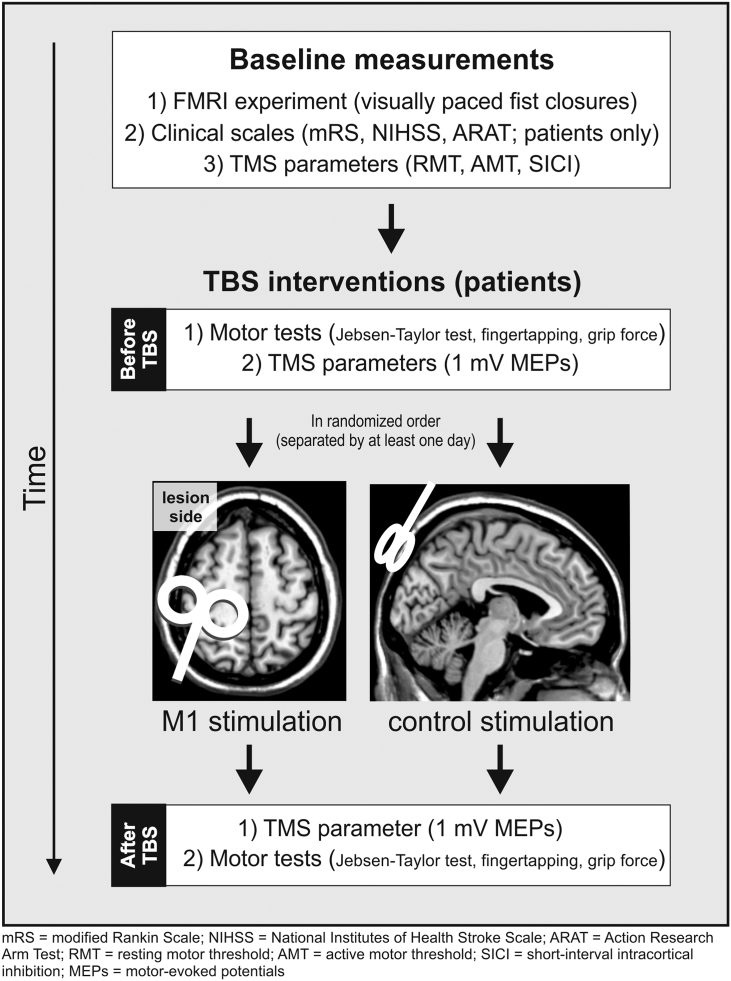
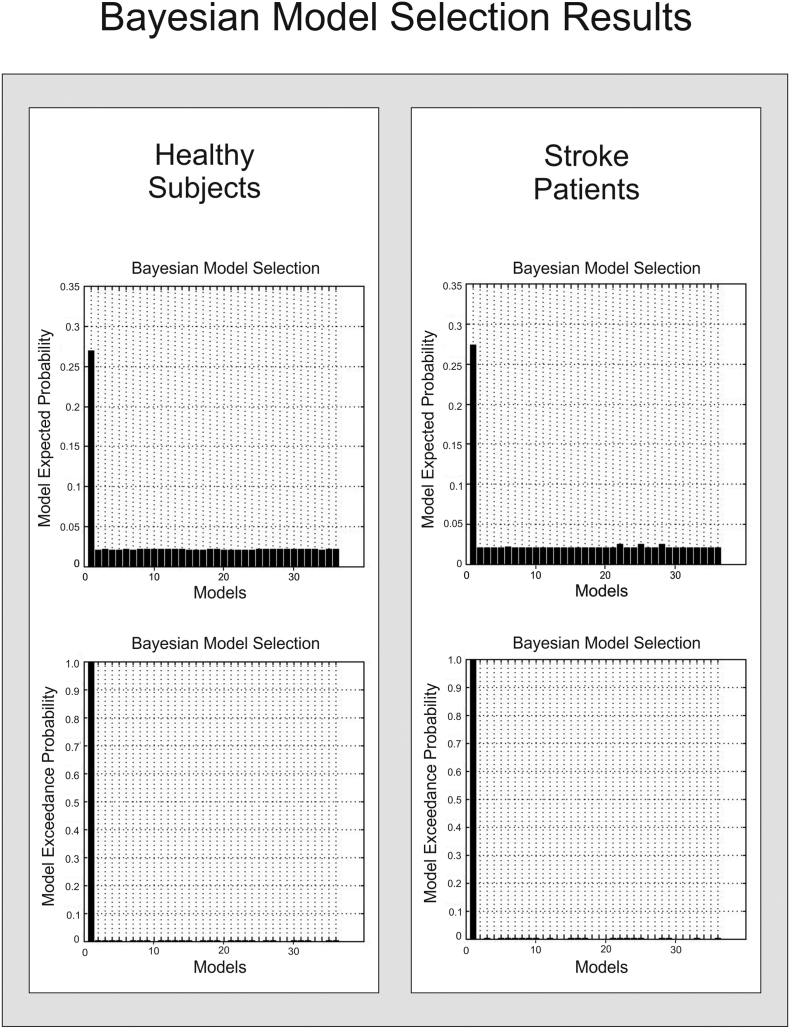
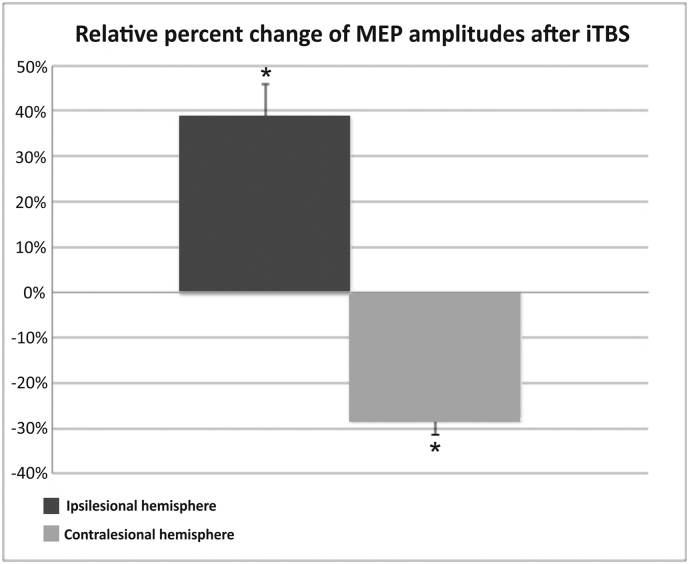
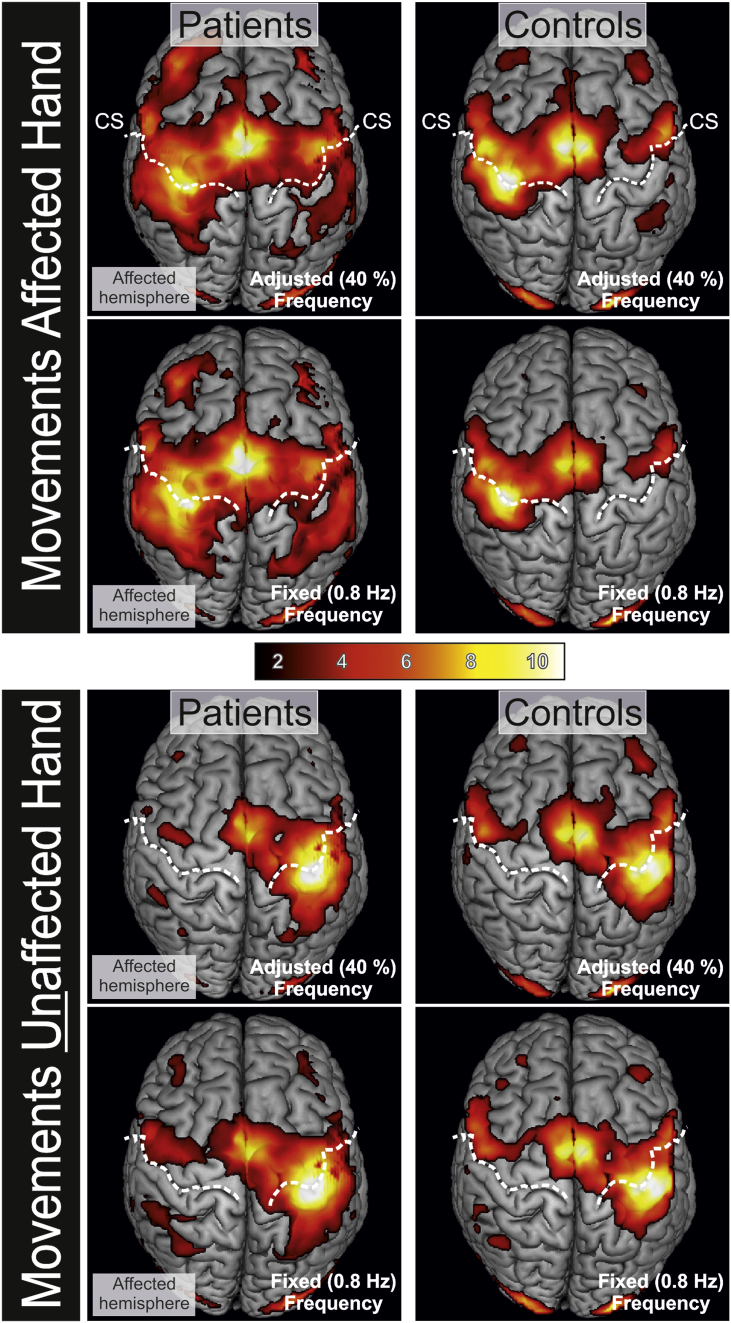
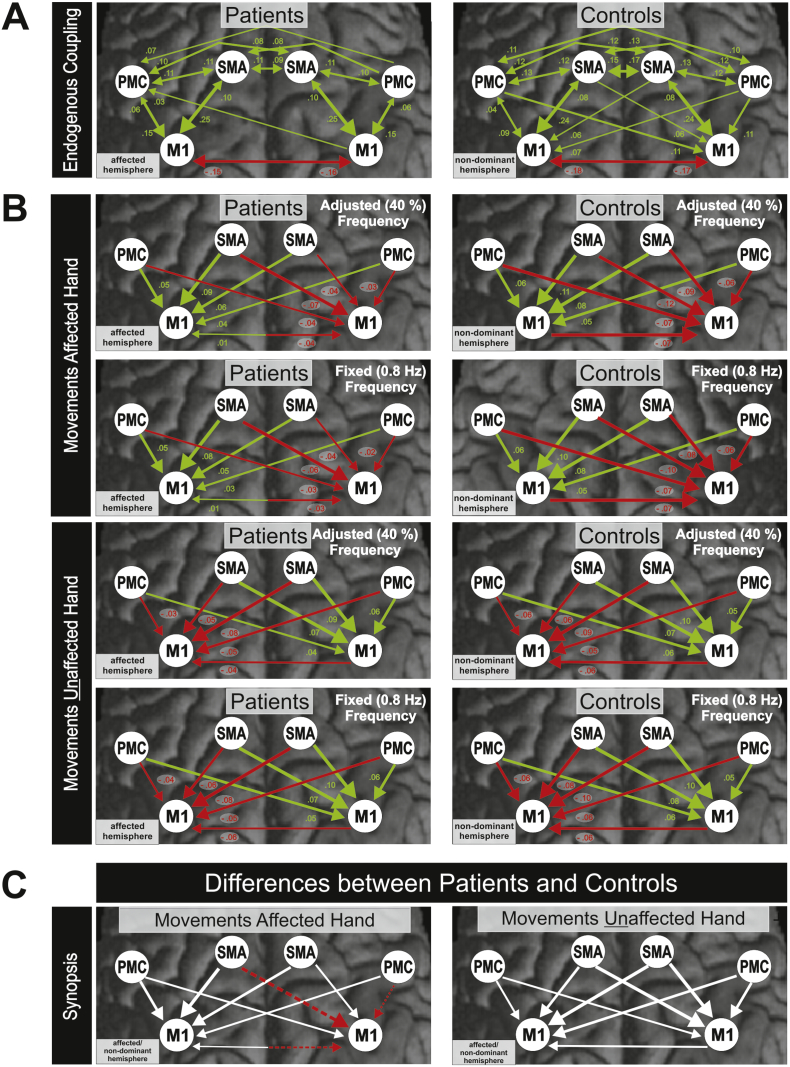
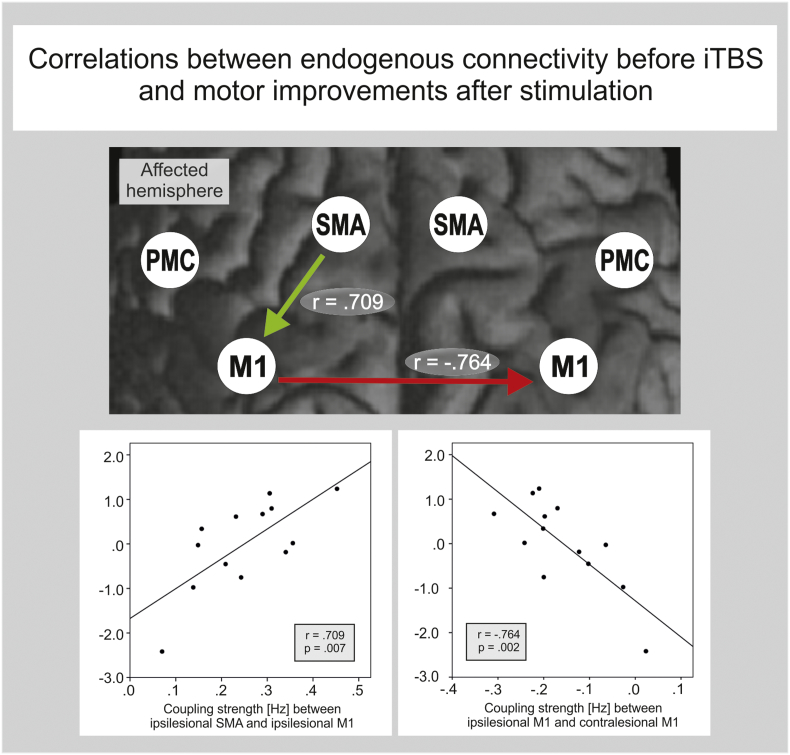
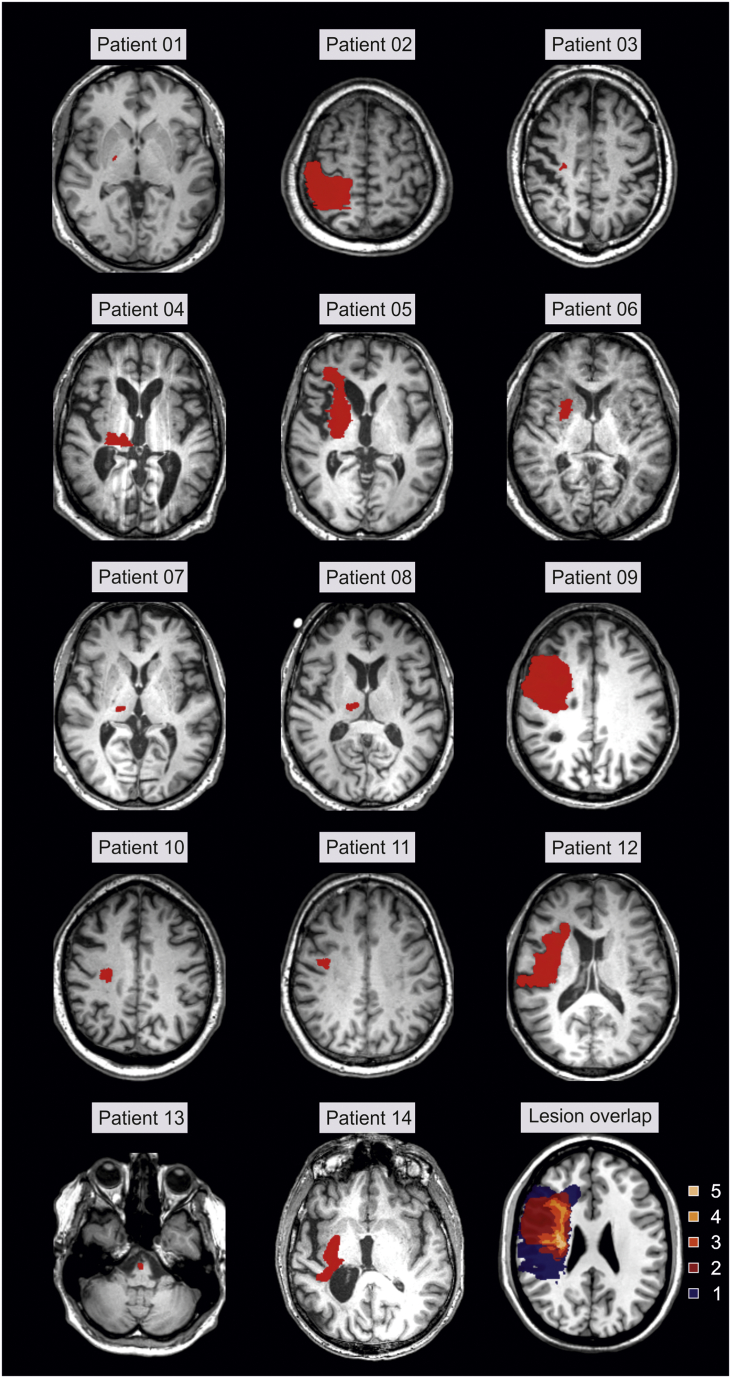
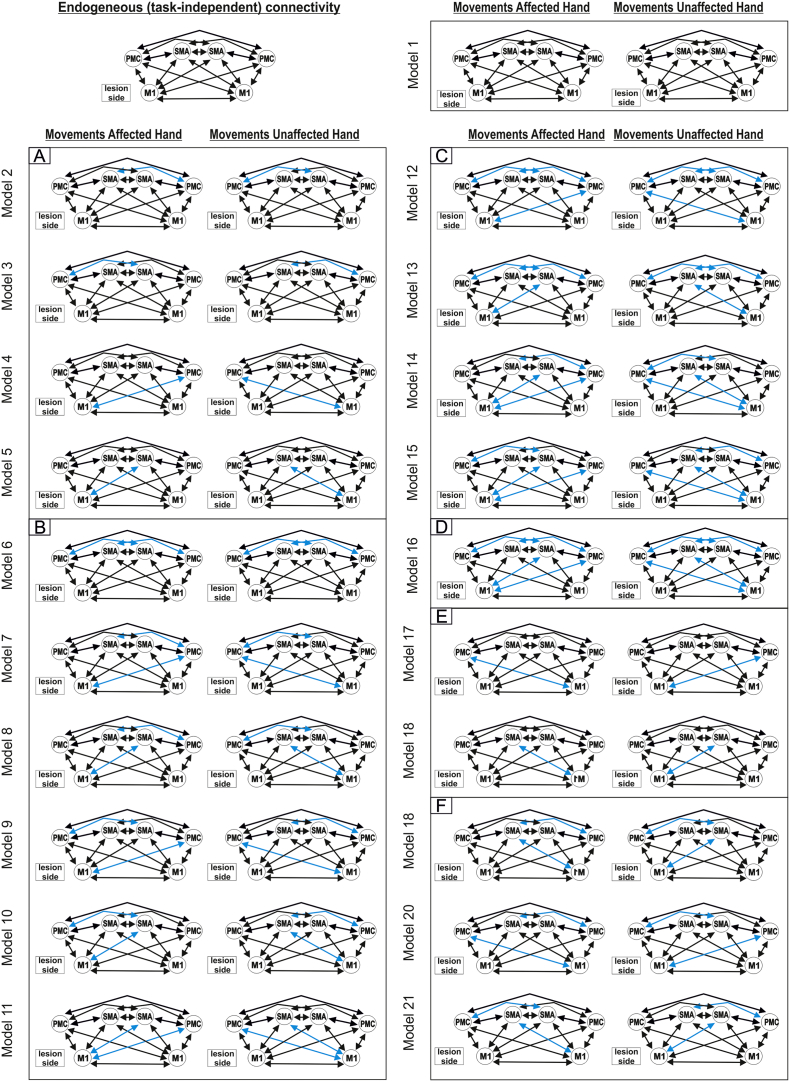
Cerebral plasticity-inducing approaches like repetitive transcranial magnetic stimulation (rTMS) are of high interest in situations where reorganization of neural networks can be observed, e.g., after stroke. However, an increasing number of studies suggest that improvements in motor performance of the stroke-affected hand following modulation of primary motor cortex (M1) excitability by rTMS shows a high interindividual variability. We here tested the hypothesis that in stroke patients the interindividual variability of behavioral response to excitatory rTMS is related to interindividual differences in network connectivity of the stimulated region. Chronic stroke patients ( = 14) and healthy controls ( = 12) were scanned with functional magnetic resonance imaging (fMRI) while performing a simple hand motor task. Dynamic causal modeling (DCM) was used to investigate effective connectivity of key motor regions. On two different days after the fMRI experiment, patients received either intermittent theta-burst stimulation (iTBS) over ipsilesional M1 or control stimulation over the parieto-occipital cortex. Motor performance and TMS parameters of cortical excitability were measured before and after iTBS. Our results revealed that patients with better motor performance of the affected hand showed stronger endogenous coupling between supplemental motor area (SMA) and M1 before starting the iTBS intervention. Applying iTBS to ipsilesional M1 significantly increased ipsilesional M1 excitability and decreased contralesional M1 excitability as compared to control stimulation. Individual behavioral improvements following iTBS specifically correlated with neural coupling strengths in the stimulated hemisphere prior to stimulation, especially for connections targeting the stimulated M1. Combining endogenous connectivity and behavioral parameters explained 82% of the variance in hand motor performance observed after iTBS. In conclusion, the data suggest that the individual susceptibility to iTBS after stroke is influenced by interindividual differences in motor network connectivity of the lesioned hemisphere.
在可以观察到神经网络重组的情况下,如中风后,像重复经颅磁刺激(rTMS)这样的诱导脑可塑性方法备受关注。然而,越来越多的研究表明,通过rTMS调节初级运动皮层(M1)兴奋性后,中风患侧手的运动表现改善存在高度个体差异。我们在此测试了一个假设,即中风患者对兴奋性rTMS行为反应的个体差异与受刺激区域网络连接的个体差异有关。对慢性中风患者(n = 14)和健康对照者(n = 12)进行功能磁共振成像(fMRI)扫描,同时让他们执行简单的手部运动任务。使用动态因果模型(DCM)研究关键运动区域的有效连接性。在fMRI实验后的两天,患者分别接受患侧M1的间歇性theta爆发刺激(iTBS)或顶枕叶皮层的对照刺激。在iTBS前后测量运动表现和皮层兴奋性的TMS参数。我们的结果显示,患侧手运动表现较好的患者在开始iTBS干预前,辅助运动区(SMA)和M1之间的内源性耦合更强。与对照刺激相比,对患侧M1应用iTBS显著增加了患侧M1的兴奋性,并降低了对侧M1的兴奋性。iTBS后个体行为改善与刺激前受刺激半球的神经耦合强度特别相关,尤其是针对受刺激M1的连接。结合内源性连接性和行为参数解释了iTBS后观察到的手部运动表现差异的82%。总之,数据表明中风后对iTBS的个体易感性受患侧半球运动网络连接个体差异的影响。