Present address: Laboratory of Molecular Neuroscience and Neurology, School of Life Sciences, Tokyo University of Pharmacy and Life Sciences, 1432-1 Horinouchi, Hachioji, Tokyo, 192-0392, Japan.
Department of Evolutionary Neuroethology, Max Planck Institute for Chemical Ecology, Hans-Knöll-Strasse 8, 07745, Jena, Germany.
BMC Biol. 2017 Jun 30;15(1):56. doi: 10.1186/s12915-017-0389-z.
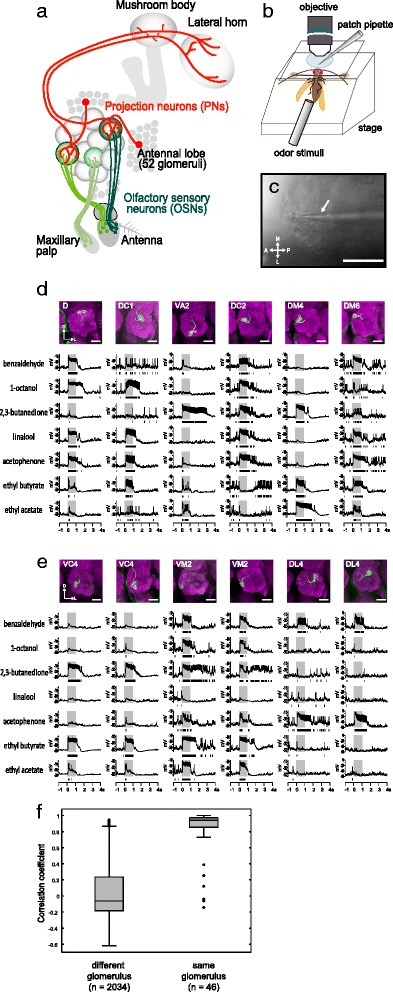
Odor information is processed through multiple receptor-glomerular channels in the first order olfactory center, the antennal lobe (AL), then reformatted into higher brain centers and eventually perceived by the fly. To reveal the logic of olfaction, it is fundamental to map odor representations from the glomerular channels into higher brain centers.
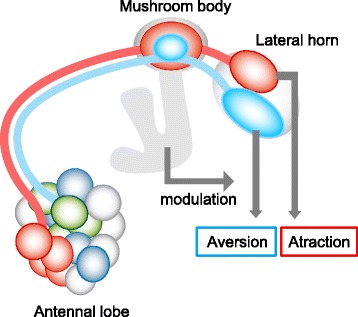
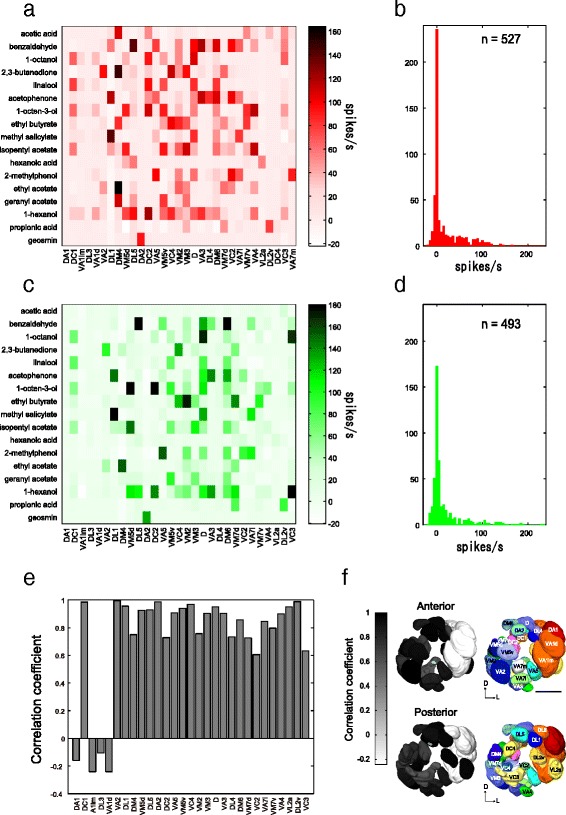
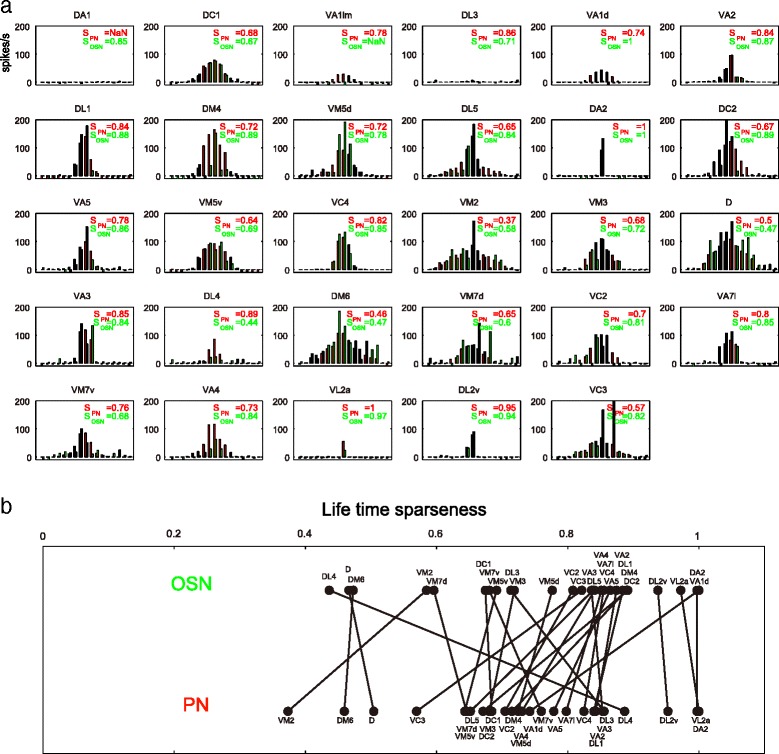
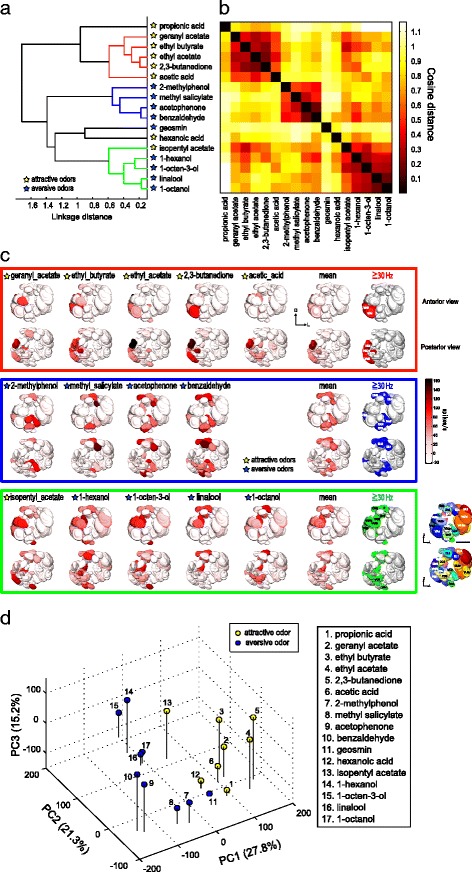
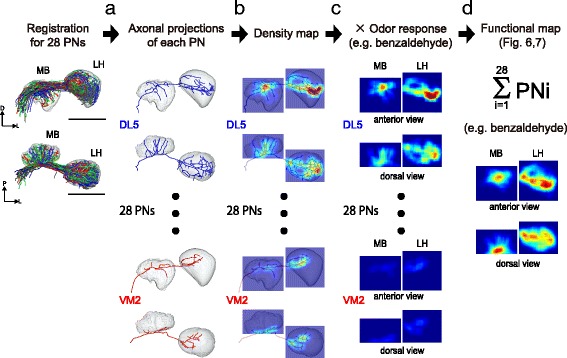
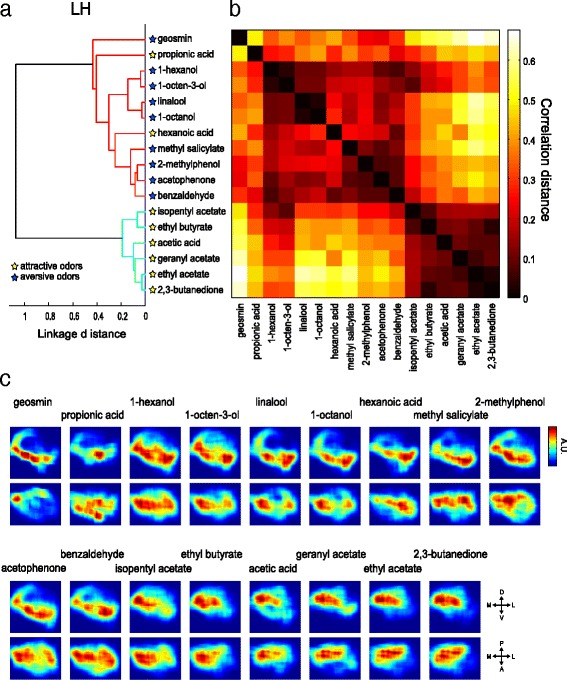
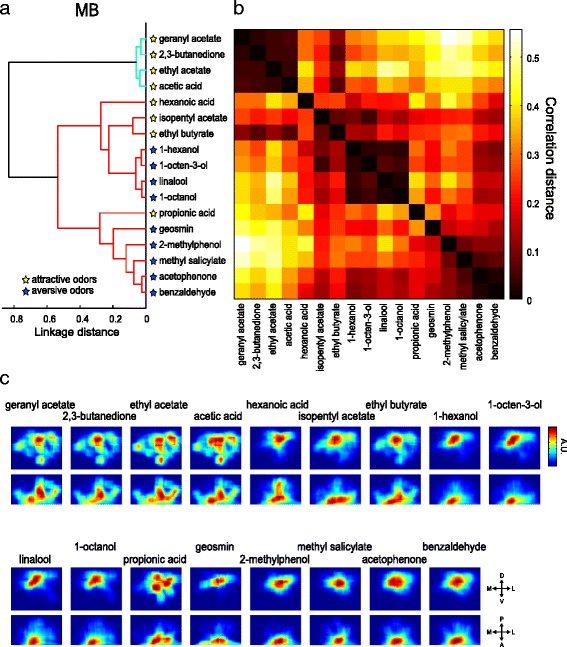
We characterize odor response profiles of AL projection neurons (PNs) originating from 31 glomeruli using whole cell patch-clamp recordings in Drosophila melanogaster. We reveal that odor representation from olfactory sensory neurons to PNs is generally conserved, while transformation of odor tuning curves is glomerulus-dependent. Reconstructions of PNs reveal that attractive and aversive odors are represented in different clusters of glomeruli in the AL. These separate representations are preserved into higher brain centers, where attractive and aversive odors are segregated into two regions in the lateral horn and partly separated in the mushroom body calyx.
Our study reveals spatial representation of odor valence coding from the AL to higher brain centers. These results provide a global picture of the olfactory circuit design underlying innate odor-guided behavior.
气味信息通过第一级嗅觉中枢——触角叶(antennal lobe,AL)中的多个受体-神经节通道进行处理,然后重新格式化到更高的大脑中枢,并最终被苍蝇感知。为了揭示嗅觉的逻辑,从神经节通道映射气味表示到更高的大脑中枢是至关重要的。
我们使用黑腹果蝇的全细胞膜片钳记录技术,对来自 31 个神经节的 AL 投射神经元(projection neurons,PNs)的气味反应谱进行了表征。我们揭示了从嗅觉感觉神经元到 PNs 的气味表示通常是保守的,而气味调谐曲线的转换则依赖于神经节。PNs 的重建表明,有吸引力和令人厌恶的气味在 AL 中的不同神经节簇中被表示。这些分离的表示在更高的大脑中枢中得以保留,在那里,有吸引力和令人厌恶的气味被分离到侧角的两个区域,并在蘑菇体的卷心中部分开。
我们的研究揭示了从 AL 到更高的大脑中枢的气味效价编码的空间表示。这些结果提供了一个内在气味引导行为的嗅觉回路设计的整体图景。